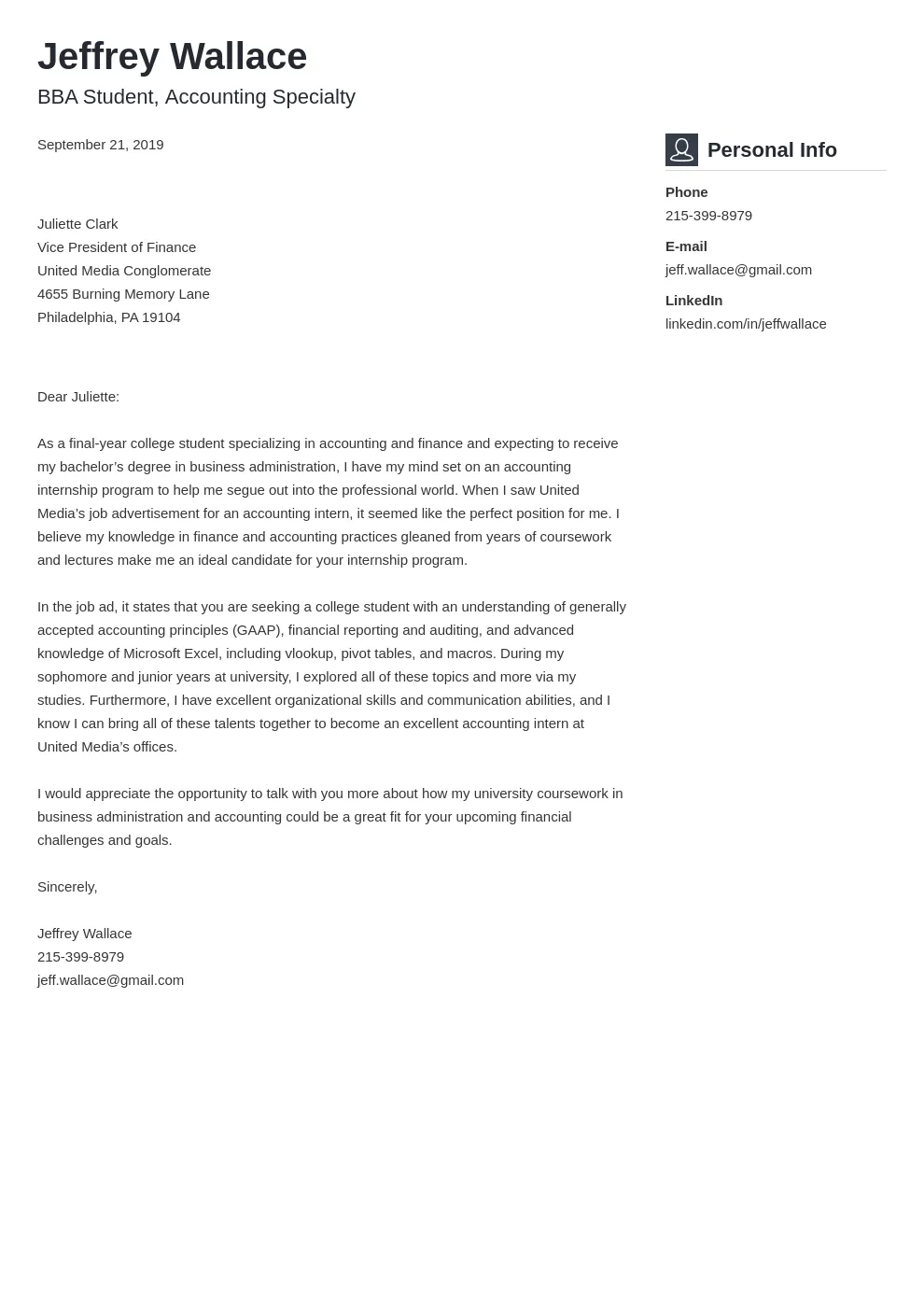
Highlighting Your Skills in Accounting Cover Letter
A well-crafted accounting cover letter is your first impression on a potential employer, a chance to showcase your skills and experience. It’s more than just a formality, it’s a strategic tool to capture attention and differentiate yourself from other candidates. In a competitive job market, a compelling cover letter can be the deciding factor in securing an interview. This guide will walk you through the essential elements of creating an accounting cover letter that highlights your strengths and increases your chances of landing your dream job. We will delve into strategies that will help you not only get noticed but also leave a lasting positive impression. The goal is to create a narrative that is tailored to the specific role and accounting firm.
Quantify Your Achievements
Instead of just listing your responsibilities, quantify your achievements to demonstrate the impact you’ve made in previous roles. Use numbers and data to showcase your successes. For example, instead of saying “Managed accounts payable,” state “Managed accounts payable for a portfolio of 500+ vendors, reducing processing time by 15%.” Or, instead of saying “Improved financial reporting,” try “Implemented new reporting system, resulting in a 10% reduction in report generation time and improved accuracy.” Providing tangible results makes your cover letter much more compelling and shows potential employers the value you can bring to their team. Using metrics and measurable outcomes will make your cover letter stand out.
Showcase Relevant Experience

Your cover letter should highlight experiences directly relevant to the job you are applying for. If you have experience in a specific industry or with a particular type of accounting software, be sure to mention it. Tailor your experience to the job requirements. Review the job description carefully and identify the key skills and qualifications the employer is seeking. Then, provide specific examples from your previous roles where you have demonstrated these skills. For example, if the job requires experience with tax preparation, mention your experience preparing tax returns for individuals or businesses, and the software you used. Make sure to provide context and details to allow the hiring manager to quickly see your experience related to their needs. Showing a clear alignment will boost your chances.
Demonstrating Technical Proficiency
Accounting roles demand a strong understanding of accounting principles and proficiency in relevant software. Your cover letter should clearly demonstrate your technical skills. Mention specific accounting software you are familiar with, such as QuickBooks, Xero, SAP, or others. Also, highlight your knowledge of accounting standards like GAAP or IFRS. If the job requires a particular skill, such as financial modeling or budgeting, be sure to mention your experience in these areas. If you hold any certifications, such as a CPA or CMA, make sure to include them prominently in your cover letter. It is also useful to add a link to your LinkedIn profile or your professional website. Show your ability to handle the software and knowledge of the required standards.
Tailoring Your Cover Letter
A generic cover letter is unlikely to impress. Customize each cover letter to the specific job and the accounting firm you are applying to. This demonstrates that you’ve done your research and are genuinely interested in the opportunity. Begin by researching the company to understand its values, mission, and culture. Then, tailor your cover letter to show how your skills and experience align with the specific needs of the role and the firm. Mention the specific skills and experiences they are looking for, and demonstrate how you can contribute to their team. Tailoring your letter is essential, it shows that you are interested in the company.
Researching the Accounting Firm

Before writing your cover letter, conduct thorough research on the accounting firm. Visit their website, read about their services, clients, and values. Explore their social media presence to gain insights into their culture. Understand the firm’s focus areas, such as tax, auditing, or consulting. Tailoring your cover letter to address their specific needs and demonstrating your understanding of their business will make a strong impact. Identifying their values and mission will give you an edge over your competition. Understanding the firm will help you frame your qualifications to match their needs. It will signal to the hiring manager that you have taken the time to learn about the firm.
Matching Skills to Job Description
Carefully review the job description and identify the key skills and qualifications the employer is seeking. Then, match your skills and experience to these requirements. Use keywords from the job description to demonstrate your understanding of the role and the employer’s needs. Provide specific examples from your previous roles where you have demonstrated these skills. If the job requires experience with a particular software program, mention your proficiency. If the job emphasizes teamwork, provide examples of your ability to collaborate with others. Highlighting the alignment between your skills and the job requirements increases your chances of getting an interview. This approach will help you focus on what is essential for the role.
Formatting and Structure
A well-formatted and structured cover letter is easier to read and leaves a professional impression. Use a clear and concise writing style with a professional font like Times New Roman or Arial. Keep your cover letter to one page. Use paragraphs to organize your thoughts and make your letter easy to read. Divide your cover letter into logical sections, such as an opening statement, body paragraphs, and a closing statement. Use bullet points to highlight key skills and achievements. Proofread your cover letter carefully for any grammatical errors or typos. A well-structured letter will show your attention to detail, a critical skill in accounting. A cover letter that is well-formatted shows your commitment to professionalism.
Essential Elements of Your Cover Letter

Opening Statement
Your opening statement is the first opportunity to grab the reader’s attention. Start with a strong opening that immediately highlights your interest in the position and the company. Mention where you saw the job posting and briefly state why you are a good fit. Avoid generic openings like “I am writing to express my interest…” Instead, use a more engaging approach. For example, you might start with a statement like, “I am excited to apply for the Senior Accountant position at [Company Name], as I am impressed by [Company’s achievement or value].” Make sure that your opening is attention-grabbing and highlights your enthusiasm for the role and the company. The opening must set the tone for the rest of your letter.
Body Paragraphs
The body paragraphs are where you provide more detail about your skills, experience, and accomplishments. This is the space to showcase your value to the employer. Use the STAR method (Situation, Task, Action, Result) to describe your achievements. For each achievement, describe the situation, the task you were assigned, the action you took, and the results you achieved. Use this approach to highlight your ability to solve problems, manage projects, and deliver results. Include examples of your technical skills, relevant software proficiency, and any experience with industry regulations. Tailor these paragraphs to match the specific requirements of the job description. These examples should be specific and well-organized.
Closing Statement

Your closing statement should reiterate your interest in the position and thank the employer for their time and consideration. Express your enthusiasm for the opportunity and briefly mention your availability for an interview. Reiterate your key skills and accomplishments to reinforce your value. Avoid generic closings like “Thank you for your time.” Instead, you can write something like, “Thank you for considering my application. I am eager to discuss how my skills and experience can contribute to your team.” Include a call to action, such as, “I look forward to hearing from you soon.” End with a professional closing such as “Sincerely” or “Best regards,” followed by your name and contact information. Ensure that it is professional and reinforces your value.
Proofreading and Editing
Before submitting your cover letter, thoroughly proofread and edit it to catch any errors. Errors can damage your credibility and give the impression that you are not detail-oriented, a crucial skill for an accounting professional. Check for grammatical errors, typos, and inconsistencies in formatting. Read your cover letter aloud to catch awkward phrasing. Ask a friend or colleague to review your cover letter for any errors you might have missed. Ensure that your contact information is correct and that you have used a professional email address. Proofreading will help ensure your letter is free from any errors, that may impact your chances of being considered for the job. Attention to detail is a key skill that is essential in accounting.
Follow-up Strategy
After submitting your cover letter and resume, following up is a crucial step in the job application process. This shows your continued interest in the position and increases your chances of getting an interview. Develop a strategic follow-up plan. Timing is important; the follow-up should be made within the right timeframe after you have submitted your application. Follow-up will help keep you at the top of the hiring manager’s mind, and helps to increase your chances of getting an interview.
When and How to Follow Up

If you haven’t heard back within a reasonable timeframe (usually 1–2 weeks), it’s appropriate to follow up. Send a brief, polite email to the hiring manager or the contact person mentioned in the job posting. In your email, express your continued interest in the position and reiterate your key skills and qualifications. Ask if they have any updates on the hiring process. Keep your follow-up email concise and professional. Avoid sending multiple follow-up emails, which might be perceived as being pushy. The email is a way to maintain your presence, it also shows initiative. You may also consider calling if you did not get a response from your email.
Preparing for an Interview
If you are contacted for an interview, prepare thoroughly. Review your cover letter, resume, and the job description. Research the company and the interviewer. Anticipate common interview questions and prepare your answers. Practice answering behavioral questions using the STAR method. Dress professionally and arrive on time. Bring copies of your resume and any relevant documents. Prepare some questions to ask the interviewer to show your interest and engagement. Your preparation will greatly increase your chances of performing well. Your ability to answer questions, as well as your preparation, can significantly impact your impression on the hiring manager. A prepared candidate will be more confident and can clearly explain his or her qualifications.