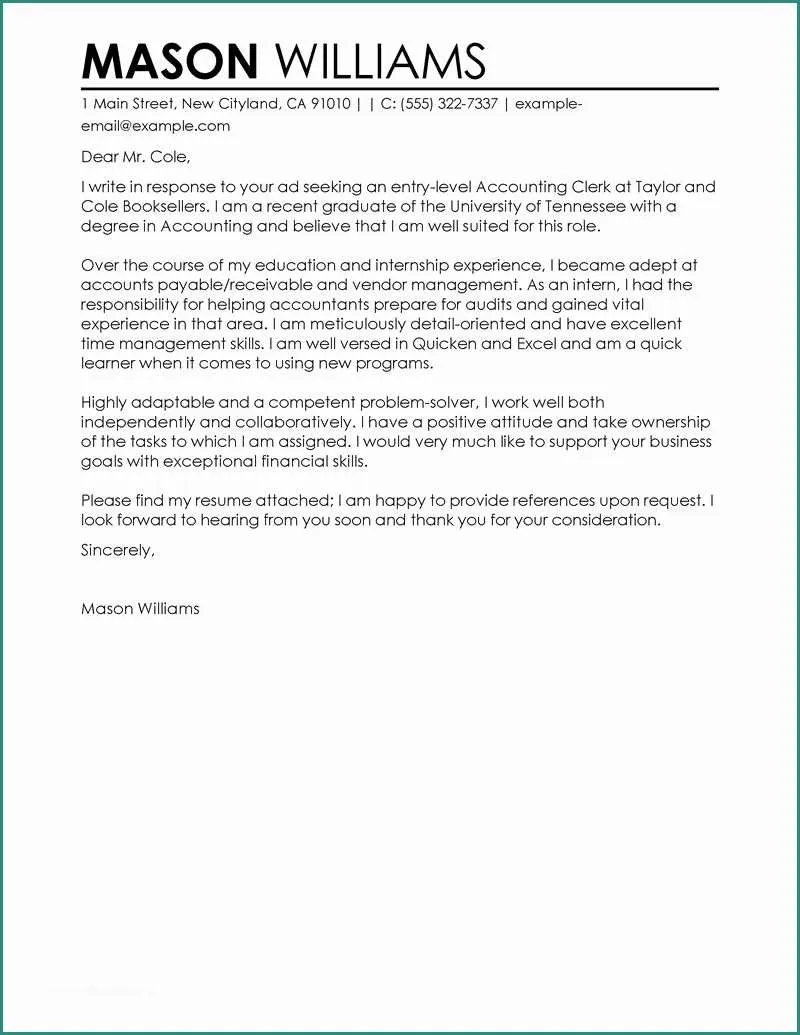
Why a Strong Accounting Internship Cover Letter Matters
In the competitive field of accounting, securing an internship is a crucial step toward building a successful career. A well-crafted cover letter is your first opportunity to make a lasting impression on potential employers. Unlike a resume, which simply lists your qualifications, a cover letter allows you to demonstrate your personality, enthusiasm, and genuine interest in the specific internship and the company. It’s your chance to tell a story – a story about why you are the perfect fit for their team. Ignoring the cover letter can be a critical error. It shows that you did not invest enough time and effort.
A compelling cover letter provides a personalized touch, highlighting the specific skills and experiences that align with the internship requirements. It is an excellent way to showcase your written communication skills, attention to detail, and ability to articulate your career goals. Additionally, a strong cover letter can make you stand out from other applicants, especially if your resume might not fully capture your potential. The goal is to move past resume screening software, and land an interview. So, take your time and write the best cover letter you can.
Highlighting Your Skills and Experience
Your cover letter should be more than just a summary of your resume; it should be a showcase of your most relevant skills and experiences. Focus on the skills and experiences that align with the internship’s requirements, as outlined in the job description. Use concrete examples to illustrate how you have utilized these skills in the past. This could include relevant coursework, projects, volunteer work, or previous internships. By providing specific examples, you move past generic statements. This helps the hiring manager visualize your capabilities.
When describing your experiences, use the STAR method – Situation, Task, Action, Result. This method helps you structure your responses clearly and effectively. Describe the situation you were in, the task you were assigned, the actions you took, and the positive results you achieved. This structured approach will not only demonstrate your problem-solving abilities but also quantify your achievements whenever possible. For example, instead of saying “managed financial records,” you could say, “Managed financial records for a local non-profit, resulting in a 15% reduction in accounting errors.”
Accounting Internship Cover Letter Skills to Showcase

When crafting your cover letter for an accounting internship, it’s crucial to highlight the specific skills that align with the role’s demands. This could include a range of technical and soft skills that are essential for success in the accounting field. For instance, you should mention your proficiency with accounting software like QuickBooks, SAP, or Microsoft Excel. Mention experience with data analysis, financial reporting, and tax preparation. Demonstrate your understanding of accounting principles like GAAP (Generally Accepted Accounting Principles) or IFRS (International Financial Reporting Standards).
Essential Skills for Accounting Interns
- Technical skills like experience with accounting software, financial reporting, and data analysis.
- Analytical skills, including the ability to analyze financial data, identify trends, and solve problems.
- Attention to detail, as accuracy is critical in accounting.
- Communication skills, encompassing both written and verbal communication for clear explanations.
- Organizational skills to manage multiple tasks and meet deadlines.
- Problem-solving skills to address financial issues effectively.
- Teamwork skills to collaborate with colleagues and contribute to team projects.
Showcasing Relevant Experience
Demonstrating relevant experience is critical. Whether it’s a previous internship, a part-time job, or academic projects, focus on how your experiences have prepared you for this internship. If you have completed accounting coursework, highlight any projects or assignments that involved financial analysis, budgeting, or auditing. If you’ve worked in a related field, such as customer service or data entry, explain how the skills you acquired are transferable to accounting. For example, if you have worked in a customer service role, you can highlight your communication skills and ability to handle complex inquiries, which are valuable in any accounting role.
When describing your experience, always quantify your achievements whenever possible. Instead of saying you “managed invoices,” mention the number of invoices you processed or any improvements you made to the process. If you were involved in any projects that resulted in cost savings or efficiency gains, be sure to highlight these. Use action verbs to make your descriptions more compelling and dynamic. Examples include “analyzed,” “managed,” “prepared,” “reconciled,” and “implemented.”
Formatting Your Accounting Internship Cover Letter

Formatting your cover letter correctly is as important as the content. A well-formatted cover letter is easy to read and visually appealing, demonstrating your attention to detail. Start with a professional header that includes your contact information (name, phone number, email address, and LinkedIn profile URL) and the date. Follow this with the employer’s contact information – the hiring manager’s name (if known), their title, the company name, and the company address. This attention to detail will show you have done your research.
Cover Letter Structure for Accounting Internships
A standard cover letter typically follows a structured format. The first part of the cover letter is the header. It should include your contact information and the date. Then, you must write the opening paragraph that explains why you’re writing and how you heard about the internship. In the body, you highlight your relevant skills and experiences, and explain why you’re a good fit. Finally, write the closing paragraph that expresses your interest and includes a call to action. The whole process should be done with excellent attention to detail.
The Header
The header provides essential contact information, ensuring the hiring manager can easily reach you. It typically includes your full name, address, phone number, email address, and a link to your professional online presence (LinkedIn profile). Use a clean, professional font, and maintain consistent formatting throughout the document. Make sure your contact information is up-to-date and accurate. Double-check everything. It demonstrates your professionalism and organizational skills. Place the header at the top of your cover letter.
The Opening Paragraph

The opening paragraph is your first opportunity to capture the reader’s attention. Start by clearly stating the position you are applying for (Accounting Internship) and where you found the job posting (e.g., company website, job board). Express your enthusiasm for the opportunity and briefly mention why you are interested in the company and the internship. If you have a connection to the company or a specific employee, mention it here. Be concise and focused, setting the tone for the rest of your letter.
Body Paragraphs Highlighting Achievements
The body paragraphs are where you showcase your skills and experience. Use one or two paragraphs to highlight your most relevant qualifications. Tailor your content to match the specific requirements listed in the job description. Provide concrete examples of how you’ve utilized your skills in the past, quantifying your achievements whenever possible. Demonstrate your understanding of accounting principles, your proficiency with accounting software, and your ability to work effectively in a team. Show how you can make an impact at the company.
Quantifying Achievements
Quantifying your achievements is a powerful way to demonstrate your impact. Instead of simply stating what you did, provide specific numbers and data to illustrate your success. This could involve metrics like the number of transactions you processed, the percentage reduction in errors you achieved, or the amount of money you helped save. When quantifying your achievements, make sure the numbers are accurate and relevant. This makes your cover letter more convincing and shows that you’re results-oriented.
The Closing

The closing paragraph should reiterate your interest in the internship and the company. Reiterate your enthusiasm for the opportunity and thank the hiring manager for their time and consideration. End with a strong call to action, such as “I am eager to learn more about this opportunity and discuss how my skills and experience can benefit your team. I look forward to hearing from you soon.” Include a professional closing, such as “Sincerely” or “Best regards,” followed by your name. A strong close can create a lasting impression.
Cover Letter Examples and Templates
Reviewing cover letter examples and templates can be a helpful way to get started. These resources can give you ideas for formatting, content, and tone. However, avoid simply copying and pasting from a template. Instead, use these examples as a guide to help you create a unique cover letter that reflects your personality and experiences. Pay attention to the language used, the structure of the paragraphs, and the way skills and experiences are highlighted. Adapt the template to align with your specific background and the requirements of the internship. Don’t be afraid to seek feedback on your draft.
Accounting Internship Cover Letter Example 1
Here’s an example cover letter structure. Start with your name and contact information, then add the date and the hiring manager’s contact information. Then, include a greeting like, ‘Dear [Hiring Manager Name].’ In the opening paragraph, state the position you are applying for and where you saw the job posting. Next, highlight your relevant skills and experiences, and explain why you are a good fit. In the closing paragraph, restate your interest and include a call to action, like ‘I look forward to hearing from you soon.’ Finally, sign off with ‘Sincerely, [Your Name].’
Accounting Internship Cover Letter Example 2

Another example, you can start with your qualifications. Mention your education, like a Bachelor’s in Accounting. Then you can add skills, such as data analysis, financial reporting, and proficiency in accounting software. Highlight any related experience, such as a previous internship or relevant projects. Be sure to show your understanding of accounting principles and a strong work ethic. Tailor your examples to the specific job description. Add a strong conclusion with your enthusiasm. This is a simple way to build your cover letter.
Common Mistakes to Avoid
Avoiding common mistakes can significantly increase your chances of success. One of the most frequent errors is failing to tailor your cover letter to each specific job. A generic cover letter will likely be rejected. Spend time researching the company and the internship requirements, and customize your letter accordingly. Another common mistake is typos and grammatical errors. Proofread your cover letter carefully, and consider having someone else review it. A poorly written cover letter can create a negative impression. Also, do not be negative or overly casual.
Avoid including irrelevant information or making excessive claims. Focus on the skills and experiences that are most relevant to the internship, and be honest about your abilities. Do not ramble; be clear and concise. Also, do not use the wrong format. Make sure your cover letter is properly formatted and easy to read. Finally, do not submit a cover letter without a resume.
Proofreading and Editing Your Cover Letter
Proofreading and editing are critical steps in the cover letter writing process. Proofread your cover letter multiple times, paying close attention to grammar, spelling, punctuation, and sentence structure. Use a spell checker, but don’t rely on it entirely. Read your cover letter aloud to catch any awkward phrasing or inconsistencies. Consider asking a friend, family member, or career counselor to review your cover letter. They can provide valuable feedback and help you identify any areas for improvement. Ensure your tone is professional and appropriate for the industry.
Tailoring Your Cover Letter

Tailoring your cover letter to each specific internship is essential. Begin by carefully reviewing the job description and identifying the key skills and experiences the employer is seeking. Then, highlight your qualifications that match those requirements. Show that you have researched the company and understand its mission and values. Explain why you are interested in the specific internship and how your skills and experience align with the company’s needs. Personalize your cover letter by mentioning something specific about the company or the role that appeals to you. Tailoring will increase your chances of getting an interview.
Your cover letter should demonstrate your knowledge of the company and your genuine interest in the internship. Research the company’s mission, values, and recent projects or initiatives. Mention specific aspects of the company or the role that appeal to you. Avoid using generic statements; instead, show that you have taken the time to understand the company and how you can contribute to its success. Tailoring your cover letter is a clear way to show your interest.
Conclusion
Writing a strong accounting internship cover letter is an essential part of the job application process. By following these guidelines, you can create a cover letter that showcases your skills, experience, and enthusiasm for the opportunity. Remember to highlight your relevant qualifications, quantify your achievements, and tailor your cover letter to each specific internship. With a well-crafted cover letter, you’ll increase your chances of securing an interview and taking a significant step towards your career goals. Take your time, write a great cover letter, and good luck!