What is an Accounting Resume Cover Letter?
An accounting resume cover letter is a crucial document that accompanies your resume when applying for accounting positions. It serves as a personalized introduction, allowing you to showcase your skills, experience, and qualifications in a way that a resume alone cannot. The cover letter provides an opportunity to highlight your interest in the specific role and demonstrate how your abilities align with the company’s needs. It’s your chance to make a strong first impression and persuade the hiring manager that you are the ideal candidate for the job. Think of it as a sales pitch, where you’re selling your professional self to the potential employer, aiming to secure an interview.
Why is an Accounting Resume Cover Letter Important?
The importance of an accounting resume cover letter cannot be overstated. Firstly, it provides context to your resume. Your resume is a summary of your professional history, but the cover letter allows you to explain gaps in employment, career changes, or any unique circumstances that might need clarification. Secondly, it demonstrates your communication skills. A well-written cover letter showcases your ability to articulate your thoughts clearly and concisely, an essential skill in accounting. Thirdly, it allows you to personalize your application. By tailoring your letter to the specific job and company, you demonstrate genuine interest and attention to detail. Finally, it increases your chances of getting an interview. A compelling cover letter can set you apart from other applicants and grab the hiring manager’s attention.
Key Components of a Perfect Accounting Resume Cover Letter

Crafting a perfect accounting resume cover letter involves several key components working together to create a compelling narrative. Each section plays a vital role in conveying your qualifications and enthusiasm for the position. From the header to the closing, every element should be carefully considered and meticulously written to ensure a polished and professional presentation. A well-structured cover letter leaves a positive and lasting impression on the hiring manager, significantly boosting your chances of securing an interview and ultimately, landing the job.
Header Section
The header section of your accounting resume cover letter is the very first element a hiring manager sees. It should be clean, professional, and easy to read. Include your full name, address, phone number, and email address. Make sure your email address is professional-sounding (e.g., firstname.lastname@email.com) and not something casual. If you have a LinkedIn profile, you can include the URL here as well. The header sets the tone for the entire letter, providing essential contact information and establishing your professional identity. Proper formatting and presentation in the header can signal your attention to detail, a crucial trait in accounting.
Your Contact Information
Your contact information, included in the header, should be accurate and up-to-date. Double-check your phone number and email address for any errors. If you are using a professional email address, ensure that you check it regularly and respond promptly to any messages. Your contact information is the primary means by which the employer will reach you, so it’s vital to present it correctly. Make sure the font and size are consistent with the rest of your cover letter to maintain a professional look. This attention to detail reflects your overall professionalism, which is highly valued in the accounting field.
Recipient’s Contact Information

Include the recipient’s contact information, which is usually the hiring manager’s name and title, the company name, and the company’s address. If you can’t find the hiring manager’s name, you can use a general greeting such as “Dear Hiring Manager.” Researching the hiring manager’s name is beneficial as it shows you’ve taken the initiative and personalization. The recipient’s information should be formatted correctly and aligned with the rest of the header section. Use the same font and size to maintain consistency. This attention to detail reflects your respect for the recipient and the company, reinforcing your professionalism.
Professional Greeting
The greeting sets the tone for your cover letter. Always use a professional greeting, such as “Dear Mr./Ms./Mx. [Last Name]” if you know the hiring manager’s name. If you are unsure of the name, “Dear Hiring Manager” is a suitable alternative. Avoid casual greetings like “Hi” or “Hello.” The greeting should be followed by a colon. Your greeting should be formal, yet engaging, demonstrating respect and courtesy. A well-chosen greeting shows that you understand professional etiquette and are prepared to conduct yourself professionally.
Opening Paragraph
The opening paragraph is your chance to grab the hiring manager’s attention. State the position you are applying for and where you found the job posting. Briefly mention why you are interested in the position and the company. Show enthusiasm and excitement, but keep it concise and focused. This paragraph should act as a hook, drawing the reader in and encouraging them to continue reading. It’s your first opportunity to demonstrate your strong writing skills and your understanding of the role and the company. Making a strong first impression can make the difference between your resume being noticed or discarded.
Highlighting Your Skills and Experience

In the body of your cover letter, highlight your relevant skills and experience. Focus on the qualifications that align with the job description. Provide specific examples of your accomplishments, using the STAR method (Situation, Task, Action, Result) to illustrate your abilities. Mention any software you’re proficient in, such as QuickBooks, SAP, or Excel. Quantify your achievements whenever possible, showing the impact of your work. Your goal is to demonstrate your value to the company by showing how you meet their requirements and can contribute to their success. Tailoring your skills to match the job description demonstrates your understanding of the role and your ability to deliver results. (Image: highlighting-skills)
Quantifiable Achievements
Use quantifiable achievements to demonstrate the impact of your skills and experience. Instead of saying “Managed accounts payable,” say “Reduced accounts payable processing time by 15% by implementing a new system.” Quantifiable achievements provide concrete evidence of your abilities and show the value you brought to previous roles. This allows the hiring manager to quickly understand the potential benefits of hiring you. Metrics such as percentages, dollar amounts, or specific numbers add credibility to your claims and set you apart from other candidates. The use of numbers shows you are results-oriented and focused on efficiency. (Image: quantifiable-achievements)
Tailoring Your Letter
Customize your cover letter for each job application. This shows you’ve taken the time to research the company and understand their needs. Mention specific aspects of the company or role that interest you. Refer to the job description and use keywords from the posting. Tailoring your letter to the specific needs of the role demonstrates your genuine interest and attention to detail. Generic cover letters can be easily identified and may be discarded. Personalizing your letter to each application makes it more relevant and increases the chances of capturing the hiring manager’s attention.
Closing Paragraph

In your closing paragraph, reiterate your interest in the position and summarize your key qualifications. Express your enthusiasm and confidence in your ability to succeed. Thank the hiring manager for their time and consideration. This section should leave a lasting positive impression and reinforce your desire for the role. A strong closing paragraph solidifies your candidacy and encourages the hiring manager to move forward with your application. It should be concise, impactful, and leave the reader with a positive impression.
Call to Action
Include a clear call to action in your closing paragraph. This might be a statement like, “I am eager to discuss my qualifications further in an interview.” Or, “I look forward to the opportunity to speak with you soon.” A call to action prompts the hiring manager to take the next step, increasing the chances of receiving an interview. Make sure your call to action is direct, confident, and aligned with the job application process. This demonstrates your initiative and eagerness to move forward with the application process.
Formal Closing
Use a formal closing, such as “Sincerely,” “Regards,” or “Best regards.” Avoid informal closings like “Thanks” or “Cheers.” The closing should be consistent with the professional tone of the letter. Your signature should be placed below the closing. This formality reinforces your professionalism and shows respect for the hiring manager and the company. A well-chosen and correctly formatted closing is a simple way to ensure your letter is polished and shows attention to detail.
Formatting and Design Tips for Your Cover Letter

The formatting and design of your accounting resume cover letter are crucial for making a positive first impression. A well-formatted letter is easier to read and demonstrates your attention to detail, which is essential in accounting. Proper formatting enhances readability and allows the hiring manager to quickly grasp the information. The overall design should be clean, professional, and free of distractions. Consistency in formatting throughout the document reflects your professionalism and enhances the overall presentation of your qualifications. (Image: formatting-tips)
Font Choice and Size
Choose a professional font, such as Times New Roman, Arial, Calibri, or Helvetica. Keep the font size between 10 and 12 points for readability. Avoid using overly decorative or unusual fonts. A consistent and readable font makes your cover letter easy on the eyes. Choosing a standard font demonstrates your professionalism and understanding of business etiquette. Your objective is to present your information clearly and effectively, and the font is a crucial element of this. Proper font choice creates a professional, polished look for your cover letter.
Page Margins and Spacing
Use standard page margins of 1 inch on all sides. Use single spacing within paragraphs and double spacing between paragraphs. Ensure your cover letter is well-organized and easy to read. Proper spacing and margins improve the overall appearance of your letter, enhancing readability. This makes it easier for the hiring manager to quickly grasp your qualifications. A well-formatted letter indicates your attention to detail, which is crucial in accounting. Consistent margins and spacing allow the document to breathe.
Proofreading and Editing

Always proofread and edit your cover letter carefully. Check for any typos, grammatical errors, and spelling mistakes. Ask a friend or colleague to review your letter as well. Errors can undermine your credibility and professionalism. Proofreading is an essential step in creating a polished and effective cover letter. Pay close attention to detail; it’s a critical skill in accounting. Proofreading ensures your cover letter is error-free and presents you in the best possible light. A well-proofread cover letter demonstrates your attention to detail and your commitment to quality.
Common Mistakes to Avoid
Avoiding common mistakes is critical to creating a compelling cover letter. These errors can undermine your application and reduce your chances of getting an interview. Being aware of these pitfalls and making a conscious effort to avoid them can significantly increase the effectiveness of your cover letter. This awareness can help you prevent your application from being rejected due to easily avoidable issues. Focusing on these mistakes can help your cover letter stand out.
Generic Content
Avoid using generic content that could apply to any job. Tailor your letter to the specific position and company. Show genuine interest and highlight the skills and experiences that align with the job requirements. Generic content does not show you care about the specific role. When it’s clear you’ve customized your cover letter, it immediately captures the reader’s attention. Focus on the specific needs of the role and how your skills are uniquely suited to meet those needs. (Image: avoid-mistakes)
Typos and Grammatical Errors
Typos and grammatical errors can damage your credibility. Always proofread your cover letter carefully. Use a spell checker and grammar checker, but don’t rely on them entirely. Read your letter aloud to catch any awkward phrasing. Errors signal a lack of attention to detail, a crucial trait in accounting. Errors can make your cover letter look unprofessional and reduce your chances of securing an interview. Always be meticulous and pay attention to detail. Proper grammar and spelling demonstrate your professionalism.
Lying or Exaggerating
Never lie or exaggerate your qualifications. Employers can easily verify your claims during the background check or interview process. Dishonesty can lead to immediate disqualification and damage your professional reputation. Honesty is a fundamental principle in accounting, so it’s crucial to maintain this integrity in your job application. Presenting accurate information about your skills and experiences builds trust with the hiring manager. When applying, present yourself authentically. Present your true skills to build trust and maintain ethical standards.
Tips for Different Accounting Roles
Tailoring your cover letter to the specific accounting role you’re applying for can significantly improve your chances of success. Different roles require different skill sets and experiences, and your cover letter should reflect those specific requirements. This adaptability shows your understanding of the role and the needs of the company. By customizing your cover letter, you demonstrate your commitment to meeting the specific requirements of the position.
Entry-Level Accounting Positions
For entry-level positions, emphasize your education, relevant coursework, internships, and any volunteer experience. Highlight your knowledge of accounting principles, software proficiency, and strong analytical skills. Focus on your eagerness to learn and your willingness to take on new challenges. If you have little professional experience, emphasize your academic achievements, extracurricular activities, and any relevant volunteer work that demonstrates your skills. Show enthusiasm and a strong work ethic.
Experienced Accountant Roles
For experienced accountant roles, focus on your accomplishments and the results you’ve achieved. Quantify your achievements whenever possible and highlight your leadership skills. Demonstrate your expertise in specific areas of accounting, such as financial reporting, budgeting, or auditing. Showcase your ability to manage complex projects, lead teams, and drive improvements. Tailor your letter to the specific requirements of the role, emphasizing the skills and experiences most relevant to the position. Highlight your accomplishments with specific examples.
Using Keywords in Your Cover Letter
Use keywords from the job description in your cover letter. Applicant Tracking Systems (ATS) often scan cover letters for specific keywords. Incorporating these keywords increases the chances of your application being noticed. Review the job description carefully and identify the most important skills and qualifications. Use those keywords naturally throughout your cover letter. This includes the skills section and throughout the content, to show you’re a strong fit for the role. Ensure that your use of keywords is relevant and does not sound forced or unnatural.
Example Cover Letter for an Accounting Position
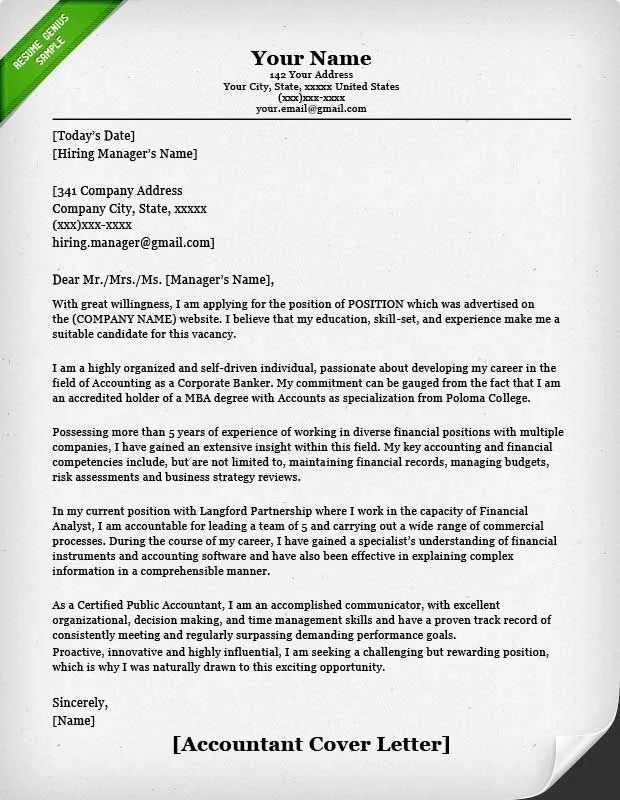
Here is an example of a cover letter for an accounting position. Remember to tailor it to your specific skills and the job description. This example provides a framework, but it is essential to customize it to fit your experience and the specific requirements of the job. Adapt the content to highlight your qualifications, and the specific needs of the role, for maximum impact. Modify this example to match your experiences to fit the specific role, highlighting your key skills. This adaptability will increase your chances of a positive outcome.