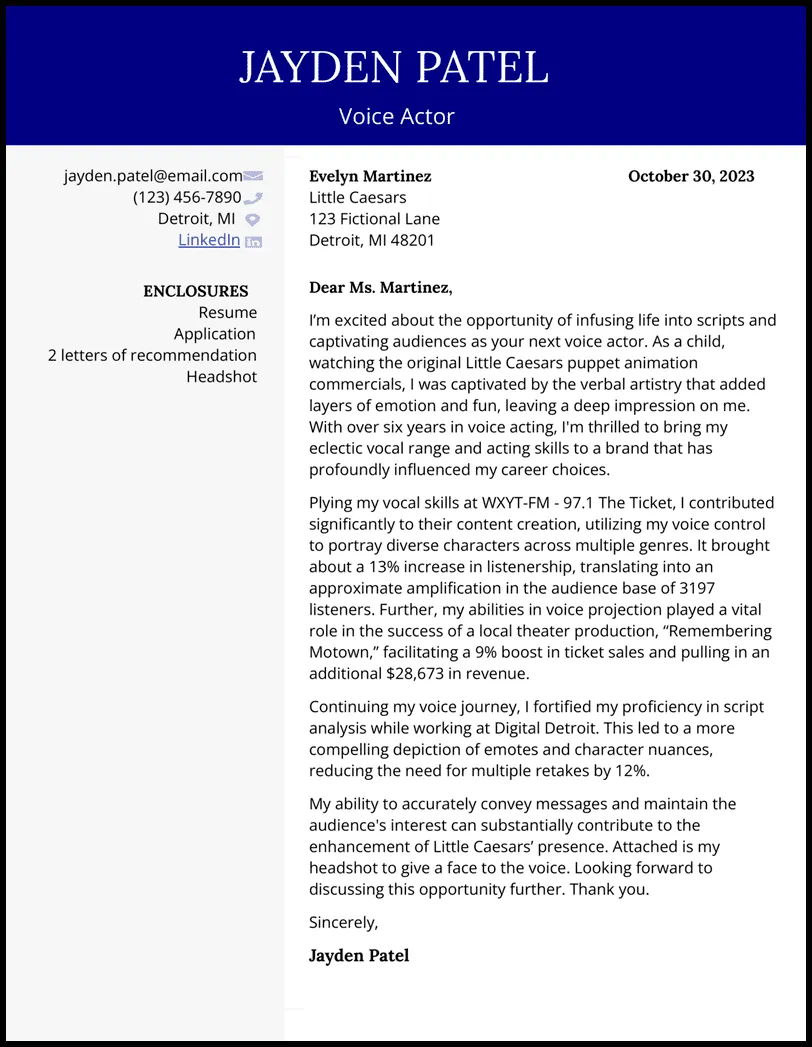
Understanding the Importance of an Acting Cover Letter
In the competitive world of acting, a well-crafted cover letter is your first impression. It’s your chance to go beyond your headshot and resume, showcasing your personality, passion, and suitability for a role. Many actors underestimate the power of a strong cover letter, but it can be the difference between getting an audition and being overlooked. Think of it as your personal introduction, setting the stage for your talent and professionalism. A compelling letter demonstrates your genuine interest in the project and your understanding of the specific requirements.
Why Cover Letters are Crucial
A cover letter provides context to your resume and allows you to highlight specific skills and experiences relevant to the role. It gives you the space to articulate your enthusiasm, explain gaps in your experience, or address any unique aspects of your background. Unlike a resume, a cover letter lets you show your voice and personality. It demonstrates your communication skills and your understanding of the industry. It also gives you a chance to explain any unique circumstances or choices you’ve made in your career path, such as taking time off for training or switching representation.
Highlighting Your Uniqueness

Use your cover letter to showcase what makes you, you. Briefly touch on what sets you apart. This could be a unique skill, a particular type of role you excel in, or a specific experience that aligns with the project. Let your personality shine through while maintaining professionalism. This is where you can express your passion for acting and explain why you are specifically drawn to the role or project. Remember to keep your tone authentic and sincere, allowing your personality to shine through the text.
Step 1 Research the Role and Company
Before you even start writing, thoroughly research the role, the production company, and the project itself. Understand the character’s background, motivations, and relationships. Read the script, watch previous works by the company, and familiarize yourself with their style. This research informs your cover letter, allowing you to tailor your approach and demonstrate your genuine interest. Knowledge of the project also helps to show your specific interest.
Find the Right Opportunities
Focus on roles and projects that match your skills and experience. Don’t waste time applying for roles that are not a good fit. Identify opportunities that align with your strengths. This targeted approach increases your chances of success. Actively seek out casting calls, auditions, and projects that are relevant to your acting abilities and career goals. Subscribe to casting websites, and network with other actors and industry professionals to stay informed about upcoming opportunities.
Tailor Your Letter

Avoid using a generic cover letter. Customize each letter to the specific role and company. Address the casting director or hiring manager by name if possible. Reference specific details from the project, such as the character’s traits or the production’s themes. Show that you’ve taken the time to understand the requirements of the role. This personalization demonstrates your professionalism and attention to detail, making you a more appealing candidate.
Step 2 Craft a Compelling Opening
Your opening paragraph is crucial; it’s the first thing a casting director reads. Start with a strong hook that grabs their attention immediately. This could be a brief anecdote, a relevant achievement, or a compelling statement about your passion for the role. The goal is to make the reader want to continue reading. A powerful opening sets a positive tone and makes the reader interested in the rest of your application. It is your first chance to show your unique personality, so be confident and direct in your initial statement.
Grab Their Attention Immediately
Start with a strong statement that grabs their attention. For example, you can express your specific admiration for the company, the director, or the project, or make a bold statement about what you can bring to the role. Avoid generic phrases. Instead, immediately demonstrate your specific qualifications and experience. Use a confident and engaging tone, showing that you are excited and ready to contribute to the project. This direct approach demonstrates confidence and a genuine interest.
Showcase Your Passion

Convey your enthusiasm for acting and your genuine interest in the role. Briefly explain why you are drawn to the character or the project. Share your specific understanding of the character and how you can bring the role to life. Expressing your passion is vital because it shows that you’re invested in the project. It signals to the casting team that you have the commitment and drive to deliver a memorable performance. Passionate actors are more likely to be remembered and chosen for roles.
Step 3 Present Your Skills and Experience
Highlight your relevant skills and experience. Focus on the aspects that align with the role’s requirements. If the role requires a specific skill, mention your training or experience in that area. Refer to your resume and provide additional details that aren’t included there. Don’t just list your experience. Provide specific examples of your work to showcase your capabilities. Emphasize your strengths to make the case for why you’re the right person for the part. This helps the casting team envision you in the role.
Emphasize Relevant Training
List your acting training, including workshops, classes, and degrees. Mention any specific techniques you’ve studied, such as Meisner, Stanislavski, or method acting, that are pertinent to the role or project. Include the names of the acting coaches or institutions you’ve worked with. Highlight training that complements the role’s requirements, such as dialect coaching or stage combat. Demonstrating your commitment to ongoing professional development shows you take your craft seriously. Include anything that helps you stand out from other candidates.
Quantify Your Achievements

Whenever possible, quantify your achievements to make them more impactful. Use numbers, percentages, and specific results to demonstrate the value you bring to the role. Instead of saying you played the lead in a play, state how many performances you did or the number of people who saw the show. If you’ve received awards or positive reviews, mention them. Provide concrete evidence of your achievements to showcase the impact of your work. This makes a stronger impression than vague statements.
Step 4 Demonstrate Your Personality and Fit
Your cover letter is an opportunity to convey your personality. Let your enthusiasm for the role shine through. Show how your personality aligns with the character’s and the project’s overall tone. Maintain a professional tone while ensuring that your authentic voice is heard. Casting directors want to find not only skilled actors but also individuals who can bring something unique to the project. Your personality and ability to fit in can be as important as your experience. Be yourself and let your passion for acting show.
Show Enthusiasm
Express your enthusiasm for the role and the project. Show that you have a genuine interest in being part of the production. Mention specific aspects that excite you and demonstrate that you understand the project’s vision. Enthusiasm is infectious and can make you stand out. Casting directors are looking for actors who are passionate and committed to the project. Your excitement can make them believe in you and your potential. Make sure your enthusiasm is genuine and authentic.
Maintain a Professional Tone

While showcasing your personality, maintain a professional tone throughout your cover letter. Use proper grammar and spelling, and format your letter neatly. Proofread your work carefully. Use professional language, and address the casting director or hiring manager appropriately. Avoid slang or overly casual language. Your professionalism communicates respect and attention to detail. It creates a positive impression and demonstrates that you’re serious about the role.
Step 5 End with a Strong Call to Action
Conclude your cover letter with a strong call to action. Clearly state what you want the reader to do next. This could be a request for an audition, a meeting, or a phone call. Make it easy for them to take the next step. Thank the casting director or hiring manager for their time and consideration. A strong call to action increases your chances of being contacted. This shows you’re proactive and serious about the role. Conclude with a formal closing such as “Sincerely” or “Best regards”.
Request an Audition
Clearly state that you would like to audition for the role. Express your interest in the audition process and your availability. Indicate how the casting director can reach you to schedule an audition. Make it easy for them to contact you by providing your contact information. Be proactive in expressing your interest in the role. Suggest possible dates or times to demonstrate your flexibility. A clear request for an audition increases your chances of being called in.
Express Gratitude

Express your gratitude to the casting director or hiring manager for their time and consideration. Thank them for reviewing your application. This shows respect and appreciation for their efforts. A simple “Thank you” can go a long way in making a positive impression. Reiterate your enthusiasm for the role, reminding them of your key qualifications. Concluding your letter on a positive note leaves a lasting impact. Expressing your gratitude leaves a positive impression, making it more likely that you will be remembered.