Understand the Apprenticeship and the Employer
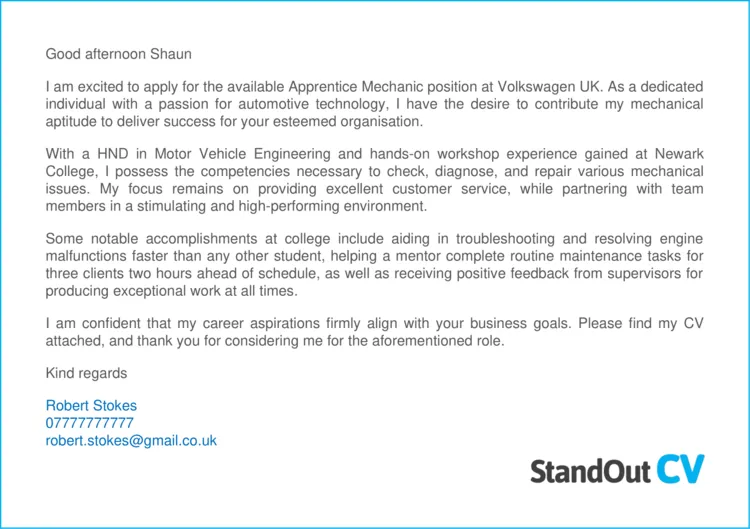
Before even thinking about putting pen to paper, or fingers to keyboard, you must first understand the apprenticeship you are applying for and the employer offering it. This initial step is crucial for tailoring your cover letter and making a strong impression. A generic cover letter simply won’t cut it. Employers can spot a generic application a mile away, and it goes straight to the rejection pile. Your goal is to demonstrate that you’ve done your homework, you understand the opportunity, and you’re genuinely interested in what the company does. This also means you need to know if your skillsets are a good match to the apprenticeship.
Research the Company and the Role
Start by thoroughly researching the company. Visit their website, read their “About Us” section, and explore their social media profiles. Look for their mission statement, values, and recent news or projects. What products or services do they offer? What is their company culture like? Next, carefully review the job description for the apprenticeship role. Identify the key responsibilities, required skills, and any specific qualifications they are seeking. Take notes on how your skills and experiences align with their requirements. The more you know, the better you can position yourself as the ideal candidate, and writing your cover letter becomes a lot easier.
Find Key Information

Pay close attention to the job description for any specific instructions on how to apply or what information the employer wants to see in your cover letter. Sometimes, they might request you to address particular points or provide specific examples. If you can find the name of the hiring manager or the person to whom you should address your application, even better. Personalizing your cover letter adds a professional touch that shows you’ve gone the extra mile. Always double-check the application guidelines and make sure you meet all the requirements before you even start writing, this way you won’t waste your time.
Structure Your Cover Letter
A well-structured cover letter is easy to read and highlights the most important information. The format should be clear, professional, and concise. Your cover letter should be no more than one page long. If you are applying for a role in a creative industry, you can show off your creative side here, but remember your cover letter is all about highlighting your skills and experience and why you would be the best for the job. There is a general structure that works and is easy to follow so you should implement this to make sure you have all of the relevant information you need.
Header and Contact Information
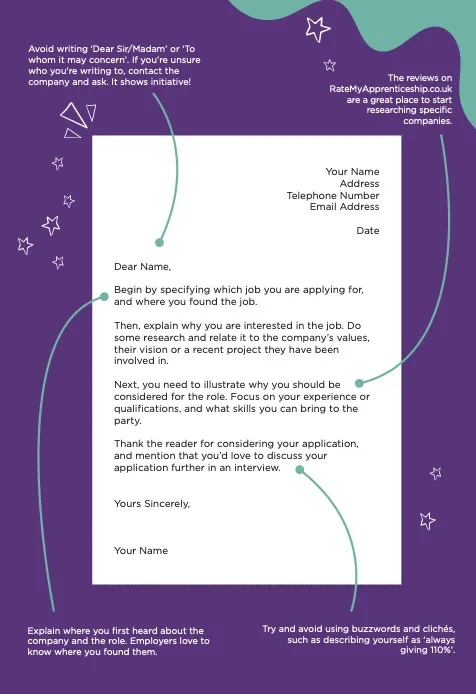
At the top of your cover letter, include your contact information: your full name, address, phone number, and email address. If you’re sending a physical letter, include the date. Directly beneath your contact information, include the employer’s contact information (if available): their name, job title, company name, and address. This will show the employer how serious you are about the role and that you are dedicated to the apprenticeship. Make sure all your information is correct and up-to-date, and your email address is professional (e.g., firstname.lastname@email.com).
Greeting

Start your cover letter with a professional greeting. If you know the hiring manager’s name, use it. “Dear Mr./Ms./Mx. [Last Name]” is a great way to start. If you don’t know their name, use a general greeting like “Dear Hiring Manager” or “Dear [Company Name] Team.” Avoid generic greetings such as “To Whom It May Concern,” as they lack personalization and can make your letter seem less engaging. It’s best to do your research to find the appropriate contact person if you can, as this shows your attention to detail.
First Paragraph Captivate
The first paragraph is your chance to grab the reader’s attention. Immediately state the position you’re applying for and where you saw the job posting. Then, write a brief statement about why you are a good fit for the apprenticeship. Highlight your enthusiasm and a key skill or experience that makes you stand out. Mention something specific about the company that interests you – this shows you have done your research and are genuinely interested. Make sure your first paragraph is concise, engaging, and clearly states your objective. You only have a few seconds to impress the reader, so make sure your opening is strong.
Body Paragraphs Highlight Skills and Experience
The body of your cover letter is where you showcase your skills, experience, and qualifications. Tailor your content to match the requirements of the apprenticeship. Use clear, concise language and provide specific examples to support your claims. This section should be about two to three paragraphs long, with each paragraph focusing on a few key points. Here, you need to sell yourself to the employer. Let them know you are the best candidate for this apprenticeship and why.
Showcase Relevant Skills

Identify the key skills the employer is seeking. These might include technical skills, soft skills (communication, teamwork, problem-solving), or specific knowledge. Provide examples from your previous experiences (work, volunteering, school projects) where you have demonstrated these skills. Use action verbs to describe what you did and how you contributed. If you don’t have much work experience, focus on transferable skills gained from other areas of your life, and ensure that you relate the skills to the requirements of the apprenticeship. Explain why the specific skills are important for the apprenticeship and what the employer will gain from having you.
Quantify Your Achievements
Whenever possible, quantify your achievements. Use numbers and data to demonstrate the impact of your actions. For example, instead of saying “Improved customer service,” say “Improved customer satisfaction scores by 15% through active listening and problem-solving.” This adds credibility and makes your claims more impactful. If you are in the early stages of your career, the key is to show the employer what you are capable of. Use your own words and give examples in your cover letter. Providing specific examples will help sell your experience and skillsets.
Address the Employer’s Needs
Connect your skills and experience to the employer’s needs and how you can contribute to their success. Show that you understand the challenges they might be facing and how you can help them achieve their goals. This demonstrates that you are thinking strategically and are not just interested in the job but in the company’s overall success. This is an important part of the process so make sure you put the time into showing the employer that you are the right candidate for the apprenticeship.
Express Enthusiasm and Interest
Throughout your cover letter, express your enthusiasm for the apprenticeship and the company. Demonstrate your genuine interest in the opportunity by mentioning specific aspects of the role or the company that excite you. Highlight why you are particularly drawn to this apprenticeship and why you believe it’s a good fit for your career goals. This could be due to the experience the role offers or the type of business that the company does. Showing your enthusiasm will help you stand out from other candidates and leave a lasting impression on the hiring manager.
Closing Paragraph
In your closing paragraph, reiterate your interest in the apprenticeship and thank the employer for their time and consideration. State your availability for an interview and how they can contact you. This gives the employer a clear call to action. You can also briefly mention your excitement about the opportunity to learn and grow within the company. End with a professional closing such as “Sincerely,” “Best regards,” or “Yours faithfully” (if you started the letter with the name of the person). Make sure you sign off correctly and keep the letter concise.
Proofread and Edit
Before you send your cover letter, proofread it carefully for any errors in grammar, spelling, and punctuation. Errors can damage your credibility and make you appear unprofessional. Read your letter aloud to catch any awkward phrasing or unclear sentences. Ask a friend, family member, or career counselor to review your cover letter as well. A second pair of eyes can often spot mistakes you may have missed. Make sure the overall tone is professional and reflects your personality in a positive way. Don’t submit a cover letter until you are confident that it is free of errors.
Use of Keywords

Use keywords from the job description in your cover letter, but do so naturally. Don’t stuff your letter with keywords; instead, incorporate them into your sentences to demonstrate that you understand the role and its requirements. This helps the hiring manager quickly see how well your skills and experience align with the job requirements. Ensure you’re using the correct terminology and that your letter is relevant to the specific role. Tailoring your cover letter to the job description is essential. If you don’t know how to identify the keywords, then ask a friend, relative, or career counselor.
Formatting and Presentation
Pay attention to the formatting and presentation of your cover letter. Use a professional font such as Arial, Times New Roman, or Calibri, and keep the font size between 10 and 12 points. Use clear headings and bullet points to make the information easy to read. Make sure your letter is well-spaced and does not look cluttered. Use a standard business letter format with left-aligned text. Save your cover letter as a PDF file to ensure that the formatting remains consistent, regardless of the software or device used to open it. The cover letter is your first impression so it is important to put the time in.
Common Mistakes to Avoid
Avoid common mistakes such as typos, grammatical errors, and using a generic cover letter. Do not exceed the one-page limit, and do not include irrelevant information. Avoid being overly formal or using slang. Never lie or exaggerate your skills or experience. Failing to research the company or the role is also a common mistake. Always tailor your letter to the specific apprenticeship and employer. Remember that the cover letter is a tool to market yourself. Your main goal is to convince the employer that you are the best candidate for the role. By avoiding common mistakes, you can increase your chances of getting noticed and landing an interview.