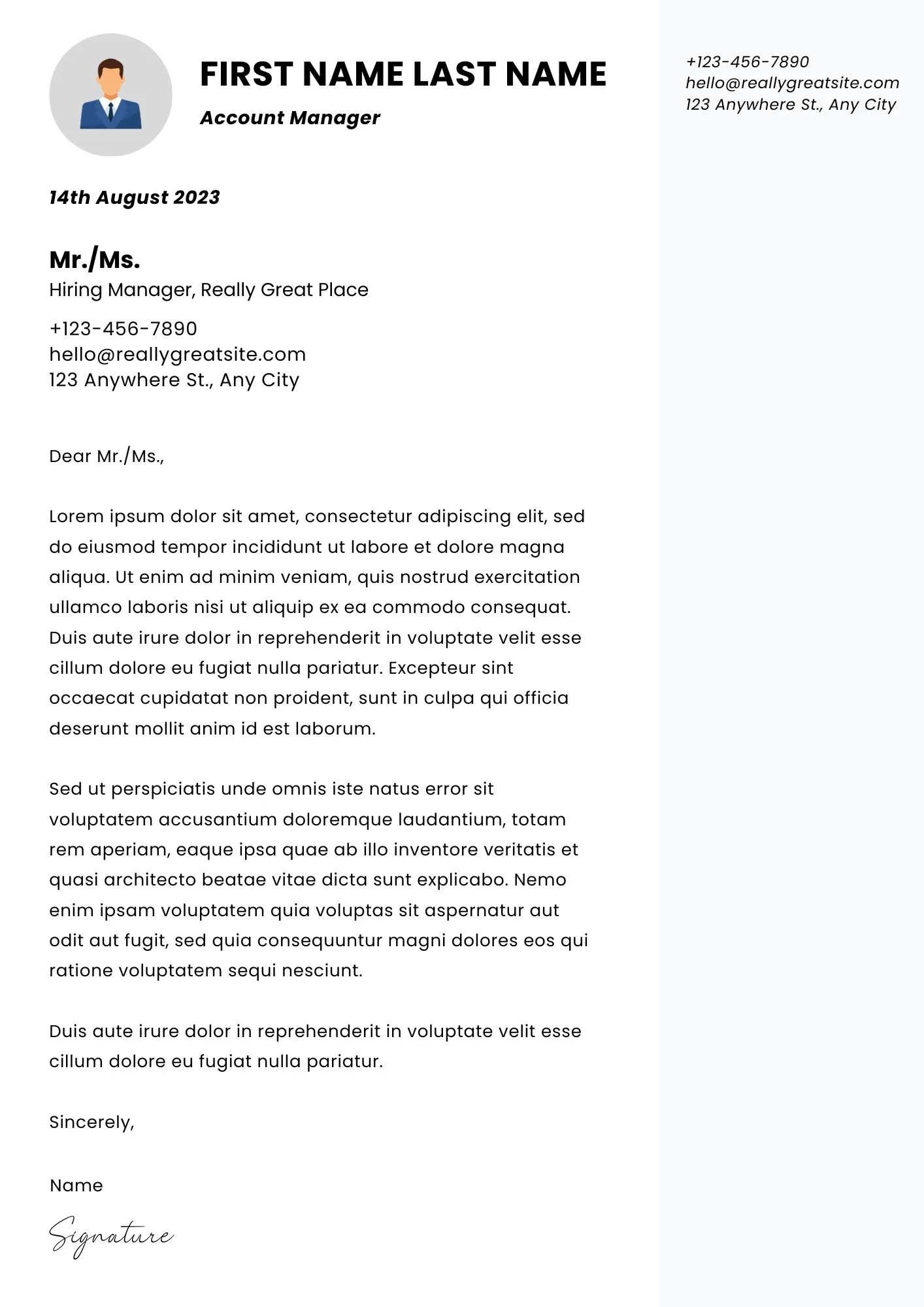
Understanding the Power of a Cover Letter
In the competitive landscape of job applications, a cover letter is often the first impression you make on a potential employer. It’s your opportunity to showcase your personality, articulate your value, and demonstrate your genuine interest in the position. While a resume provides a snapshot of your qualifications, a cover letter allows you to connect the dots, weaving a narrative that highlights your suitability for the role and the company. A well-crafted cover letter can significantly boost your chances of landing an interview and ultimately, your dream job. A cover letter is not just a formality; it is a crucial tool for career advancement.
Why a Cover Letter Matters
A cover letter serves several critical purposes. It provides context to your resume, explaining why you are a strong fit for a specific job. It allows you to address any gaps in your employment history or explain career changes. The cover letter demonstrates your communication skills, attention to detail, and your understanding of the company’s needs. A well-written cover letter can set you apart from other candidates, making you memorable and increasing your likelihood of getting noticed by the hiring manager. When a hiring manager has dozens or hundreds of applications, you must stand out.
Cover Letter vs Resume Key Differences

A resume is a factual summary of your skills, experience, and education. It’s a quick overview of your professional background. A cover letter, on the other hand, is a personalized document that complements your resume. It tells a story, highlighting your relevant experiences and explaining why you’re the ideal candidate for the specific job. The resume provides what you’ve done, while the cover letter explains how and why your skills and experiences align with the job requirements and the company’s objectives. Think of the resume as the ‘what’ and the cover letter as the ‘why’.
10 Powerful Cover Letter Secrets
Research the Company Before Writing
Thoroughly research the company and the specific role. Understand the company’s mission, values, and recent activities. Review the job description carefully and identify the key requirements and keywords. Tailor your cover letter to demonstrate how your skills and experiences align with the company’s needs and the specific role’s responsibilities. This demonstrates your genuine interest and shows you’ve invested the time to understand the opportunity.
Personalize Each Cover Letter

Avoid using a generic cover letter template. Customize each cover letter to the specific job and company. Mention the hiring manager’s name (if possible) and tailor your language to reflect the company’s brand and culture. Personalization shows that you’ve taken the time to understand the role and the company’s unique needs. Use the job description to help understand the role’s specific requirements and align your experience to match.
Highlight Your Key Skills and Achievements
Don’t just list your skills; highlight the achievements that showcase your abilities. Provide specific examples of how you’ve used your skills to achieve positive outcomes in previous roles. Quantify your accomplishments whenever possible to demonstrate the impact you’ve made. Instead of saying ‘Managed projects,’ say ‘Managed and successfully delivered 5 projects on time and under budget, resulting in a 15% increase in efficiency.’ This makes your application more impactful.
Quantify Your Accomplishments
Use numbers and data to quantify your achievements. Instead of saying ‘Improved sales,’ say ‘Increased sales by 20% in one year.’ This provides concrete evidence of your value and demonstrates your ability to deliver results. Use metrics to showcase your impact. For example, ‘Reduced customer support response time by 30%,’ or ‘Increased website traffic by 40% through SEO optimization’. Quantification makes your claims more credible and memorable.
Use Action Verbs

Start your sentences with strong action verbs to create a dynamic and engaging narrative. Use verbs like ‘managed,’ ’led,’ ‘developed,’ ‘achieved,’ ‘implemented,’ and ‘created.’ This helps to make your accomplishments more impactful and demonstrates your proactive approach. Avoid passive language and focus on showcasing your skills through your actions. This makes your cover letter more active and professional.
Show, Don’t Just Tell
Instead of simply stating your skills, provide examples of how you’ve used them to achieve results. Describe specific situations and the actions you took to overcome challenges or achieve goals. This allows the hiring manager to see your skills in action and understand your capabilities. Provide specific examples to showcase your skills and make your cover letter more engaging and memorable. Focus on demonstrating your skills rather than simply listing them.
Keep It Concise
Keep your cover letter brief and to the point. Aim for a single page, focusing on the most relevant information. Avoid unnecessary jargon or long paragraphs. Use clear and concise language to convey your message effectively. Hiring managers often have limited time, so make sure your cover letter is easy to read and quickly highlights your key qualifications.
Proofread Meticulously

Proofread your cover letter carefully for any typos, grammatical errors, or formatting issues. Errors can create a negative impression and undermine your credibility. Have someone else review your cover letter to catch any mistakes you might have missed. A polished, error-free cover letter demonstrates your attention to detail and professionalism, and shows the reader you care about the application.
Include a Strong Call to Action
End your cover letter with a clear call to action. Express your interest in an interview and provide your contact information. Make it easy for the hiring manager to take the next step. Include a direct statement, such as ‘I am eager to discuss how my skills and experience can benefit your team. I am available for an interview at your earliest convenience’ Make sure your application has a call to action to help the hiring manager.
Format for Readability
Use a professional and easy-to-read format. Choose a clear font like Arial or Times New Roman. Use consistent spacing, and break up long blocks of text with paragraphs and bullet points. This makes your cover letter visually appealing and easy to scan. A well-formatted cover letter is more likely to be read and understood, and will set you apart from other candidates.
The Anatomy of a Great Cover Letter

Header Essentials Contact Information
Include your name, address, phone number, and email address at the top of your cover letter. Make sure your contact information is accurate and up-to-date. This makes it easy for the hiring manager to contact you for an interview. Include your LinkedIn profile if you have one.
Greeting the Hiring Manager
Address the hiring manager by name if possible. Research the hiring manager’s name online, through LinkedIn or the company website. If you can’t find the hiring manager’s name, use a general greeting, such as ‘Dear Hiring Manager’ or ‘Dear [Company Name] Team.’ Avoid using generic greetings such as ‘To Whom It May Concern’.
Body Paragraphs Highlighting Value

The body of your cover letter is where you showcase your skills and experience. Use the first paragraph to state the position you’re applying for and where you found it. In the following paragraphs, highlight your relevant achievements and experiences, and explain why you’re the best fit for the job. Tailor your message to the job description and the company’s needs. Don’t just restate your resume – provide additional context and insights.
Closing the Cover Letter
In your closing paragraph, reiterate your interest in the position and thank the hiring manager for their time and consideration. Include a call to action, such as stating your availability for an interview. Use a professional closing, such as ‘Sincerely,’ ‘Best regards,’ or ‘Thank you.’ Avoid overly casual or informal closings.
Cover Letter Mistakes to Avoid
Generic Cover Letters
Avoid using a generic cover letter that is not tailored to the specific job or company. Generic cover letters show a lack of interest and effort, and they often fail to highlight your relevant qualifications. Always customize your cover letter for each application. Always align your letter with the specific role to demonstrate your interest and suitability.
Typos and Grammatical Errors
Typos and grammatical errors can create a negative impression and make you appear unprofessional. Always proofread your cover letter carefully before submitting it. Have someone else review your cover letter to catch any mistakes you might have missed. A polished, error-free cover letter demonstrates your attention to detail and professionalism. Make sure to use a grammar checker.
Focusing on Yourself Too Much
While it’s important to highlight your skills and achievements, avoid making your cover letter all about you. Focus on how your skills and experience can benefit the company and contribute to its success. Show the hiring manager how you can solve their problems and help them achieve their goals. This demonstrates your understanding of the company’s needs and your ability to contribute to its success.
Ignoring the Job Description
Carefully review the job description and tailor your cover letter to match the requirements. Highlight the skills and experiences that are most relevant to the role. Address any specific requirements or keywords mentioned in the job description. Make sure you address all the key points that the hiring manager will be looking for in your cover letter. The job description is the key to crafting a good cover letter.
Where to Find Cover Letter Templates and Examples
Numerous online resources provide cover letter templates and examples. Websites like LinkedIn, Indeed, and Resume.com offer a variety of templates that you can adapt to your needs. Use these resources to get ideas and inspiration, but always customize the template to reflect your unique skills and experiences. Adapt the examples you find to your own experiences, using the advice to shape the structure of your letter, and always proofread.