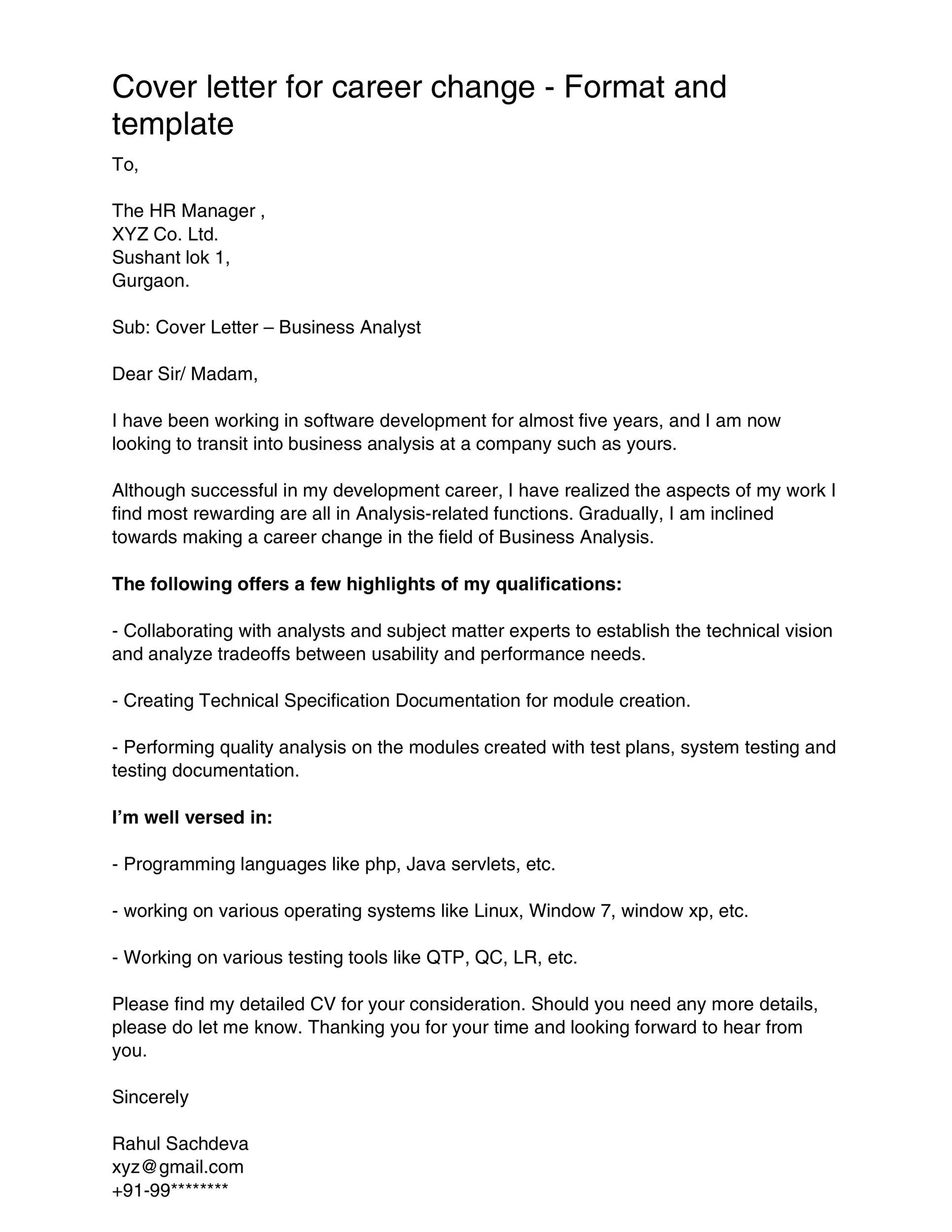
Understanding the Importance of a Career Change Cover Letter
Embarking on a new career path is an exciting, yet challenging endeavor. Your resume details your past experiences, but a cover letter serves as your personal introduction, allowing you to explain the ‘why’ behind your career change. It provides the space to articulate your motivations, highlight transferable skills, and demonstrate your genuine interest in the new role. It’s your opportunity to connect with the hiring manager on a more personal level, setting the stage for a successful application. A well-crafted cover letter is not just a formality; it’s a crucial tool that can significantly increase your chances of landing an interview. It bridges the gap between your past experience and your future aspirations, making your application more compelling.
Why a Cover Letter is Crucial for Career Transition
For career changers, the cover letter is more critical than for those applying within the same field. It’s where you address the elephant in the room—the career change itself. It provides context for your decision, explaining why you’re making the transition and what excites you about the new opportunity. Without a cover letter, your application might be viewed with skepticism. A cover letter allows you to directly address any potential concerns, such as a lack of direct experience, and illustrate how your skills align with the new role. This proactive approach demonstrates your understanding of the position and your commitment to the new path. By clearly articulating your value proposition, you convince the employer that you are a worthy candidate despite the career shift.
Highlighting Transferable Skills

One of the most effective strategies in a career change cover letter is highlighting your transferable skills. These are the skills you’ve gained in previous roles that are relevant to the new position. Identify skills such as communication, problem-solving, leadership, project management, or technical abilities, and provide concrete examples of how you’ve utilized them in your past experiences. Instead of simply listing skills, describe a specific situation or project where you successfully applied those skills. This approach showcases your abilities in a practical context and demonstrates your potential to excel in the new role. Tailor these skills to match the job description, emphasizing those most valued by the employer. This personalized approach shows you understand the job’s requirements and can contribute immediately.
Key Components of a Powerful Career Change Cover Letter
Contact Information and Salutation
Start with your contact information at the top, including your name, phone number, email address, and LinkedIn profile URL. Next, address the hiring manager by name if possible; research the company website or LinkedIn to find out who will be reviewing your application. Avoid generic salutations like ‘To Whom It May Concern’ if possible. Use ‘Dear Mr./Ms. [Last Name]’ or ‘Dear [Hiring Manager Name]’ to personalize the letter and show you’ve taken the time to research the company. This personal touch can set you apart from other applicants and make a positive first impression.
Opening Paragraph Hook

Your opening paragraph should immediately grab the reader’s attention. State the position you’re applying for and briefly explain why you are interested in it. Show your enthusiasm for the role and the company. Consider using a compelling statement that highlights your skills and experience or a brief anecdote that illustrates your passion for the field. The opening paragraph should clearly communicate your purpose and immediately convince the reader to continue reading. Make it clear why you’re an excellent fit for the role and what you hope to achieve within the company.
Showcasing Your Passion and Motivation
A career change cover letter provides the perfect opportunity to showcase your passion and motivation for the new role. Explain why you’re making this career transition and what excites you about the new field or company. Demonstrate your knowledge of the industry and express how your skills can contribute to the company’s goals. Let your enthusiasm shine through. Be authentic and genuine in expressing your motivations. Explain what drives you and why you are genuinely interested in the role. Hiring managers appreciate candidates who are excited and passionate about the job.
Highlighting Relevant Experience
Even if your experience isn’t directly related to the new role, highlight the relevant experience and skills you’ve gained in previous positions. Focus on transferable skills and provide specific examples of how you’ve used them. Quantify your achievements whenever possible, using numbers and data to illustrate your impact. Tailor your examples to match the requirements of the job description. Show how your past experiences have prepared you for success in the new role. Provide concrete evidence to prove your capabilities. Your ability to connect your past experiences with the job’s demands is critical.
Addressing the Career Change

Directly address the career change in your cover letter. Briefly explain why you’re transitioning to a new field. Focus on positive aspects, such as your passion for the new role and your desire to learn and grow. Explain how your skills and experiences are transferable. Be honest and transparent about your career change but frame it in a way that highlights your potential and dedication. Show that you’ve carefully considered your decision and are committed to your new career path. This transparency helps alleviate any concerns the hiring manager might have about your transition.
Emphasizing Skills and Accomplishments
In addition to highlighting your transferable skills, emphasize your accomplishments. Use the STAR method (Situation, Task, Action, Result) to describe your achievements. Provide specific examples of how you’ve made a difference in your past roles. Quantify your accomplishments whenever possible to make them more impactful. Show the hiring manager how your skills and experiences align with the job requirements. Demonstrate that you have a proven track record of success and can bring value to the company. Emphasizing your accomplishments can help the hiring manager visualize you succeeding in the new role.
Call to Action and Closing
In your closing paragraph, include a call to action and express your interest in the next steps. Thank the hiring manager for their time and consideration. Reiterate your enthusiasm for the role and the company. Clearly state your availability for an interview and how the hiring manager can reach you. Ensure your contact information is included in the closing. Leave a lasting positive impression, summarizing your key qualifications and reiterating your commitment. End with a professional closing, such as ‘Sincerely’ or ‘Best regards’.
Tailoring Your Cover Letter to Each Application

Researching the Company and Role
Before writing your cover letter, research the company and the specific role you’re applying for. Understand the company’s mission, values, and culture. Identify the key skills and qualifications the employer is seeking. Tailor your cover letter to align with the company’s needs and expectations. Customize your language, examples, and accomplishments to match the job description and company culture. This demonstrates that you have taken the time to understand the role and are genuinely interested in the company. Thorough research is critical for crafting a cover letter that truly resonates with the hiring manager.
Customizing Your Letter for the Job
Each cover letter should be customized to the specific job you’re applying for. Avoid using a generic template. Carefully review the job description and tailor your cover letter to match the requirements and preferences of the hiring manager. Highlight the skills and experiences that are most relevant to the role. Use the same keywords and phrases that are used in the job description. Demonstrate that you understand the role and are a perfect fit for it. A customized cover letter shows that you’ve taken the time to understand the role and company, increasing your chances of getting noticed.
Proofreading and Editing Your Cover Letter

Common Mistakes to Avoid
Several common mistakes can undermine a career change cover letter. Avoid generic language and clichés. Ensure your letter isn’t too long; keep it concise and focused. Don’t simply restate your resume; provide additional information and context. Refrain from negative language or criticizing previous employers. Don’t focus too much on your lack of experience; instead, highlight your transferable skills and accomplishments. Avoid using jargon or technical terms that might not be understood by the hiring manager. Make sure your letter is free of errors, both grammatical and spelling.
Formatting and Presentation Tips
Pay attention to formatting and presentation. Use a professional font such as Arial or Times New Roman. Ensure your letter is easy to read, with clear spacing and margins. Avoid using excessive bolding or underlining. Keep the letter to one page. Use bullet points to highlight key skills or accomplishments. Make sure the letter is visually appealing. Ensure your cover letter looks professional and polished. Poor formatting can distract the hiring manager. Proofread the letter carefully to avoid any errors.