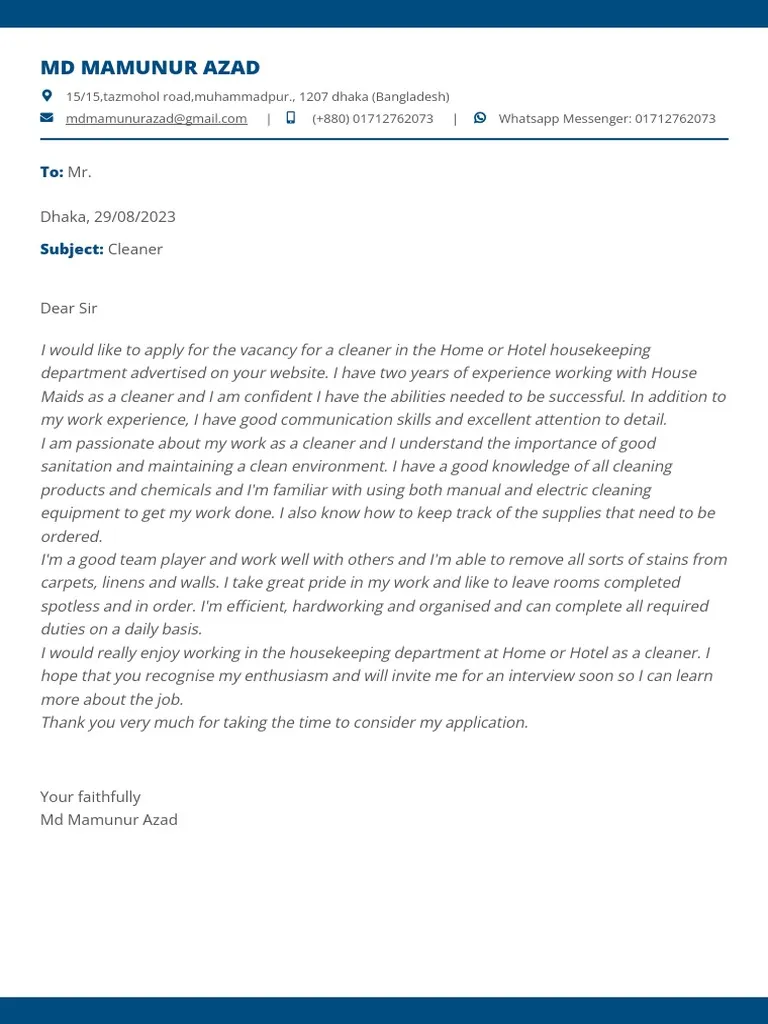
Crafting a Compelling Cleaning Company Cover Letter
In the competitive world of job hunting, a well-crafted cover letter is your secret weapon. For aspiring cleaners, a cover letter for a cleaning company isn’t just a formality; it’s your first impression. It’s your chance to showcase your skills, experience, and enthusiasm, setting you apart from other applicants. This guide will provide you with all the essential information needed to create a cover letter that gets you noticed and helps you land your dream cleaning job quickly. We’ll cover everything from highlighting your relevant skills and experience to tailoring your letter for maximum impact and avoiding common mistakes. Let’s dive in and get you hired fast!
Understanding the Importance of a Cover Letter
Why is a cover letter so crucial, especially when applying to a cleaning company? It’s simple: it’s your chance to speak directly to the hiring manager, introduce yourself, and make a strong case for why you’re the perfect fit. A resume lists your qualifications, but a cover letter adds personality and context. It allows you to elaborate on your skills, explain your motivations, and express your genuine interest in the specific role and the company. A well-written cover letter demonstrates professionalism, attention to detail, and a proactive approach – all qualities that are highly valued in the cleaning industry.
Highlighting Relevant Skills and Experience

Your cover letter for a cleaning company should shine a spotlight on your skills and experience that align with the job requirements. Start by reviewing the job description carefully and identifying the key skills and qualifications the company is seeking. Then, tailor your letter to emphasize your relevant abilities. This approach shows the hiring manager that you’ve taken the time to understand their needs and that you possess the qualities they are looking for. Avoid a generic letter and personalize it to resonate with the specific role.
Key Skills to Showcase
Several skills are highly valued in cleaning companies. These include attention to detail, time management, physical stamina, reliability, and the ability to work independently or as part of a team. Other valuable skills include knowledge of cleaning products and equipment, understanding of safety protocols, and excellent communication skills. If you have experience in specialized cleaning, such as commercial cleaning, or specific certifications, be sure to mention them. Demonstrate these skills not just by listing them, but by providing specific examples of how you’ve utilized them in the past.
Previous Cleaning Experience
Detail your previous cleaning experience. Even if it’s not extensive, highlight any relevant experience, such as cleaning your own home, volunteer work, or past jobs. Describe your responsibilities, the environments you’ve cleaned (e.g., residential, office, industrial), and the types of tasks you performed. If possible, quantify your achievements (e.g., ‘cleaned an average of 5 houses per week’ or ‘maintained a 5-star rating from clients’). Always mention the use of cleaning products, equipment, and any specific cleaning methods you’re familiar with. This shows your practical knowledge and prepares you to hit the ground running.
Tailoring Your Cover Letter to the Specific Job

One of the biggest mistakes job seekers make is sending a generic cover letter to multiple employers. Tailoring your cover letter for a cleaning company involves customising it for the particular job you’re applying for. This demonstrates that you’re genuinely interested in the position and that you’ve taken the time to understand the company’s needs and values. Researching the company and customizing your letter will significantly increase your chances of getting hired. This shows that you are serious about the opportunity and not just sending out generic applications.
Researching the Cleaning Company
Before you begin writing, do your homework. Visit the company’s website, explore their social media presence, and read online reviews. Understand their mission, values, and the types of services they offer. This information will help you tailor your cover letter to demonstrate your understanding of the company and how your skills align with their needs. Knowing their core values enables you to incorporate them when highlighting your skills and experiences. Mention the company’s name and specific services you’re impressed with in your cover letter to show you’ve done your homework.
Customizing Your Letter
Once you’ve researched the company, customize your cover letter accordingly. Use specific examples from your past experiences that align with their services or values. Highlight skills that match the job description. For example, if the job description mentions ‘attention to detail,’ provide an example of how you ensured a high standard of cleanliness in a previous role. Demonstrate how your experience, skills, and career goals align with the specific company and position you are applying for. Refer to specific projects you admired on their website or mention what made you want to work for them.
Structuring Your Cover Letter for Maximum Impact

The structure of your cover letter is critical. It should be easy to read, well-organized, and engaging. A clear structure will allow the hiring manager to quickly grasp your key qualifications and understand why you’re the perfect candidate. Use a professional format and include the necessary elements to leave a lasting impression. Remember, it’s the first document the potential employer sees, so it should make a positive first impression that motivates them to read your resume.
Header and Contact Information
Start your cover letter with a professional header that includes your contact information: your full name, phone number, email address, and LinkedIn profile (optional). Also, include the date and the hiring manager’s name (if you have it) and the company’s address. This ensures the hiring manager knows who you are and how to contact you. Double-check for accuracy to avoid missing any chances to be contacted by the hiring manager.
Opening Paragraph that Grabs Attention
Your opening paragraph is your chance to grab the hiring manager’s attention. Start with a strong hook, such as a brief statement about your experience or a summary of your key skills. State the specific position you are applying for and where you found the job listing. Express your enthusiasm for the opportunity and your interest in the company. This opening should immediately communicate your excitement and interest in the role and company, so keep it concise, enthusiastic, and tailored to the specific job. Consider using a relevant statistic to make it more impactful.
Body Paragraphs: Demonstrating Value

The body paragraphs are the meat of your cover letter, where you demonstrate your value to the company. Use these paragraphs to elaborate on your skills, experience, and achievements. Provide specific examples that support your claims. For example, if you mention your attention to detail, describe a situation where your meticulousness led to a positive outcome. Quantify your achievements whenever possible. For instance, ‘Successfully cleaned over 20 homes per week.’ Ensure each paragraph focuses on a particular skill or aspect of your experience and how it relates to the job requirements.
Closing with Confidence
In your closing paragraph, reiterate your interest in the position and the company. Thank the hiring manager for their time and consideration. Clearly state your availability for an interview and provide your contact information once again. End with a confident call to action, such as, ‘I am eager to discuss my qualifications further.’ Your closing should leave a positive and lasting impression and make it easy for the hiring manager to take the next step. A strong close shows professionalism and a proactive approach to the application process.
Proofreading and Formatting Your Cover Letter
Attention to detail is key in the cleaning industry, and it should also be reflected in your cover letter. Proofreading and formatting are essential steps to ensure your letter looks professional and error-free. A polished cover letter shows the hiring manager that you are serious about the opportunity and possess the attention to detail that the job requires. Poorly written or formatted letters can make the hiring manager question your qualifications.
Avoiding Common Mistakes

Avoid common mistakes that can undermine your application. These include spelling and grammatical errors, generic language, and a lack of specific examples. Don’t make the cover letter too long, and always tailor it to the specific job requirements. Don’t exaggerate your experience, and avoid using jargon that the hiring manager may not understand. Always be truthful and genuine in your descriptions and show that you are enthusiastic.
Using a Professional Tone
Maintain a professional tone throughout your cover letter. Use formal language, avoid slang, and keep your writing clear and concise. Be respectful and polite in your communication. Ensure the tone matches the company’s culture. If the company is known for being formal, adjust the language accordingly, and the same with a more relaxed atmosphere. Be confident but not arrogant, enthusiastic without being overbearing. A professional tone reflects your attention to detail.
Formatting for Readability
Proper formatting makes your cover letter easy to read and visually appealing. Use a clear font (such as Arial or Times New Roman), and a font size between 10 and 12 points. Use single spacing within paragraphs and double spacing between paragraphs. Break up large blocks of text with bullet points or short paragraphs. Make sure there is a margin of one inch on all sides. A well-formatted cover letter shows that you respect the reader’s time and attention and that you are organized and professional.