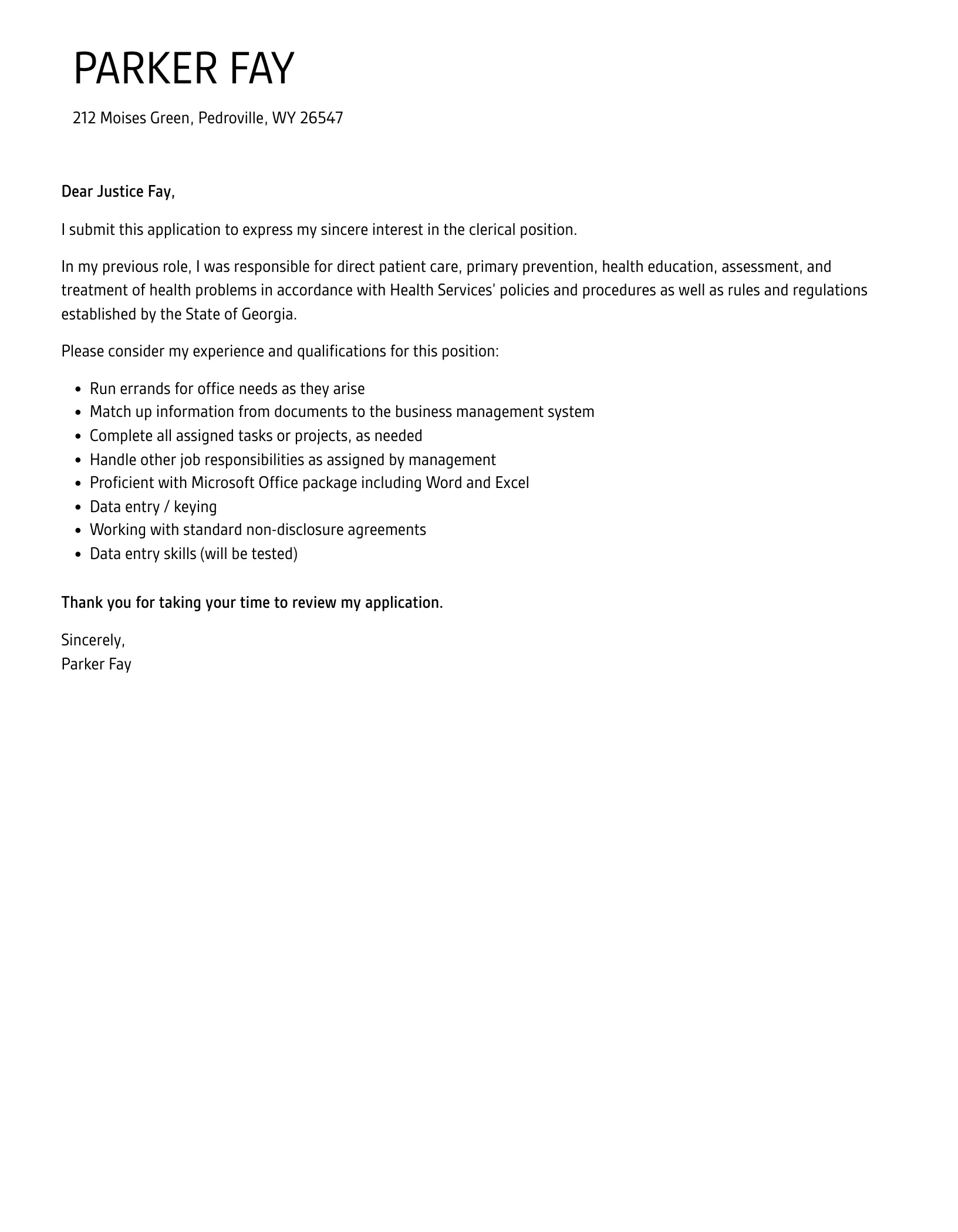
Understanding the Purpose of a Clerical Cover Letter
A clerical cover letter serves as your introduction to a potential employer, offering a glimpse into your qualifications and suitability for a clerical position. Unlike a resume, which is a factual account of your work history, a cover letter allows you to express your personality, enthusiasm, and how your skills align with the specific job requirements. It’s a crucial tool in securing an interview because it provides context to your resume and demonstrates your interest in the role. Without a well-crafted cover letter, your application might be overlooked, even if you possess the necessary qualifications. Think of it as a personal pitch, selling yourself and your abilities to the hiring manager and ultimately setting you apart from other candidates. A strong cover letter can highlight key skills, experience, and the value you bring to the organization, increasing your chances of getting noticed and invited for an interview.
Highlighting Relevant Skills
Clerical positions require a diverse set of skills to ensure the smooth operation of an office environment. Your cover letter is the perfect place to showcase the specific skills that align with the job description. Before writing, carefully review the job posting and identify the key skills the employer is seeking. Then, in your cover letter, provide concrete examples of how you’ve utilized these skills in previous roles. This shows the hiring manager that you not only possess the skills, but also have a proven track record of successfully applying them. Think about quantifying your achievements whenever possible, providing tangible evidence of your abilities. For instance, if the job description emphasizes data entry, describe your accuracy rate and speed. Highlighting relevant skills effectively can significantly increase your chances of landing an interview.
Administrative and Organizational Skills

Administrative and organizational skills are the backbone of any successful clerical role. Employers seek candidates who can manage multiple tasks, prioritize effectively, and maintain accurate records. In your cover letter, demonstrate your proficiency in these areas by mentioning your experience with scheduling, managing correspondence, organizing files, and maintaining databases. Provide specific examples of how you’ve streamlined administrative processes or improved organizational efficiency in past roles. For instance, you might describe how you implemented a new filing system that improved document retrieval time or how you successfully managed a complex project involving numerous deadlines and stakeholders. Showcasing your ability to keep things organized and efficient is critical for clerical positions.
Communication and Interpersonal Skills
Clerical roles often involve extensive communication, both internally and externally. Strong communication and interpersonal skills are essential for interacting with colleagues, clients, and vendors. Highlight your ability to communicate clearly and professionally in both written and verbal formats. Mention any experience you have with answering phones, managing email correspondence, or assisting customers. Include examples of your ability to handle difficult situations with tact and diplomacy, as well as your ability to work effectively as part of a team. Being able to build rapport and maintain positive relationships with others is a valuable asset in a clerical position, and your cover letter should reflect your proficiency in this area. Demonstrating a positive attitude and strong communication skills will make you a more appealing candidate.
Technical Skills
Technical skills are increasingly important in clerical roles. Employers expect candidates to be proficient in various software applications and office equipment. In your cover letter, be sure to list the software and technologies you are familiar with, such as Microsoft Office Suite (Word, Excel, PowerPoint, Outlook), database management systems, and any industry-specific software. If you have experience with data entry, bookkeeping software, or other relevant technologies, be sure to include those details. Specifying your proficiency level (e.g., proficient, intermediate, beginner) can also be helpful. Additionally, mention your experience with office equipment such as printers, scanners, and fax machines. Showing your tech skills shows the hiring manager that you can hit the ground running.
Structuring Your Clerical Cover Letter

A well-structured cover letter is essential for making a positive impression. The format should be clean, professional, and easy to read. Start by creating a clear header with your contact information, followed by the date and the employer’s contact information. The body of the letter should be divided into concise paragraphs, each addressing a specific point. By following a standard cover letter format, you present yourself in a professional manner and show that you understand the conventions of business communication. Maintaining a clear, organized structure helps the hiring manager quickly grasp your qualifications and understand your enthusiasm for the position.
Header and Contact Information
Your header should include your name, address, phone number, and email address. This information ensures that the hiring manager can easily contact you. Make sure the contact information is accurate and up-to-date. Use a professional-sounding email address; avoid nicknames or unprofessional language. Following your contact information, include the date and the hiring manager’s name and title, if known. If the name is not available, use the title (e.g., Hiring Manager). This personalized touch demonstrates that you’ve done your research and are serious about the application. The header is the first thing the hiring manager sees, so it’s important to present a polished and professional image.
Greeting the Hiring Manager
The greeting sets the tone for your cover letter. If you know the hiring manager’s name, use it (e.g., “Dear Mr./Ms. [Last Name]”). This personalization shows you’ve taken the time to learn about the company and the specific hiring process. If you don’t know the hiring manager’s name, use a professional greeting like “Dear Hiring Manager” or “Dear [Company Name] Hiring Team.” Avoid generic greetings like “To Whom It May Concern.” The greeting is your first chance to make a good impression, so ensure it is professional and respectful. A personalized greeting can immediately capture the reader’s attention and set a positive tone for the rest of your letter.
Opening Paragraph

Your opening paragraph should immediately grab the reader’s attention and state your purpose for writing. Clearly state the position you are applying for and where you saw the job posting. Briefly mention what excites you about the role or the company. This demonstrates your genuine interest and enthusiasm. You might also include a brief statement about your most relevant qualifications or a key skill that aligns with the job requirements. The opening paragraph is your hook; it sets the stage for the rest of the letter and encourages the hiring manager to keep reading. It needs to be concise, engaging, and relevant to the specific job you’re applying for.
Body Paragraphs
The body paragraphs are where you provide the details about your qualifications and experience. Each paragraph should focus on a specific point and provide supporting evidence. Use the job description as your guide, highlighting the skills and experiences the employer is seeking. Use specific examples from your previous roles to demonstrate your abilities and achievements. Quantify your accomplishments whenever possible, using numbers and data to show the impact you made. For instance, describe how you improved efficiency, reduced costs, or enhanced customer satisfaction. Keep the language clear and concise. The body paragraphs must be a compelling argument for why you are the best candidate for the job.
Closing Paragraph
Your closing paragraph should summarize your interest in the position, reiterate your enthusiasm, and express your gratitude for the hiring manager’s time and consideration. Clearly state your availability for an interview and include a call to action, such as “I am eager to discuss how my skills and experience can benefit [Company Name].” Reiterate your contact information, making it easy for the hiring manager to reach you. Maintain a positive and professional tone throughout. The closing paragraph leaves a lasting impression, so make it strong and memorable, and thank the reader for their time.
Formatting and Proofreading

Formatting and proofreading are crucial steps in creating a professional cover letter. Use a standard font, such as Times New Roman or Arial, and a font size between 10 and 12 points. Ensure your letter is well-organized, with clear headings and paragraphs. Maintain consistent spacing and margins. Before submitting your cover letter, carefully proofread it for any grammatical errors, spelling mistakes, and typos. Use a spell checker, but also read the letter aloud to catch any errors the spell checker might miss. Consider having a friend or family member review your letter for clarity and accuracy. A polished cover letter shows attention to detail and a commitment to quality. Proofreading is your last opportunity to make sure your application makes a positive first impression.
Content to Include in Your Cover Letter
The content of your cover letter should be tailored to each specific job application. While a general cover letter template can be a helpful starting point, you must customize the content to match the requirements of each position. Refer to the job description to identify the key skills, experiences, and qualifications the employer is seeking. Emphasize how your skills and experiences align with these requirements. Be specific and provide concrete examples to support your claims. Your cover letter should showcase your personality, enthusiasm, and your understanding of the company and the role. A well-crafted cover letter is an important step in setting yourself apart from other candidates and demonstrating you’re the ideal choice for the job.
Expressing Your Interest and Enthusiasm
Your cover letter should clearly communicate your interest and enthusiasm for the clerical position and the company. Show genuine excitement about the opportunity to contribute to the organization. Mention what aspects of the role or the company specifically appeal to you. Research the company and demonstrate your understanding of its mission, values, and goals. Explain why you want to work for this particular organization. Demonstrating your enthusiasm will make a positive impression on the hiring manager. Your excitement for the position can set you apart from less enthusiastic candidates.
Showcasing Your Skills and Experience

The main purpose of your cover letter is to showcase your relevant skills and experiences. Carefully review the job description and identify the key requirements. Highlight your experience in areas such as administrative support, data entry, record keeping, and customer service. Provide concrete examples of how you’ve successfully utilized these skills in previous roles. Quantify your achievements whenever possible, using numbers and data to demonstrate the impact you’ve made. For instance, if you improved efficiency in a previous role, provide the percentage of improvement. Use strong action verbs to describe your accomplishments. Demonstrate your ability to meet the needs of the clerical position.
Mentioning Specific Job Requirements
When writing your cover letter, be sure to address the specific requirements listed in the job description. Tailor your letter to match the exact qualifications and skills the employer is seeking. Refer to the job posting and identify the key requirements. Highlight your relevant experience and skills, providing examples of how you’ve met similar requirements in the past. If the job requires proficiency in specific software, mention your experience with those programs. If the job description mentions specific tasks or responsibilities, discuss your ability to perform those tasks. Tailoring your cover letter to the specific job requirements increases your chances of getting noticed and shows the employer that you have carefully considered the position. By addressing these specific needs, you demonstrate that you’re a good fit for the role.
Demonstrating Your Value to the Company
In your cover letter, demonstrate your value to the company. Explain how your skills and experience can benefit the organization and contribute to its success. Think about what you can bring to the role and the company. Highlight your ability to solve problems, improve efficiency, and enhance customer service. Provide specific examples of your accomplishments and how they align with the company’s goals. Demonstrate your understanding of the company’s mission, values, and objectives. Showing the hiring manager how you can contribute to the organization’s success is key to winning the job. Making a strong impression involves showing how you can make a positive impact.
Proofreading Your Cover Letter

Proofreading is a critical step in ensuring your cover letter is free of errors and presents you in the best possible light. Before submitting your cover letter, carefully proofread it for any typos, grammatical errors, and spelling mistakes. Read your letter aloud to catch any awkward phrasing or inconsistencies. Consider having a friend or family member review your letter for clarity, accuracy, and overall effectiveness. A polished cover letter shows attention to detail and a commitment to quality. Errors can undermine your credibility and give the impression that you are not careful or thorough. Proofreading your cover letter is essential to make sure your application is the best it can be. Make sure that you have checked everything before submitting the application.