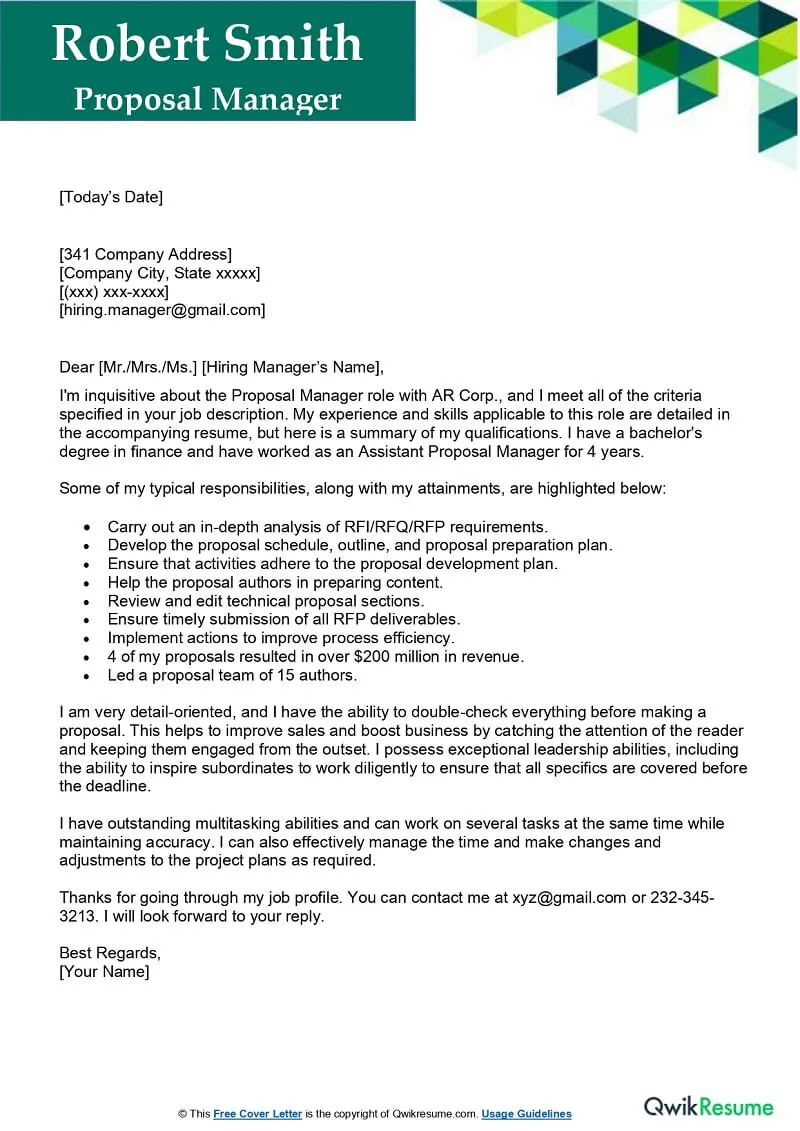
Cover Letter Proposal: 5 Tips to Captivate Employers
In the competitive world of job applications, a well-crafted cover letter is your key to unlocking the door to your dream job. It’s not just a formality; it’s your first impression, a chance to make a compelling case for why you’re the perfect fit. Many job seekers underestimate the importance of a cover letter proposal, seeing it as a mere formality, but a strategically written cover letter can significantly increase your chances of getting noticed. It provides an opportunity to go beyond your resume, showcasing your personality, skills, and enthusiasm for the role. This article outlines five essential tips to help you create a cover letter that grabs the attention of employers and sets you apart from the competition.
Tip 1: Tailor Your Letter
Generic cover letters are easily spotted and often disregarded. Tailoring your cover letter proposal to each specific job is crucial. This shows employers that you’ve taken the time to understand their needs and are genuinely interested in the opportunity. Generic letters suggest a lack of effort and a scattershot approach to job searching. Customization demonstrates that you’ve done your research and are invested in the specific role and company. This personalization is what separates you from other applicants.
Understanding the Job Description

Carefully review the job description. Identify the key skills, qualifications, and experiences the employer is seeking. What are the must-have requirements? What are the desired qualities? Make a list and use it to align your cover letter with these requirements. This demonstrates that you’ve understood the role and are prepared to address the specific needs of the employer.
Highlighting Relevant Skills
Once you know what the employer wants, highlight the skills and experiences from your background that align with the job description. Don’t just list skills; provide examples of how you’ve used those skills to achieve results. Quantify your accomplishments whenever possible (e.g., “Increased sales by 15%,” “Managed a team of 10 people”). This provides concrete evidence of your capabilities and makes your application more compelling.
Tip 2: Showcase Your Achievements
Your resume provides a factual overview of your work history and skills. The cover letter proposal is your opportunity to provide more detail and emphasize your successes. Instead of simply stating your responsibilities, describe specific achievements and the impact you made in previous roles. This allows you to paint a clearer picture of your capabilities and demonstrate the value you can bring to a potential employer.
Quantifying Your Accomplishments

Whenever possible, use numbers and data to quantify your achievements. For example, instead of saying “Improved customer service,” say “Improved customer satisfaction scores by 20% through implementing a new training program.” Quantifiable achievements are much more impactful and provide concrete evidence of your ability to deliver results. This is critical to showing an employer you are worth their time and will generate results for their company.
Using Action Verbs
Start your sentences with strong action verbs to make your accomplishments more dynamic and engaging. Examples include “Managed,” “Developed,” “Implemented,” “Increased,” “Reduced,” and “Led.” Action verbs make your writing more lively and direct. They grab the reader’s attention and make your accomplishments sound more impressive. A well-written cover letter proposal uses these carefully, creating a persuasive narrative.
Tip 3: Perfect the Structure
A well-structured cover letter proposal is easy to read and follow. It should include a clear introduction, body paragraphs that highlight your skills and achievements, and a strong closing. A logical structure ensures that your key points are presented in a clear and concise manner, allowing the reader to easily understand your qualifications and enthusiasm.
Opening Paragraph: Grab Attention

Your opening paragraph is your chance to make a strong first impression. Start with a hook that grabs the reader’s attention, such as a brief statement about your passion for the role or a noteworthy accomplishment. Clearly state the position you’re applying for and how you learned about it. Be sure to immediately present your value proposition: Why should they hire you? What do you offer that others don’t?
Body Paragraphs: Provide Value
In the body paragraphs, elaborate on your skills and experiences, providing specific examples to support your claims. Connect your qualifications to the job requirements, and explain how your abilities will benefit the company. The body should be well-organized and concise, avoiding unnecessary jargon or fluff. Each paragraph should focus on a specific aspect of your qualifications. Demonstrate how your experience has prepared you for the new position and the company’s specific needs.
Closing: Call to Action
End with a clear call to action. Express your interest in an interview and reiterate your enthusiasm for the position. Thank the employer for their time and consideration. Provide your contact information for easy reach. This is your final opportunity to encourage the employer to take the next step and schedule an interview. Make sure to make it easy for the employer to respond to your proposal.
Tip 4: Proofread Meticulously

Typos, grammatical errors, and poor writing can immediately disqualify your application. Always proofread your cover letter carefully before submitting it. Multiple readings are recommended, as it’s easy to miss errors when you’re familiar with the text. Consider having a friend or family member review it as well, as a fresh pair of eyes can often catch mistakes that you may have missed. Sloppy writing creates a negative impression, so this step is essential.
Checking for Grammar and Spelling Errors
Use spell-check and grammar-check tools to identify potential errors. However, don’t rely solely on these tools, as they may not catch all mistakes, particularly those related to context or word choice. Ensure that your writing is free of errors, as mistakes reflect poorly on your attention to detail. Consider reading your letter aloud, as this can help you catch awkward phrasing or missing words.
Ensuring Clarity and Conciseness
Aim for clarity and conciseness in your writing. Avoid using overly complex language or jargon. Use short, concise sentences and paragraphs to make your cover letter easy to read. Make sure every word serves a purpose and is directly contributing to your point. Being concise demonstrates professionalism and respect for the employer’s time. A well-written cover letter proposal is an effective tool, and you want to communicate your message as clearly as possible.
Tip 5: Maintain a Professional Tone

Your cover letter proposal should maintain a professional tone throughout. Avoid slang, casual language, or overly familiar phrasing. Even if the company culture seems relaxed, it’s better to err on the side of formality. Always remember that this is a business document. The tone of your cover letter reflects your professionalism and demonstrates your understanding of workplace communication.
Appropriate Language
Use professional language and avoid slang, colloquialisms, and informal expressions. Focus on expressing yourself clearly and directly. Avoid overly enthusiastic or desperate language. Proofread for typos and grammatical errors, paying close attention to word choice. Maintain a balance of confidence and enthusiasm.
Formatting Considerations
Pay attention to the formatting of your cover letter. Use a professional font, such as Times New Roman, Arial, or Calibri, and maintain a consistent font size. Use clear and concise spacing to improve readability. Keep your letter to one page. The format is as important as the content, so make it easy for the reader’s eyes.
By following these five tips, you can create a compelling cover letter proposal that captures the attention of employers and significantly increases your chances of securing an interview. A well-written cover letter is your first step towards landing your dream job, so take the time to craft a proposal that is tailored, showcases your achievements, is structured perfectly, proofread meticulously, and maintains a professional tone.