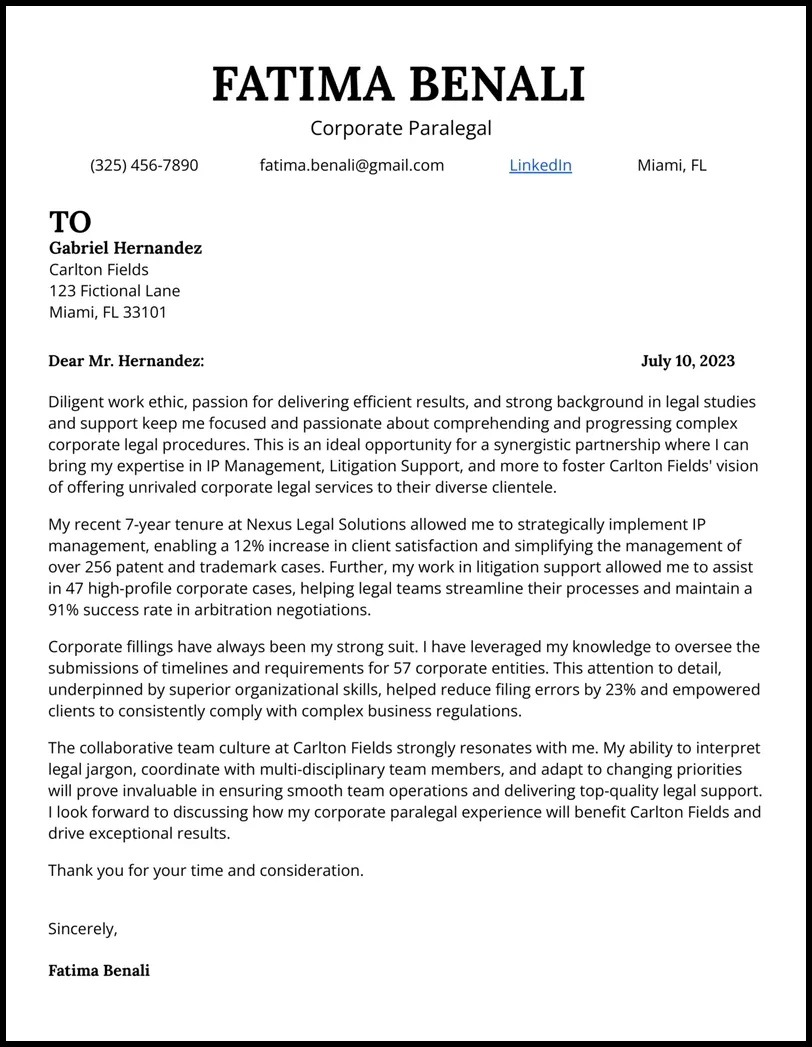
Why a Strong Cover Letter Matters for Paralegals
In the competitive legal field, a well-crafted cover letter is your first impression. It’s a crucial tool that highlights your qualifications and enthusiasm, setting you apart from other applicants. A strong cover letter is more than just a formality; it’s an opportunity to showcase your personality, skills, and experience in a way that a resume alone cannot. It provides context to your resume, allowing you to elaborate on specific achievements and demonstrate your suitability for the paralegal role. A compelling cover letter can significantly increase your chances of landing an interview, ultimately leading to your dream paralegal position. Consider it the key that unlocks the door to your next career move.
Highlighting Your Paralegal Skills
Your cover letter should spotlight the skills most relevant to the paralegal position. This demonstrates your understanding of the job requirements and your ability to fulfill them. Focus on both hard and soft skills. Hard skills are the technical abilities specific to the legal field, while soft skills encompass your interpersonal and communication abilities. When highlighting skills, provide concrete examples of how you’ve utilized them in past roles. This helps the hiring manager visualize your capabilities and understand your practical application of these skills in real-world scenarios. Make sure to align your skills with those mentioned in the job description.
Legal Research and Writing

Legal research and writing are fundamental skills for any paralegal. Your cover letter should mention your proficiency in conducting legal research using resources like Westlaw, LexisNexis, and other relevant databases. Provide examples of research projects you have completed and the types of legal documents you have drafted, such as legal memoranda, pleadings, or briefs. Highlight any experience with case law analysis and the ability to synthesize information effectively. Emphasize your attention to detail and accuracy in all written work. Demonstrate your understanding of legal terminology and your ability to communicate complex information clearly and concisely. Your ability to research and write effectively is critical to a paralegal’s success.
Case Management and Organization
Paralegals must possess strong organizational and case management skills. In your cover letter, showcase your ability to manage multiple cases simultaneously, maintain organized files, and meet deadlines. Mention any experience using case management software, such as Clio, MyCase, or AbacusLaw. Describe your process for organizing documents, tracking deadlines, and managing communications. Highlight your ability to prioritize tasks and work efficiently under pressure. Effective case management is crucial to the smooth operation of a legal practice, making this skill highly valued by employers. Demonstrate your attention to detail and your capacity to keep everything on track.
Client Communication
Client communication is a crucial soft skill. In your cover letter, emphasize your ability to communicate professionally and empathetically with clients. Describe your experience handling client inquiries, gathering information, and providing updates. Highlight your active listening skills, ability to explain legal concepts in plain language, and ability to build rapport with clients. If you are bilingual, this can be a significant advantage, so make sure to mention it if applicable. Showcase your understanding of client confidentiality and ethical considerations. Effective client communication is essential for fostering positive relationships and ensuring client satisfaction.
Showcasing Your Experience

Your cover letter should provide a snapshot of your professional history. Briefly mention your previous paralegal roles, including the law firms or organizations you worked for and the types of law you specialized in. Highlight your key responsibilities and accomplishments in each position, focusing on the most relevant experiences for the job you are applying for. Tailor your descriptions to match the job description’s requirements. Use action verbs to describe your duties and accomplishments. Show how your past experiences have prepared you to succeed in this new role. This allows potential employers to understand your professional background and assess your fit for the position.
Quantifying Achievements
Whenever possible, quantify your achievements to demonstrate your impact. Instead of stating that you ‘managed cases’, specify the number of cases you managed or the increase in efficiency you achieved. For example, ‘Managed a caseload of 50+ cases simultaneously, consistently meeting all deadlines.’ Quantifying your achievements provides concrete evidence of your skills and abilities. It shows employers the tangible results you have achieved in previous roles. Use numbers, percentages, and other metrics to illustrate your impact and make your cover letter more compelling. This helps make your qualifications stand out.
Tailoring Your Letter to the Job
Customize your cover letter for each job application. Review the job description carefully and identify the key skills and qualifications the employer is seeking. Adjust your cover letter to highlight the experiences and skills most relevant to those requirements. Use the same keywords and phrases from the job description to demonstrate your understanding of the role. Showing you understand the specific needs of the employer is key to making a good impression. This shows that you have taken the time to research the role and understand the specific needs of the hiring organization. Avoid sending generic cover letters; always tailor them to the specific job.
Formatting and Structure of the Cover Letter

A well-formatted cover letter is professional and easy to read. Use a standard business letter format, including your contact information, the date, the employer’s contact information, a salutation, body paragraphs, and a closing. Choose a professional font such as Times New Roman, Arial, or Calibri, with a font size between 11 and 12 points. Ensure that your cover letter is free of grammatical errors and typos. Keep the layout clean and organized, using clear paragraphs and appropriate spacing. The format makes a good first impression on the hiring manager. Use consistent formatting throughout the document for a polished look.
Contact Information and Salutation
Start your cover letter with your contact information: your name, address, phone number, and email address. Then, include the date and the employer’s contact information, including the hiring manager’s name (if known), title, and the law firm’s address. Always use a professional salutation, such as ‘Dear Mr./Ms. [Last Name]’ if you know the hiring manager’s name. If you don’t know the name, use a general salutation, such as ‘Dear Hiring Manager’ or ‘Dear [Law Firm Name] Hiring Team’. Avoid generic salutations like ‘To Whom It May Concern’, as these can make your letter feel impersonal.
Body Paragraphs and Content
The body of your cover letter should consist of several paragraphs that explain why you are a strong candidate. The first paragraph should grab the reader’s attention and state your purpose for writing. Middle paragraphs should highlight your skills, experience, and accomplishments, providing specific examples to support your claims. The closing paragraph should summarize your interest in the position and express your enthusiasm for the opportunity. Keep each paragraph concise and focused, using clear and concise language. Focus on conveying your qualifications and showcasing your personality.
The Opening Paragraph

Start your cover letter with a strong opening paragraph. State the specific position you are applying for and how you learned about it. Briefly introduce yourself and express your interest in the role. If possible, mention something specific that attracted you to the law firm or the position. This creates a positive initial impression and encourages the reader to continue. Make sure your opening paragraph is engaging and makes the reader want to learn more about you.
Middle Paragraphs
In the middle paragraphs, provide details about your skills, experience, and achievements. Use specific examples to illustrate your abilities and showcase your value. Tailor the content to the job description, highlighting the skills and qualifications the employer is seeking. Quantify your accomplishments whenever possible to demonstrate your impact. This is where you sell yourself as the ideal candidate. Focus on the relevant aspects of your background, using clear language, and showing how your past experiences align with the job requirements.
Closing Paragraph and Call to Action
Conclude your cover letter with a strong closing paragraph. Summarize your interest in the position and reiterate your enthusiasm for the opportunity. Express your confidence that you are a good fit for the role. Include a call to action, such as requesting an interview or stating your availability. Thank the hiring manager for their time and consideration. Use a professional closing, such as ‘Sincerely’ or ‘Respectfully’, followed by your full name. Always proofread before submitting.
Essential Dos and Don’ts

Following a few essential dos and don’ts will ensure that your cover letter stands out for the right reasons. A well-written cover letter is your opportunity to present your skills and experience in the best possible light. Careful attention to detail and a proactive approach will significantly improve your job search prospects. Adhering to these guidelines will help you create a cover letter that effectively communicates your qualifications and captures the hiring manager’s attention.
Proofreading and Editing
Proofread and edit your cover letter meticulously. Errors and typos create a negative impression and undermine your credibility. Read your cover letter several times, checking for grammatical errors, spelling mistakes, and punctuation errors. Consider asking a friend, family member, or career counselor to review your letter for you. A fresh pair of eyes can often catch errors that you might miss. Always proofread the final version before submitting it to ensure it is error-free. A polished and error-free cover letter shows that you pay attention to detail and have excellent writing skills.
Avoiding Common Mistakes
Avoid common mistakes that can hurt your chances. Do not use generic templates without customizing them to the specific job. Avoid clichés and overly formal language. Do not simply repeat the information from your resume; instead, elaborate on your skills and achievements. Do not exceed one page in length. Avoid providing irrelevant information or making negative statements about previous employers. Ensure your cover letter is free of any errors. Focus on showcasing your unique strengths and qualifications.
Cover Letter Examples for Different Paralegal Roles

Cover letters can be tailored to different paralegal roles. Your cover letter should reflect the specific skills and experiences relevant to the position you are applying for. While the core components remain the same, the focus and content of your cover letter will change based on the type of law and the responsibilities of the role. By customizing your cover letter, you can demonstrate your understanding of the specific needs of the role and show that you have the skills and qualifications necessary to excel.
Litigation Paralegal Cover Letter Example
For a litigation paralegal role, highlight your experience with discovery, legal research, and trial preparation. Mention your familiarity with court procedures and deadlines. Showcase your ability to manage case files and assist attorneys in all aspects of litigation. Mention specific software you’ve used such as e-discovery platforms. Include relevant examples such as assisting with depositions, preparing trial exhibits, and drafting legal documents. Focus on your attention to detail, organizational skills, and ability to thrive in a fast-paced environment. Illustrate your ability to work effectively under pressure and meet deadlines. A well-written cover letter clearly communicates your litigation experience.
Corporate Paralegal Cover Letter Example
For a corporate paralegal position, emphasize your experience with contracts, due diligence, and regulatory compliance. Highlight your knowledge of corporate law and your ability to assist with transactions. Mention any experience with drafting legal documents, managing corporate records, and conducting legal research. Show your understanding of business operations and your ability to work effectively with corporate clients and legal teams. Showcase your attention to detail, organizational skills, and ability to maintain confidentiality. For example, include your experience reviewing and summarizing contracts. Demonstrating your corporate legal experience is key.
Real Estate Paralegal Cover Letter Example

When applying for a real estate paralegal position, highlight your experience with property transactions, title searches, and closings. Mention your knowledge of real estate law and your ability to assist with document preparation and filings. Demonstrate your ability to manage deadlines, communicate with clients, and work with title companies and lenders. Showcase your organizational skills, attention to detail, and ability to work efficiently. Mention any experience with preparing closing documents, conducting title searches, and assisting with property transfers. Your cover letter should convey your understanding of real estate law and your experience in the field.