The Importance of a Cover Letter
In the competitive landscape of job applications, a well-crafted cover letter is more than just a formality; it is your initial opportunity to make a lasting impression. A cover letter serves as your personal introduction, allowing you to showcase your personality, enthusiasm, and genuine interest in the specific role and company. It provides context to your resume, elaborating on your key skills, experiences, and achievements in a way that a resume alone cannot. A compelling cover letter distinguishes you from other applicants, highlighting why you are the best fit for the position and what unique value you bring to the table. It is the first step toward securing an interview and ultimately, landing your dream job. Failing to submit a cover letter, or submitting a generic one, can significantly diminish your chances of being considered, signaling to the hiring manager a lack of attention to detail or genuine interest. Therefore, invest time and effort into crafting a cover letter that truly represents you and your aspirations.
Why Cover Letters Matter
Cover letters are critical because they offer a platform to go beyond the basic information presented in your resume. They provide a space to tell your story, explaining why you are drawn to the specific role and company. This level of personalization is invaluable in capturing the attention of hiring managers, who often read dozens, if not hundreds, of applications. Cover letters demonstrate your communication skills, which are essential in virtually every professional setting. The way you articulate your thoughts, present your experiences, and express your enthusiasm reflects your ability to effectively interact with colleagues, clients, and superiors. Moreover, a well-written cover letter shows that you have done your research on the company and the position, customizing your message to align with their needs and values. This attention to detail can set you apart from candidates who submit generic applications. By highlighting your relevant skills and experiences, you make it easier for the hiring manager to see how you can contribute to their organization’s success.
Highlighting Your Skills and Experience

Effectively highlighting your skills and experience in a cover letter is about more than just listing qualifications; it is about demonstrating their relevance and impact. Begin by carefully reviewing the job description, identifying the key skills and experiences the employer is seeking. Then, in your cover letter, provide specific examples that showcase how you have applied those skills in past roles. Use the STAR method (Situation, Task, Action, Result) to structure your examples, providing concrete evidence of your accomplishments. For instance, instead of simply stating that you have strong communication skills, describe a situation where you successfully communicated a complex project to a diverse audience, the task you were assigned, the actions you took, and the positive results that followed. This approach not only quantifies your achievements but also provides a clear and compelling picture of your capabilities. Tailor your language to mirror the keywords used in the job description, but always maintain authenticity and avoid exaggeration. Focus on quality over quantity, selecting the most relevant experiences and highlighting the specific results you achieved.
What to Include in a Cover Letter
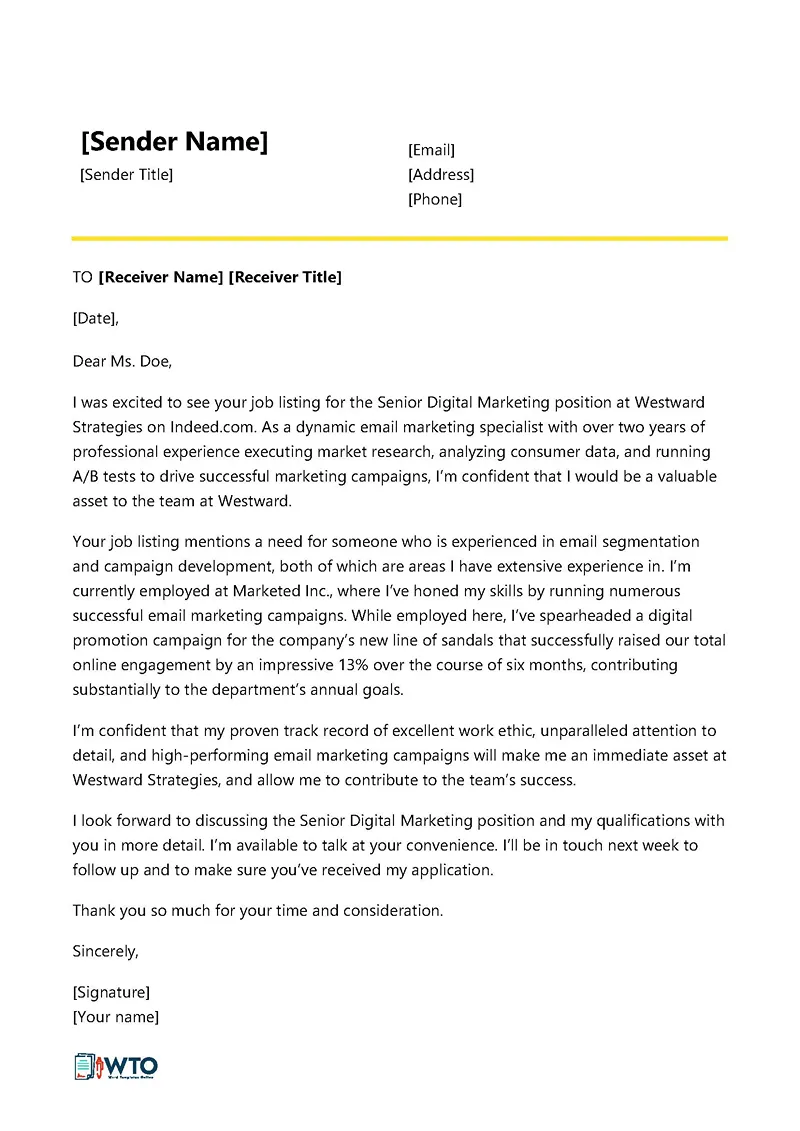
A comprehensive cover letter should contain several key elements that work together to create a persuasive narrative. Start with a professional header that includes your contact information and the date. Address the letter to the hiring manager by name, if possible, demonstrating that you have done your research. The opening paragraph should immediately capture the reader’s attention by stating the position you are applying for and expressing your enthusiasm for the opportunity. The body of the letter is where you showcase your skills and experience, providing specific examples of your accomplishments and how they align with the job requirements. Tailor this section to emphasize the most relevant aspects of your background. Conclude the letter with a call to action, expressing your eagerness for an interview and thanking the hiring manager for their time and consideration. Proofread the entire letter carefully to ensure there are no grammatical errors or typos. The cover letter should be concise, typically not exceeding one page, and written in a professional and engaging tone.
Understanding the Structure
A well-structured cover letter is essential for conveying your message effectively. Begin with a professional header, including your contact details and the date. Following the header, address the hiring manager by name, if possible, to personalize the letter. The opening paragraph should immediately state the position you are applying for and express your interest in the company. The body paragraphs are the core of your letter, where you highlight your skills, experiences, and accomplishments, providing specific examples to support your claims. Use the STAR method to structure your examples, explaining the situation, task, actions, and results. Keep each paragraph focused and concise, using clear and compelling language. End with a call to action, expressing your enthusiasm for an interview and thanking the hiring manager for their consideration. Maintain a professional and engaging tone throughout the letter, tailoring it to the specific job and company.
Header

The header of your cover letter is the first element a hiring manager will see, so it must be professional and easy to read. Include your full name, address, phone number, and email address. Ensure your email address sounds professional; avoid using nicknames or unprofessional language. The date should be placed below your contact information, indicating when you are sending the application. Formatting should be consistent and neat, ensuring that the header aligns properly with the rest of the document. Double-check that all contact information is accurate to facilitate communication from potential employers. Using a clear and concise header sets a positive tone and ensures the recruiter can easily contact you. The header is not only functional but also reflects your attention to detail and professionalism.
Greeting
The greeting sets the tone for your cover letter and directly addresses the recipient. Whenever possible, address the hiring manager by name; this shows you have taken the time to research the company and personalize your application. Use a formal greeting like “Dear Mr./Ms./Mx. [Last Name].” If you are unable to find the hiring manager’s name, use a general greeting like “Dear Hiring Manager” or “Dear [Department Name] Hiring Team.” Avoid generic greetings such as “To Whom It May Concern,” as they often make your letter feel impersonal. The greeting should be followed by a colon, setting the stage for the introduction. Always double-check the spelling of the recipient’s name and ensure that the title is correct, as mistakes can leave a negative impression. The right greeting shows respect, demonstrates your attention to detail, and makes your application more approachable.
Body Paragraphs
The body paragraphs are the core of your cover letter, where you showcase your skills, experience, and enthusiasm. Start with a compelling opening paragraph that immediately states the position you’re applying for and your interest in the company. The subsequent paragraphs should elaborate on your qualifications, providing specific examples that demonstrate how your skills and experiences align with the job requirements. Use the STAR method (Situation, Task, Action, Result) to structure your examples, providing concrete evidence of your accomplishments. Quantify your achievements whenever possible to demonstrate the impact you have made in previous roles. Tailor each paragraph to the specific job description, highlighting the skills and experiences most relevant to the position. Keep the language clear, concise, and engaging. Use strong action verbs to convey your accomplishments. Avoid jargon and keep the focus on what you can offer the company. The body paragraphs should effectively tell your story and make a strong case for why you’re the ideal candidate.
Call to Action

The call to action is the final opportunity to leave a lasting impression and encourage the hiring manager to take the next step. In this section, reiterate your enthusiasm for the opportunity and your belief that you are a strong fit for the role. Express your interest in an interview, and make it easy for the hiring manager to contact you. You can use phrases like, “I am eager to discuss how my skills and experience can contribute to [Company Name]’s success” or “I welcome the opportunity to further discuss my qualifications in an interview.” Thank the hiring manager for their time and consideration, demonstrating your respect and professionalism. You can also mention your availability for an interview and how to reach you. Conclude with a professional closing, such as “Sincerely” or “Best regards,” followed by your typed name. A well-crafted call to action ensures that your cover letter ends on a positive note and increases the likelihood of getting an interview.
Closing
The closing of your cover letter should be professional and leave a positive final impression. Begin with a formal closing such as “Sincerely,” “Best regards,” or “Thank you.” These closings convey respect and show that you have taken the time to write a thoughtful letter. Follow your closing with a blank line, then type your full name. If you are sending a hard copy, leave space for your signature above your typed name. Avoid casual closings like “Cheers” or “See you soon,” which are generally inappropriate for professional communication. Review your closing to ensure that it aligns with the tone and style of the rest of your cover letter. The closing, when done well, reinforces the professional image you want to project and enhances your application.
Top 5 Cover Letter Samples for Applications
Here are five cover letter samples designed to illustrate various approaches to job applications, each highlighting different aspects of a candidate’s qualifications and experience.
Sample 1 The Enthusiastic Professional

This sample focuses on conveying enthusiasm and a genuine interest in the company and the specific role. It highlights the candidate’s passion and eagerness to contribute to the organization’s goals. The language used is energetic and positive, emphasizing the candidate’s motivation and willingness to go above and beyond. The letter opens by expressing genuine excitement about the opportunity and quickly moves to specific reasons why the candidate is interested in the company. The body paragraphs feature examples of relevant experiences, but the tone remains upbeat and shows the candidate’s drive to succeed. The conclusion reinforces the candidate’s enthusiasm and strong desire to contribute to the company.
Sample 2 The Skills-Focused Candidate
This sample prioritizes the candidate’s skills, emphasizing how their abilities align with the job requirements. It provides specific examples of how the candidate has applied their skills in the past, providing quantifiable results whenever possible. The letter clearly and concisely outlines the candidate’s key competencies and directly connects them to the job description’s requirements. The body paragraphs are structured to showcase the most relevant skills and provide concise examples of accomplishments. The letter avoids unnecessary language and focuses on providing compelling evidence of the candidate’s capabilities. The conclusion reiterates the candidate’s fit for the role, highlighting their ability to bring value to the organization.
Sample 3 The Career-Change Cover Letter
This sample is tailored for individuals seeking a career change. It acknowledges the shift and highlights transferable skills, making the candidate’s experience relevant to the new role. The letter addresses the transition openly, explaining the candidate’s motivations and the reasons for the change. It focuses on skills and experiences that are transferable to the new field, providing examples of how those skills have been applied in different contexts. The tone is confident and emphasizes the candidate’s adaptability and willingness to learn. The conclusion reinforces the candidate’s commitment to the new career path and their excitement to contribute. It seeks to bridge the gap between past and present careers.
Sample 4 The Networking Approach

This sample demonstrates the value of networking. It mentions how the candidate learned about the opportunity through a professional contact. The letter opens with a reference to the referral, highlighting the credibility it brings. The body paragraphs provide specific examples of the candidate’s qualifications and how they relate to the job requirements. The tone is personable, showcasing the candidate’s ability to connect with others and build relationships. It includes a call to action to discuss further and is highly personalized. The conclusion reinforces the networking element and the candidate’s enthusiasm for the opportunity. It seeks to build trust through the existing connection.
Sample 5 The Value Proposition Letter
This sample focuses on the value the candidate brings to the company. It quickly highlights the candidate’s key achievements and how they can contribute to the company’s success. The letter starts with a brief summary of the candidate’s qualifications, followed by specific examples of how they have delivered results in the past. It quantifies accomplishments to demonstrate impact. The body of the letter focuses on the value proposition, highlighting the specific benefits the candidate offers to the company. The conclusion summarizes the key value points and encourages the hiring manager to move forward with an interview. It is results-oriented and demonstrates the candidate’s ability to make a difference in the company.
Tips for Customizing Your Cover Letter
Customizing your cover letter is essential to make it stand out and demonstrate your genuine interest in the specific role and company. Start by thoroughly researching the company and the position. Understand their values, mission, and recent initiatives. Tailor your cover letter to align with the job description, highlighting the skills and experiences that are most relevant to the position. Use keywords from the job description to demonstrate that you understand the requirements. Avoid using generic templates and instead, personalize your letter to reflect your unique qualifications and experiences. This will show that you have taken the time to understand the company’s needs. Keep the tone of your letter professional yet authentic, showcasing your personality and enthusiasm. Proofread carefully for any errors in grammar or spelling, which can undermine your credibility. A customized cover letter is a crucial step towards securing an interview.
Research the Company

Thoroughly researching the company is the first step in customizing your cover letter. Visit the company’s website and explore their mission, values, and recent news or projects. Understand their business, their market, and their culture. Identify the company’s goals and objectives, and consider how your skills and experiences can contribute to their success. Look at their social media profiles to gain insights into their workplace culture and values. Find out who the hiring manager is and, if possible, learn about their background and interests. When writing your cover letter, mention specific details about the company that demonstrate you have done your homework. This shows that you are genuinely interested in the organization and have taken the time to understand their needs. The more you know about the company, the more effectively you can tailor your cover letter to demonstrate your qualifications.
Tailor to the Job Description
Tailoring your cover letter to the job description is a crucial step in increasing your chances of getting an interview. Start by carefully reading the job description, identifying the key skills, experiences, and qualifications the employer is seeking. Highlight the skills and experiences that are most relevant to the position, providing specific examples of how you have demonstrated those skills in past roles. Use keywords from the job description throughout your cover letter, making it clear that you understand the requirements of the job. However, do not simply copy and paste from the job description; instead, use your own words to describe your skills and experiences. Show how your qualifications align with the employer’s needs, focusing on what you can bring to the company. Tailoring your cover letter demonstrates your attention to detail and commitment to the specific role.
Proofread Carefully
Proofreading your cover letter is an essential step that should never be skipped. Errors in grammar, spelling, or punctuation can undermine your credibility and detract from your qualifications. After writing your cover letter, set it aside for a few hours or even a day before reviewing it. This will allow you to approach it with fresh eyes. Read through your letter carefully, checking for any errors in spelling, grammar, and punctuation. Ensure that your sentences are clear and concise and that your ideas flow logically. It’s also beneficial to have someone else proofread your cover letter. A fresh set of eyes can often catch errors that you may have missed. Use spell-check and grammar-check tools, but do not rely on them completely. Always read through the letter carefully, paying attention to the details. A well-proofread cover letter demonstrates professionalism and attention to detail.
The Finishing Touches

The finishing touches are critical for making a great first impression with your cover letter. Focus on formatting, style, and overall presentation. Ensure that your cover letter is easy to read and visually appealing. Pay close attention to the details and ensure your letter presents you as a polished, professional candidate. A well-crafted cover letter demonstrates your communication skills and attention to detail. Your application, as a whole, speaks volumes about your professionalism. Take the time to make it shine.
Format and Style
The format and style of your cover letter play a significant role in how it is perceived. Use a professional font like Times New Roman, Arial, or Calibri in a readable size (11 or 12 points). Use single-spaced paragraphs with a blank line between each paragraph. Keep the margins at one inch on all sides. Choose a simple and consistent layout. Ensure that your contact information is at the top and is clearly formatted. Address the letter to the hiring manager by name, if possible, using a formal greeting. Maintain a professional and engaging tone throughout the letter. Use strong action verbs and active voice to make your writing more compelling. Avoid jargon and clichés, and focus on clarity and conciseness. Ensure the overall presentation is visually appealing, with proper spacing and alignment. A well-formatted and styled cover letter shows that you pay attention to detail.
Review and Refine
Reviewing and refining your cover letter is the final step in ensuring it is polished and effective. After you have written your cover letter, set it aside for a while, then read it again with fresh eyes. Check for any errors in spelling, grammar, and punctuation. Make sure your sentences are clear and concise, and that your ideas flow logically. Ask a friend or colleague to review your cover letter and provide feedback. Consider whether the letter effectively communicates your qualifications and enthusiasm. Make sure the content is tailored to the specific job and company. Revise your cover letter based on the feedback you receive, and make any necessary changes to improve its clarity, conciseness, and impact. Ensure that the overall presentation is professional and visually appealing. Once you are satisfied with your cover letter, proofread it one last time before submitting your application. A well-reviewed and refined cover letter significantly increases your chances of securing an interview.