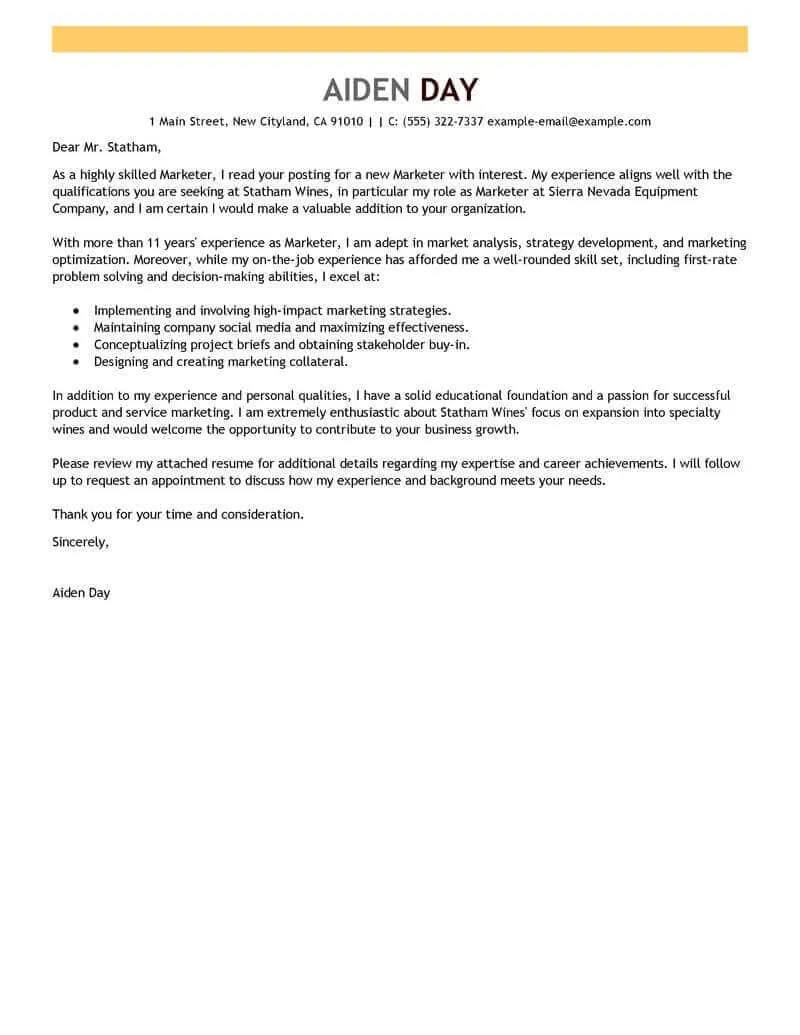
What Is a Cover Letter and Why Do You Need One?
A cover letter is your first impression on a potential employer, the first opportunity to make a positive impression. It’s a crucial document that accompanies your resume when applying for a job. Unlike a resume, which is a summary of your skills and experience, a cover letter allows you to elaborate on those qualifications, express your enthusiasm for the position, and demonstrate why you are a perfect fit for the role and the company. Think of it as your personal introduction, a chance to tell your story and make a compelling case for why you deserve an interview. Without a well-crafted cover letter, your resume might get overlooked, especially in competitive job markets, and even if your resume is perfect, your cover letter is the opportunity to shine. The cover letter provides context and personality, going beyond the bullet points of your resume to show your genuine interest and suitability.
Key Components of a Cover Letter
A strong cover letter has several key components that work together to present you in the best light. Each part serves a specific purpose, contributing to the overall effectiveness of your application. Mastering these elements is crucial for crafting a cover letter that grabs the reader’s attention and motivates them to read your resume and invite you for an interview. Starting with the basics and working your way to the core message, it’s important to ensure each section is clear, concise, and compelling. The key components create a comprehensive overview, making sure your application highlights your strengths and showcases why you’re the ideal candidate.
Contact Information

Start with your contact information at the top of the letter. Include your full name, address, phone number, and professional email address. This allows the hiring manager to easily reach you. Ensure your email address is professional; avoid using nicknames or informal language. Consider using a simple, professional email address that includes your name and avoids any potentially unprofessional elements. Providing all necessary contact details ensures you are readily accessible for communication, which is crucial in the hiring process.
Date
Below your contact information, include the date you are writing the letter. This helps the employer know when you applied. Using the correct date gives context and relevance to your application. It shows you’re current and aware of the application timeline. The date is a small detail, but it adds a layer of professionalism, making your application more polished and respectable.
Recipient’s Information
Address your letter to the hiring manager, if possible. Research their name and title. If you can’t find a specific name, use a professional greeting like ‘Dear Hiring Manager.’ Personalizing your letter shows you’ve done your research and are genuinely interested in the position. Addressing the letter to the correct person increases the chances of your application standing out. This simple step can demonstrate your attention to detail and interest in the role. It gives your application a personal touch, setting a more positive initial tone.
Opening Paragraph Grabbing Attention

The opening paragraph is your opportunity to grab the reader’s attention. State the position you are applying for and where you found the job posting. Briefly mention why you are interested in the role and the company. This paragraph is all about making a strong first impression. A compelling opening paragraph sets the tone for the entire letter, making the reader want to continue reading. It should be concise, enthusiastic, and clearly state your purpose for writing. It’s your first chance to convince the reader to invest their time in your application, so make it count.
Highlighting Your Skills and Experience
This is where you elaborate on your skills and experience, drawing connections to the job requirements. Choose the most relevant experiences and skills. Use specific examples to show how you’ve used your skills in previous roles. This section should be tailored to the specific job. It is essential to demonstrate how your qualifications align with the needs of the position. Focus on the key requirements outlined in the job description and how you have met similar challenges in the past. Use concrete examples to prove your capabilities, not just stating them. Your aim is to convince the hiring manager that you not only possess the necessary skills but also have a proven track record of success.
Showcasing Relevant Skills
Identify the key skills required for the job and highlight them in your letter. This could include technical skills, soft skills, or both. Explain how you have developed and utilized these skills in your previous roles. Provide concrete examples to support your claims. Make sure that the skills you choose to showcase align with the job description. Emphasize your most relevant skills. This shows employers you have the right tools for the job.
Quantifying Your Achievements

Whenever possible, quantify your achievements with numbers or data. This adds credibility to your claims and demonstrates your impact in previous roles. Instead of saying you ‘improved sales,’ say you ‘increased sales by 15% in one quarter.’ Quantifiable results are much more compelling than vague statements. Use numbers to highlight your achievements. Using metrics shows how you contribute to the overall company goals.
Demonstrating Your Enthusiasm
Express your genuine interest in the role and the company. Explain why you are excited about the opportunity. Research the company and mention specific reasons you want to work there. Your enthusiasm can make a significant difference. Your enthusiasm should shine through in your writing. Show that you are passionate about the job, and the company will take note.
Body Paragraphs Writing the Heart of Your Letter
The body paragraphs are where you showcase how your skills, experience, and enthusiasm align with the job requirements. This is where you demonstrate how you meet the key qualifications. Each paragraph should focus on a specific point, linking your past experiences to the needs of the role. Use clear, concise language and provide concrete examples. The body of your cover letter forms the core message. Your goal is to convince the hiring manager that you are a good fit for the role.
Tailoring Your Cover Letter

Avoid sending a generic cover letter. Customize your letter for each job you apply for. Review the job description carefully and highlight the skills and experiences that are most relevant. Show that you have researched the company and understand their needs. Demonstrate how your skills and experience align with their requirements. Tailoring your cover letter demonstrates your genuine interest in the role and the company. It shows that you are not just sending out mass applications, but are specifically targeting the opportunity. This personalization will set you apart from the competition.
Researching the Company
Before writing your cover letter, research the company. Visit their website, read news articles, and check their social media profiles. Understand their mission, values, and recent projects. Use this information to tailor your letter and demonstrate your knowledge. This research shows that you are truly interested in the company and have taken the initiative to learn about their operations. Understanding the company culture and mission helps you to align your values with theirs, adding authenticity to your application.
Matching Skills to Job Requirements
Carefully review the job description and identify the key skills and requirements. Highlight the skills and experiences that match these requirements. Use keywords from the job description to show your understanding. Provide specific examples of how you have used these skills in previous roles. By directly matching your skills to the job requirements, you show the hiring manager that you are a strong fit. This approach helps the hiring manager quickly assess your qualifications.
Using Action Verbs

Use strong action verbs to describe your accomplishments and responsibilities. Action verbs make your letter more dynamic and engaging. Instead of saying ‘responsible for,’ say ‘managed,’ ’led,’ or ‘implemented.’ Use action verbs to describe your role and responsibilities. Action verbs add energy to your writing, making your letter more engaging and easier to read. They demonstrate your proactivity and accomplishments in previous roles.
Closing the Cover Letter
The closing paragraph is your last chance to leave a lasting impression. Express your gratitude for the hiring manager’s time and consideration. Reiterate your interest in the role. Include a call to action to encourage the next step. A strong closing paragraph reinforces your value proposition and creates a positive conclusion. Your closing paragraph should leave a clear message. Thank the reader for their time and leave a good lasting impression.
Expressing Gratitude
Thank the hiring manager for considering your application. Show appreciation for their time and effort. This shows professionalism and respect. Thanking the hiring manager is a polite and professional gesture. It sets a positive tone and demonstrates your respect for their time. It is a basic courtesy, but it makes a difference in showing you are grateful for the opportunity.
Call to Action

Include a call to action, such as inviting the hiring manager to contact you for an interview. Provide your contact information again, if necessary. Make it easy for the hiring manager to take the next step. The call to action encourages a direct response. Your call to action guides the hiring manager. A clear call to action ensures the hiring manager knows the next steps and how to reach you.
Proofreading and Formatting
Pay close attention to the formatting and proofreading of your cover letter. A well-formatted and error-free letter shows attention to detail and professionalism. Formatting and proofreading are essential to make a good impression. Proofreading is about ensuring your cover letter reflects your professionalism. Always proofread your letter. Errors can make your letter less effective, but a well-formatted and error-free letter shows you care about the details.
Formatting Tips
Use a professional font, such as Times New Roman or Arial, with a font size between 10 and 12 points. Use consistent spacing and margins. Keep your letter concise and easy to read, ideally within one page. Proper formatting makes your letter readable. Choose a readable and professional font style. The goal is to ensure your letter is visually appealing and easy to read.
Proofreading for Errors
Carefully proofread your cover letter for any spelling, grammar, or punctuation errors. Check for typos and ensure your sentences are clear and concise. Have someone else proofread your letter as well, as a fresh pair of eyes can often catch mistakes you might miss. Proofreading is a crucial step. A well-proofread cover letter is essential for making a strong impression, so take the time to review your cover letter carefully.