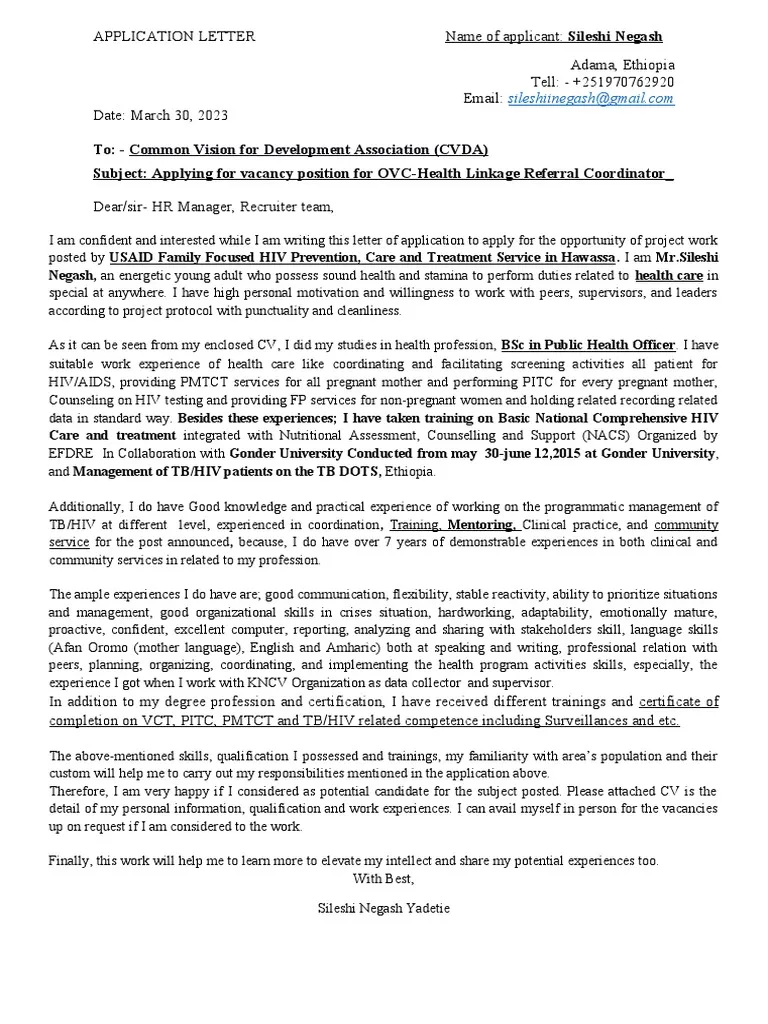
Understanding the Public Health Cover Letter
A cover letter is your first introduction to a potential employer, and for public health professionals, it’s a critical tool. It serves as a personalized narrative that complements your resume, providing context to your skills, experience, and passion for the field. A well-crafted cover letter can significantly increase your chances of landing an interview by showcasing your understanding of the role, the organization’s mission, and your alignment with both. This document isn’t merely a formality; it’s an opportunity to distinguish yourself from other applicants and highlight your unique qualifications. It allows you to express your enthusiasm for public health and explain why you are the ideal candidate for the position. In an increasingly competitive job market, a strong cover letter can be the deciding factor between getting hired and being passed over.
Key Components of a Public Health Cover Letter
A comprehensive cover letter for public health positions follows a standard structure, but the content should be tailored to each specific job. It typically includes an introduction, body paragraphs that highlight your skills and experience, and a conclusion. The letter should clearly state the position you’re applying for and where you found the job posting. The body paragraphs should provide specific examples that demonstrate your qualifications and how they align with the job requirements. The conclusion should reiterate your interest in the position and express your gratitude for the opportunity. A well-structured cover letter ensures that your message is clear, concise, and persuasive, making a strong first impression on the hiring manager. It also allows you to convey your understanding of the public health field and your commitment to improving community health outcomes.
Your Contact Information and the Date

Begin your cover letter with your contact information, including your full name, address, phone number, and professional email address. This information should be left-aligned at the top of the document. Directly below your contact information, include the date. The date is crucial for professional correspondence, as it establishes when the letter was written and submitted. Using a standard format for the date (e.g., Month Day, Year) is recommended. Ensure the date is current to reflect the submission time and allows the hiring manager to quickly identify when the application was received. Maintaining a professional format and ensuring accuracy in this initial section is vital for setting a positive tone and demonstrating your attention to detail.
The Hiring Manager’s Information
If possible, address your cover letter to a specific person, such as the hiring manager or the department head. Research the company’s website or LinkedIn to find the correct name and title. Addressing the letter to a specific individual shows that you have taken the initiative to learn about the organization and shows a personal touch. If you cannot find a name, use a professional salutation such as “Dear Hiring Manager” or “Dear [Department Name] Hiring Committee.” Always double-check the spelling of the recipient’s name and title. A personalized cover letter immediately indicates that you have researched the opportunity and are genuinely interested in the role.
The Salutation
The salutation sets the tone for your cover letter. Use a formal and professional salutation, such as “Dear Mr./Ms./Mx. [Last Name],” if you know the hiring manager’s name. If the name is unavailable, use “Dear Hiring Manager” or “Dear [Department Name] Hiring Team.” Avoid overly casual greetings. Ensure the salutation is consistent with the rest of the document in terms of tone and style. The right salutation shows respect and establishes a professional connection with the reader. Remember to always spell the recipient’s name correctly. A well-chosen salutation immediately tells the reader that you are professional and organized.
Highlighting Your Public Health Skills

In the body of your cover letter, emphasize the skills most relevant to the job description. Public health roles often require a combination of technical, analytical, and interpersonal skills. Highlight your skills in areas such as data analysis, program evaluation, epidemiology, health education, community outreach, and grant writing. Provide specific examples of how you have utilized these skills in previous roles. Use action verbs to describe your accomplishments and responsibilities. Tailor your skills section to match the job requirements. By focusing on the skills that directly relate to the position, you demonstrate to the hiring manager that you are a strong fit for the role and can make an immediate impact.
Showcasing Relevant Experience
Your cover letter is the place to highlight your professional experience. Select experiences that directly align with the job requirements and demonstrate your abilities. Clearly describe your role and responsibilities in each position. Use the STAR method (Situation, Task, Action, Result) to provide context and showcase your achievements. Quantify your accomplishments whenever possible. For instance, if you improved a program’s efficiency, include the percentage of improvement or the number of people served. Detail your experience in project management, program development, or community engagement. Make sure that your professional journey supports your claim of being the perfect match for the job.
Quantifying Your Achievements
Whenever possible, quantify your achievements to demonstrate your impact and value. Use numbers and metrics to provide concrete evidence of your accomplishments. Instead of saying “Improved program efficiency,” state, “Improved program efficiency by 15% through the implementation of new data tracking methods.” Quantifying your accomplishments makes your cover letter more compelling and shows your potential employer the tangible results you have achieved in past positions. Include metrics such as the number of participants, the amount of funding secured, or the number of successful projects completed. Providing quantifiable results helps the hiring manager understand the scope of your work and the benefits of hiring you.
Demonstrating Your Passion for Public Health

Showcase your genuine interest in public health and your commitment to the field. Explain why you are passionate about public health and what motivates you to pursue a career in this area. Mention any specific public health issues or populations you are particularly interested in. Discuss how the organization’s mission and values align with your own professional goals. Share any personal experiences or motivations that drive your commitment to public health. Demonstrate that you have a deep understanding of the sector’s challenges and opportunities. Make it clear that you are not just looking for a job, but are committed to making a positive contribution to the health and well-being of communities.
Tailoring Your Cover Letter
Avoid using a generic cover letter. Customize your cover letter for each job application, tailoring it to the specific requirements and details of each position. Review the job description carefully and identify the key skills, experience, and qualifications the employer is seeking. Adjust your cover letter to highlight these aspects, providing specific examples of your achievements. Research the organization and its mission, values, and goals. Show that you understand their work and how your skills can help them achieve their objectives. When you tailor your letter, it shows the hiring manager that you’ve done your research and are genuinely interested in the specific job and organization.
Researching the Organization
Before you start writing your cover letter, research the organization thoroughly. Visit their website, review their mission statement, and explore their recent projects and initiatives. Understand their values and culture. Look for any recent news or announcements that provide insight into their current priorities. Researching the organization shows you have done your homework and are genuinely interested in the opportunity. It will enable you to highlight your interest and demonstrate how your skills and experience align with the organization’s needs and goals. Mentioning specific programs, initiatives, or values in your cover letter will strengthen your application and demonstrate your commitment to the organization.
Aligning with Job Requirements

Carefully review the job description and identify the specific requirements for the position. The job description will outline the required skills, experience, and qualifications. Use the job description to guide the content of your cover letter. Highlight your skills and experiences that match the requirements. Provide concrete examples of how you have demonstrated those skills in the past. Use the same keywords and phrases used in the job description, when appropriate, to show the hiring manager that you meet the qualifications. Customize your cover letter to each role, as this will show the hiring manager that you are genuinely interested and understand what the role requires.
Formatting and Structure of Your Cover Letter
Use a professional and easy-to-read format. Choose a standard font, such as Times New Roman or Arial, in a readable size (11-12 points). Maintain consistent formatting throughout the document. Use clear headings and paragraphs to organize your information logically. Keep your paragraphs concise and focused. The cover letter should be one page in length. Use white space to separate sections and make the document visually appealing. Properly formatted cover letters are easy to read and give a favorable first impression. A well-structured cover letter tells the hiring manager that you are organized, detail-oriented, and capable of communicating effectively.
Professionalism and Tone
Maintain a professional tone throughout your cover letter. Use formal language and avoid slang or casual expressions. Be respectful and courteous. Your writing style should be clear, concise, and direct. Ensure your writing is free of grammatical errors and typos. Proofread your cover letter carefully before submitting it. Maintain a positive and enthusiastic tone to convey your passion for public health. The overall tone should reflect the professionalism and seriousness of your application, showing you are well-prepared and take your job search seriously.
Proofreading and Editing

Thoroughly proofread and edit your cover letter before submitting it. Check for any errors in grammar, spelling, punctuation, and sentence structure. Ensure that your tone and language are appropriate for a professional setting. Have a friend or career counselor review your cover letter for feedback. A well-written and error-free cover letter makes a strong first impression and increases your chances of being invited for an interview. Proofreading is a critical step that ensures your attention to detail and reinforces your professionalism.
Cover Letter Examples
Use cover letter examples to guide your writing and get ideas on how to structure your own. Review examples from various public health roles, such as public health analyst, health educator, epidemiologist, and program coordinator. Pay attention to how the writers highlight their skills, experience, and accomplishments. Modify the examples to suit your individual qualifications and the specific job you are applying for. Cover letter examples provide a useful template for creating a strong and compelling cover letter, but always remember to tailor the content to fit your circumstances.
Example Cover Letter for Entry-Level Public Health
For entry-level positions, highlight your educational background, internships, and any relevant volunteer experience. Focus on transferable skills like communication, data analysis, and teamwork. Explain how your coursework and practical experience have prepared you for the role. Show your eagerness to learn and contribute to the team. Showcase your enthusiasm for public health and eagerness to apply your knowledge. Demonstrate a clear understanding of the job’s requirements and articulate how your skills and experience match. Focus on your willingness to learn and your eagerness to develop your career in public health.
Example Cover Letter for Experienced Professionals

For experienced professionals, showcase your achievements and provide quantifiable results. Emphasize your relevant skills and previous accomplishments. Provide specific examples that demonstrate your expertise and impact. Focus on your leadership, management, and project management experience. Highlight your ability to work independently, manage teams, and take on complex projects. Outline your accomplishments with metrics. Demonstrate your ability to take on new challenges and contribute to organizational success. Emphasize your experience and ability to drive positive change in the field.
Example Cover Letter for a Specific Role
When applying for a specific role, tailor your cover letter to the job description. Highlight the skills and experience that the employer is seeking. Use the same keywords and phrases from the job posting to demonstrate your understanding of the role. Emphasize the aspects of your experience that are most relevant to the position. Use the STAR method (Situation, Task, Action, Result) to provide context and showcase your achievements. Include concrete examples that demonstrate your abilities and how you have contributed to previous organizations. Make sure that your experience aligns with the requirements of the role.
Common Mistakes to Avoid
Avoid making common mistakes that can undermine your application. Be aware of common pitfalls to ensure your cover letter is effective and helps you land an interview. These mistakes can range from poor formatting to a lack of enthusiasm. Making sure that your cover letter is polished, professional, and tailored to each specific job is extremely important. Addressing these common mistakes will significantly improve your chances of success in the job application process.
Generic Content

Do not use generic cover letters. Avoid sending the same letter to multiple employers. Always tailor your cover letter to the specific job and organization. Generic cover letters demonstrate a lack of interest and may be discarded. Instead, customize your cover letter to showcase your skills and demonstrate your understanding of the organization’s mission and values. Providing a personal approach is essential.
Typos and Grammatical Errors
Typos and grammatical errors can detract from your credibility and show a lack of attention to detail. Proofread your cover letter carefully. Have someone else review your document. Errors will make you look less professional. Proofread the document more than once, as errors can easily be overlooked. Pay close attention to spelling, grammar, punctuation, and sentence structure.
Lack of Enthusiasm
Show genuine enthusiasm for the position and the organization. Express your passion for public health and your commitment to improving community health outcomes. A lack of enthusiasm can make your cover letter seem impersonal and uninspired. Use positive and energetic language. Share why you are excited about the opportunity. Demonstrate that you are genuinely interested in the role and the organization’s work. Your enthusiasm will help you stand out from the competition and make a memorable impression.
Concluding Your Cover Letter
Conclude your cover letter with a professional closing. Express your gratitude for the opportunity and reiterate your interest in the position. Provide a call to action, such as inviting the hiring manager to contact you for an interview. Ensure your closing is concise and professional. A strong conclusion reinforces your qualifications, showcases your enthusiasm, and encourages the hiring manager to take the next step. A well-crafted conclusion can leave a positive and lasting impression.
Expressing Gratitude
Express your gratitude to the hiring manager for considering your application. Thank them for their time and attention. Show that you appreciate the opportunity to be considered. A simple and sincere expression of gratitude can leave a positive impression. Acknowledging their time and consideration reflects your professionalism and respect.
Call to Action
Include a call to action in your conclusion, encouraging the hiring manager to contact you for an interview. State your availability and willingness to discuss your qualifications further. Make it easy for them to take the next step by providing your contact information. A clear call to action shows your interest in the role and encourages them to take the initiative. Express your enthusiasm for the opportunity to discuss your qualifications further.