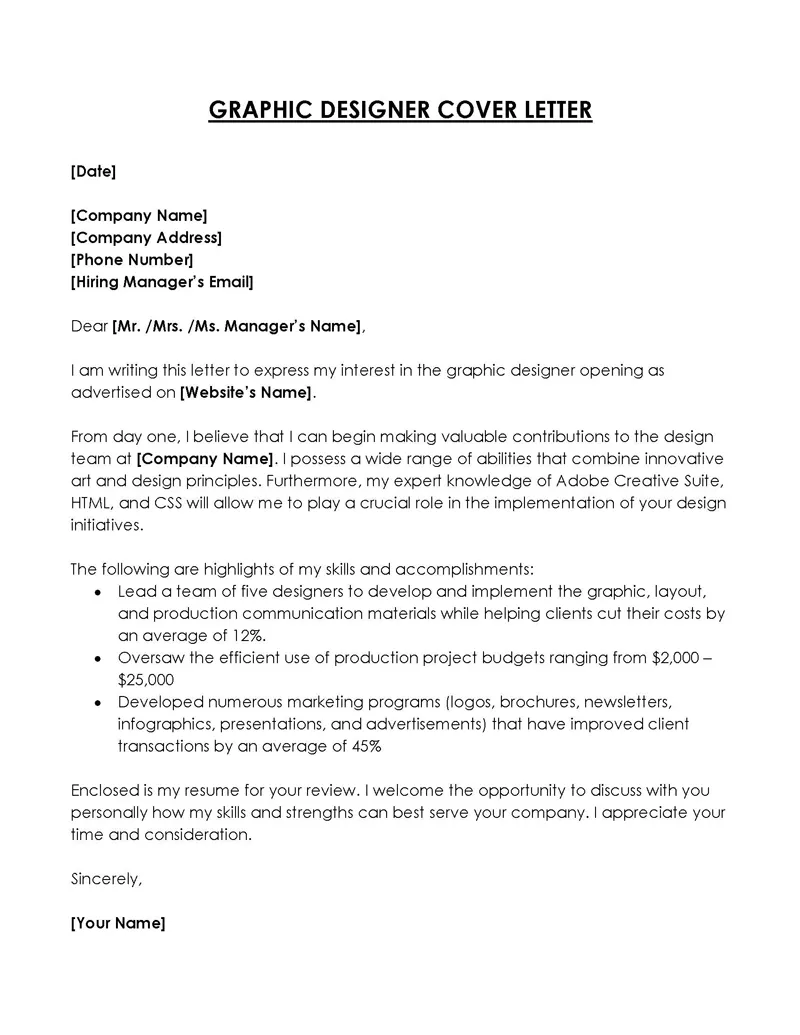
Why a Cover Letter Matters for Graphic Designers
In the competitive world of graphic design, a cover letter is your initial handshake with potential employers. It’s your first opportunity to make a positive impression and distinguish yourself from other applicants. While your portfolio showcases your creative abilities, the cover letter provides context. It allows you to explain your thought process, highlight relevant experiences, and express your enthusiasm for the specific role and company. A well-crafted cover letter can be the decisive factor in landing an interview, especially in a field where visual presentation is paramount. Without a cover letter, you risk being seen as just another applicant, lacking the initiative to go the extra mile. A cover letter is important for graphic designers.
Highlighting Your Graphic Design Skills
Your cover letter should serve as a concise summary of your most relevant skills. Don’t just list them; provide examples of how you’ve utilized them to achieve results. Instead of stating, ‘Proficient in Adobe Photoshop,’ elaborate by mentioning a project where your Photoshop skills were critical to the outcome. Mention specific software, such as Illustrator, InDesign, or After Effects, along with the level of your expertise. Highlight your understanding of design principles like typography, color theory, and layout. If you have experience with branding, web design, or other specialized areas, make sure to emphasize those skills that align with the job description. Remember to use action verbs to describe your accomplishments and skills, providing a clear picture of your capabilities.
Showcasing Your Portfolio in Your Cover Letter

Your portfolio is the cornerstone of your graphic design application, and your cover letter should direct the hiring manager to it effectively. Instead of simply stating that your portfolio is attached, strategically reference specific projects within your portfolio that align with the job requirements. Briefly describe the project’s goals, your role, and the successful results. Include a link to your online portfolio or attach a PDF version. Make sure your portfolio is up-to-date, showcasing your best work and demonstrating your versatility. Customize the projects you highlight to match the company’s style and the job’s responsibilities. This targeted approach shows that you’ve taken the time to understand the company’s needs and tailor your application accordingly, which is a cover letter best practice.
Tailoring Your Cover Letter to Each Job
Generic cover letters are easily recognizable and often discarded. To stand out, customize each cover letter for the specific job and company you’re applying to. Research the company’s values, mission, and recent projects to demonstrate your genuine interest. Study the job description carefully and tailor your skills and experiences to match the requirements. Show how your skills and experiences align with what the company is looking for. If the job requires a particular design style, such as minimalist design or vibrant illustrations, make sure your portfolio reflects this. Mention specific projects in your portfolio that align with the company’s work. By personalizing your cover letter, you show that you’re not just sending out mass applications but are truly interested in the opportunity.
Top 7 Tips to write Cover Letter for Graphic Design Jobs
Research the Company and the Role

Before you begin writing, thorough research is essential. Visit the company’s website, explore their social media profiles, and understand their design style, target audience, and recent projects. Look closely at the job description, identifying the key skills and experiences the employer is seeking. Tailor your cover letter to address these requirements, demonstrating how your qualifications align with their needs. This research phase will not only help you write a more targeted cover letter but also show the hiring manager that you’re genuinely interested in the role and the company.
Use a Professional and Engaging Tone
Your cover letter should strike a balance between professionalism and personality. Avoid overly formal language or generic phrases. Use a tone that reflects your personality while maintaining a professional demeanor. Be enthusiastic about the opportunity, but avoid excessive flattery. Use active voice and strong verbs to make your writing more dynamic and engaging. Show your passion for graphic design and express your excitement about the prospect of contributing to the company’s creative team. Your tone should be positive, confident, and reflective of your design sensibilities.
Quantify Your Achievements
Instead of simply stating that you’re good at something, quantify your achievements to make a more compelling case. Use numbers, percentages, and specific metrics to demonstrate your impact. For example, instead of saying ‘Improved website design,’ state ‘Increased website conversion rates by 15%.’ If you’ve worked on projects that generated measurable results, include those details in your cover letter. Quantifying your achievements helps the hiring manager understand the value you bring to the table. Always provide examples of how you’ve solved problems or improved outcomes, showcasing your abilities and potential.
Demonstrate Your Design Process

Give the hiring manager insight into your design process. Briefly describe how you approach design projects, including your research, ideation, sketching, prototyping, and final execution phases. Mention the tools and software you typically use, and explain your ability to work collaboratively with other designers, marketers, or stakeholders. Show how you incorporate client feedback and adapt your designs to meet their needs. Demonstrating your design process helps the hiring manager understand your work style and ensure that it aligns with the team’s approach. Include your design process on cover letter for higher chances to get hired.
Proofread and Edit Meticulously
Typos and grammatical errors can undermine your credibility. Before submitting your cover letter, proofread it carefully for any errors. Use a grammar checker and ask a friend or colleague to review your letter for a fresh perspective. Ensure that your writing is clear, concise, and free of any mistakes. Remember, your cover letter is a reflection of your attention to detail, so a polished and error-free document is essential. It’s also crucial to verify that your contact information is correct.
Keep it Concise and Focused
Hiring managers are busy, so keep your cover letter concise and to the point. Aim for a letter that’s no longer than one page. Focus on the most relevant information and avoid unnecessary details or jargon. Use clear and concise language, and make every word count. Your cover letter should be a brief summary of your qualifications, designed to pique the hiring manager’s interest and encourage them to review your portfolio and resume. Don’t include excessive details and keep the focus on your key strengths and how they align with the job requirements.
Include a Strong Call to Action

End your cover letter with a strong call to action, encouraging the hiring manager to take the next step. Express your enthusiasm for the opportunity and state your interest in an interview. Provide your contact information again, making it easy for the hiring manager to reach you. If appropriate, mention your availability for an interview or any other relevant details. A strong call to action ensures that your cover letter achieves its primary objective: to prompt the hiring manager to consider you for the role. Encourage an interview is the call to action for graphic designers cover letter.
Cover Letter Design Examples
Reviewing cover letter design examples can offer valuable inspiration and help you understand different approaches. Look for examples that align with your personal design style and the industry standards. Pay attention to the layout, typography, and overall visual presentation of the cover letters. Consider the tone and language used in the examples. Many online resources provide cover letter templates and examples for graphic designers. Explore these resources and adapt the design elements to create a cover letter that effectively showcases your skills and personality. The goal is to write a cover letter that is professional, visually appealing, and reflects your design expertise.
Dos and Don’ts of Graphic Design Cover Letters
What to Include in Your Cover Letter

- A strong opening statement that grabs attention
- A clear summary of your relevant skills and experiences
- Specific examples of your achievements and results
- A link to your online portfolio or attached PDF
- A demonstration of your knowledge of the company
- A professional and engaging tone
- A clear call to action
What to Avoid in Your Cover Letter
- Generic opening phrases and closing statements
- Typos and grammatical errors
- Irrelevant information or unnecessary details
- Using jargon or overly technical language
- Being overly formal or informal
- Overstating your abilities
- Failing to tailor the letter to each job
Final Thoughts
A well-crafted cover letter is a crucial tool for graphic designers seeking employment. By following the tips and guidelines outlined above, you can create a cover letter that showcases your skills, highlights your portfolio, and increases your chances of landing an interview. Remember to tailor your cover letter to each job, proofread carefully, and maintain a professional and engaging tone. Your cover letter is a chance to make a strong first impression and secure your dream job. So, invest the time and effort to create a compelling cover letter. This is how you write a good cover letter for a graphic design job.