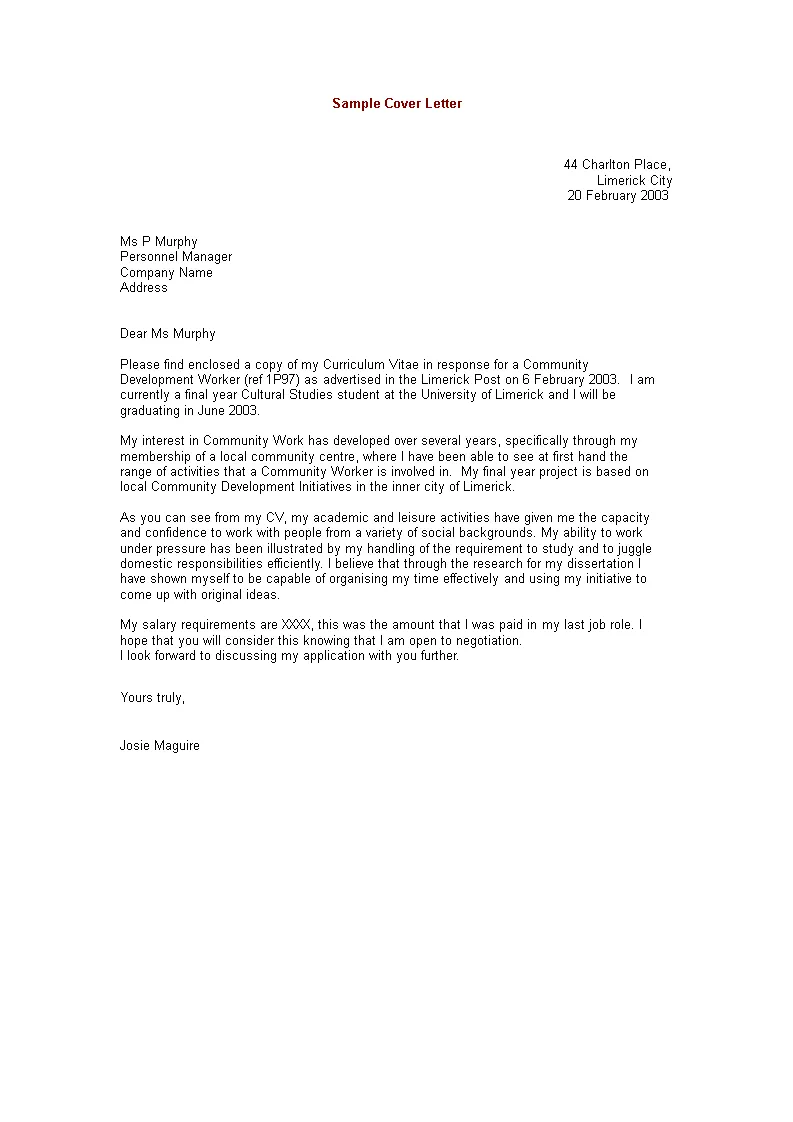
Why Salary Matters in Your Cover Letter
Your cover letter is your first chance to make a strong impression, and addressing salary expectations effectively can significantly impact your chances of landing an interview. Many job seekers underestimate the importance of this aspect, but it’s a critical piece of the application puzzle. Properly addressing salary demonstrates your professionalism, understanding of industry standards, and respect for the employer’s time. It allows you to position yourself as a serious candidate who has considered the value you bring to the role. By showing that you are informed about the market rate and are realistic about your expectations, you build trust with the hiring manager. This sets the stage for a smoother negotiation process later on, if you are offered the job. Failing to address salary correctly, however, can lead to your application being overlooked, as it could be perceived that you’re either not serious about the role or that your expectations are unrealistic.
Understanding the Employer’s Perspective
Employers are keen on efficiency. They need to quickly assess if your salary expectations align with their budget. When you address salary, you show that you understand this need and are considerate of the employer’s constraints. Companies often have a pre-defined salary range for each position based on various factors such as experience, skills, location, and budget. They want to find candidates who fit within this range. By addressing salary thoughtfully in your cover letter, you help them streamline this initial screening process. Additionally, employers want to avoid wasting time on candidates whose salary requirements are far beyond what they can offer. By being upfront, you prevent potential disappointment or wasted time for both parties. Your goal should be to demonstrate that you are a good fit not only in terms of skills and experience, but also in terms of financial expectations. Being clear and concise in your cover letter suggests that you are a pragmatic and informed professional who values mutual respect.
Researching Salary Ranges

Thorough research is crucial before you start writing your cover letter. Knowing the average salary for the role you’re applying for in your specific location gives you a significant advantage. This research will help you to position yourself realistically. Begin by identifying the common salary ranges for the role you are seeking. Consider the location, as salaries vary depending on where the job is based. You should also factor in your experience level and the specific skills required by the job. By understanding these factors, you can make a well-informed decision about the salary you will mention in your cover letter, or, if not required, how you will handle the topic.
How to Find Salary Information
Several methods can help you determine the appropriate salary range. Job boards often provide a salary range, which is a good starting point. Some job descriptions will specifically state the salary or a salary range. Reviewing industry reports and salary surveys can provide a broader view of the average compensation for similar roles. Talking to people who work in similar roles within the company or industry can also provide insights, however, be sure to keep these conversations confidential and not disclose information that is not yours to share.
Tools and Resources for Salary Research
Utilize online resources such as Glassdoor, Salary.com, and LinkedIn Salary. These platforms provide salary data based on job titles, locations, experience levels, and more. Industry-specific salary surveys, often conducted by professional organizations, provide detailed compensation data. Networking with professionals in your field can help you gather more granular insights. When using online resources, remember to consider the source’s credibility and ensure the information is current. Cross-referencing information from multiple sources will give you a more accurate picture of the salary landscape. It is also very important to tailor your salary research to the specific role and company you are targeting.
Crafting Your Salary Statement

When the job posting requests salary information, you need to craft your statement carefully. If no salary information is requested, you can still strategically address the topic or omit it. Your approach should align with your research, the company’s culture, and your personal career goals. Your objective is to present your salary expectations professionally and in a way that increases your chances of getting an interview. It is crucial to demonstrate that you have researched the market and are aware of the general salary expectations. It’s also important to be transparent and not overstate or understate your value.
The Best Approach: Flexible and Research-Based
The most effective approach is often to provide a salary range, rather than a specific number. This demonstrates flexibility and acknowledges that the final compensation will depend on the job requirements and the company’s specific offer. Base your salary range on your research, ensuring it aligns with the industry standards and your experience level. Your range should reflect the level of compensation you expect, and also be realistic to the company’s budget. In your cover letter, state your desired salary range confidently and clearly. Phrases like ‘I am seeking a salary in the range of $X to $Y’ or ‘My salary expectations are between $X and $Y’ work well. Indicate that you are open to further discussion, which shows your willingness to negotiate and collaborate. This approach also highlights your understanding of the importance of salary, while still providing room for flexibility.
Examples of Effective Salary Statements
Here are some examples to guide you in different situations. When the job posting specifically requests salary information, a simple and direct approach is best. For example, ‘Based on my experience and the research I’ve conducted, I am seeking a salary in the range of $70,000 to $85,000.’ Another approach could be, ‘My salary requirements are in the range of $65,000 to $75,000, depending on the specific responsibilities of the role.’ If you are relocating, you can include this in your statement. For example, ‘I am seeking a salary in the range of $80,000 to $90,000, and am open to discussing relocation expenses.’
What to Avoid in Your Salary Discussion

Avoid providing a salary that is too high or too low, as it might eliminate you from the competition. Providing a very high salary may mean the employer cannot meet your request, while a very low salary can signal a lack of confidence in your abilities or experience. Don’t be vague or evasive. Avoid phrases like ’negotiable’ or ‘competitive salary’ unless you have no other choice. These can be perceived as lacking preparation. Do not focus solely on salary, as it makes you appear money-driven. Show that you are interested in the job and understand the value you offer. Never provide a salary based on what you ’need.’ Instead, base your expectations on the market value and the specific requirements of the role. Always ensure your salary expectations align with your skills and experience and your industry research.
Handling the Question if Salary is Required
Sometimes, the job posting will explicitly ask for your salary expectations. In these situations, providing a salary range is usually the most appropriate response. You can also tailor your response to match the specific requirements of the job. Always make sure your response is professional. If the job description states ‘Salary Negotiable,’ you still need to address the topic. The approach would be similar, but you can state your salary expectations more loosely. This gives you a greater degree of flexibility when negotiating.
When to Provide a Salary Range
When asked directly about your salary expectations, providing a salary range is the safest approach. This shows that you have researched the market and are aware of the typical compensation for your role. It also gives you the flexibility to adjust your expectations during the interview process if necessary. Your range should reflect your research and your experience level. It should be wide enough to allow for negotiation, but narrow enough to demonstrate that you have a solid understanding of the market. For example, if you’re targeting a position where the average salary is $75,000, you might provide a range of $70,000 to $80,000.
When to Omit Salary Information

If the job posting does not explicitly ask for salary requirements, you have the option to omit it from your cover letter. This can be a strategic choice, especially if you lack enough information about the role or are unsure about the company’s salary ranges. In such cases, you might choose to mention that your salary expectations are negotiable, but only after you’ve learned more about the role. However, if you decide to omit this information, be prepared to discuss your salary expectations during the interview stage. In the absence of salary expectations, the hiring manager may assume you haven’t done your research or might pass you over for candidates who have already addressed this topic. It is always a good idea to know the salary expectations before applying for the job.
Negotiating Salary After the Interview
If you are offered a job, salary negotiation is a critical step. You should be prepared to discuss your desired salary and justify it with your skills, experience, and the value you can bring to the company. If you provided a salary range in your cover letter, you will need to refer back to it during the negotiation. Your research should be current, as compensation can shift quickly. Prepare to provide a counter-offer, which is a common practice. Back up your counter-offer with your achievements and the value you bring. Consider the entire compensation package, not just the base salary. This can include benefits, bonuses, and other perks that can increase the total value of the offer. Remain professional and be confident in your abilities. Salary negotiation is the final step in showcasing your value and achieving the compensation you deserve.
Addressing salary expectations in your cover letter is more than a formality. It’s a strategic opportunity to demonstrate your professionalism, industry knowledge, and commitment to the role. By understanding the employer’s perspective, conducting thorough research, and presenting your expectations effectively, you can significantly improve your chances of getting an interview and ultimately securing the job you want. Always approach salary discussions with confidence, preparation, and a clear understanding of your worth. Remember, the goal is not just to get a job, but to secure a position where you are valued and fairly compensated for your skills and experience.