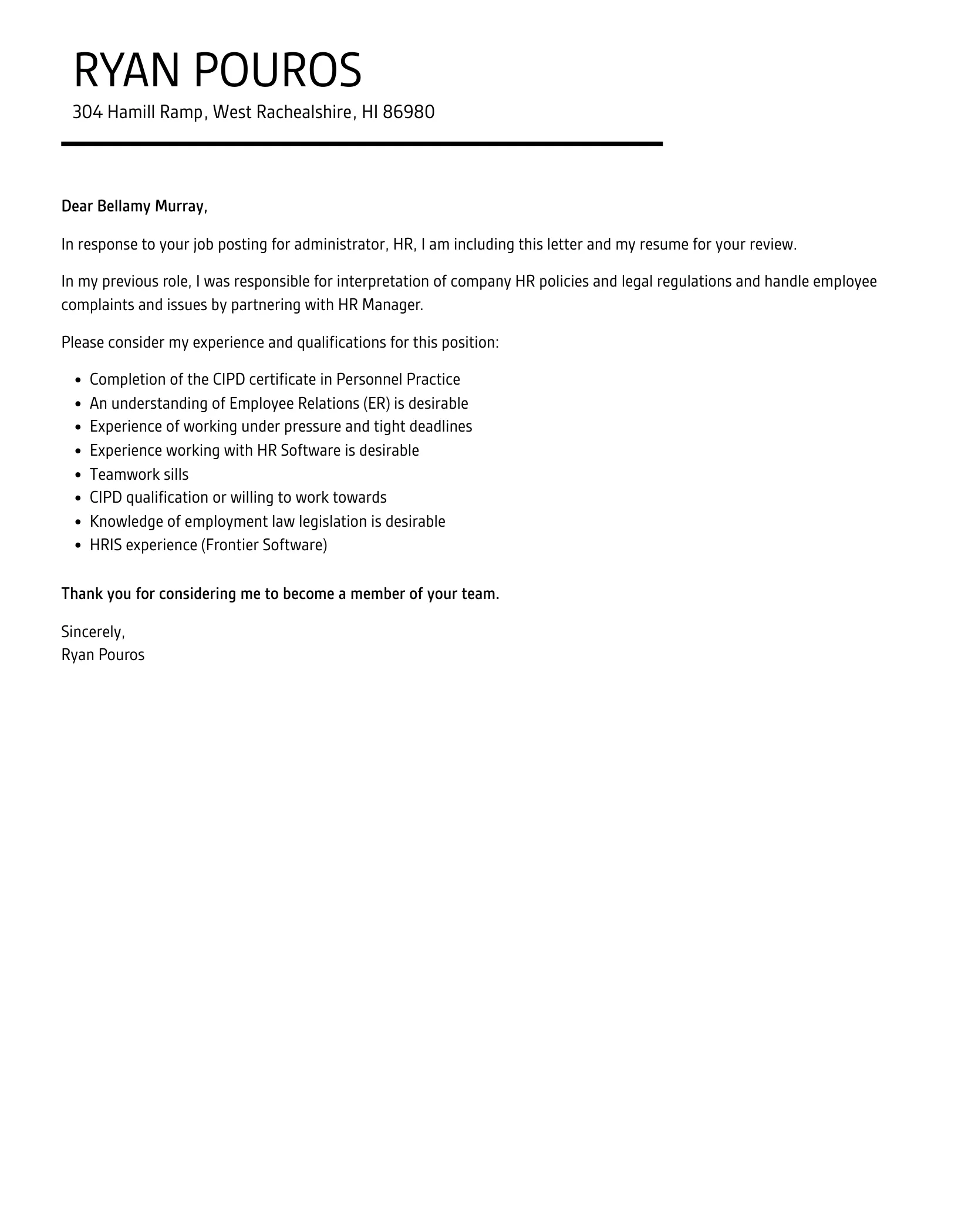
Crafting Your HR Administrator Cover Letter
A well-crafted cover letter is your first impression on a potential employer, serving as a crucial tool in your job search as an HR Administrator. It’s an opportunity to showcase your skills, experience, and personality, setting you apart from other candidates. This guide provides comprehensive steps to writing a cover letter that grabs the attention of hiring managers and increases your chances of landing an interview. The process involves understanding the role, tailoring your letter to the specific job description, and highlighting your key accomplishments. A compelling cover letter doesn’t just list your qualifications; it tells a story, demonstrating your passion for human resources and your ability to contribute to the company’s success. A well-written cover letter is your key to unlock the door to your dream job in HR.
Highlighting Your HR Skills and Experience
Your cover letter should prominently feature your HR skills and experience, as this is what the hiring manager is looking for. Begin by identifying the key skills and experiences mentioned in the job description. Then, provide concrete examples of how you’ve demonstrated those skills in previous roles. This might include managing employee relations, handling recruitment processes, administering benefits, or ensuring compliance with labor laws. Quantify your accomplishments whenever possible; for instance, you could mention the number of employees you’ve managed, the percentage reduction in employee turnover you achieved, or the successful implementation of a new HR system. Emphasize your expertise in areas that align with the job requirements, showing that you are a perfect fit for the role. Showcasing your skills and experience effectively demonstrates that you are not only qualified but also that you can deliver results.
Key HR Administrator Skills to Showcase

HR Administrators need a diverse set of skills. Make sure these are included in your cover letter: Communication skills, both written and verbal, are crucial for interacting with employees and management. Strong organizational abilities are a must for managing various tasks and maintaining records. Problem-solving skills are essential for addressing employee issues and resolving conflicts. Knowledge of employment law and regulations is vital for ensuring compliance. Proficiency in HR software and systems is increasingly important for managing employee data and streamlining processes. Detail orientation is also critical for ensuring accuracy in all HR-related tasks. Also highlight your skills in areas like recruitment, onboarding, performance management, and employee relations. Mention any certifications or training you’ve completed that are relevant to the role. By highlighting these skills, you demonstrate your readiness to take on the responsibilities of an HR Administrator.
Experience in HR Administration
The body of your cover letter is the place to highlight your HR administration experience in detail. Instead of just listing your past positions, elaborate on the responsibilities you held and the impact you made in each role. Use the STAR method (Situation, Task, Action, Result) to structure your examples. For instance, describe a situation where you were tasked with improving the onboarding process. Detail the actions you took, such as implementing a new orientation program or streamlining paperwork. Then, quantify the results, such as a decrease in new-hire turnover or an increase in employee satisfaction. If you’ve worked in different HR functions, such as benefits administration, payroll, or recruitment, be sure to include these areas. Be sure to match your experience to the requirements listed in the job description. Emphasize achievements and quantify your contributions whenever possible. This approach will make your experience more vivid and compelling to the hiring manager.
Education and Certifications for HR Professionals
Your education and certifications are essential parts of your cover letter. If you have a degree in Human Resources, Business Administration, or a related field, mention it prominently. Include the name of the university, your major, and the year of graduation. Any relevant HR certifications, such as SHRM-CP, SHRM-SCP, or PHR/SPHR, are valuable assets that should also be included. Certifications demonstrate your commitment to the profession and your knowledge of best practices. Also, mention any specialized training you’ve completed, such as courses in labor law, compensation, or benefits administration. If you’re currently pursuing further education or certifications, briefly mention this as well, demonstrating your continued commitment to professional development. By highlighting your educational background and certifications, you show that you meet the baseline qualifications for the role and that you are dedicated to excelling in your HR career.
Tailoring Your Cover Letter for HR Positions

Tailoring your cover letter is crucial to demonstrate your genuine interest in the specific role and company. Avoid using a generic template; instead, carefully review the job description and identify the key requirements and desired qualifications. Customize your letter to match the language and priorities of the hiring manager. The key is to show the recruiter that you have read the job description and that you have what they are looking for. Use the job description as a guide to showcase the skills and experiences most relevant to the position. Address specific needs or challenges the company might be facing. Research the company’s values, culture, and recent achievements. This will help you tailor your letter to reflect how your skills and experience align with the company’s goals. When you tailor your cover letter, you are not just applying for a job; you are showing that you are the best candidate for this specific opportunity.
Researching the Company and Role
Before you start writing your cover letter, take the time to research the company and the specific HR Administrator role. Visit the company’s website to learn about its mission, values, and culture. Check out the “About Us” section and read recent news articles or press releases to stay up-to-date on the company’s latest developments. Understanding the company’s strategic goals will help you tailor your letter to highlight how your skills and experience can contribute to those goals. Also, review the job description carefully to understand the specific responsibilities, required skills, and preferred qualifications. This will guide you in emphasizing the most relevant aspects of your background and tailoring your language to reflect the company’s needs. By demonstrating that you have done your homework, you show your genuine interest in the company and the position.
Addressing the HR Manager Effectively
The way you address the hiring manager sets the tone for your entire cover letter. Whenever possible, address the letter to a specific person. If you know the name of the hiring manager, use it; this demonstrates that you have taken the time to research the company and that you care about the role. If you are unable to determine the hiring manager’s name, you can use a professional salutation such as “Dear Hiring Manager.” Avoid generic greetings like “To Whom It May Concern,” as they can make your letter appear impersonal. Ensure you use the correct title and spelling of the person’s name. By addressing your cover letter to a specific individual, you immediately show the hiring manager that you are attentive and that you can write a professional cover letter.
Structuring Your HR Administrator Cover Letter

Structuring your cover letter in a clear and logical manner is key to making a strong impression. The standard structure includes an introduction, several body paragraphs, and a conclusion. Each section should have a specific purpose and contribute to the overall message. The introduction should grab the reader’s attention and state your purpose for writing. The body paragraphs should highlight your relevant skills, experience, and accomplishments. The conclusion should reiterate your interest in the position and express your enthusiasm. Use a professional and easy-to-read font, such as Times New Roman or Arial, and maintain consistent formatting throughout the letter. Keep the letter concise and focused, typically within one page. Proper structure, along with good formatting, will make your cover letter easy to read and help you showcase your qualifications effectively.
Introduction – Making a Strong First Impression
The introduction is your chance to make a strong first impression. Start by clearly stating the position you are applying for and how you learned about the opportunity. Briefly mention your most relevant skills or experiences that make you a suitable candidate. The goal is to capture the reader’s attention and encourage them to continue reading. Show enthusiasm for the role and the company. Highlight what makes you stand out from other applicants, such as a specific achievement or a relevant project. For example, you might mention a time when you successfully implemented a new HR system or improved employee satisfaction. Keep the introduction concise, focusing on the key points that make you an ideal candidate. A strong opening will make the hiring manager want to learn more about you and your qualifications.
Body Paragraphs – Showcasing Achievements
The body paragraphs are the core of your cover letter, where you showcase your skills, experience, and accomplishments. Use these paragraphs to provide specific examples of your past successes and how they relate to the job requirements. Each paragraph should focus on a specific skill or achievement, supporting it with concrete evidence. Use the STAR method (Situation, Task, Action, Result) to structure your examples. Quantify your accomplishments whenever possible. For example, instead of saying “Improved employee morale,” say “Increased employee morale by 15% through the implementation of a new recognition program.” Tailor each paragraph to the specific requirements listed in the job description. Be sure to address the company’s needs and challenges, demonstrating how you can contribute to their success. By providing detailed examples of your achievements, you can create a compelling narrative that convinces the hiring manager of your capabilities.
Quantifying Accomplishments in HR

Quantifying your accomplishments is a very important practice in writing your cover letter. Numbers, percentages, and metrics make your achievements more tangible and credible. Instead of saying “Managed recruitment efforts,” you might say “Recruited and hired 50 employees in the last year, reducing time-to-hire by 10%.” Instead of “Improved employee training,” you might say “Developed and implemented a new training program, resulting in a 20% increase in employee performance.” If you’ve reduced costs or increased efficiency, provide specific figures. For instance, “Streamlined the benefits administration process, saving the company $10,000 annually.” Quantifying your accomplishments gives the hiring manager a clear picture of the value you can bring to the role. Use data to support your claims and demonstrate the impact you have made in your previous roles.
Highlighting Relevant HR Projects
Highlighting your relevant HR projects in your cover letter provides further evidence of your skills and experience. Focus on projects that are most closely related to the HR Administrator role. Briefly describe the project, your role, and the key outcomes. Emphasize projects where you took initiative and demonstrated leadership. Mention projects where you were involved in implementing new HR systems, developing training programs, or improving employee relations. Focus on the challenges you faced, the actions you took, and the positive results you achieved. This demonstrates your ability to manage complex tasks and deliver successful outcomes. When describing a project, explain its relevance to the role and how the skills you used align with the job requirements. For instance, if the job description emphasizes experience with performance management, showcase projects where you developed or improved performance evaluation processes.
Demonstrating Knowledge of HR Software
In today’s digital world, knowledge of HR software is increasingly important. If the job description mentions specific software, be sure to highlight your experience with those systems. List the HR software you have experience with, such as Workday, SAP SuccessFactors, BambooHR, or other relevant systems. Mention any certifications or training you have received on those systems. Include details about how you have used the software in your previous roles, such as managing employee data, processing payroll, or administering benefits. If you have experience with data analytics or reporting tools, mention those as well, as HR administrators are often responsible for generating reports and analyzing data. Be sure to tailor your software knowledge to match the needs of the specific role. This ensures that the hiring manager sees you have the technology skills needed to perform the job successfully.
Closing Your HR Cover Letter

The closing paragraph of your cover letter is an important step to summarize your interest in the role and encourage the hiring manager to take the next step. Reiterate your enthusiasm for the opportunity and the company. Summarize your key qualifications and how they align with the job requirements. Express your interest in an interview and mention your availability. Include a call to action, such as encouraging the hiring manager to contact you. Keep the tone professional and enthusiastic. You can also thank the hiring manager for their time and consideration. Before closing, make sure you’ve provided all necessary contact information, including your phone number and email address. A strong and clear closing can leave a lasting positive impression and increase your chances of getting an interview.
Expressing Enthusiasm and Availability
Expressing enthusiasm for the role and availability for an interview in your closing paragraph is crucial. Show that you are genuinely excited about the opportunity and interested in contributing to the company. Reiterate your interest in the position. State your availability for an interview, indicating your willingness to meet at their earliest convenience. Be proactive and make it as easy as possible for the hiring manager to contact you. Mention that you are available by phone or email. Express your appreciation for the time the hiring manager has invested in reviewing your application. End the letter with a professional closing such as “Sincerely” or “Best regards,” followed by your name and contact information. Expressing enthusiasm and making it easy to schedule an interview are excellent ways to show your interest and get the hiring manager to invite you to the next phase of the hiring process.
Proofreading and Formatting Your Cover Letter
Proofreading and formatting are critical steps to ensure that your cover letter is polished and professional. Begin by carefully proofreading the entire document for any grammatical errors, spelling mistakes, or typos. Use a spell checker and grammar checker. However, don’t rely solely on these tools; read the letter aloud to catch any errors. Then, review the formatting to make sure it is consistent and easy to read. Use a standard font, such as Times New Roman or Arial, and a font size that is easy on the eyes. Maintain consistent margins and spacing throughout the letter. Ensure that your contact information is clearly displayed and that the letter is formatted professionally. Ask a friend, family member, or career counselor to review your cover letter. Proofreading and formatting are crucial as they show attention to detail and professionalism. A polished cover letter gives the hiring manager a positive impression and demonstrates your attention to detail.