What is a Cover Letter for Software Developers?
A cover letter is a crucial document that accompanies your resume when applying for software developer positions. It serves as your initial introduction to a potential employer, offering you the opportunity to expand on your qualifications, highlight relevant skills, and express your enthusiasm for the role. Unlike a resume, which provides a concise overview of your experience, a cover letter allows you to personalize your application, showcasing your personality and demonstrating how your skills align with the specific requirements of the job. A well-crafted cover letter can significantly increase your chances of securing an interview and landing your dream job in the competitive field of software development. Remember that the first impression can be the most important, and that includes the layout and language of your cover letter. This is an important step when trying to land that developer job!
The Purpose of a Cover Letter
The primary purpose of a cover letter is to persuade the hiring manager that you are the ideal candidate for the software developer position. It provides a platform to tell your story, explaining why you’re interested in the company and how your unique skills and experiences make you a perfect fit. It’s a chance to showcase your passion for software development, demonstrate your understanding of the role’s responsibilities, and highlight your accomplishments in a compelling manner. Moreover, a cover letter allows you to address any potential gaps in your resume, such as career changes or periods of unemployment, providing context and reassuring the hiring manager of your suitability. A strong cover letter leaves a lasting impression and encourages the hiring manager to review your resume in detail, ultimately increasing your chances of being invited for an interview. (image: cover-letter-software-developer-purpose.webp)
Key Components of a Strong Cover Letter

A compelling cover letter for a software developer position comprises several key components, each playing a vital role in capturing the attention of the hiring manager. The structure should be clean and easy to read. Begin with a professional header that includes your contact information, followed by the date and the recipient’s details. The opening paragraph should immediately grab the reader’s attention by expressing your enthusiasm for the role and the company. In the body of the letter, highlight your skills, relevant projects, and quantify your achievements using numbers and data whenever possible. Tailor your letter to the specific job description by researching the company, matching your skills to their requirements, and addressing the hiring manager directly. Conclude with a strong call to action, expressing your eagerness for an interview, and close with a professional closing. Always proofread and format your letter carefully to ensure clarity and professionalism. (image: cover-letter-software-developer-components.webp)
Header Section
The header of your cover letter sets the tone for your entire application. It should include your full name, professional contact information (phone number, email address, and optionally, your LinkedIn profile URL or personal website). Ensure your contact details are accurate and up-to-date. The date should be placed below your contact information, followed by the recipient’s details. Always address your cover letter to a specific person, if possible, to demonstrate your attention to detail and personalization. A well-formatted header demonstrates professionalism and makes it easy for the hiring manager to contact you. Also consider the font choice and font size here. Remember to make sure the header matches the format of your resume.
Contact Information
Provide accurate and professional contact details in your cover letter header. Include your full name, a phone number where you can be easily reached, and a professional email address. Avoid using nicknames or unprofessional email addresses. If you have a professional online presence, such as a LinkedIn profile or a personal website showcasing your projects, include the relevant URL. Make sure to check your voicemail message before applying for a job, to have a professional message on your voicemail. This helps the hiring manager easily reach you and can prevent any delays in the recruitment process. Double-check all the information for accuracy to avoid any communication issues.
Date

Place the current date below your contact information in the cover letter header. This indicates when you are submitting your application. The date is a standard element and it gives a quick way to understand when the letter was created. There are various date formats, but maintain consistency throughout the document. Using a standard date format, such as Month Day, Year (e.g., January 1, 2024), is recommended for professionalism and clarity. The date ensures the employer knows when you submitted the application and provides a reference point if they need to review your application in the future.
Recipient’s Information
Include the recipient’s information below the date. This usually includes the hiring manager’s name, their title, the company name, and the company’s address. Researching the specific name of the hiring manager shows your attention to detail and your genuine interest in the position. If the hiring manager’s name is not available, address the letter to the hiring department or the title of the person responsible for reviewing applications. Ensure you use the correct title and company name. A well-addressed recipient’s section demonstrates your professionalism and initiative. By taking the time to address the letter correctly, you create a positive first impression and show that you are serious about the opportunity.
Opening Paragraph
Your opening paragraph is the first impression you make. It should immediately capture the hiring manager’s attention. Start by expressing your enthusiasm for the software developer position and the company. State where you found the job posting and mention something specific that attracted you to the role or the company. Briefly highlight your most relevant skills or experience to pique the reader’s interest. The opening paragraph should be concise, engaging, and set the stage for the rest of your cover letter. It should leave the hiring manager wanting to learn more about your qualifications and how you can contribute to their team. Make it short, but memorable. The main goal of the opening paragraph is to grab the reader’s attention from the beginning.
Highlighting Your Skills and Experience

The body of your cover letter is where you showcase your relevant skills and experience as a software developer. Focus on the skills and experiences that are most relevant to the job description. Describe how your skills align with the company’s needs. Use specific examples to illustrate your abilities, such as programming languages, frameworks, and tools you are proficient in. Emphasize projects where you have successfully applied these skills. If you have experience with specific methodologies or technologies, highlight them. The goal is to demonstrate that you have the knowledge and experience necessary to excel in the role. Match your skills to the job description to highlight your compatibility. Show, don’t just tell, the skills you possess.
Showcasing Relevant Projects
Include details about relevant projects to provide tangible evidence of your skills and experience. Choose projects that align with the job requirements and the company’s industry. Describe your role in each project, the technologies you used, and the results you achieved. If possible, include links to your portfolio, GitHub, or any online platforms where your projects are showcased. This allows the hiring manager to see your work in action. For each project, explain the problem you were trying to solve, the approach you took, and the outcomes of your work. This provides context and allows the hiring manager to better understand your capabilities and problem-solving skills. The more details, the better. Remember to keep the information up to date.
Quantifying Achievements
Quantifying your achievements is critical to demonstrating the impact of your work. Instead of simply stating what you did, use numbers, data, and metrics to show the results you achieved. For example, instead of saying you ‘improved website performance’, state that you ‘increased website speed by 30%’. When describing your projects, quantify the improvements you made, the number of users you impacted, or the efficiency gains you achieved. Using data makes your accomplishments more credible and allows the hiring manager to understand the value you can bring to the company. This approach provides tangible evidence of your skills and abilities and differentiates you from other candidates. Using numbers is critical to making the letter better.
Tailoring Your Cover Letter

Tailoring your cover letter is essential to demonstrate your genuine interest in the specific job and company. Avoid using a generic cover letter. Customize each letter to the job requirements and the company’s culture. Review the job description carefully and highlight the skills and experiences that match the requirements. Research the company to understand its values, mission, and recent projects. This knowledge allows you to demonstrate how your skills and experience align with the company’s needs and how you can contribute to their goals. By tailoring your cover letter, you show that you have taken the time to understand the role and the company, making you a more appealing candidate. This is critical to demonstrating the commitment you have towards the role.
Researching the Company
Researching the company is a crucial step in tailoring your cover letter. Visit the company’s website to learn about their products, services, and mission. Explore their ‘About Us’ page to understand their values and culture. Check their news and blog sections to stay updated on their recent projects and accomplishments. Also, look for the company on social media platforms like LinkedIn to gain insights into their employees and work environment. Understanding the company’s needs and challenges allows you to align your skills and experience with their requirements, showcasing your understanding of the role and making you a more attractive candidate. This shows the recruiter that you are serious about applying for the job and that you did your homework.
Matching Skills to Job Requirements
Carefully review the job description and identify the key skills and qualifications required for the position. List the skills and experiences you possess that match these requirements. Use the same keywords and terminology used in the job description. Provide specific examples of how you have used these skills in your previous roles or projects. Explain how your experience aligns with the company’s needs and how you can contribute to their goals. By matching your skills to the job requirements, you demonstrate that you understand the role and that you are a strong fit for the position. Always try to provide specific examples. Make sure to highlight any certifications or training that align with the job requirements.
Addressing the Hiring Manager

Whenever possible, address your cover letter to the hiring manager by name. Research the company’s website or LinkedIn to find the hiring manager’s name. Addressing the letter to a specific person shows your attention to detail and personalizes your application. If you are unable to find the hiring manager’s name, use a professional salutation, such as ‘Dear Hiring Manager’ or ‘Dear [Department Name] Team.’ Avoid generic greetings like ‘To Whom It May Concern,’ which can make your application seem impersonal. Addressing the hiring manager directly shows that you have taken the time to personalize your application and shows the interest you have in the job position. If you know someone at the company, mention their name as well.
Call to Action
The call to action is your opportunity to express your interest in the role and request an interview. Clearly state your desire for an interview and express your eagerness to discuss how your skills and experience align with the company’s needs. Mention your availability for an interview and how the hiring manager can contact you. Thank the hiring manager for their time and consideration. A strong call to action encourages the hiring manager to take the next step and move forward with your application. Keep it short, simple and easy to understand. Mention that you are looking forward to hearing from them.
Closing the Cover Letter
End your cover letter with a professional closing. Use a formal closing, such as ‘Sincerely,’ ‘Best regards,’ or ‘Yours sincerely.’ Follow this with your typed name. You can also include your signature if you are submitting a printed copy. The closing should be concise, polite, and leave a positive impression. Ensure the closing matches the tone of your cover letter. The closing is the last thing the hiring manager sees, so make sure it is professional and reflects your enthusiasm and interest in the position. It’s a chance to end on a positive note. (image: cover-letter-software-developer-closing.webp)
Proofreading and Formatting

Proofreading and formatting your cover letter is critical for ensuring professionalism and making a positive impression. Carefully proofread your letter for any grammatical errors, typos, and inconsistencies. Use spell check and grammar check tools. Have a friend or colleague review your cover letter to catch any mistakes you might have missed. Ensure the formatting is clean, readable, and consistent throughout the document. Choose a professional font and font size. Use clear headings and bullet points to organize information. A well-formatted and error-free cover letter demonstrates your attention to detail and professionalism. The overall readability of your cover letter is more important than you think. Double-check all the information before submitting.
Common Mistakes to Avoid
Avoiding common mistakes can significantly improve the effectiveness of your cover letter. Be aware of the common pitfalls. Avoid generic language, which makes your letter seem impersonal and uninspired. Always customize your cover letter. Avoid typos and grammatical errors, as they can undermine your credibility. Make sure you tailor the letter to each job you apply for. By avoiding these common mistakes, you can create a cover letter that effectively showcases your skills and experience and increases your chances of landing an interview. Make sure to be yourself, and let your personality shine.
Generic Language
Generic language makes your cover letter sound impersonal and uninspired. Avoid using clichés, overly common phrases, and generic statements that could apply to any job or company. Instead, use specific examples and tailor your language to the role and the company. Demonstrate your understanding of the job and the company’s needs by using relevant keywords and industry-specific terminology. Make the hiring manager feel that you are the perfect match. A cover letter filled with generic phrases will not stand out and will likely be disregarded. Make sure that the language of your letter is specific to the job position you are applying for.
Typos and Grammatical Errors

Typos and grammatical errors can create a negative impression and undermine your credibility. Before submitting your cover letter, carefully proofread the entire document for any errors. Use spell check and grammar check tools to catch any mistakes. Have a friend or colleague review your cover letter to identify errors you may have missed. A cover letter that is free of errors demonstrates your attention to detail and professionalism. Poor grammar will make you look like you did not put much thought into the application. Errors can damage your application, and have a negative impact on your credibility as a candidate. A small mistake can derail your application, so make sure the cover letter is proofread.
Lack of Customization
A lack of customization is a common mistake that makes your cover letter seem impersonal and generic. Always tailor your cover letter to the specific job and company. Research the company to understand its values, mission, and recent projects. Highlight the skills and experiences that match the job requirements. Address the hiring manager by name, if possible. A customized cover letter shows that you have taken the time to understand the role and the company. It also increases your chances of standing out from other applicants. Generic cover letters make you seem uninterested. Make sure to highlight how you can help the company grow and succeed. (image: cover-letter-software-developer-mistakes.webp)
Cover Letter Examples for Software Developers
Reviewing cover letter examples can provide valuable insights and inspiration. Use these examples as a guide. Study how different software developers have structured their letters, highlighted their skills, and expressed their enthusiasm for the job. Pay attention to the language, tone, and formatting. Remember that these are only examples. Use the examples to create a cover letter that is tailored to your own experience and the specific job requirements. Adapt these examples to fit your own skills and experience, and ensure your cover letter is unique. (image: cover-letter-software-developer-examples.webp)
Example 1 Recent Graduate
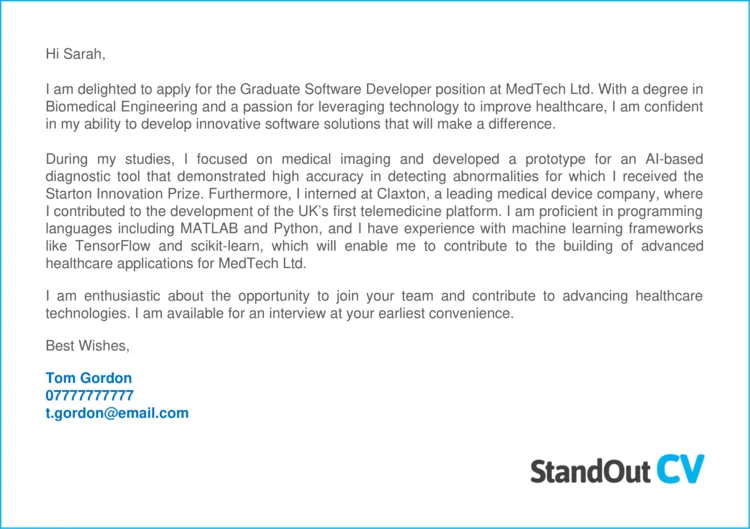
For recent graduates, cover letters should emphasize academic achievements, relevant coursework, and any internships or projects. Highlight any programming languages, frameworks, or tools you have learned. If you have any personal projects, showcase them. Clearly state your career goals and express your enthusiasm for the software developer role. This is a perfect way for someone without a lot of experience to get into the field of software development. Be sure to mention your academic achievements, and any relevant academic awards or recognition.
Example 2 Experienced Developer
Experienced developers should focus on their professional experience, including their previous roles, responsibilities, and accomplishments. Quantify your achievements whenever possible. Highlight your proficiency in specific technologies and your experience with project management and team collaboration. Showcase your problem-solving skills and your ability to deliver results. The cover letter should demonstrate that you are ready to take on more complex tasks. Remember to demonstrate any awards or recognition, to highlight your achievements. This is your chance to shine and show your professional experience.
Example 3 Switching Careers
If you’re switching careers, focus on transferable skills and experiences. Explain why you’re making the career change and highlight the relevant skills you’ve gained in your previous roles. Emphasize any projects or coursework that demonstrate your software development capabilities. Express your passion for software development and how your unique background can bring value to the company. Clearly explain why you are looking for a career change and how you can contribute to the success of the company. Tailor the letter to show the transferrable skills.
Tools and Resources for Writing Cover Letters
There are several tools and resources available to assist you in writing a compelling cover letter. Take advantage of these to streamline the process and ensure your application is polished and professional. Explore online templates and generators, as well as professional review services. These resources can provide guidance and support. (image: cover-letter-software-developer-tools.webp)
Online Templates and Generators
Online cover letter templates and generators can provide a starting point for your application. These tools offer pre-designed templates. They provide suggestions for content and structure. They can help you save time and ensure your letter is well-formatted. Customize the templates to fit your specific skills and the job requirements. Use these tools as a guide to build your cover letter, but always personalize the letter to reflect your own experience and qualifications. There are many free templates available online, so feel free to research them.
Professional Review Services
Consider using professional review services to get feedback on your cover letter. These services offer expert advice and can help you improve your writing, formatting, and overall impact. Professional reviewers can identify any errors, provide suggestions for improvement, and ensure your letter is tailored to the job and company. Investing in a professional review service can significantly increase your chances of making a positive impression on the hiring manager. This is an excellent choice for someone who is serious about a career in software development. (image: cover-letter-software-developer-success.webp)