Cover Letter Salary Demands Top 5 Tips
Navigating salary expectations in your cover letter can be a delicate dance. It’s a crucial aspect of your job application, as it sets the stage for potential negotiation and ensures both you and the employer are on the same page. However, stating your desired salary incorrectly can lead to your application being overlooked. This guide provides actionable advice and tips to help you confidently address salary requirements in your cover letter, increasing your chances of landing an interview and, ultimately, your dream job.
Understanding Salary Expectations in Cover Letters
Before diving into specific tips, understanding the context of salary expectations is vital. Employers often use cover letters to gauge your awareness of industry standards and your expectations regarding compensation. Your approach can significantly impact their perception of you. Presenting a well-researched and thoughtful salary range demonstrates professionalism and preparedness, making a positive impression. Remember that the goal is to convey your value while remaining open to negotiation, which is a sign of flexibility and willingness to find common ground. This balance is the cornerstone of a successful salary discussion.
Researching Salary Ranges

Thorough research is the foundation of any successful salary negotiation. Knowing the typical salary range for the position and your level of experience is essential. This data allows you to make informed decisions and avoid undervaluing or overvaluing your skills. Several online resources can help you gather this crucial information. Salary research is not just about numbers it is about showing the employer that you have done your homework and are serious about the role.
Using Salary Research Resources
Several online tools can help you determine a suitable salary range. Websites like Glassdoor, Salary.com, and Payscale offer comprehensive salary data based on job titles, experience levels, and location. These resources provide median salaries, allowing you to compare your experience and qualifications to industry standards. Furthermore, industry-specific websites and professional organizations may offer detailed salary surveys, which are often more accurate. Remember to cross-reference the information from multiple sources to ensure accuracy and paint the best picture possible.
Tailoring Your Approach
Your salary expectations should be tailored to the specific job and company. Consider the company’s size, location, and industry when researching salary ranges. Larger companies or those in high-cost-of-living areas typically offer higher salaries. Also, tailor your approach to your experience level. Entry-level candidates may need to be more flexible, while experienced professionals can often command higher salaries. Tailoring your approach demonstrates that you understand the market and the specific requirements of the role.
When to Address Salary

The timing of addressing salary requirements in your cover letter is another strategic consideration. There are different schools of thought on this, and your decision should be guided by the specific job posting and your personal preferences. The key is to make a considered decision, not a hasty one, and to ensure you remain professional and adaptable in your approach.
Early in the Cover Letter
Some job seekers prefer to address salary expectations early in the cover letter. This approach can be effective when the job posting explicitly requests salary information or when you have a very specific salary requirement. However, this can limit your negotiation power, and in some cases, might result in your application being automatically rejected if your expectations are too high. If you choose this route, ensure your salary range is well-researched and justified by your skills and experience.
Later in the Cover Letter
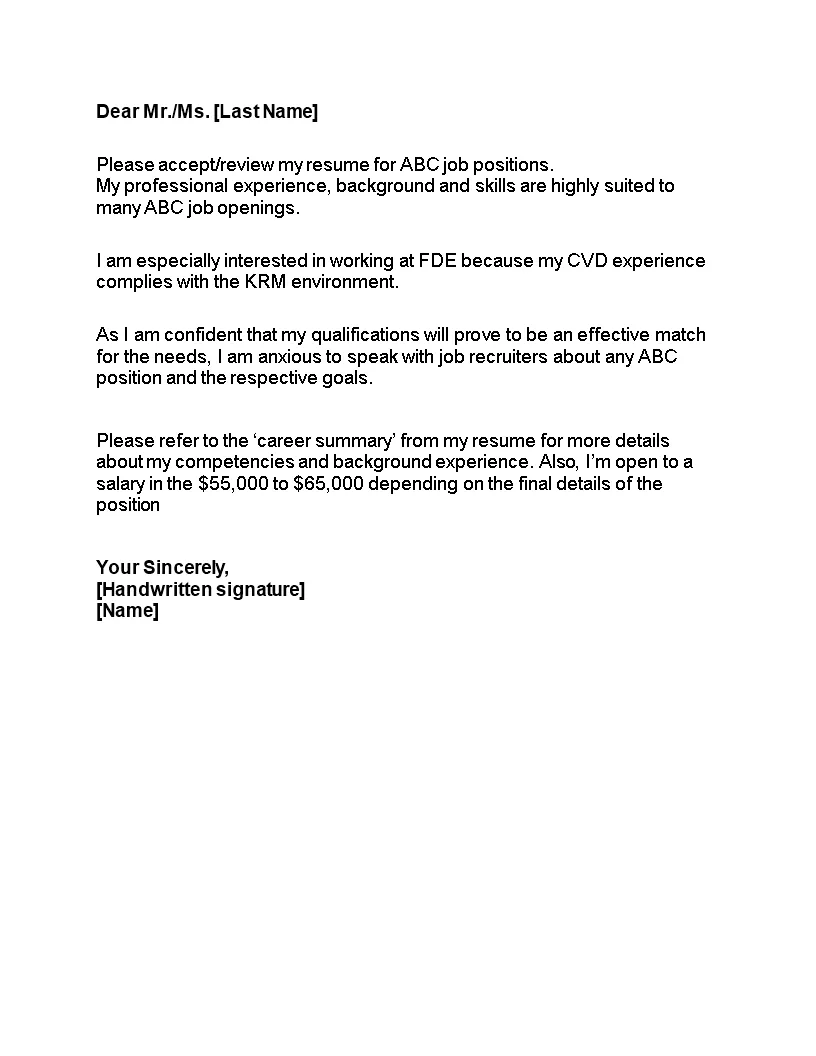
A more common and often preferred approach is to address salary requirements towards the end of your cover letter. This allows you to first highlight your qualifications and express your enthusiasm for the role. You can then state your salary expectations, or, if appropriate, indicate that your salary requirements are open to negotiation or will be discussed during the interview. This approach gives you more flexibility and the opportunity to showcase your value before discussing compensation.
Top 5 Tips for Addressing Salary

Now that you have a strong foundation of understanding, here are five essential tips to help you craft a compelling cover letter addressing salary requirements.
Tip 1 Be Specific
Whenever possible, be specific with your salary expectations. Instead of saying “competitive salary,” provide a salary range. This demonstrates that you have researched the market and have a clear idea of your worth. Provide a realistic range based on your research, and be prepared to discuss it during the interview. This clarity avoids ambiguity and shows the employer you are serious about the opportunity.
Tip 2 Use a Range
Using a salary range is a smart strategy for several reasons. It allows you to be specific while also leaving room for negotiation. The lower end of the range indicates your minimum acceptable salary, while the higher end reflects your desired compensation. This gives the employer flexibility, especially if they are offering benefits or other perks. A well-defined range also shows your awareness of industry standards and your ability to adapt.
Tip 3 Focus on Value

Frame your salary expectations in terms of the value you bring to the company. Emphasize your skills, experience, and accomplishments, and explain how they will contribute to the company’s success. This approach shifts the focus from mere compensation to the return on investment the employer will receive by hiring you. By highlighting your value, you justify your salary expectations and increase your negotiation power. Also, you are positioning yourself as an asset.
Tip 4 Be Flexible
Demonstrating flexibility can significantly improve your chances of success. State that you are open to negotiation, particularly if the company offers excellent benefits or growth opportunities. This shows the employer you’re not solely focused on the base salary, but on the overall package. Flexibility also indicates your willingness to work with the company to reach an agreement. Being flexible shows your desire to be a team player.
Tip 5 Proofread Carefully
Proofreading is essential to avoid mistakes that could undermine your credibility. Ensure your cover letter is free from typos, grammatical errors, and inconsistencies. A polished cover letter demonstrates attention to detail and professionalism. Errors can create a negative impression and might make the employer doubt your qualifications. Always read your cover letter multiple times and have someone else review it before submitting it. It also provides a fresh perspective.
Cover Letter Examples for Salary Requirements

To further illustrate these tips, here are some examples of how to address salary requirements in your cover letter, tailored to different scenarios.
Example 1 Entry-Level Position
For an entry-level position, you might write: “Based on my research and understanding of entry-level roles in this field, I am seeking a salary in the range of $45,000 - $50,000 per year. I am eager to apply my skills and learn from the experienced team at your company. I am confident that I can quickly make a valuable contribution.”
Example 2 Experienced Professional
For an experienced professional, you might write: “With over ten years of experience in project management and a proven track record of delivering successful projects, I am seeking a salary in the range of $90,000 - $105,000. My expertise in streamlining processes and leading cross-functional teams has consistently resulted in increased efficiency and cost savings. I am open to discussing this further during the interview.”
Example 3 Open to Negotiation

If you prefer to be open to negotiation, you might write: “I am very enthusiastic about the opportunity to join your team. My salary expectations are competitive, and I am open to negotiation based on the overall compensation package, including benefits and performance-based incentives. I am eager to discuss my qualifications and how they align with your needs.”
Avoiding Common Mistakes
Avoiding common mistakes can significantly increase your chances of success. Be careful to avoid actions that could negatively impact your application.
Mistake 1 Not Addressing Salary at All
Failing to address salary requirements can be a mistake, especially if the job posting explicitly requests it. This might suggest you’re not serious about the role or haven’t considered your compensation expectations. If the posting is vague, it’s generally best to address it at the end, but make sure you address the issue.
Mistake 2 Being Too Demanding
Being too demanding with your salary expectations, especially early in the process, can be detrimental. Research the industry standard and your worth before making any declarations. Presenting an unrealistic salary range could lead to your application being rejected. Instead, be realistic and base it on your experience, the job requirements, and the company’s overall compensation structure. Always be reasonable.
Mistake 3 Being Vague
Being vague, with phrases like “competitive salary,” doesn’t provide the clarity employers want. This vagueness can be interpreted as a lack of preparation or a reluctance to state your worth. Provide a specific salary range or, if appropriate, indicate your flexibility in terms of negotiation. Specificity is key to showing you’ve done your homework and are serious about the opportunity.
Conclusion
Addressing salary requirements in your cover letter doesn’t have to be stressful. By researching industry standards, tailoring your approach, and following the tips outlined, you can present your salary expectations professionally and increase your chances of landing an interview. Remember to always highlight your value, be specific, and remain flexible. With careful preparation and execution, you will confidently navigate this critical aspect of the job application process and move closer to securing your desired role.