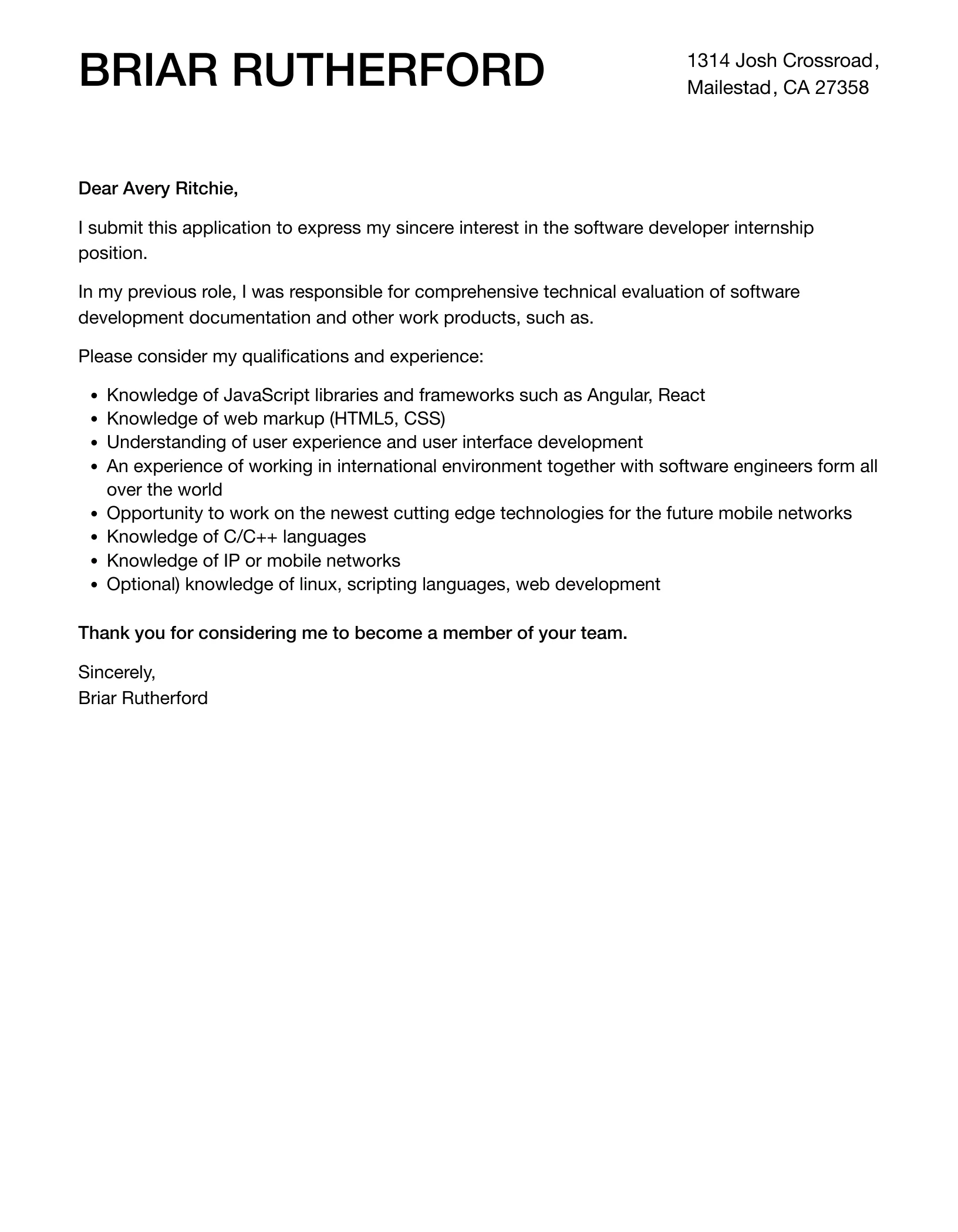
Cover Letter Secrets
Landing a software engineer internship is a significant step in your career, and a well-crafted cover letter is your secret weapon. It’s your first impression, a chance to showcase your skills and passion beyond your resume. This guide will unlock the secrets to writing a cover letter that not only grabs the attention of hiring managers but also significantly increases your chances of securing that coveted internship position. We’ll delve into the essential components, best practices, and common pitfalls to avoid, ensuring your cover letter stands out from the competition and positions you for success.
Understanding the Purpose of a Cover Letter
The purpose of a cover letter for a software engineer internship extends beyond simply repeating what’s on your resume. Think of it as your opportunity to tell a story—a story about your aspirations, your skills, and why you’re the perfect fit for the role. It’s where you demonstrate your personality, your enthusiasm, and your understanding of the company and the internship program. It’s not just a formality; it’s a crucial tool for making a strong first impression and showcasing your genuine interest in the opportunity. A well-written cover letter shows the employer that you’ve taken the time to learn about the role and company.
Why a Cover Letter Matters

In a competitive field like software engineering, a cover letter can be the deciding factor. It provides context to your resume, allowing you to elaborate on your experiences and explain how your skills align with the internship’s requirements. It allows you to highlight any relevant projects, coursework, or personal initiatives that showcase your abilities. Moreover, a cover letter shows your attention to detail, writing skills, and professionalism. It proves you’re willing to go the extra mile, which is a quality that many employers highly value in potential interns. The cover letter provides a chance to connect with the hiring manager on a personal level, making your application more memorable.
Key Components of a Cover Letter
Header and Contact Information
Start with a professional header that includes your full name, contact information (phone number and email address), and the date. If you’re applying online, you might not need your physical address. Ensure your email address is professional, and your voicemail is set up. Including your LinkedIn profile URL is also a smart idea, as it provides employers with easy access to more information about your experience and accomplishments. Make sure the formatting is clean and easy to read, as this immediately sets a professional tone for your application. This is the very first thing a hiring manager sees, so it needs to be spot on. A well-formatted header will demonstrate your attention to detail.
The Salutation

Address your letter to a specific person whenever possible. Research the hiring manager’s name or the contact person for the internship. A personalized salutation, such as “Dear Mr./Ms. [Last Name],” demonstrates that you’ve done your homework and taken the time to tailor your application. If you can’t find a specific name, use a professional greeting, such as “Dear Hiring Manager,” but avoid generic greetings like “To Whom It May Concern.” Personalization shows you’re genuinely interested in the position and have taken initiative in your application process. It shows that you’re willing to put in the effort to make a good impression, and it makes your application more engaging.
Opening Paragraph Hook
Your opening paragraph is crucial. It needs to grab the reader’s attention immediately. Start with a compelling statement about why you’re excited about the internship or the company. Briefly mention the specific position you are applying for and how you discovered the opportunity. Showing your enthusiasm and passion is the first step towards making a lasting impression. Consider mentioning a specific project you’ve worked on, a skill you’ve developed, or a unique aspect of the company that resonates with you. This initial statement sets the tone for the rest of your letter, piquing the reader’s interest and encouraging them to continue reading. Make sure your opening paragraph is concise, compelling, and relevant to the role.
Body Paragraphs
The body paragraphs are where you showcase your skills, experience, and qualifications. Break down your content into clear, concise paragraphs. Explain how your skills and experiences align with the requirements of the internship. Instead of simply listing your skills, provide concrete examples of how you’ve used them in projects or previous experiences. Use the STAR method (Situation, Task, Action, Result) to structure your examples, illustrating your abilities and contributions. Avoid jargon and technical terms that may be difficult for a non-technical reader to understand. Focus on the value you can bring to the company and the internship, emphasizing your accomplishments and your potential.
Highlighting Relevant Skills and Experience

Carefully review the job description and identify the key skills and requirements the company is seeking. Then, tailor your cover letter to directly address those requirements. Highlight the skills and experiences that align with the internship’s needs, providing specific examples of how you’ve demonstrated those skills. This could include programming languages you’re proficient in, projects you’ve worked on, or technical skills you’ve acquired. It’s essential to use keywords from the job description to demonstrate that you understand the role and are a good fit. Make sure your skills and experiences are relevant to the specific software engineering internship you’re applying for. Show how your qualifications make you the ideal candidate for the internship opportunity.
Quantifying Achievements
Whenever possible, quantify your achievements. Instead of saying, “Improved code quality,” say, “Improved code quality by 25% by implementing new testing strategies.” Use numbers and data to demonstrate the impact of your work. This helps employers better understand your abilities and contributions. If you led a project, mention the size of the team, the budget, and the results achieved. Quantifiable achievements provide concrete evidence of your skills and abilities, making your application more persuasive and memorable. It adds credibility to your claims, allowing the hiring manager to see the value you bring to the table. Use data to illustrate your impact in previous projects.
Tailoring the Cover Letter to the Internship
Customize your cover letter for each internship opportunity. Generic cover letters are easily detectable and make a poor impression. Research the company and the specific internship role. Show that you understand the company’s mission, values, and culture. Demonstrate your enthusiasm for the specific opportunity and how your skills and experiences align with their needs. Mention any specific projects or technologies that the company uses and that you’re familiar with. This shows initiative and a genuine interest in the position. Avoid using a generic template and tailor your application to each specific internship. This demonstrates that you have taken the time to understand the company.
Closing Paragraph

Your closing paragraph should reiterate your interest in the internship and thank the hiring manager for their time and consideration. Summarize your key qualifications and express your eagerness to learn and contribute to the team. Reiterate your enthusiasm for the specific opportunity and how your skills and experience align with their needs. Keep the tone professional and enthusiastic. Make sure your closing statement is memorable and leaves a positive impression. This is the last thing the hiring manager will read, so it’s a crucial opportunity to reinforce your interest and enthusiasm. A strong closing can make your application stand out.
Call to Action
Include a clear call to action, such as expressing your availability for an interview or follow-up. Encourage the hiring manager to contact you if they have any questions. Provide your contact information again in the closing. Make it easy for the hiring manager to take the next step. A simple statement like, “I am eager to discuss my qualifications further in an interview” is effective. Ensure your contact information is up-to-date and that you check your email regularly for responses. This proactive step shows that you’re serious about the opportunity and eager to move forward in the hiring process. Show the hiring manager you are enthusiastic to discuss the position.
Formatting and Design
Font and Readability

Choose a professional font, such as Times New Roman, Arial, or Calibri. Use a font size between 10 and 12 points for body text and 12-14 points for headings. Maintain a consistent font throughout the document. Use clear formatting to make your cover letter easy to read. Use bolding, italics, and bullet points sparingly to highlight key information. Ensure proper spacing between paragraphs and sections. A well-formatted cover letter is essential for readability. Use white space effectively to avoid a cluttered look. The font choice and formatting significantly impact the first impression of your application.
Proofreading and Editing
Proofread your cover letter meticulously for any typos, grammatical errors, and punctuation mistakes. These errors can undermine your credibility. Use spell check and grammar check tools, but don’t rely on them entirely. Have a friend or family member review your cover letter to catch any errors you might have missed. Ensure that your writing is clear, concise, and error-free. A cover letter filled with errors will negatively impact your application. A flawless cover letter demonstrates your attention to detail and professionalism, qualities employers look for in software engineers. Proofreading is crucial for presenting your best self.
Common Mistakes to Avoid
Generic Letters

Avoid using a generic cover letter template. Tailor your letter to each specific internship opportunity and company. Demonstrate your genuine interest in the role by researching the company, the team, and the specific technologies they use. Personalize the letter by addressing the hiring manager by name and highlighting specific aspects of the internship that appeal to you. Generic letters do not demonstrate your understanding of the role. Customize your cover letter to stand out and reflect your personal interest in the specific software engineering internship.
Typos and Grammatical Errors
Typos, grammatical errors, and punctuation mistakes can undermine your credibility and professionalism. Proofread your cover letter carefully, and have someone else review it as well. Even a single error can create a negative impression. Ensure your writing is clear, concise, and error-free. Using tools to help with these issues can be a good practice. These errors make your application seem unprofessional and reflect negatively on your attention to detail. A perfect cover letter shows that you care about your work.
Lying or Exaggerating
Avoid lying or exaggerating your skills or experience. Honesty and transparency are essential in the job application process. Be truthful about your abilities and accomplishments. Focus on showcasing your strengths and potential, and don’t try to be someone you’re not. Exaggerating your skills is a major red flag. It can lead to disappointment and even termination. If you’re caught lying on your cover letter, you may lose your chance to get an interview. Be truthful and present an accurate representation of your skills.
Cover Letter Examples
Software Engineering Internship Cover Letter Example
A good cover letter example is an excellent way to understand the structure and tone. Look for examples online that align with the type of internship you’re applying for. Study the language, formatting, and content of successful cover letters. Adapt the examples to fit your own experiences and the specific requirements of the software engineering internship. Use these examples as a starting point, making sure to customize them to reflect your own unique background and skills. Ensure the example is appropriate for your situation.
Tips for Different Internship Types
Tailor your cover letter to the type of software engineering internship you are applying for. Research the specific requirements of the internship program and the company’s mission. Highlight the skills and experiences most relevant to that specific role. For example, if you’re applying for a front-end development internship, emphasize your experience with JavaScript, HTML, and CSS. If you are applying for a data science internship, highlight your knowledge of Python, machine learning, and data analysis techniques. Consider the skills and knowledge that are most in demand for the position. By tailoring your cover letter, you’re showcasing your interest.
Final Thoughts
A well-crafted cover letter can significantly increase your chances of securing a software engineer internship. By following these tips, you can create a cover letter that showcases your skills, experience, and enthusiasm. Remember to tailor your cover letter to each specific opportunity, and always proofread it carefully. Writing a strong cover letter is about showing that you are the best candidate for the role. By presenting yourself professionally, you are one step closer to securing your dream internship. Your cover letter will be a critical factor in your job search success.