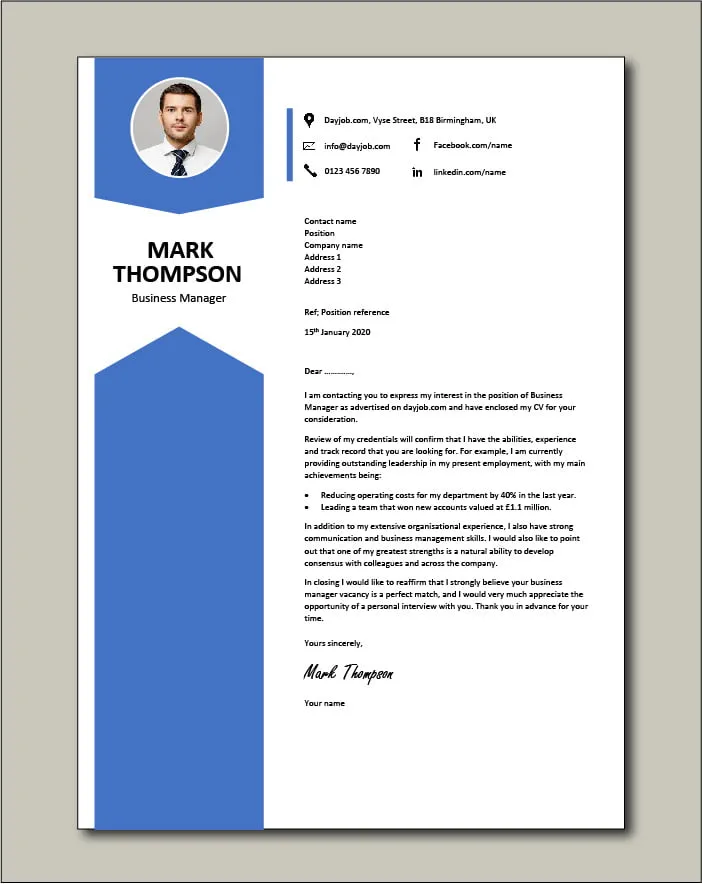
Cover Letter for Business Managers The Fundamentals
A cover letter is a crucial tool for business managers seeking new opportunities. It serves as your introduction, a snapshot of your qualifications, and a showcase of your personality and communication skills. Unlike a resume, which provides a factual overview, a cover letter allows you to articulate your passion for the role, explain how your skills align with the company’s needs, and demonstrate your understanding of the business landscape. It’s your chance to make a strong first impression and encourage the hiring manager to read your resume. Remember, a well-crafted cover letter is not just a formality; it’s a strategic advantage that can significantly increase your chances of landing an interview.
Understanding the Role of a Business Manager
Before crafting your cover letter, it’s essential to understand the multifaceted role of a business manager. These professionals are the linchpins of organizations, responsible for overseeing various aspects of operations, from finance and marketing to human resources and strategic planning. They often act as liaisons between different departments, ensuring smooth communication and collaboration. Business managers must possess a diverse skill set, including strong leadership abilities, analytical thinking, problem-solving expertise, and excellent communication skills. They are expected to make critical decisions, manage budgets, and drive performance improvements. Highlighting your relevant experiences and skills in your cover letter is vital to show you understand this role.
Key Responsibilities of Business Managers

Business managers wear many hats, juggling a range of responsibilities. These can include developing and implementing business strategies, managing budgets and financial performance, overseeing daily operations, and leading and motivating teams. They are often involved in hiring, training, and performance management. Effective business managers are adept at risk management, identifying potential threats and developing strategies to mitigate them. They also need to have strong customer service skills and the ability to build and maintain relationships with clients and stakeholders. When writing your cover letter, make sure to highlight the responsibilities that align with the job you are applying for and show that you have experience in these key areas.
Essential Tips for Writing a Strong Cover Letter
A compelling cover letter requires careful planning and execution. Begin by researching the company and the specific role. Tailor your letter to match the job description, emphasizing the skills and experiences most relevant to the position. Use clear, concise language and avoid jargon that might confuse the reader. The tone should be professional yet personable, reflecting your enthusiasm for the opportunity. Focus on your achievements and quantifiable results rather than just listing your responsibilities. Proofread meticulously to eliminate any grammatical errors or typos, as these can undermine your credibility. A well-written cover letter tells a story, showcasing your value proposition and making a strong case for why you are the ideal candidate.
Highlighting Relevant Skills and Experience
Your cover letter is your opportunity to showcase your skills and experience. Carefully review the job description and identify the key requirements. Then, highlight your relevant skills, providing specific examples of how you’ve used them in the past. For instance, if the job requires project management skills, describe a project you led, the challenges you overcame, and the results you achieved. Quantify your achievements whenever possible; for example, “Successfully managed a team of 10, increasing sales by 15% within six months.” This provides concrete evidence of your abilities and demonstrates your value to the potential employer. Make sure your skills are aligned with the company’s core values.
Quantifying Achievements and Results

Numbers speak louder than words. When describing your achievements, use quantifiable results to demonstrate your impact. Instead of saying “Improved customer satisfaction,” say “Increased customer satisfaction scores by 20%.” Instead of saying “Managed a budget,” say “Managed a $1 million budget, consistently delivering projects under budget.” Use metrics to illustrate your successes and make your claims more credible. This approach not only shows your accomplishments but also highlights your ability to analyze data and track progress. Quantifying your achievements immediately sets you apart from other candidates who may only use vague descriptions of their work. For business managers, showing how you helped improve the bottom line or increase efficiency is very effective.
Tailoring the Cover Letter to the Job Description
Generic cover letters are easily spotted and often discarded. To make your application stand out, tailor your cover letter to each specific job. Carefully analyze the job description and identify the key requirements, skills, and qualifications the employer is seeking. Then, customize your cover letter to directly address these requirements. Highlight the experiences and skills that align with the job description, and use keywords from the description to demonstrate that you understand the role and the company’s needs. Explain how your past experiences have prepared you to excel in this particular position. Demonstrating that you took the time to understand the requirements of the role can make a great impression.
Formatting and Structure for Business Managers
Proper formatting and structure are essential for a professional cover letter. Use a clean, easy-to-read font such as Arial or Times New Roman. Ensure your letter is well-organized, with a clear introduction, body paragraphs, and a concise conclusion. Address the hiring manager by name if possible; otherwise, use a professional salutation, such as “Dear Hiring Manager.” In the introduction, state the position you’re applying for and how you learned about the opportunity. In the body, highlight your key skills and experiences, providing specific examples and quantifiable results. In the conclusion, reiterate your interest in the position and express your eagerness to discuss your qualifications further. Your formatting should be consistent and easy on the eyes.
Choosing the Right Tone and Language

The tone and language you use should be appropriate for a professional setting. Be confident and enthusiastic but avoid sounding arrogant. Use clear, concise language and avoid overly complex or technical jargon unless it is relevant to the role. Your writing should be grammatically correct and free of errors. Proofread your cover letter carefully to ensure a polished final product. Maintain a positive and professional tone throughout. The language should reflect your personality while conveying your qualifications and interest in the position. The correct tone can make you seem confident and knowledgeable without seeming boastful.
Proofreading and Editing for Perfection
Proofreading and editing are non-negotiable steps. Even the most well-written cover letter can be undermined by typos or grammatical errors. Before submitting your cover letter, carefully proofread it multiple times. Read it aloud to catch any awkward phrasing or run-on sentences. Consider having a friend or colleague review your letter for a fresh perspective. Pay close attention to spelling, grammar, punctuation, and sentence structure. Ensure your formatting is consistent and professional. Errors can create a negative impression and make you appear careless or inattentive to detail. Take the time to ensure your cover letter is polished and error-free. A few minutes spent proofreading can make a world of difference in securing an interview.
Common Mistakes to Avoid in Cover Letters
Several common mistakes can sabotage your cover letter. Avoiding these pitfalls is crucial for making a positive impression. Be aware of the common issues that can cost you a chance at an interview, and take the steps needed to avoid them. Correcting the mistakes can help your cover letter shine.
Generic Openings and Closings

Generic openings and closings show a lack of effort and attention to detail. Avoid using generic phrases like “To Whom It May Concern” or “Sincerely.” Instead, address the hiring manager by name whenever possible, or use a professional salutation. In your closing, avoid clichés like “Thank you for your time” and instead express your enthusiasm for the opportunity and reiterate your interest in the role. Tailor your opening and closing to reflect the specific job and the company. Doing so shows that you are not just sending out a mass email, but that you have put thought and care into your application. This makes you appear more serious and helps the hiring manager know you are paying attention.
Lack of Specificity and Detail
Vague language and a lack of specific details can leave the reader with a weak impression. Avoid making general statements about your skills and experiences. Instead, provide concrete examples and quantifiable results. For instance, instead of saying “Managed projects successfully,” say “Successfully managed five projects simultaneously, delivering them on time and under budget, resulting in a 10% increase in efficiency.” The more specific you are, the more compelling your cover letter will be. Show rather than tell, and provide evidence to back up your claims. The more detail you provide, the easier it is for the hiring manager to see that you are the right person for the job.
Overuse of Jargon and Clichés
Overusing jargon and clichés can make your cover letter difficult to understand and can make you seem unoriginal. Avoid using industry-specific terms and phrases that the hiring manager may not be familiar with, unless you are sure the hiring manager is familiar with them. Clichés can make your writing sound stale and uninspired. Use clear, concise language and express your ideas in your own words. Focus on conveying your unique perspective and showcasing your personality. Using unique and clear language makes you seem more personable and shows the hiring manager who you really are. You don’t need to be generic, so make sure to let your personality shine.
Resources and Further Guidance for Business Managers

Several resources can help business managers write effective cover letters. Online resources, such as resume and cover letter templates, can provide a starting point and offer guidance on formatting and content. Professional career counselors can offer personalized advice and feedback on your cover letter. Networking with other business managers can provide insights into industry best practices and job opportunities. Furthermore, reading sample cover letters for business manager positions can give you ideas for content and style. Many online resources offer free cover letter reviews. Taking advantage of these resources can help you improve your cover letter and increase your chances of landing an interview.