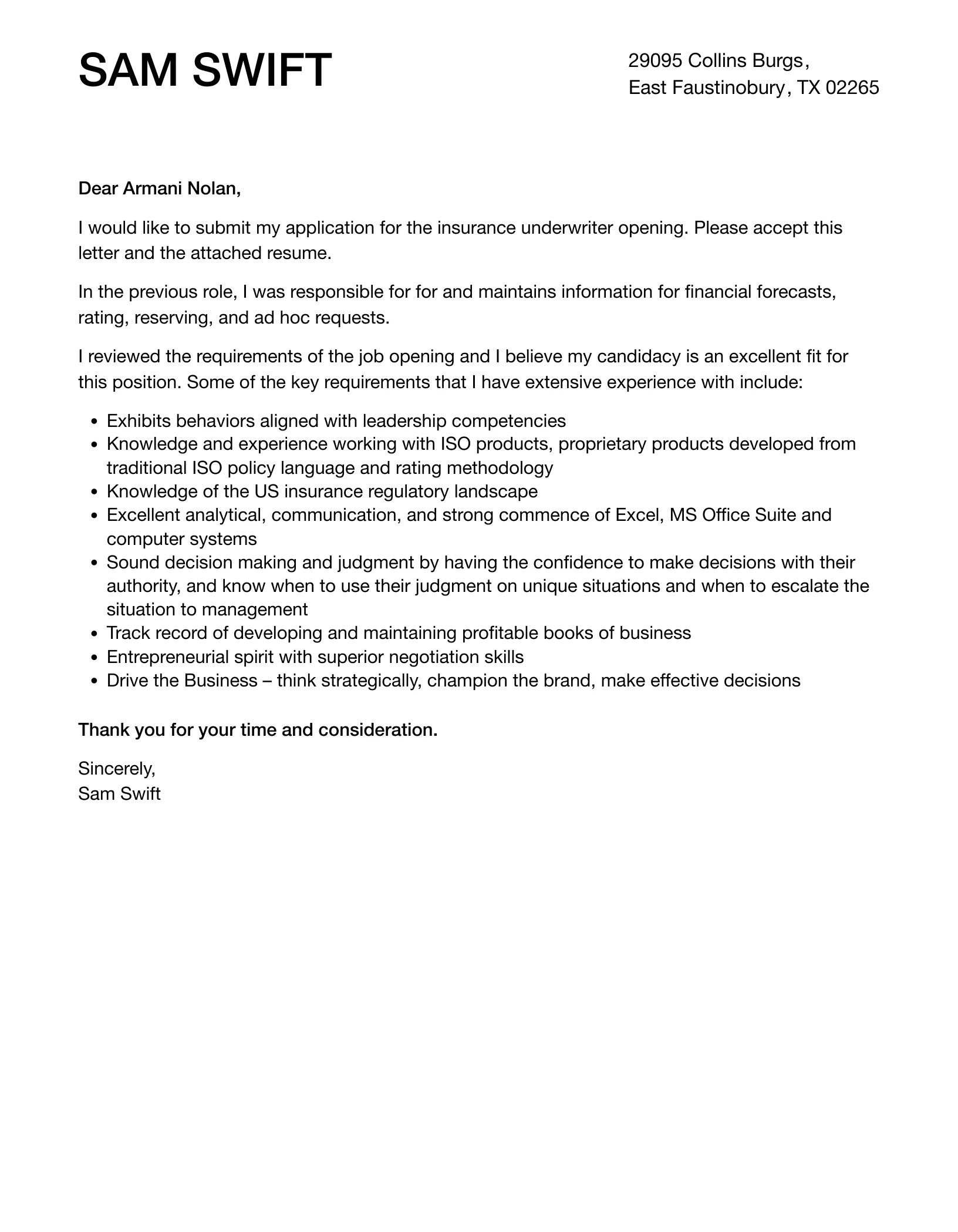
A well-crafted cover letter is your first impression in the competitive field of insurance underwriting. It’s more than just a formality; it’s a strategic tool to showcase your skills, experience, and personality. This guide provides essential cover letter tips tailored for insurance underwriters, ensuring your application stands out and captures the attention of hiring managers. By focusing on key elements and avoiding common pitfalls, you can significantly increase your chances of landing an interview and securing your desired position. From highlighting your underwriting expertise to demonstrating your soft skills, learn how to make a lasting impact with your cover letter.
Highlighting Your Insurance Underwriting Skills
Your cover letter should immediately spotlight your insurance underwriting skills. This section is critical for establishing your expertise and aligning your qualifications with the job requirements. Begin by clearly stating your understanding of the underwriting process and the specific types of insurance you have experience with, such as property, casualty, or life insurance. Then, detail your proficiency in risk assessment, policy evaluation, and claims analysis. Use industry-specific terminology and keywords from the job description to demonstrate that you are a knowledgeable and suitable candidate. Focus on the value you bring to the table, such as your ability to assess risk accurately, make informed decisions, and contribute to the profitability of the insurance company.
Quantifying Achievements in Your Cover Letter
Instead of merely listing your responsibilities, quantify your achievements. This is where you show the tangible impact you’ve made in previous roles. Use numbers, percentages, and specific data to illustrate your accomplishments. For example, instead of saying you ‘reduced errors,’ state that you ‘reduced policy errors by 15% within one year through the implementation of a new review process.’ This approach immediately grabs the reader’s attention and offers a clearer picture of your capabilities. It shows that you not only have the skills, but you know how to apply them to achieve measurable results. This data-driven approach differentiates you from other candidates and establishes your credibility as a results-oriented underwriter.
Using Numbers to Showcase Success

Numbers are powerful tools in a cover letter. They provide concrete evidence of your success and make your claims more persuasive. For instance, if you’ve improved the efficiency of your underwriting process, specify by how much. Did you increase the number of policies reviewed per day by 20%? Did you help the company save a certain amount of money by identifying and mitigating high-risk policies? Including these figures makes your accomplishments more vivid and shows potential employers that you are capable of making a significant contribution to their organization. Always aim to back your statements with solid numerical data to demonstrate the value you bring as an insurance underwriter.
Tailoring Your Cover Letter to the Role
Generic cover letters are easily spotted and often disregarded. Customize each cover letter to the specific job you are applying for. Start by carefully reading the job description and identifying the key skills and experiences the employer is looking for. Then, structure your cover letter to directly address these requirements, ensuring that you highlight your relevant qualifications. Tailor your language and tone to reflect the company’s culture and the specific role. This personalized approach demonstrates that you have taken the time to understand the company and are genuinely interested in the position. This targeted approach increases your chances of getting noticed and showing that you’re a perfect fit for the job.
Researching the Company and its Needs
Before you start writing, research the company and the specific department you are applying to. Understanding their values, mission, and current challenges allows you to tailor your cover letter to their needs. Look at the company’s website, read industry publications, and check their social media profiles to gain insights into their priorities and recent projects. Mention any recent company achievements or specific projects that resonate with your experience. By showing that you understand the company’s goals and can contribute to its success, you increase your chances of making a strong impression and positioning yourself as a valuable asset.
Showcasing Relevant Experience

In addition to highlighting your skills, your cover letter should showcase your relevant experience. Describe your previous roles and responsibilities, focusing on those that align with the requirements of the job you are applying for. Detail your experience in risk assessment, policy evaluation, claims processing, and any other underwriting-related tasks. Be clear about the types of insurance policies you have worked with, such as commercial, personal, or specialty lines. Explain how your experience has prepared you for this new role, providing specific examples of successful projects or outcomes. Emphasize achievements that demonstrate your expertise and highlight your ability to handle the challenges of the insurance underwriting role.
Demonstrating Technical Expertise
Insurance underwriting requires a high level of technical expertise. Showcase your proficiency in relevant software, tools, and methodologies. Mention any experience you have with underwriting systems, risk assessment tools, and policy administration platforms. If you have certifications or training in underwriting or related fields, be sure to list them. Furthermore, demonstrate your understanding of industry regulations and compliance standards. Highlighting these technical skills shows that you’re ready to handle the technical aspects of the role effectively and contribute to the company’s operational efficiency.
Mentioning Specific Software Proficiencies
In today’s insurance industry, proficiency in specific software and tools is crucial. Make sure to list the software you are proficient in, such as policy management systems, risk assessment software, and data analysis tools. Provide examples of how you’ve used these tools in your previous roles to improve efficiency, accuracy, or decision-making. Mention your experience with common platforms such as Guidewire, Duck Creek, or other industry-specific applications. Being specific about your software proficiencies will demonstrate your readiness to hit the ground running and quickly contribute to the company’s underwriting processes.
Communicating Soft Skills Effectively

While technical skills are essential, don’t overlook the importance of soft skills. Insurance underwriting requires strong communication, problem-solving, and analytical abilities. Emphasize your ability to work as part of a team, communicate clearly with colleagues and clients, and make informed decisions under pressure. Mention your organizational skills, your attention to detail, and your ability to manage multiple tasks simultaneously. Provide specific examples of how you’ve used your soft skills to resolve complex issues, collaborate with others, or improve processes. Show the hiring manager that you are a well-rounded candidate with the interpersonal skills necessary for success.
Emphasizing Attention to Detail
Attention to detail is crucial in insurance underwriting, where accuracy is paramount. Explicitly mention your attention to detail and give examples of how you ensure accuracy in your work. Explain how you’ve used thoroughness and precision in risk assessments, policy reviews, and claims analysis. Highlight any processes or methods you use to minimize errors, such as double-checking data or using checklists. Show that you understand the importance of accuracy in underwriting and are committed to providing high-quality work. This is a key trait that insurance companies look for in their underwriters, so make sure it is clearly highlighted in your cover letter.
Structuring Your Cover Letter for Impact
The structure of your cover letter is as important as its content. A well-organized cover letter is easy to read, highlights your key qualifications, and maintains the reader’s interest. Use a professional format, with a clear introduction, body paragraphs, and a strong conclusion. The introduction should grab the reader’s attention and state your interest in the position, the body should showcase your skills and experience, and the conclusion should reiterate your enthusiasm and call to action. Use headings and bullet points to break up the text, making it more scannable and easier to digest. A structured and organized cover letter will make a strong impression and make it easy for the hiring manager to see why you are the best candidate for the job.
Crafting a Compelling Introduction

Your introduction should immediately grab the reader’s attention and set the tone for the rest of your cover letter. State the specific position you are applying for and how you learned about the opportunity. Briefly explain why you are interested in the role and what makes you a great fit. In the first paragraph, demonstrate your understanding of the company’s values, mentioning any specific company initiatives that align with your skills or experience. By providing a quick overview of your skills and expressing genuine enthusiasm, you can create a positive first impression and encourage the reader to continue reading.
Writing a Strong Body Paragraph
The body of your cover letter is where you highlight your key qualifications and sell yourself to the hiring manager. Use separate paragraphs to discuss your skills, experience, and achievements. Start each paragraph with a topic sentence that summarizes the main point, then provide supporting details and examples. Use action verbs to describe your accomplishments and focus on the value you brought to your previous roles. When possible, link your experiences directly to the requirements listed in the job description. Each paragraph should offer compelling evidence of your abilities and demonstrate your suitability for the insurance underwriter position. Keep the body paragraphs focused and ensure they provide concrete evidence of your qualifications.
Concluding with Confidence
Your conclusion should summarize your interest in the position and reiterate your qualifications. Thank the hiring manager for their time and consideration. State your availability for an interview and provide your contact information. Avoid using generic phrases like ‘Thank you for your consideration.’ Instead, express your enthusiasm for the opportunity and your confidence in your ability to contribute to the company’s success. Include a call to action, such as ‘I am eager to discuss how my skills and experience can benefit your team.’ This leaves the reader with a strong final impression and encourages them to contact you.
Proofreading and Editing

Before you submit your cover letter, always proofread and edit it carefully. Errors in grammar, spelling, or punctuation can undermine your credibility and make you appear unprofessional. Ensure your cover letter is clear, concise, and free of any typos. Reading your cover letter aloud can help you catch errors you might otherwise miss. Consider asking a friend or colleague to review your letter and provide feedback. A polished and error-free cover letter shows that you pay attention to detail and are committed to presenting your best self.
Checking for Grammatical Errors
Grammatical errors in your cover letter can create a negative impression, so thoroughly check your document for any mistakes. Ensure that your subject-verb agreement is correct, and that you are using proper tenses and punctuation. Use a grammar checker, such as Grammarly or ProWritingAid, to identify and correct potential errors. Review your cover letter multiple times to catch any mistakes you might have missed. A well-written and grammatically correct cover letter demonstrates that you possess strong communication skills and pay attention to detail, which are vital for an insurance underwriter.
Ensuring Clarity and Conciseness
Your cover letter should be clear, concise, and easy to read. Avoid using overly complicated language or jargon that the reader may not understand. Each sentence should have a clear purpose, and each paragraph should focus on a specific point. Keep your sentences and paragraphs short and to the point. Eliminate any unnecessary words or phrases that do not add value to your message. Use strong, active verbs to describe your accomplishments and responsibilities. Clarity and conciseness in your cover letter will make it easier for the hiring manager to quickly grasp your qualifications and appreciate your skills as an insurance underwriter.
In conclusion, crafting a compelling cover letter is essential for securing an insurance underwriter position. By following these tips, you can highlight your skills, quantify your achievements, and demonstrate your understanding of the role. Remember to tailor your cover letter to each specific job, showcase your technical expertise, and emphasize your soft skills. A well-structured, proofread, and concise cover letter will significantly increase your chances of standing out and getting hired. Good luck!