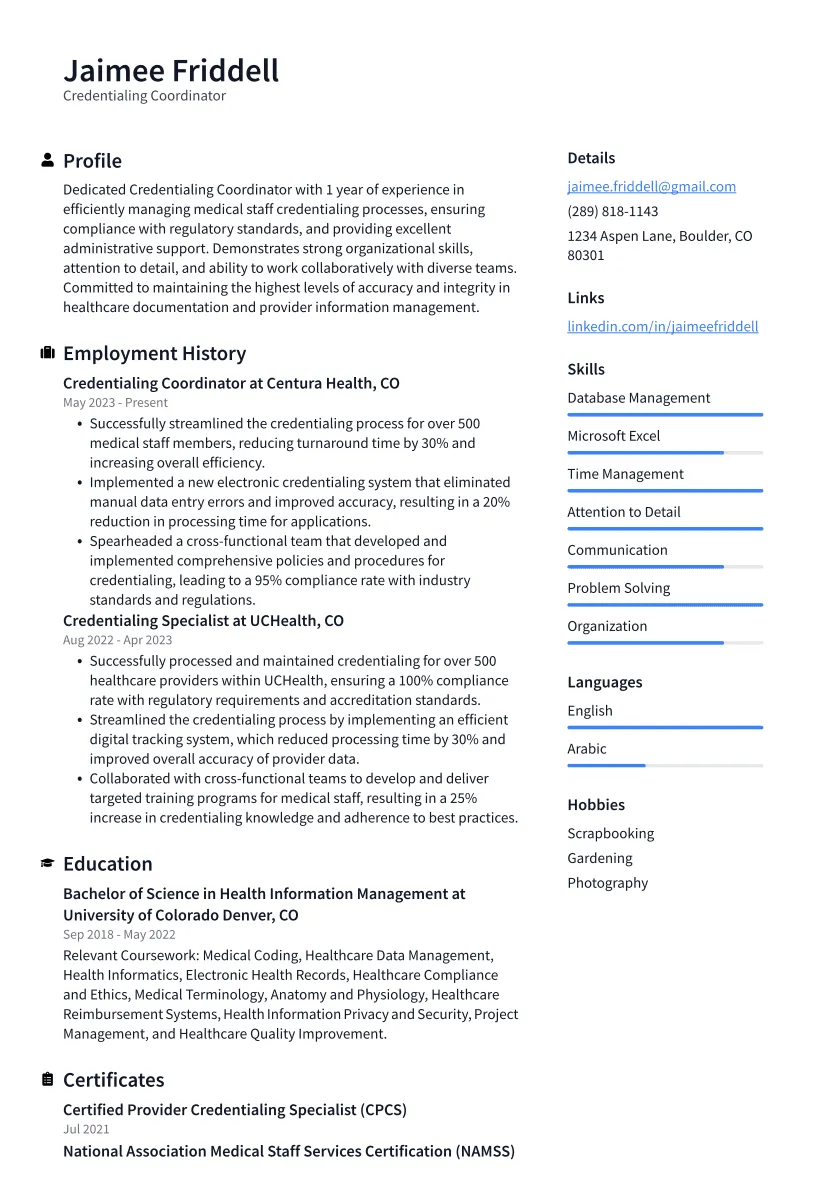
What is a Credentialing Coordinator?
A Credentialing Coordinator plays a crucial role in the healthcare industry, ensuring that medical professionals are properly vetted and credentialed to provide patient care. This involves verifying their qualifications, licenses, and professional experience, and ensuring compliance with regulatory standards. They act as a bridge between healthcare providers, insurance companies, and regulatory agencies, maintaining accurate records and facilitating a smooth credentialing process. The work of a credentialing coordinator directly impacts patient safety and the operational efficiency of healthcare organizations. Their expertise is essential for maintaining a compliant and qualified medical staff, which is critical for both the quality of care and the financial stability of healthcare providers.
Duties and Responsibilities of a Credentialing Coordinator
The responsibilities of a Credentialing Coordinator are multifaceted and demand meticulous attention to detail and strong organizational skills. They manage the entire credentialing process, from initial application to ongoing verification and recredentialing. This includes collecting and verifying documents like medical licenses, certifications, and professional liability insurance. They also communicate with healthcare providers, insurance companies, and regulatory bodies to gather necessary information and resolve any discrepancies. Furthermore, they maintain accurate and up-to-date credentialing databases, ensuring compliance with all applicable standards and regulations. In addition to these core duties, they might also participate in audits, prepare reports, and assist with the implementation of new credentialing policies and procedures. Their work directly influences the smooth operation and regulatory compliance of healthcare practices.
Key Skills for Credentialing Coordinator Cover Letter

When crafting your cover letter for a Credentialing Coordinator position, you must highlight skills that showcase your competence and suitability for the role. Strong organizational skills are paramount, as the job involves managing extensive documentation and deadlines. Attention to detail is equally crucial, as even minor errors can lead to significant compliance issues. Effective communication skills, both written and verbal, are necessary for interacting with various stakeholders, including providers, insurance companies, and internal staff. Proficiency in relevant software, such as credentialing databases and Microsoft Office suite, is often a requirement. Familiarity with healthcare regulations and accreditation standards is also highly valued, as it demonstrates your understanding of the industry. Finally, the ability to work independently, prioritize tasks, and manage time effectively are essential for success in this role, so make sure you can clearly showcase them in your cover letter.
Highlighting Relevant Experience
Your cover letter should not just list your past roles; it must demonstrate how your experience aligns with the specific requirements of the Credentialing Coordinator position. Focus on highlighting experiences that directly translate to the responsibilities outlined in the job description. If you have experience managing credentialing processes, specify the number of providers you managed or the volume of applications you processed. Detail any experience you have with data entry, verification, and database management. If you have worked with specific credentialing software or have knowledge of healthcare regulations, be sure to mention it. Quantify your achievements whenever possible, such as ‘reduced processing time by X%’ or ‘improved compliance rates by Y%.’ Provide specific examples of your work, showing how your skills and experience have resulted in positive outcomes for previous employers, making your cover letter more compelling and demonstrating your value to a potential employer.
Structuring Your Credentialing Coordinator Cover Letter
A well-structured cover letter is as important as its content. Begin with your contact information, including your name, phone number, email address, and LinkedIn profile (optional). Address the hiring manager by name, if possible; otherwise, use a professional salutation. Your cover letter should have a clear introduction, body paragraphs, and a strong conclusion. The introduction should state the position you are applying for and how you learned about it. The body should detail your relevant skills, experience, and achievements, using specific examples to support your claims. Each paragraph should focus on a specific aspect of your qualifications, ensuring clarity and readability. Finally, the conclusion should reiterate your interest in the position and express your eagerness to discuss your qualifications further. Maintain a professional tone throughout the letter, and ensure it is free of grammatical errors and typos.
Contact Information and Formatting

Correct formatting and accurate contact information are the first things a hiring manager will notice. Place your contact information at the top of your cover letter, including your full name, phone number, professional email address, and optionally, your LinkedIn profile URL. Use a clear and easy-to-read font, such as Arial or Times New Roman, with a font size between 10 and 12 points. Maintain consistent formatting throughout the document, including margins, spacing, and alignment. Ensure your cover letter is well-organized, with clear sections and concise paragraphs. Proofread your contact information carefully to avoid any errors that could prevent the hiring manager from reaching you. If you’re submitting the cover letter electronically, save it as a PDF to preserve the formatting and ensure it appears correctly on any device. Always tailor the formatting to suit the specific job and the employer’s preferences.
Writing the Opening Paragraph
The opening paragraph of your cover letter is your opportunity to make a strong first impression. It should immediately state the position you are applying for, the source where you found the job posting, and your overall enthusiasm for the opportunity. If you have a personal connection to the organization or the healthcare field, you can briefly mention it. Keep the opening concise and focused, avoiding generic statements. Instead, highlight a key skill or experience that aligns with the job requirements to capture the reader’s attention. For instance, you might state your experience with a specific credentialing software or your understanding of healthcare regulations. Make sure to express your genuine interest in the role and the organization. It is crucial to quickly demonstrate that you have carefully read the job description and are aware of the key responsibilities and requirements.
Detailing Your Skills and Experience
The body paragraphs of your cover letter are where you provide more detail about your skills, experience, and accomplishments. Use this section to demonstrate how your qualifications match the requirements listed in the job description. For each key skill or experience, provide specific examples of how you have applied them in previous roles. If the job description emphasizes database management, describe your experience with credentialing software and how you have ensured the accuracy and completeness of provider records. If the role requires knowledge of accreditation standards, explain your familiarity with relevant regulations and your ability to ensure compliance. When possible, quantify your achievements to demonstrate your impact. For example, you might state that you ‘successfully managed the credentialing process for over 100 providers’ or ‘reduced credentialing processing time by 15%.’ Tailor the content of your cover letter to highlight the skills and experience most relevant to the specific job you are applying for.
Showcasing Achievements and Quantifiable Results

Showcasing your achievements and quantifiable results is essential for making a strong impression. Rather than simply listing your responsibilities, focus on what you accomplished in previous roles. Use metrics to demonstrate the impact of your work, such as ‘reduced credentialing processing time by 20%’ or ‘improved compliance rates by 10%.’ If you have implemented new processes or technologies, explain the positive outcomes and benefits. When describing your achievements, use action verbs to make your statements more dynamic and impactful. For instance, instead of saying ‘responsible for verifying credentials,’ say ‘verified credentials for over 200 providers, ensuring 100% compliance with regulatory standards.’ Whenever possible, use numbers and data to back up your claims. Highlighting your accomplishments shows potential employers the value you can bring to their organization and helps you stand out from other candidates.
Closing Your Cover Letter
The closing paragraph of your cover letter should reinforce your interest in the position and thank the hiring manager for their time and consideration. Reiterate your enthusiasm for the opportunity and your belief that your skills and experience align with the job requirements. Express your eagerness to discuss your qualifications in more detail during an interview. Include a call to action, such as ‘I am available for an interview at your earliest convenience’ or ‘I look forward to hearing from you soon.’ End your cover letter with a professional closing, such as ‘Sincerely’ or ‘Best regards,’ followed by your full name. Proofread the entire closing paragraph carefully to ensure it is clear, concise, and free of errors. A well-crafted closing paragraph leaves a positive final impression and encourages the hiring manager to contact you.
Tips for Proofreading and Editing Your Cover Letter
Before submitting your cover letter, thorough proofreading and editing are essential steps. Check for any grammatical errors, spelling mistakes, and typos. Ensure that the language is clear, concise, and professional. Read your cover letter aloud to catch any awkward phrasing or sentences. Pay close attention to the formatting, ensuring that the margins, spacing, and font are consistent throughout the document. Ask a friend or colleague to review your cover letter and provide feedback. They can catch errors that you may have missed. Verify that your contact information is accurate and up-to-date. Ensure that the cover letter is tailored to the specific job you are applying for and that all relevant information is included. Proofreading is an essential step to ensure your cover letter represents you in the best possible light, showcasing your attention to detail and commitment to quality.
Credentialing Coordinator Cover Letter Sample

Use the sample as a guide when creating your cover letter. Adapt it to your specific experience, and ensure the information you provide reflects your particular skills and achievements. Be sure to customize the sample with your own information to highlight your qualifications effectively, and customize it to match the specific job requirements and your experience.