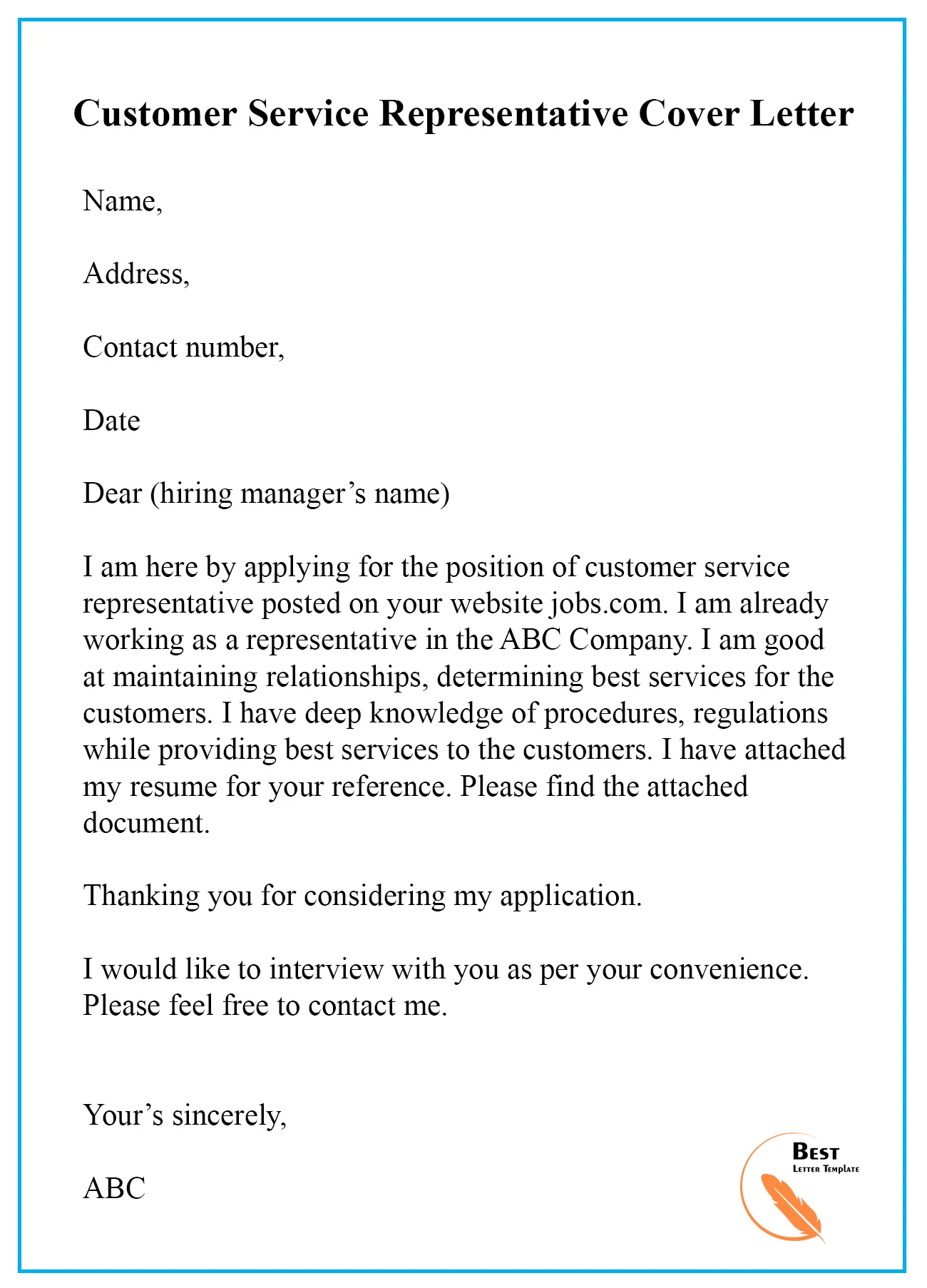
Understanding the Importance of a Customer Service Cover Letter
In the competitive job market, a well-crafted cover letter for a customer service representative position can be the key to unlocking your potential. While your resume provides a snapshot of your experience and qualifications, a cover letter offers the crucial opportunity to connect with the hiring manager on a personal level. It’s a chance to showcase your personality, enthusiasm, and unique value proposition beyond the bullet points. Many applicants underestimate the power of a cover letter, which is a significant misstep, a compelling cover letter can be what sets you apart from all other applicants. It shows that you took the extra time to craft a personalized message, indicating your genuine interest in the role and the company.
Why a Cover Letter Matters
A cover letter matters because it allows you to elaborate on your resume, providing context and depth to your experiences. A cover letter allows you to explain any gaps in employment or unusual career choices. It’s also your chance to highlight specific skills and experiences that are directly relevant to the customer service role. For example, maybe you volunteered or did a project that relates to customer service. Furthermore, a cover letter allows you to demonstrate your understanding of the company and its values. By tailoring your letter to the specific requirements of the job and the culture of the organization, you communicate your genuine interest and suitability for the role. In essence, the cover letter is your first impression, setting the stage for a successful interview.
Highlighting Relevant Skills and Experience

Your cover letter is the perfect platform to showcase the skills and experiences that make you an ideal customer service representative. However, it’s not enough to simply list your skills; you need to demonstrate how you’ve utilized them to achieve positive outcomes. Focus on experiences where you’ve successfully handled customer inquiries, resolved complaints, and provided exceptional service. These experiences are your selling points. Always tailor your letter to the job description and highlight skills and experiences that directly align with the role’s requirements. Doing so demonstrates your ability to add value to the company.
Key Skills to Showcase in Your Cover Letter
When crafting your customer service cover letter, make sure you highlight these skills. Empathy and active listening, the ability to understand customer needs and resolve issues, are crucial. Problem-solving skills are also very critical. Furthermore, strong communication skills, both written and verbal, are also crucial. These skills are crucial to addressing customer inquiries and complaints effectively. Finally, you should demonstrate your adaptability and your capacity to stay calm in stressful situations.
Quantifying Achievements for Impact
Instead of just stating your skills, quantify your achievements whenever possible. For example, rather than saying “Improved customer satisfaction,” you could say “Increased customer satisfaction scores by 15% within six months.” Quantifying your achievements provides concrete evidence of your abilities and the value you bring to the table. It makes your cover letter more impactful and memorable. Use data, numbers, and specific examples to demonstrate your success in previous customer service roles. This approach proves you’re results-oriented and capable of making a real difference.
Structuring Your Customer Service Cover Letter

A well-structured cover letter is essential for making a positive impression. A disorganized or poorly formatted letter can create a negative perception. Your cover letter should be clear, concise, and easy to read. Ensure you follow a logical flow that highlights your key qualifications. A good structure makes the letter more effective and helps you to capture the hiring manager’s attention from the beginning.
The Header Contact Information
Start with a professional header that includes your name, address, phone number, and email address. This information should be clearly displayed at the top of the letter. Make sure your email address is professional-sounding, avoiding nicknames or informal language. The header ensures the hiring manager can easily contact you. This ensures the hiring manager can easily contact you. Include the date and the hiring manager’s name and title, if known, along with the company name and address. This indicates you have paid attention to detail and are genuinely interested in the specific opportunity.
The Greeting Addressing the Hiring Manager
Always address your cover letter to the hiring manager or the specific contact person if possible. If you don’t know the name, research the company’s website or LinkedIn to find out. If you can’t find a name, use a general greeting like “Dear Hiring Manager.” Avoid generic greetings like “To Whom It May Concern,” as they can make your letter feel impersonal. Addressing the letter directly shows you’ve taken the time to personalize your application.
Writing a Compelling Opening Paragraph

Your opening paragraph is your chance to grab the hiring manager’s attention. Start with a concise statement of your interest in the position and briefly highlight why you are a good fit. You should state the specific role you are applying for and where you found the job listing. You could mention a key skill or experience that immediately grabs their attention. Consider including an achievement that demonstrates your ability to excel in a customer service role. This first impression is very important, so make it count by being enthusiastic and confident.
Body Paragraphs Showcasing Your Value
The body paragraphs are where you provide detailed examples of your skills and experiences. Use specific examples to illustrate how you’ve successfully handled customer interactions, resolved complaints, and exceeded expectations. Each paragraph should focus on a specific skill or achievement and should be supported by evidence. Use the STAR method (Situation, Task, Action, Result) to structure your examples. This helps you clearly explain the context, your responsibilities, the actions you took, and the positive outcomes achieved. This structure makes your narrative both engaging and impactful.
Closing the Letter Call to Action
In your closing paragraph, reiterate your interest in the position and express your enthusiasm for the opportunity. Thank the hiring manager for their time and consideration. End with a clear call to action. For example, state that you look forward to the opportunity to discuss your qualifications further in an interview. Include your contact information again and indicate your availability for an interview. A strong closing leaves a positive impression and encourages the hiring manager to move forward with your application.
Formatting and Proofreading for Professionalism

Your cover letter is a reflection of your professionalism, so it’s crucial to ensure it’s well-formatted and free of errors. Pay close attention to the layout, grammar, and spelling. A polished and error-free cover letter demonstrates your attention to detail and respect for the hiring process.
Formatting Tips
Use a professional font such as Times New Roman, Arial, or Calibri, with a font size between 10 and 12 points. Use single-spacing within paragraphs and double-spacing between paragraphs. Ensure that your letter has adequate margins, typically one inch on all sides. Keep your letter concise, ideally one page in length. Break up long paragraphs to improve readability. Use bullet points to highlight key skills or achievements when appropriate.
Proofreading Checklist
Proofreading is an essential step in the application process. Carefully proofread your cover letter for any grammatical errors, spelling mistakes, and typos. Check that all your contact information is correct. Have a friend or family member review your letter. Reading the letter out loud can help you catch errors you might miss when reading silently. Use a grammar and spell checker, but don’t rely on it completely. Ensure that the tone and language of the letter are professional and appropriate for the customer service role.
Examples and Templates to Get You Started

To help you get started, look for cover letter examples and templates specifically designed for customer service positions. These resources provide a structure and can serve as inspiration for your own letter. Adapt the examples to reflect your unique skills and experiences, but do not copy them verbatim. Tailor the template to fit your individual qualifications. There are numerous free online templates that can guide you through the writing process. These resources offer a variety of formats and examples to help you create a compelling cover letter that stands out.
Cover Letter Template for Customer Service
Here’s a basic template you can adapt: Your Name Your Address Your Phone Number Your Email Date Hiring Manager’s Name (if known) Hiring Manager’s Title (if known) Company Name Company Address Dear [Hiring Manager Name], [Opening Paragraph: State your interest and a brief highlight.] [Body Paragraph 1: Highlight relevant skills and experiences.] [Body Paragraph 2: Provide a specific example of an achievement.] [Closing Paragraph: Reiterate interest, thank them, and call to action.] Sincerely, [Your Name]. Remember to customize this template to match the specific job description and company culture.
Common Mistakes to Avoid
Avoid these common mistakes when writing your customer service cover letter. Avoid generic cover letters. Tailor each letter to the specific job and company. Don’t just repeat your resume; provide additional context and details. Avoid using overly casual language or slang. Keep the tone professional and respectful. Do not make spelling or grammatical errors. Proofread carefully. Don’t write a cover letter that is too long. Keep it concise and focused on the most relevant skills and experiences. Avoid negative language and instead, focus on your accomplishments and enthusiasm.
By following these guidelines, you can craft a customer service cover letter that effectively showcases your skills, experience, and personality. Remember, your cover letter is your opportunity to make a strong first impression and secure an interview. Good luck with your job search!