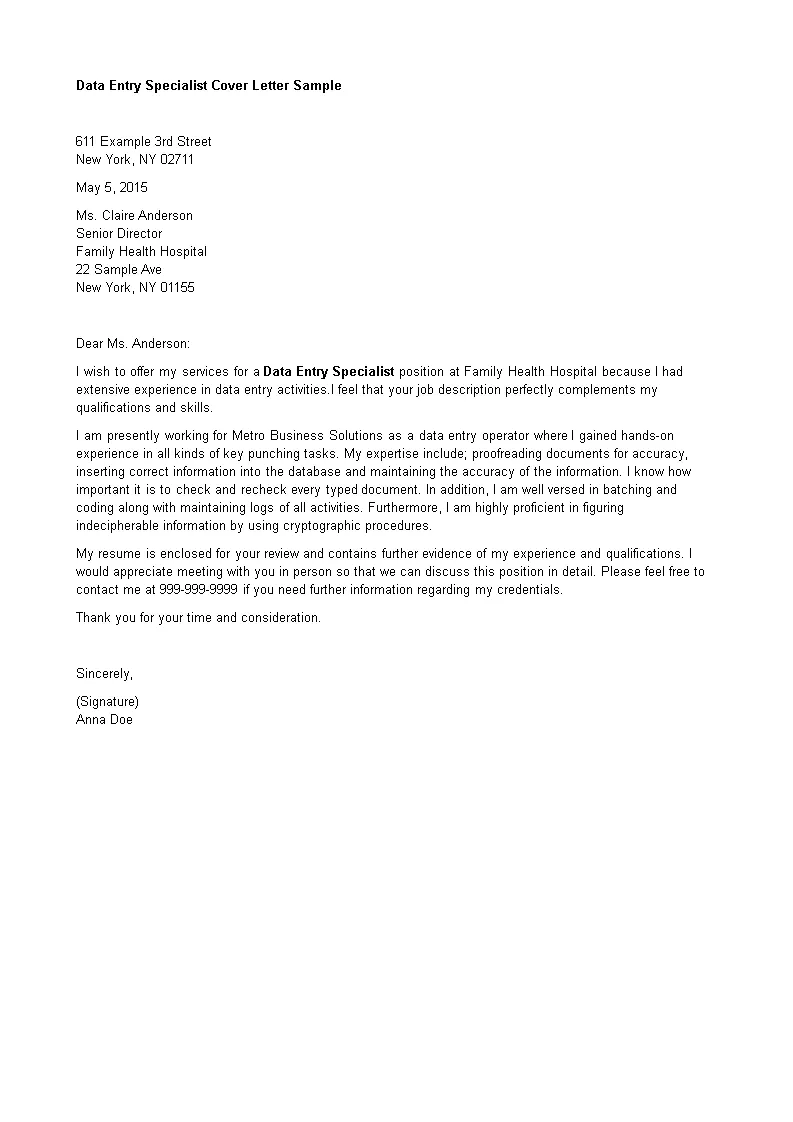
In today’s competitive job market, a well-crafted data entry cover letter is your key to unlocking the door to your dream role. It’s more than just a formality; it’s your first chance to make a lasting impression and showcase why you’re the perfect fit for the position. A strong cover letter complements your resume, providing a platform to highlight your relevant skills, experience, and enthusiasm for the specific job you’re applying for. Ignoring this crucial step could mean missing out on opportunities that perfectly align with your career goals. This guide will walk you through how to create a compelling data entry cover letter that gets noticed and lands you an interview.
Why a Data Entry Cover Letter is Crucial
A data entry cover letter serves as your personalized introduction to the hiring manager. It’s where you go beyond the basic facts presented in your resume and demonstrate your understanding of the role and the company. The cover letter allows you to explain how your skills and experience align with the specific requirements of the job description. Moreover, it gives you the opportunity to express your personality, passion for data accuracy, and your eagerness to contribute to the organization’s success. Without a strong cover letter, you risk being just another applicant in a sea of resumes, potentially missing the chance to highlight your unique qualifications.
Understanding the Data Entry Role
Before you start writing, take a moment to fully understand the data entry role. Data entry professionals are the backbone of many organizations, responsible for accurately inputting and maintaining large volumes of information. This requires more than just typing skills; it involves precision, attention to detail, and a good understanding of data management principles. Data entry specialists often work with sensitive information, so they must be trustworthy and committed to confidentiality. Depending on the role, you may be working with different types of data, such as financial records, customer information, or inventory details, which will impact your cover letter.
Key Skills to Highlight in Your Cover Letter

When writing your cover letter, emphasize the skills that are most relevant to data entry. This includes both technical skills and soft skills that demonstrate your ability to succeed in the role. Tailor your skills section to mirror the requirements in the job description; this is crucial for getting your application past the initial screening phase. Demonstrating these skills effectively through examples and achievements is what separates a good cover letter from a great one. Let’s examine the most critical skills in detail, so you know what to focus on in your application.
Accuracy and Attention to Detail
Accuracy is paramount in data entry, so clearly showcase your ability to maintain a high level of precision. Give specific examples of times when your meticulous approach prevented errors or improved data quality. Mention any quality control measures you’ve used, such as double-checking data or utilizing validation tools. Illustrate situations where your commitment to detail led to positive outcomes, like improved efficiency or reduced errors. For example, “In my previous role at XYZ Company, I consistently achieved a 99.9% accuracy rate while processing over 500 data entries daily. I implemented a double-entry verification system that minimized errors and improved overall data integrity.”
Typing Speed and Efficiency
Data entry requires efficient typing skills. Mention your typing speed (words per minute) and how you’ve maintained a high level of productivity in the past. Provide instances where your typing speed contributed to completing tasks on time or ahead of schedule. Focus on the speed, but remember to emphasize the importance of accuracy. State your WPM and indicate that you’re confident in typing quickly without sacrificing accuracy. For instance, “I have a typing speed of 70 words per minute, and I consistently meet or exceed daily data input quotas while maintaining a high degree of accuracy, ensuring that project deadlines were always met.
Software Proficiency

Specify which software programs you are proficient in, such as Microsoft Excel, Google Sheets, CRM systems, or other relevant applications. Tailor this section to match the software mentioned in the job description. Include your experience using these tools in your previous roles, and indicate your comfort level with these programs. Mentioning specific software and your ability to navigate them effectively will significantly boost your application. “I am highly proficient in Microsoft Excel, including creating spreadsheets, using formulas, and managing large datasets. In my previous role, I used Excel daily to analyze and organize customer data, which improved data organization and analysis.”
Formatting Your Data Entry Cover Letter
A well-formatted cover letter demonstrates professionalism and attention to detail. Use a clear and easy-to-read font, such as Arial or Times New Roman, and maintain consistent formatting throughout the document. Keep your letter concise, ideally within one page. Ensure there are clear sections with headings and bullet points, making it easy for the hiring manager to scan your key qualifications. Proper formatting makes your cover letter more accessible and visually appealing. Remember that a well-structured letter will help you stand out from the crowd and highlight your important skills, experiences, and abilities.
Contact Information and Salutation
Start with your contact information at the top, including your name, phone number, email address, and LinkedIn profile URL (optional). Address the hiring manager by name if possible. If you can’t find the name, use a professional greeting like “Dear Hiring Manager.” This small gesture shows that you’ve done your research and are serious about the role. This professional introduction sets the tone for the rest of your letter and ensures the hiring manager can easily contact you.
Opening Paragraph: Grab Attention

Your opening paragraph should immediately grab the reader’s attention. State the position you’re applying for and where you saw the job posting. Briefly mention your key skills and qualifications, and express your enthusiasm for the opportunity. Make it clear why you are a good fit for the role. For instance, “I am writing to express my keen interest in the Data Entry Specialist position at ABC Company, as advertised on LinkedIn. With my proven track record in maintaining high accuracy and efficiency, I am confident in my ability to contribute to your team’s success from day one.”
Highlighting Your Skills and Experience
In the body of your letter, elaborate on your skills and experience. Use specific examples to demonstrate how you’ve applied your skills in previous roles. Match your skills to the requirements listed in the job description, and provide concrete examples of your achievements. This part of the cover letter provides you with the chance to expand on points from your resume and showcase what you can bring to the company. Use action verbs to start each bullet point, and quantify your achievements whenever possible. The goal is to paint a picture for the hiring manager to understand your strengths and how you can meet their needs.
Quantifying Achievements (If Possible)
Wherever possible, quantify your achievements to demonstrate your impact. Use numbers to illustrate your accomplishments, such as the percentage of data accuracy achieved, the number of records processed per day, or any improvements you made to efficiency. Quantifiable achievements will make your cover letter stand out and make your claims more believable. For example, “In my previous role, I increased data entry efficiency by 15% by streamlining the data input process. I also maintained a 99.8% accuracy rate, which prevented errors and saved the company time and resources.”
Expressing Enthusiasm and Company Research

Express your genuine enthusiasm for the company and the role. Briefly mention what you admire about the company’s mission, values, or products/services. This shows that you have taken the time to research the company and are truly interested in joining their team. Explain why you are excited about the opportunity and how your skills and experience align with their needs. Tailor this section to each company, making the cover letter more engaging. This personalization highlights that your interest extends beyond just getting a job and shows your genuine desire to work at the company.
Closing the Cover Letter
In your closing paragraph, summarize your interest in the position and reiterate your qualifications. Thank the hiring manager for their time and consideration, and include a clear call to action. State your availability for an interview and express your willingness to provide additional information. Use a professional closing, such as “Sincerely” or “Best regards,” followed by your name. A clear call to action and a professional closing will help ensure the hiring manager knows how to proceed, making a positive, lasting impression.
Proofreading and Polishing Your Cover Letter
Before submitting your cover letter, proofread it carefully for any grammatical errors, typos, or formatting issues. Ask a friend or family member to review it as well, as a fresh pair of eyes can often catch mistakes you might miss. Ensure that the tone of your letter is professional and enthusiastic, and that it accurately reflects your skills and experience. Correct any issues and ensure that you tailor your letter to the job posting. A polished, error-free cover letter will leave a positive and professional impression, increasing your chances of getting an interview. Remember, attention to detail, as with the role itself, is critical.
Writing a data entry cover letter may seem daunting, but by following these steps, you can create a document that highlights your unique abilities and experience. Remember to tailor each cover letter to the specific job and company. Take the time to demonstrate that you understand the job requirements and are eager to contribute. Use the strategies in this guide to show why you are the ideal candidate. With a well-crafted cover letter, you’ll be one step closer to landing your ideal data entry role.