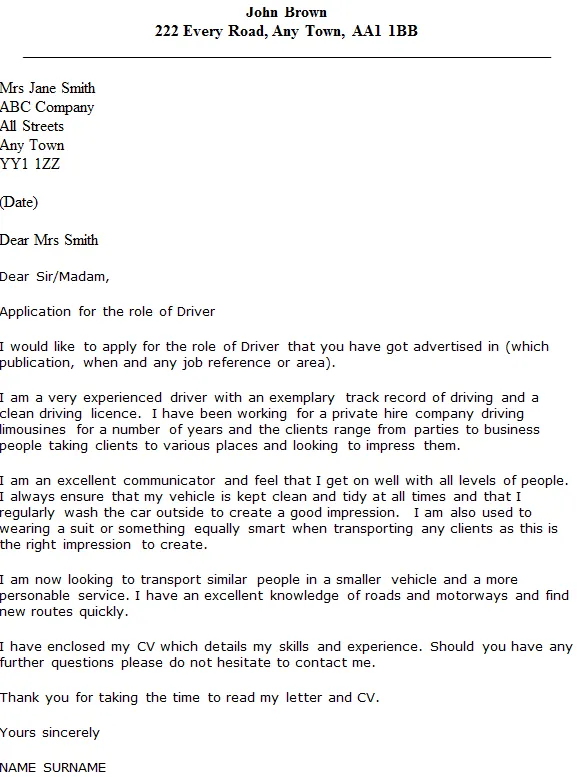
What is a Driver Cover Letter
A driver cover letter is a crucial document that accompanies your resume when applying for driving positions. It serves as your introduction to the hiring manager, providing a concise overview of your qualifications, skills, and experience. Unlike a resume, which lists your work history and education, a cover letter allows you to express your personality, highlight your key strengths, and demonstrate why you are the perfect fit for the job. A well-crafted cover letter can significantly increase your chances of landing an interview, as it showcases your enthusiasm, attention to detail, and ability to communicate effectively. It is your opportunity to make a positive first impression and set yourself apart from other applicants. Whether you are applying for a truck driver, delivery driver, or any other driving role, a compelling cover letter is essential for getting your foot in the door.
Key Elements of a Driver Cover Letter
A successful driver cover letter includes several key elements that work together to present you as a qualified and desirable candidate. First, your contact information, including your name, address, phone number, and email address, should be clearly stated at the top. Following this, include the hiring manager’s information, if available, such as their name, title, and the company’s address. Begin with a professional greeting, such as ‘Dear Mr/Ms. [Last Name]’. The opening paragraph should immediately grab the reader’s attention by stating the position you are applying for and briefly mentioning why you are interested. The body of the letter should highlight your relevant skills and experience, providing specific examples of your achievements and quantifying your accomplishments whenever possible. Express your enthusiasm and interest in the position and the company. Finally, end with a strong call to action, requesting an interview, and a professional closing, such as ‘Sincerely’ or ‘Best regards’.
Your Contact Information

At the top of your cover letter, provide your full name, address, phone number, and a professional-looking email address. This allows the hiring manager to quickly contact you for an interview. Ensure that your contact details are up-to-date and easily accessible. Double-check for any errors in your contact information. This initial presentation sets the tone for the rest of your application and demonstrates your attention to detail.
The Hiring Manager’s Information
If possible, address your cover letter to the hiring manager by name. Researching the company and finding out who is responsible for hiring decisions shows initiative and genuine interest. If you cannot find the hiring manager’s name, use a generic greeting like ‘Dear Hiring Manager’. Include the company’s name and address to personalize your application further.
Professional Greeting
Start your cover letter with a professional greeting. ‘Dear Mr/Ms/Mx. [Last Name]’ is a standard and respectful way to address the hiring manager. Using the correct title and last name demonstrates respect and professionalism. Avoid informal greetings like ‘Hi’ or ‘Hello’. Ensure that you spell the recipient’s name correctly.
Opening Paragraph Grab the Reader

The opening paragraph is your chance to make a strong first impression. Clearly state the position you are applying for and briefly mention where you saw the job posting. Immediately express your interest in the role and the company. Highlight your most relevant skill or experience to capture the hiring manager’s attention from the start. Keep it concise and focused, ensuring the reader knows why you are a good fit for the job.
Highlight Your Skills and Experience
The body of your cover letter is where you showcase your skills and experience, aligning them with the job requirements. Provide specific examples that demonstrate your abilities and achievements. Focus on the most relevant aspects of your driving career, emphasizing skills such as safe driving practices, route planning, vehicle maintenance, and customer service. Support your claims with quantifiable results whenever possible, such as the number of miles driven without accidents or improvements in delivery efficiency. Tailor your examples to match the specific requirements listed in the job description.
Driving Experience
Detail your driving experience, including the type of vehicles you have operated, the duration of your experience, and the types of routes you have handled. Specify the industries you have worked in, such as transportation, delivery services, or logistics. Mention any specialized driving experience, such as operating hazardous materials, oversized loads, or refrigerated trucks. Provide specific examples of your previous responsibilities, focusing on safe driving, adherence to schedules, and customer satisfaction. Include the number of years you have been driving and the total miles driven.
Certifications and Licenses

List all relevant certifications and licenses, such as a Commercial Driver’s License (CDL), endorsements (e.g., Hazmat, Tanker), and any other specialized training. Include the issuing state and expiration dates of your licenses. Highlight any safety certifications, such as defensive driving courses or first aid training. Providing this information upfront shows that you meet the necessary legal requirements for the driving position and are committed to safety. Clearly state your CDL class (A, B, or C) and any relevant endorsements.
Relevant Skills
Highlight the skills that are most important for the driving position you are applying for. These may include safe driving, route planning, vehicle maintenance, customer service, and communication. Mention any skills related to technology, such as using GPS, electronic logging devices (ELDs), or mobile applications for delivery and tracking. Include skills related to loading and unloading cargo, such as operating forklifts or other material handling equipment. Emphasize your ability to work independently, follow instructions, and adhere to company policies. Demonstrate your proficiency in these skills with concrete examples from your past experiences.
Quantify Your Achievements
Whenever possible, quantify your achievements with specific numbers and data. For example, instead of saying ‘I have a good driving record’, say ‘I have driven over 500,000 miles without a preventable accident’. Instead of saying ‘I improved delivery efficiency’, say ‘I improved delivery efficiency by 15%’. Quantifying your achievements provides concrete evidence of your skills and abilities, making your cover letter more persuasive. This also demonstrates your ability to track performance, which is a key aspect of many driving jobs.
Express Enthusiasm and Interest

Throughout your cover letter, express your enthusiasm and genuine interest in the position and the company. Research the company and mention something specific that interests you about their mission, values, or products. Explain why you are particularly drawn to this opportunity and how your skills and experience align with the company’s needs. Show that you have a strong desire to contribute to the company’s success and are eager to learn and grow within the organization. Expressing your enthusiasm can make a positive impact on the hiring manager.
Call to Action and Closing
Conclude your cover letter with a clear call to action and a professional closing. In your call to action, explicitly state that you are available for an interview and look forward to discussing your qualifications further. Provide your phone number and email address again for easy contact. Use a professional closing, such as ‘Sincerely’, ‘Best regards’, or ‘Thank you for your consideration’. Proofread the entire cover letter to ensure that it is free of errors before submitting it.
Proofread and Edit
Proofreading is a critical step in the cover letter writing process. Carefully review your cover letter for any typos, grammatical errors, or formatting inconsistencies. Read the letter aloud to catch any awkward phrasing or unclear sentences. Ask a friend or family member to review your cover letter for a second opinion. Ensuring your cover letter is error-free demonstrates your attention to detail and professionalism.
Sample Driver Cover Letter (Example)

Here’s a sample driver cover letter to give you an idea of how to structure your own. Remember to customize it with your own information and experiences. [Include a sample driver cover letter here, formatted with clear sections for contact information, greeting, opening paragraph, skills and experience, and closing]. This example is a template; adapt it to highlight your best qualifications.
Customizing Your Cover Letter
Customization is essential when writing a cover letter. Tailor your letter to each specific job application, emphasizing the skills and experience that are most relevant to the position. Research the company and incorporate relevant information to demonstrate your understanding of their business and values. Generic cover letters are easily identified and are less likely to impress a hiring manager. By personalizing your letter, you show that you are genuinely interested in the opportunity and have taken the time to understand the job requirements.
Tailoring to the Job
Carefully review the job description and identify the key skills and requirements listed. Highlight your relevant skills and experiences that directly match these requirements. Use the same keywords and phrases from the job description to demonstrate your understanding of the role. Provide specific examples of how you have successfully performed similar tasks in the past. Tailoring your cover letter shows the hiring manager that you have the necessary qualifications and are a strong fit for the position.
Keywords

Incorporate relevant keywords throughout your cover letter to increase your chances of getting noticed by applicant tracking systems (ATS) and hiring managers. Identify keywords from the job description and use them naturally in your writing. Use keywords in your skills sections, experience descriptions, and opening and closing paragraphs. Be careful not to overuse keywords to the point where it feels unnatural or forced. The goal is to demonstrate that you possess the skills and experience required for the job.
Formatting
Ensure your cover letter is well-formatted and easy to read. Use a professional font, such as Times New Roman, Arial, or Calibri. Use a readable font size (11 or 12 points) and 1-inch margins. Use clear headings and bullet points to break up large blocks of text and make your information easily accessible. Maintain consistent spacing and formatting throughout the document. Poor formatting can detract from the content of your letter and make it less appealing to read. A well-formatted letter makes it easier for the hiring manager to quickly scan and absorb the key information.
Common Mistakes to Avoid
Avoiding common mistakes can significantly improve the effectiveness of your driver cover letter. These mistakes can easily undermine your chances of getting an interview. Pay close attention to the details and thoroughly review your cover letter before submitting your application.
Lack of Specificity

Avoid using vague or general statements in your cover letter. Provide specific examples of your skills and achievements. Instead of saying ‘I have good communication skills,’ describe how you have effectively communicated with customers, colleagues, or supervisors in past roles. Quantify your accomplishments whenever possible. Generic statements do not provide sufficient evidence to support your claims, making it difficult for the hiring manager to assess your abilities.
Typos and Grammatical Errors
Typos and grammatical errors can create a negative impression and suggest a lack of attention to detail. Always proofread your cover letter carefully before submitting it. Use a spell checker and grammar checker, but also read the letter aloud to catch any awkward phrasing or unclear sentences. Ask someone else to review your cover letter for a second opinion. A polished cover letter demonstrates your professionalism and respect for the hiring process.
Generic Content
Avoid using a generic cover letter that is not tailored to the specific job you are applying for. Personalize your letter by researching the company and highlighting skills and experiences that align with the job requirements. Generic cover letters show a lack of genuine interest and effort, making them less likely to stand out from other applications. Customize each cover letter to show the hiring manager that you have taken the time to understand the job requirements and are a strong fit for the role.
Submitting Your Cover Letter
Follow the application instructions provided by the employer when submitting your cover letter and resume. Ensure that your cover letter is saved in a professional format, such as PDF or DOCX. Double-check that you are attaching the correct documents and that they are properly named. Send a follow-up email or call if the application instructions permit it, to confirm that your application has been received. These steps will show your professionalism and attention to detail, increasing your chances of getting an interview.