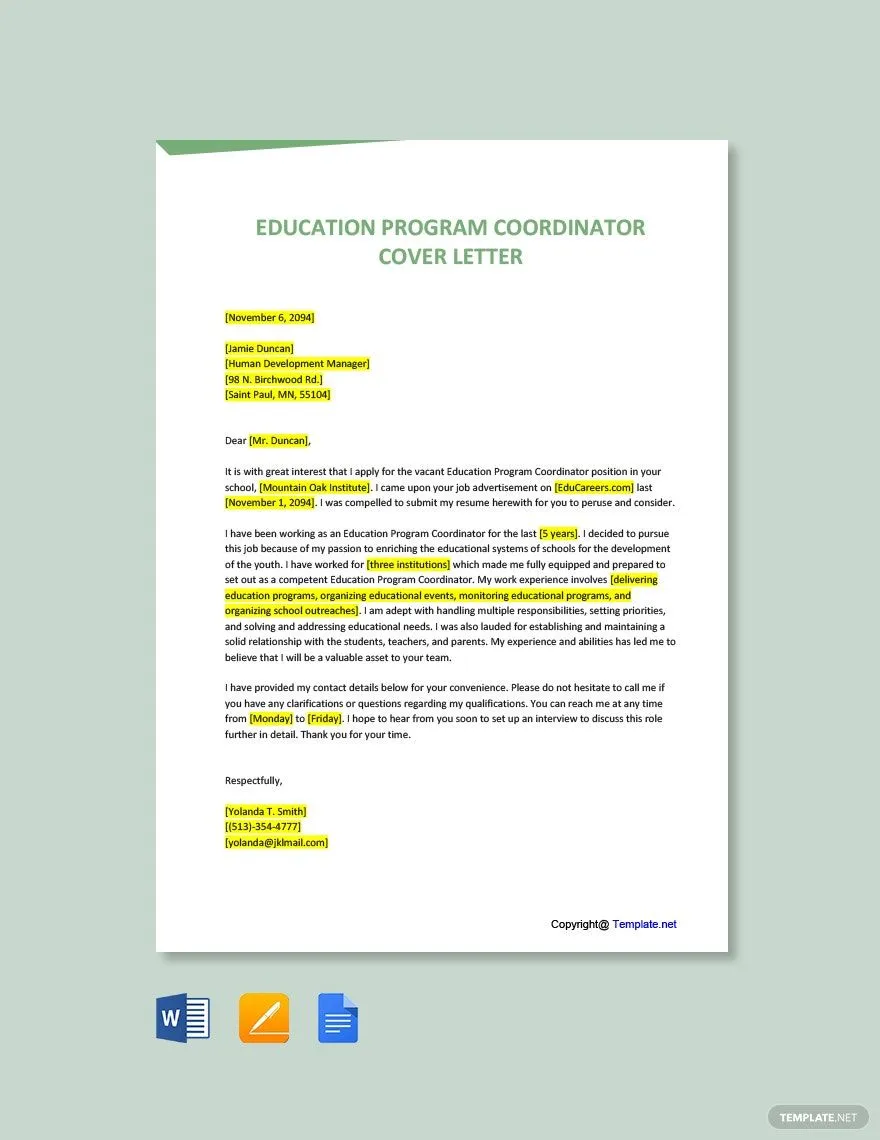
Understanding the Entry Level Program Coordinator Role
Before crafting your cover letter, it’s crucial to grasp the responsibilities of an entry-level Program Coordinator. This role typically involves assisting with program development, implementation, and evaluation. Program Coordinators often work with diverse teams, manage schedules, coordinate events, and handle administrative tasks. They are the backbone of successful programs, ensuring smooth operations and effective communication. When writing your cover letter, highlight your understanding of these responsibilities and how your skills align with the demands of the position. This demonstrates your genuine interest and suitability for the role. Consider the specific requirements mentioned in the job description and tailor your letter to reflect your knowledge of the program’s objectives and the organization’s mission. A well-informed candidate stands out from the crowd.
Key Skills for Entry Level Program Coordinators
Entry-level Program Coordinators need a blend of soft and hard skills to excel. Essential soft skills include strong communication, both written and verbal, excellent organizational abilities, and the capacity to work collaboratively. Problem-solving skills, adaptability, and the ability to manage time effectively are also critical. Regarding hard skills, proficiency in Microsoft Office Suite (Word, Excel, PowerPoint) is often expected. Knowledge of project management software, data analysis, or specific program-related tools can be advantageous. In your cover letter, emphasize the skills most relevant to the specific job you are applying for. For example, if the role involves event planning, highlight your experience with event logistics and coordination. If the role requires data analysis, showcase any relevant coursework or project experience. Use the job description as a guide to determine which skills to focus on.
Essential Components of an Effective Cover Letter

An effective cover letter should be well-structured and compelling. It should introduce you, explain why you’re interested in the position, and highlight your relevant skills and experiences. Start with a professional header containing your contact information. Then, address the hiring manager by name, if possible. The body of your letter should be divided into paragraphs, each focusing on a specific aspect of your qualifications. This includes your key skills, achievements, and your enthusiasm for the role and the organization. Quantify your accomplishments whenever possible using numbers and specific examples. The letter should conclude with a strong call to action, expressing your interest in an interview and thanking the reader for their time and consideration. Proofread meticulously to avoid any grammatical errors or typos. The cover letter is your first impression; make it count.
Formatting Your Entry Level Cover Letter
The format of your cover letter is just as important as its content. Choose a professional font like Times New Roman, Arial, or Calibri, and use a font size between 10 and 12 points. Maintain consistent formatting throughout the document. Use single spacing within paragraphs and double spacing between paragraphs to make the letter easy to read. Keep the margins at one inch on all sides. The letter should be concise, ideally fitting on one page. Break up long blocks of text into shorter paragraphs to improve readability. Avoid using jargon or overly complex language. The goal is to create a clean, professional, and easy-to-read document that effectively conveys your qualifications. Use bullet points to highlight your skills and achievements. This will make the information more digestible and help the hiring manager quickly assess your suitability.
Header and Contact Information
Your header should include your full name, address, phone number, and email address. Ensure your email address is professional; avoid using nicknames or informal addresses. Place the header at the top of the page, either left-aligned or centered. Below your contact information, include the date. Then, include the hiring manager’s name, title, and the company’s address. If you are unsure of the hiring manager’s name, research the company’s website or LinkedIn to find the appropriate contact. Addressing the letter to a specific person demonstrates your initiative and attention to detail. If you cannot find a name, you can use a general greeting like ‘Dear Hiring Manager.’ A well-formatted header sets a professional tone for the entire cover letter and makes it easy for the hiring manager to contact you.
Greeting and Opening Paragraph

Start your cover letter with a professional greeting, such as ‘Dear Mr./Ms. [Last Name]’ or ‘Dear Hiring Manager.’ Your opening paragraph should immediately grab the reader’s attention. State the specific position you’re applying for and where you found the job posting. Briefly mention why you’re interested in the role and the company. Express your enthusiasm for the opportunity and highlight your understanding of the program coordinator role. Avoid generic opening lines; instead, tailor your introduction to reflect your specific interest in the position. You can mention a specific aspect of the company or program that resonates with you. The goal is to create an initial impression that is both professional and engaging, setting the stage for the rest of your letter. This paragraph should showcase your initiative and ability to communicate effectively.
Body Paragraph 1 Highlight Your Skills
In the first body paragraph, focus on highlighting your key skills that align with the job requirements. Review the job description and identify the most important skills the employer is seeking. Provide specific examples of how you have demonstrated these skills in previous experiences, whether it’s from academic projects, volunteer work, or previous employment. Use action verbs to describe your accomplishments and skills. For example, instead of saying ‘I was responsible for,’ say ‘I coordinated,’ ‘I managed,’ or ‘I developed.’ Be specific and provide context to demonstrate your capabilities. This paragraph should prove that you possess the necessary skills to succeed in the role, making your application stand out. If the job description emphasizes organizational skills, describe your experience with scheduling, time management, or project coordination.
Body Paragraph 2 Quantify Your Achievements
The second body paragraph should focus on quantifying your achievements. Use numbers and specific metrics to demonstrate the impact of your work. Instead of saying ‘I improved efficiency,’ say ‘I improved efficiency by 15% by implementing a new scheduling system.’ If you’ve managed projects, mention the number of projects, the size of the budgets, and your successes. If you’ve worked in a team, describe your role and your contributions to the team’s success. Quantifying your achievements provides concrete evidence of your capabilities and helps the hiring manager understand your value. This is especially important for an entry-level position, where demonstrating tangible results can make a significant difference. For example, if you organized events, mention the number of attendees, the budget, and the positive feedback received.
Body Paragraph 3 Show Your Enthusiasm

In the third body paragraph, express your enthusiasm for the specific opportunity and the company. Explain why you are interested in the organization’s mission or the program’s objectives. Show that you have researched the company and understand its values. Demonstrate how your career goals align with the position and the company’s goals. You can mention specific programs or initiatives that you are passionate about. This paragraph is a chance to personalize your letter and make a genuine connection with the reader. Sharing your enthusiasm can make a strong impression, especially in an entry-level position where the hiring manager is looking for candidates who are eager to learn and contribute. Emphasize what attracts you to the company and the role.
Closing and Call to Action
Conclude your cover letter with a strong call to action. Reiterate your interest in the position and express your eagerness to learn more. Thank the hiring manager for their time and consideration. Include a statement indicating your availability for an interview. Offer to provide additional information or samples of your work, if relevant. End with a professional closing, such as ‘Sincerely’ or ‘Best regards,’ followed by your typed name. Proofread the entire letter again before sending it. A well-written closing paragraph and a proper sign-off leave a lasting impression, signaling your professionalism and your enthusiasm for the opportunity. Make sure your closing aligns with the tone you have set throughout your letter and reinforces your suitability for the entry-level program coordinator role.