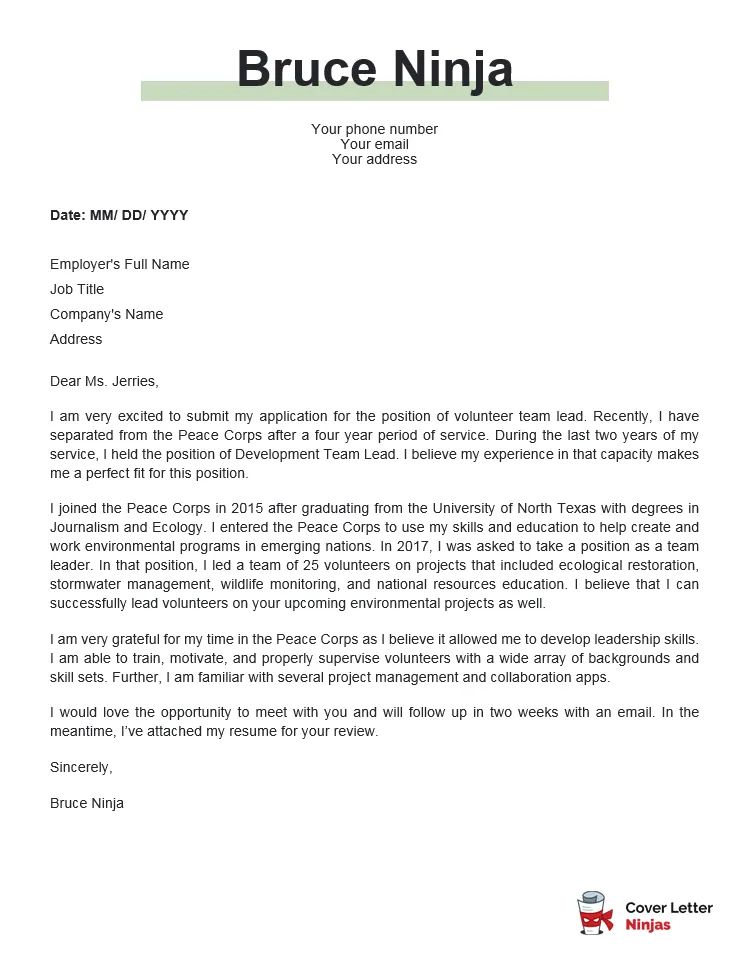
Why Your Executive Director Cover Letter Matters
In the competitive landscape of the nonprofit sector, a compelling cover letter is your first opportunity to make a lasting impression and secure an interview for an Executive Director role. It is where you move beyond the bullet points of your resume and craft a narrative that showcases your leadership skills, strategic vision, and passion for the organization’s mission. A well-written cover letter demonstrates your understanding of the organization’s needs, your commitment to its goals, and your ability to drive positive change. It provides context to your accomplishments, highlights your unique qualifications, and shows the hiring committee why you are the ideal candidate to lead their organization. A poorly written or generic cover letter, however, can quickly lead to your application being overlooked. Therefore, taking the time to craft a standout cover letter is essential for any aspiring Executive Director seeking to make a significant impact in the nonprofit world. This document is your opportunity to shine and demonstrate your capabilities to make a significant impact in the organization.
Highlighting Your Leadership Experience
Executive Director roles demand exceptional leadership abilities. Use your cover letter to highlight your leadership experience, showcasing your ability to guide teams, set strategic direction, and drive organizational success. Provide concrete examples of your leadership style, such as how you have motivated teams, fostered collaboration, and made tough decisions. Describe situations where you successfully navigated periods of change, resolved conflicts, or implemented new initiatives. If you have managed staff, highlight your ability to provide support, delegate responsibilities, and foster a positive and productive work environment. Illustrate your ability to build consensus, empower others, and create a shared vision for the future. When describing your leadership experience, always relate it to the specific requirements of the Executive Director position and the nonprofit’s mission. Tailor your narrative to demonstrate how your leadership style aligns with the organization’s culture and values. Whenever possible, provide quantifiable results to support your claims and demonstrate your impact. This will strengthen your application.
Quantify Your Achievements

Quantifying your achievements is crucial for demonstrating your impact and making your cover letter more compelling. Instead of making vague statements about your accomplishments, provide specific, measurable results. For instance, instead of saying, “Increased fundraising,” state, “Increased annual fundraising revenue by 35% through the implementation of a new donor engagement strategy.” Instead of saying, “Improved program efficiency,” state, “Reduced program expenses by 20% while increasing the number of beneficiaries served by 15%.” Provide data on financial management, such as budget oversight, cost savings, and successful grant acquisitions. By backing up your claims with concrete numbers and metrics, you provide potential employers with tangible proof of your capabilities and your ability to deliver results. Quantifying your achievements makes your cover letter more credible and demonstrates your ability to drive measurable results, which can greatly enhance your chances of landing an interview and ultimately, the job.
Showcasing Your Fundraising Prowess
Fundraising is often a core responsibility of an Executive Director. Your cover letter should therefore clearly showcase your fundraising skills and experience. Highlight any successful fundraising campaigns you have led or participated in, detailing the strategies you employed and the outcomes achieved. Mention your experience in grant writing, donor relations, and developing fundraising plans. If you have cultivated relationships with major donors or secured significant grants, be sure to provide those achievements. Emphasize your understanding of diverse fundraising methods, including online giving, corporate sponsorships, and event fundraising. Showcase your experience in donor stewardship, planned giving, and building long-term relationships with donors. Highlight your knowledge of fundraising best practices and your ability to meet or exceed fundraising goals. If you have a strong network of contacts within the philanthropic community, mention this, as it can be a valuable asset for the organization. A proven fundraising track record is highly valued by nonprofits; make sure to present your skills and achievements in the most effective way possible to increase your chances of success in the application process.
Demonstrating Your Strategic Vision
Demonstrate your strategic thinking abilities in your cover letter. Discuss your strategic planning experience, setting organizational goals, and measuring performance. Share your ideas for program development, community outreach, and building partnerships. Articulate your understanding of the nonprofit’s challenges and opportunities. Showcase your ability to think long-term, adapt to changing environments, and inspire others to work toward a shared vision. If you have developed or executed strategic plans, describe the process, and the outcomes. Highlight your skills in assessing an organization’s strengths and weaknesses, identifying areas for growth, and leading change initiatives. Your cover letter should express your capacity to translate your strategic vision into actionable plans. Show how your vision aligns with the organization’s mission and values and demonstrate that you can bring innovative ideas and solutions to the table. This will demonstrate to the hiring manager your ability to align the organization for success.
Emphasizing Your Communication Skills

Effective communication is crucial for Executive Directors. Use your cover letter to showcase your strong written and verbal communication skills. Highlight your experience in public speaking, media relations, and crafting compelling narratives. Show your capacity to effectively communicate the organization’s mission, values, and impact to diverse audiences. If you have experience in crisis communication or managing sensitive information, be sure to mention it. Demonstrate your ability to build and maintain strong relationships with staff, board members, donors, volunteers, and the community. Ensure your writing is clear, concise, and engaging. Tailor your communication style to align with the nonprofit’s tone and values, showing that you can represent the organization and its mission effectively. A well-written cover letter that effectively communicates your skills and experiences will help you stand out from other candidates and secure an interview.
Illustrating Your Commitment to the Nonprofit’s Mission
Nonprofit organizations are driven by their missions; express your commitment to the mission. Articulate why you are drawn to the organization and its work. Share personal experiences or motivations aligned with the mission. Mention any volunteer experience, involvement, or a deep understanding of the issues the nonprofit addresses. Demonstrate your understanding of the organization’s programs, services, and impact on the community. Show that you have researched the organization and understand its challenges and opportunities. Convey your enthusiasm for leading the organization and making a difference in the lives of those it serves. By illustrating your commitment to the cause, you demonstrate that you are a leader driven by purpose and passionate about making a positive impact. This will increase your chances to show the hiring committee why you’re the best candidate.
Proofread and Polish Your Cover Letter
Before submitting your cover letter, carefully proofread and polish it to ensure it is free of errors and reflects your professionalism and attention to detail. Errors, typos, and grammatical mistakes can undermine your credibility and detract from your qualifications. Carefully review your cover letter for any errors in spelling, punctuation, and grammar. Make sure the language is clear, concise, and easy to understand. Have a friend or colleague read over your cover letter for feedback, as a second opinion can help you to identify mistakes. Ensure your cover letter is well-formatted, with a professional layout. Check all your contact information to make sure it is correct and up-to-date. Furthermore, ensure you have tailored your cover letter to the specific job and organization. Proofreading demonstrates your attention to detail, commitment to quality, and dedication to presenting yourself as a polished professional. A well-written, error-free cover letter significantly increases your chances of making a positive impression and securing an interview.