Crafting a Compelling Family Support Worker Cover Letter
A well-crafted cover letter is your crucial first step to making a positive impression on potential employers, especially for the Family Support Worker role. Your cover letter serves as a vital introduction, demonstrating your grasp of the role, your relevant skills, and your genuine dedication to assisting families. This guide provides a comprehensive, actionable approach to writing a cover letter that not only stands out but shines. It empowers you to effectively showcase your qualifications and drastically increase your chances of securing that all-important interview. The aim is to position yourself as a committed, capable professional poised to contribute positively to the well-being of families in need.
Highlighting Relevant Skills and Experience
The most impactful cover letters strategically highlight skills and experiences that directly align with the requirements of the job description. Begin by meticulously reviewing the job posting, identifying and noting the key requirements. Common skills sought in Family Support Workers include stellar communication, empathy, strong problem-solving abilities, and excellent organizational skills. Focus on instances where you have successfully applied these skills in past roles. For example, describe how you’ve effectively communicated with families to resolve conflicts, or managed multiple tasks efficiently. Providing concrete examples of your accomplishments, such as improving family outcomes, or increasing client engagement will undoubtedly make your letter more compelling and memorable. Always tailor your skills and experiences to precisely match the specific requirements of the job.
Understanding the Family Support Worker Role

A strong cover letter starts with a solid understanding of the Family Support Worker’s responsibilities. The role focuses on providing emotional and practical support to families navigating various challenges, including poverty, mental health issues, or domestic violence. Family Support Workers often interact with children, parents, and extended family members. Demonstrating an awareness of the role’s nuances—including the ability to build trust, maintain confidentiality, and advocate for families—is critical to crafting a persuasive cover letter. Weave these insights throughout your letter to show you are conscious of the job’s key responsibilities. This will set you apart from other applicants.
Key Responsibilities of a Family Support Worker
Family Support Workers undertake a variety of duties, including offering parenting education, connecting families with community resources, and assisting with crisis intervention. They may also be required to conduct home visits, prepare reports, and collaborate with professionals such as social workers, therapists, and educators. In your cover letter, consider mentioning specific responsibilities you’ve handled in the past, emphasizing those that align closely with the job requirements. Highlighting these experiences will showcase your readiness and ability to take on the tasks needed for the position. Use the job description as a guide to pinpoint the duties most pertinent to the role, and reflect your experience appropriately.
Tailoring Your Cover Letter
A generic cover letter can easily be identified and often ends up overlooked. To make your application stand out, it is essential to tailor your cover letter to each specific job application. This demonstrates to the hiring manager that you have taken the time to research the organization and the unique needs of the role, clearly indicating your genuine interest. Start by personalizing the letter and highlighting aspects of your experience that directly match the requirements of the specific position. This will allow you to present yourself as an ideal candidate, proving that you are a great fit for the company, and demonstrating your attention to detail and commitment.
Researching the Organization

Dedicate some time to researching the organization before you begin to write your cover letter. Understanding their mission, values, and specific programs will allow you to seamlessly demonstrate your alignment with their goals and tailor your cover letter to show how you can contribute to their mission. You can usually find this information on the organization’s website, social media pages, or through online reviews. Use this research to show your enthusiasm for the role and the organization’s aims.
Personalizing Your Cover Letter
With a good understanding of the organization and the specific job requirements, you can begin to personalize your cover letter. If possible, address the hiring manager by name, which can often be found on the job posting or the company website. Mention specific programs or initiatives that resonate with you, clearly explaining your genuine interest in working for that organization. Throughout the body of your letter, highlight how your skills and experiences align with the organization’s goals and how you can contribute to their success. This level of personalization makes your letter far more compelling, and shows that you’ve taken the time to think about how you can best serve the families in need.
Showcasing Your Achievements
Instead of simply listing your responsibilities, focus on showcasing your achievements. Use the STAR method (Situation, Task, Action, Result) to provide concrete examples of your accomplishments. For each example, describe the situation, the task you were assigned, the actions you took, and the results you achieved. This structured approach helps demonstrate the impact you made in your previous roles and allows employers to clearly see how you can create positive outcomes for the families you serve. Achievements that highlight positive results or a significant impact are always more memorable.
Quantifying Your Impact

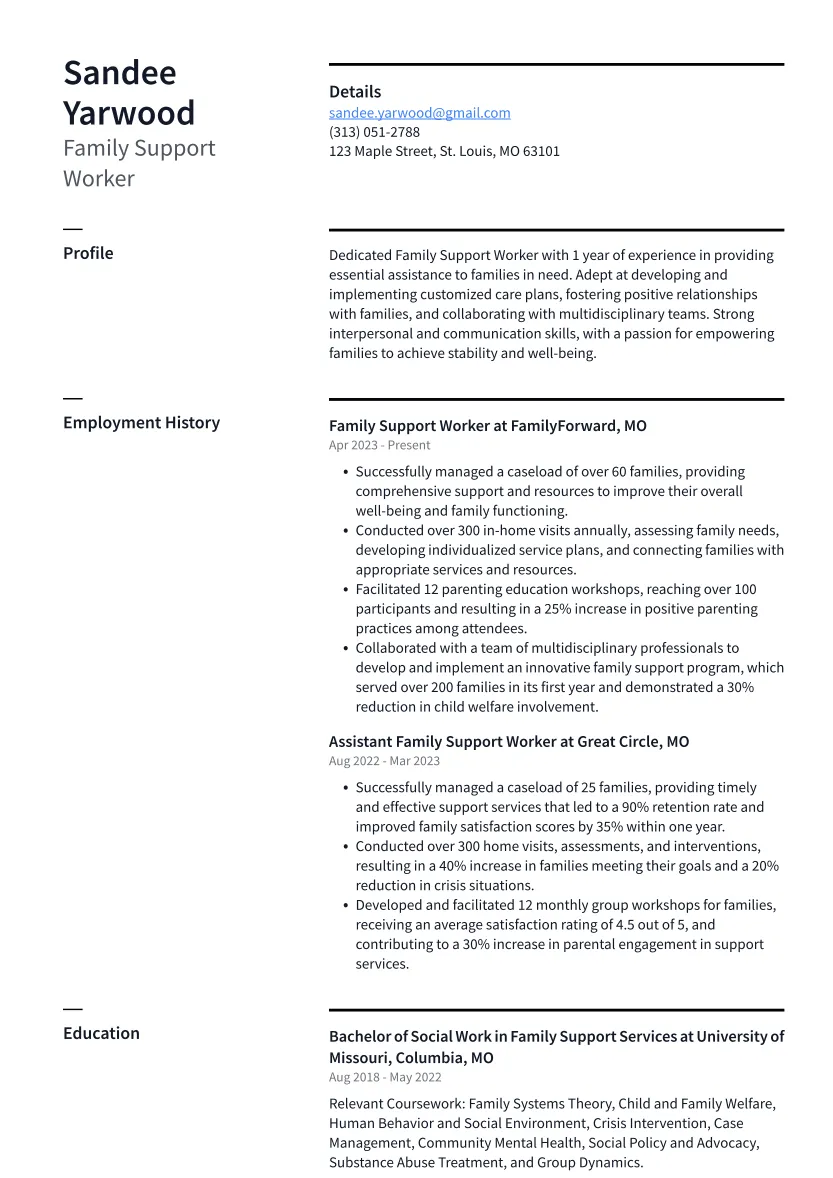
Wherever possible, quantify your achievements using numbers and data. Instead of stating, “Improved family engagement,” try, “Increased family engagement by 30% through the implementation of a new outreach program.” These quantifiable results provide concrete evidence of your success and demonstrate your ability to drive positive change. Use metrics such as the number of families served, the percentage of families who achieved their goals, or the reduction in negative outcomes to showcase your achievements. Numbers make your accomplishments more impactful and easier for the employer to understand and appreciate. Quantifiable details underscore your value as a candidate.
Formatting and Structure
A well-formatted cover letter is not just visually appealing, but also easy to read and professional in its presentation. Implementing a clear, concise structure enhances readability and allows the hiring manager to quickly grasp the key points you want to convey. Organize your content logically, with each section serving a distinct purpose. Pay close attention to the overall layout, including your font choice, spacing, and margins. The goal is to present your qualifications in a clear and professional manner, making it easy for the reader to scan your letter and grasp your core strengths.
Essential Sections of a Cover Letter
Every effective cover letter should include a header containing your contact information, a professional salutation, a compelling opening paragraph, body paragraphs that highlight your skills and experience, and a strong closing paragraph. Adhering to this structure will ensure that you present your qualifications in a clear, organized, and persuasive manner. Each section plays a crucial role in effectively communicating your value as a candidate. By including all of these components, you significantly increase your chances of capturing the hiring manager’s attention, and demonstrating that you are indeed the best fit for the role.
Header and Contact Information

The header of your cover letter should include your full name, contact information (phone number and email address), and, optionally, your LinkedIn profile URL. Make sure that your contact information is up-to-date and professional. Using a professional email address is crucial, and double-check your phone number to ensure that it is correct and that you have a professional voicemail setup. It’s also a good idea to include the date and the hiring manager’s name and title (if known) at the top of the letter. This establishes a professional tone right away and demonstrates your attention to detail and organizational abilities.
The Opening Paragraph
The opening paragraph is your opportunity to capture the hiring manager’s attention from the start. Begin with a strong, engaging sentence that immediately states your interest in the Family Support Worker position. Briefly mention where you found the job posting, and then immediately state your key qualifications or the most relevant aspects of your experience that align perfectly with the job requirements. Keep it concise and focused. Make sure it clearly highlights why you are a strong fit for the role. An effective opening paragraph is crucial for setting the right tone and encouraging the reader to continue, highlighting your genuine interest in helping families in need.
Writing a Strong Body Paragraph
The body paragraphs should provide further detail on your skills, experience, and key achievements. Use one or two paragraphs to highlight your most relevant qualifications and provide specific examples of how you have made a positive impact in your previous roles. As mentioned, use the STAR method (Situation, Task, Action, Result) to structure your examples, describing the context, the task you faced, the actions you took, and the specific results you achieved. The body paragraphs are your opportunity to showcase your skills and experience. Make sure to tailor these paragraphs to the job description, emphasizing the skills and experiences the employer is specifically seeking. Use keywords from the job description to show that you are a good fit, and that you understand the particular needs of the families you will serve.
Emphasizing Relevant Experience

Focus your attention on experiences most directly relevant to the Family Support Worker position. If you have experience working with families, children, or other vulnerable populations, highlight these experiences. Even if your previous roles were not specifically in family support, emphasize transferable skills like communication, empathy, problem-solving, and crisis intervention. Provide specific examples of how you’ve applied these skills in the past, and how these skills have benefited the families you worked with. The more detail you provide, the more clearly you will showcase your qualifications and abilities. This demonstrates that you are fully prepared and ready to take on the responsibilities of a Family Support Worker role.
Demonstrating Soft Skills
Family Support Workers require a diverse range of soft skills, including empathy, active listening, patience, and cultural sensitivity. Your cover letter must effectively demonstrate that you possess these skills. Include relevant examples that showcase how you’ve successfully utilized these skills to build rapport with families, resolve conflicts, or effectively navigate challenging situations. You can also touch upon instances where you adapted to changing circumstances, and always show a passion for the community. The ability to connect with families on a personal level is an essential part of this role. Highlighting the skills that enable you to build positive, trusting relationships is crucial.
Addressing the Specific Job Requirements
Carefully review the job description and address each requirement in your cover letter. Directly reference the skills, experiences, and qualifications that the employer is seeking. Use keywords from the job posting to demonstrate that you fully understand the role and that you possess the specific skills they require. For example, if the job description emphasizes case management experience, provide specific, detailed examples of your case management skills. This shows that you meet all of the requirements and that you would indeed be a valuable asset to the team. Ensure that you highlight your ability to follow instructions, and fulfill the specific needs and objectives of the role, as this demonstrates you have strong attention to detail.
The Closing Paragraph

The closing paragraph should effectively reiterate your interest in the position, and express your enthusiasm. Thank the hiring manager for their time and consideration. Clearly state your availability for an interview and re-provide your contact information. If appropriate, you may choose to mention how you are a strong advocate for families, and reiterate that you are available to provide support whenever it may be needed. A well-crafted closing paragraph leaves a positive impression, and encourages the hiring manager to promptly take the next step.
Expressing Enthusiasm and Call to Action
Conclude your cover letter with a compelling call to action. Express your sincere enthusiasm for the role and the opportunity to contribute to the organization’s mission. Extend an invitation to the hiring manager, encouraging them to contact you for an interview, and make it easy for them to do so by reiterating your contact information. A strong call to action will encourage the reader to take the next step, and shows your genuine interest in the position. Make it abundantly clear that you are available and eager to further discuss your qualifications in person.
Proofreading and Editing
Meticulously proofreading and editing your cover letter is essential to guarantee that it is free of errors. Errors can easily create a negative impression, and detract from your overall qualifications. Carefully review your letter for grammar, spelling, punctuation, and formatting mistakes. Read your letter aloud to help you catch any awkward phrasing or sentences that might not flow well. Consider asking a trusted friend or colleague to review your letter, and provide a second opinion. A fresh pair of eyes can often identify mistakes that you might have overlooked. The last thing you want is for a simple grammatical error to potentially cost you a job opportunity. Always take the time to ensure that your letter is polished, professional, and error-free.
Common Mistakes to Avoid
There are several common mistakes that can quickly undermine your cover letter. Avoid these pitfalls to significantly increase your chances of making a strong, positive first impression. One particularly important tip is to avoid negative language or making any excuses. Always remain positive and focused on what you bring to the table, and the specific skills you possess. Present yourself in a way that makes you appear to be a highly desirable employee. By proactively avoiding these common errors, you can create a cover letter that effectively showcases your qualifications, and demonstrates your genuine commitment to supporting families in need.
Grammar and Spelling Errors
Grammar and spelling errors are among the most common, and damaging, mistakes in a cover letter. Proofread your letter carefully to ensure that it is free of any errors. Use spell-check and grammar-check tools, but don’t rely on them entirely. Always read your letter aloud to catch any errors that these tools might miss. The goal is to show that you have a strong attention to detail and, therefore, you are committed to excellence, and always avoid anything that can create a negative impression.
Generic and Uninspired Language
Avoid the use of generic and uninspired language that could apply to any job. Instead, tailor your letter to the specific position and the organization. Avoid overly vague statements, and use precise language when describing your skills and experiences. The more specific your examples, the more compelling your letter will be. Furthermore, always use active and engaging language. If your writing is genuinely engaging, it makes it much easier for the reader to connect with your message and your skills.
Lack of Specificity
Another common mistake is a lack of specificity. Instead of making general statements, always provide concrete examples of your accomplishments and experiences. Avoid making vague descriptions of your skills, and highlight your achievements. When possible, use numbers and data to quantify your impact. A lack of specificity can make it difficult for the hiring manager to fully understand your qualifications, so always provide detailed examples. Use the STAR method to help you present detailed examples of your accomplishments, and the positive results that you achieved in your previous roles. This will help set you apart.
Seeking Feedback
Before submitting your cover letter, it’s highly recommended to seek feedback from trusted sources. Ask a friend, family member, or career counselor to carefully review your letter and provide you with suggestions for improvement. A fresh perspective can help you easily identify any weaknesses or any areas where you can further strengthen your letter. Be open to constructive criticism, and always use the feedback to improve your final submission. Consider having several people review your letter, and get a variety of viewpoints. Getting feedback is a critical part of the overall process, so never hesitate to seek it. Good feedback can make all the difference.
Tips for a Successful Application
Beyond crafting a compelling cover letter, there are further steps you can take to significantly increase your chances of success. Always be sure to follow all instructions carefully, submit your application on time, and showcase your in-depth understanding of the Family Support Worker role. Taking these extra steps will not only show that you are professional, but also demonstrate that you are fully capable of following instructions. All of these actions contribute to a successful job application, and increase your chances of securing an interview and, hopefully, the job itself.
Following Instructions
Carefully read and follow all instructions provided in the job posting. Many employers will provide very specific guidelines for submitting applications, and failing to follow these instructions can very easily lead to your application being rejected. Pay very close attention to details such as the required format, the file naming conventions, and the all-important submission deadline. If you are required to submit a cover letter, be sure to follow the instructions regarding the content and format. Your overall attention to detail will be a very positive sign for the employer. It will indicate that you can be trusted with handling important and sensitive matters, and will prove that you have an excellent work ethic.
Submitting Your Application
Make sure to submit your application before the deadline, because late applications are often not considered. Proofread your cover letter and resume one last time before you finally submit them. Double-check all contact information to make sure it is completely correct. Once you’ve taken the final steps to submit your application, you’ve also taken the next step towards securing the job. Always submit your application in a timely and professional manner. Be sure to follow up appropriately if specified in the job posting. If everything is submitted properly, it will certainly show the potential employer that you are professional, and serious about taking on the role of Family Support Worker. Best of luck!