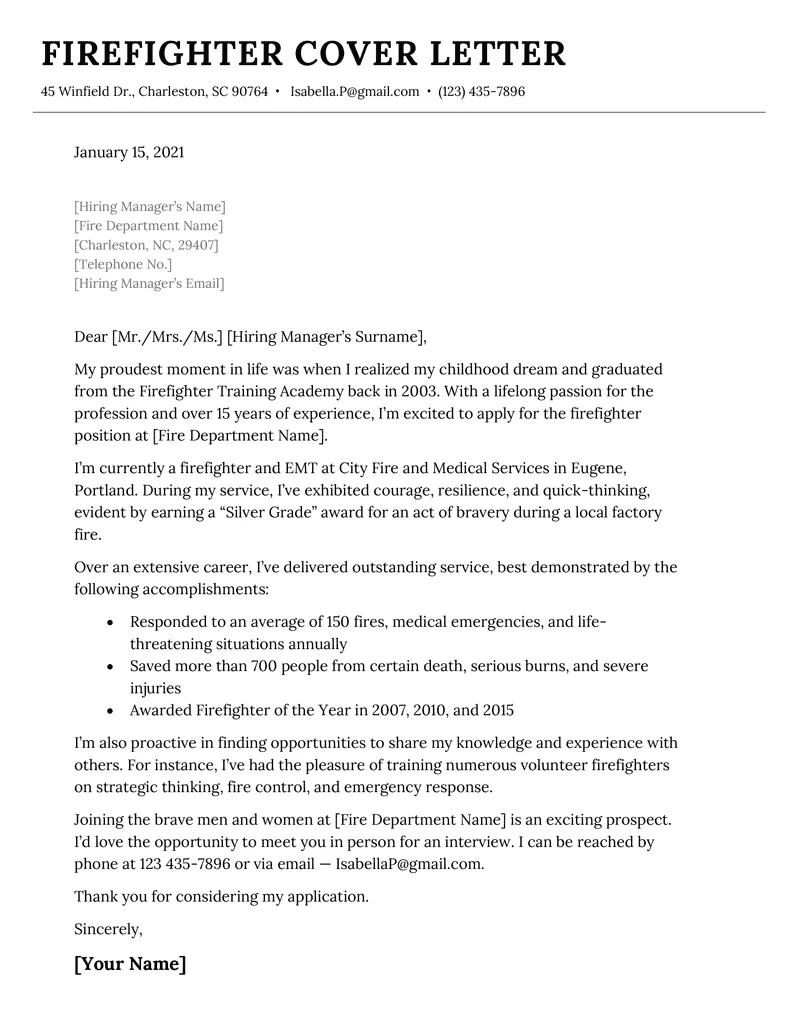
Crafting a Winning Firefighter Cover Letter
A firefighter cover letter is your first opportunity to make a strong impression on a potential employer. It’s more than just a formality; it’s your chance to showcase your unique skills, experience, and passion for the firefighting profession. This guide will walk you through the essential steps of crafting a cover letter that grabs attention and increases your chances of landing an interview. Remember, the goal is to stand out from the crowd and demonstrate why you are the ideal candidate for the position. A well-written cover letter is a critical component of any successful job application.
Understanding the Firefighter Role
Before you start writing, it’s crucial to have a clear understanding of what the firefighter role entails. Firefighters are responsible for much more than just putting out fires. They respond to a wide range of emergencies, including medical calls, hazardous material incidents, and rescue operations. They work in teams, often in dangerous and stressful situations, requiring quick thinking, physical strength, and a calm demeanor. Understanding the demands of the job allows you to tailor your cover letter to highlight the most relevant skills and experiences, such as problem-solving abilities and commitment to community safety.
Key Skills and Qualities for Firefighters

Firefighting demands a unique blend of skills and qualities. In your cover letter, emphasize your possession of these essential attributes. These include physical strength, stamina, and endurance to perform demanding tasks under pressure. Highlight your ability to work effectively as part of a team, following instructions, and communicating clearly. Critical thinking and problem-solving skills are also crucial for making quick decisions in emergencies. Demonstrate your commitment to safety, both for yourself and others, along with your ability to remain calm and focused in high-stress situations. Showcasing these attributes can make your cover letter more appealing.
Highlighting Relevant Experience
Your cover letter should clearly outline your relevant experience. Even if you are a recent graduate or have limited direct firefighting experience, there are ways to showcase transferable skills. Include any volunteer work, internships, or part-time jobs that have equipped you with valuable skills like teamwork, leadership, and emergency response. If you have experience in first aid, CPR, or other relevant certifications, be sure to highlight them. For those with prior firefighting experience, detail your roles, responsibilities, and accomplishments, quantifying them whenever possible (e.g., “Rescued three individuals from a burning building”).
Researching the Fire Department
Before submitting your cover letter, do your homework on the specific fire department you are applying to. Research their mission, values, and recent activities. Tailoring your cover letter to reflect your understanding of the department shows that you are genuinely interested in the position and have taken the initiative to learn more. Mention specific programs or initiatives that resonate with you, and explain how your skills and experiences align with the department’s goals. Showing this knowledge is an effective way to make your application more personal and memorable, and it can enhance your chance of being selected for the job.
Writing a Compelling Cover Letter

Formatting and Structure
A well-formatted cover letter is easy to read and professional-looking. Use a standard font like Times New Roman or Arial, with a font size of 11 or 12 points. Ensure your cover letter is no more than one page long, and use clear headings, concise paragraphs, and bullet points to organize the information. Include your contact information at the top, followed by the date, the hiring manager’s name (if known), and the fire department’s address. Maintain consistent formatting throughout the document to create a polished and professional appearance. This is important to show respect to the reader and make them more likely to read it to the end.
Opening Paragraph
The opening paragraph is your chance to grab the reader’s attention. Start with a strong statement that highlights your interest in the position and your connection to the fire department. State the specific position you are applying for. Briefly mention the skills or experience that make you a suitable candidate. Avoid generic openings; instead, personalize your introduction to show your enthusiasm and understanding of the role. For instance, you might mention a specific accomplishment or a shared interest in the department’s mission to catch the reader’s attention and encourage them to read further.
Body Paragraphs

The body paragraphs are the heart of your cover letter, where you demonstrate your qualifications. Use these paragraphs to elaborate on your skills and experiences. Provide specific examples of how you have demonstrated those skills in previous roles or situations. Quantify your accomplishments whenever possible (e.g., “Managed a team of five volunteers, resulting in a 20% increase in community outreach”). Relate your skills and experiences to the requirements of the firefighter position, showing the hiring manager that you possess the necessary abilities to succeed. The way you write is crucial, so use clear language, and don’t use too much filler.
Closing Paragraph
In the closing paragraph, reiterate your interest in the position and thank the hiring manager for their time and consideration. Express your eagerness to discuss your qualifications further and state your availability for an interview. Include your contact information again, making it easy for the hiring manager to reach you. A strong closing paragraph summarizes your key qualifications and leaves a positive lasting impression. This is your final chance to emphasize the value you can bring to the fire department and convey your genuine enthusiasm for the role.
Showcasing Your Skills and Experience
Emphasizing Certifications and Training

Firefighting requires specific certifications and training. In your cover letter, clearly list all relevant certifications, such as EMT, CPR, Hazardous Materials, and Firefighter I and II. Include the name of the certifying institution and the date of completion. If you have additional specialized training, such as rope rescue or swift water rescue, be sure to mention it. Highlight any ongoing training or professional development activities. Detail your commitment to continuous learning and staying up-to-date with the latest firefighting techniques and safety protocols. Including this is a must to show you’re prepared for the job.
Demonstrating Physical Fitness and Stamina
Firefighting is a physically demanding profession. In your cover letter, emphasize your physical fitness and stamina. Mention any activities you engage in to maintain your physical condition, such as running, weightlifting, or other forms of exercise. If you have participated in any physical fitness tests or competitions, include those details. Consider mentioning specific achievements, such as completing a marathon or excelling in a fitness challenge. This demonstrates your commitment to meeting the physical demands of the job and your dedication to staying in top shape. It gives the reader confidence in your physical abilities.
Highlighting Teamwork and Communication
Firefighters work as a team and must communicate effectively. Highlight your ability to work collaboratively and communicate clearly. Provide examples of your teamwork experience, such as participation in team sports, group projects, or volunteer activities. Mention your communication skills, including your ability to listen actively, speak clearly, and write effectively. Describe any experience you have in conflict resolution or de-escalation techniques. Emphasize your ability to follow instructions and take direction from supervisors. Showcasing your collaboration ability and communication skills shows that you can perform well in a team.
Using Action Verbs to Describe Accomplishments

Use action verbs to make your cover letter more dynamic and impactful. Instead of saying “I was responsible for,” use verbs like “managed,” “led,” “implemented,” or “achieved.” When describing your accomplishments, use strong verbs that convey your skills and initiative. For instance, use phrases like “coordinated emergency response efforts,” “trained new recruits in fire safety procedures,” or “developed a community outreach program.” This approach helps to showcase your abilities and makes your cover letter more engaging and memorable. You must use strong and precise language to enhance your application.
Reviewing and Proofreading Your Cover Letter
Checking for Grammar and Spelling Errors
Proofread your cover letter carefully for any grammar and spelling errors. Mistakes can undermine your credibility and detract from your qualifications. Use a spell checker and grammar checker, but also read your cover letter aloud to catch any errors that the software might miss. Pay attention to sentence structure, punctuation, and word choice. Make sure that all your information is accurate and consistent. A polished cover letter demonstrates your attention to detail and commitment to professionalism. Checking all aspects of the writing is important for demonstrating your professionalism.
Ensuring a Professional Tone

Maintain a professional tone throughout your cover letter. Use formal language and avoid slang or colloquialisms. Address the hiring manager by name if possible. Be respectful and courteous in your communication. Avoid excessive use of jargon or technical terms, unless they are essential to the context. Make sure your tone matches the culture and values of the fire department. The goal is to present yourself as a qualified and responsible candidate who is serious about the position and shows respect for the organization.
Seeking Feedback from Others
Before submitting your cover letter, ask someone else to review it. A fresh pair of eyes can catch errors or provide feedback that you might have missed. Ask a friend, family member, career counselor, or mentor to read your cover letter and provide constructive criticism. Consider asking someone with experience in firefighting or human resources to provide feedback on the content and format. Revise your cover letter based on the feedback you receive, making sure it accurately reflects your qualifications and presents you in the best possible light. The opinions of others can often provide valuable insights.
Firefighter Cover Letter Examples
Reviewing cover letter examples can provide valuable guidance in crafting your own. Search online for firefighter cover letter samples. Pay attention to the structure, language, and tone of the examples. Use them as a template to create your cover letter, but remember to tailor it to your specific experience and the fire department’s requirements. Avoid simply copying an example; instead, use it as inspiration to create a unique cover letter that reflects your individual skills and experiences. Use examples to guide your own writing.