Why a Cover Letter Matters for Your Resume
In the competitive landscape of job applications, a compelling cover letter can be the difference between your resume landing in the ‘read’ pile or the ‘rejected’ one. It’s your first, and often only, opportunity to make a strong personal impression on a potential employer. A cover letter serves as a critical introduction, a platform to showcase your personality, and a chance to elaborate on the achievements that make you the ideal candidate. While your resume provides a factual overview of your experience and qualifications, a cover letter provides the context and narrative that brings your application to life. It demonstrates your communication skills, your understanding of the job requirements, and your genuine enthusiasm for the opportunity. A well-crafted cover letter will capture the reader’s attention and make them want to learn more about you, setting the stage for an interview.
Highlighting Your Skills and Experience in Cover Letter
A cover letter is more than just a formality; it’s a strategic tool for highlighting the skills and experiences that align with the specific requirements of the job. Instead of simply repeating what’s in your resume, the cover letter gives you the space to provide concrete examples of your accomplishments and how they have made a positive impact. Tailoring your cover letter to each job application is crucial, because it allows you to focus on the most relevant skills and experiences that the employer is seeking. Use the cover letter to explain how your background has prepared you for the role and what unique value you can bring to the organization. By connecting your past experiences with the needs of the company, you increase your chances of demonstrating your potential and securing an interview. Think of it as your chance to prove why you are the perfect fit for this particular job.
Cover Letter Free: Key Components

A great cover letter is structured to create a strong first impression. It typically includes several key components that work together to present you as a polished and thoughtful candidate. By understanding these key parts, you can create a free cover letter that effectively communicates your value. Each section serves a specific purpose, from establishing a professional tone to highlighting your most relevant skills and experiences. Mastering each of these sections ensures that your cover letter is clear, persuasive, and tailored to the job you are applying for. With the right components in place, your cover letter becomes a powerful asset in your job search.
Header and Contact Information
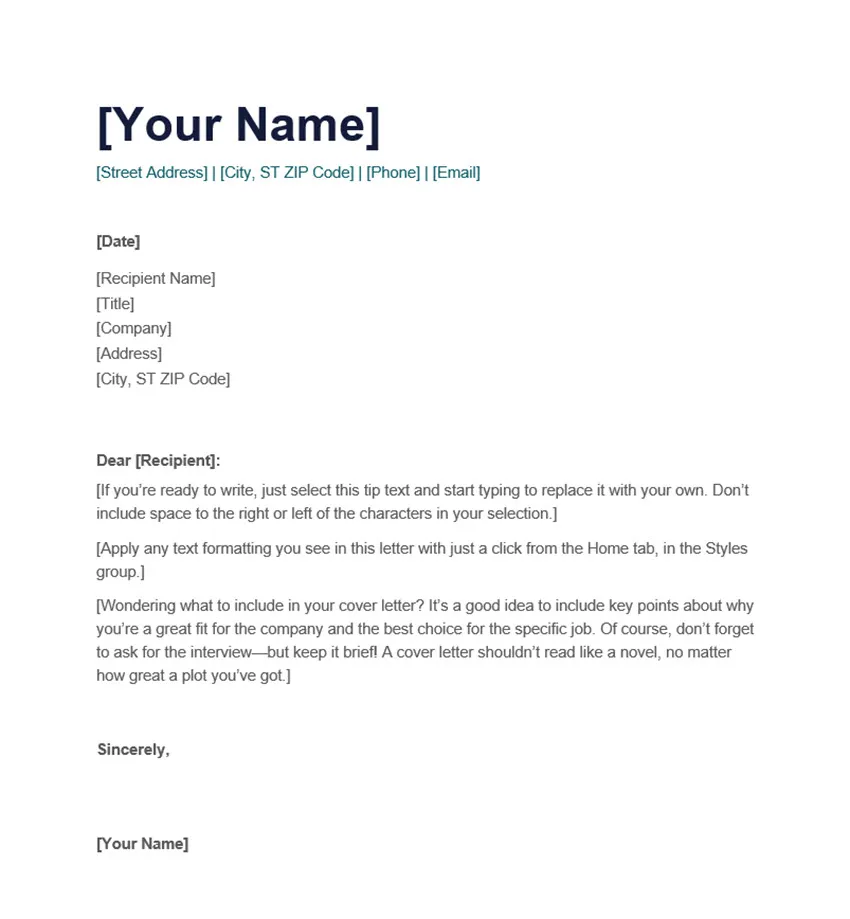
The header of your cover letter sets the tone for professionalism and provides the essential contact information for the employer. Start with your full name, address, phone number, and email address, ensuring these are up-to-date and easily accessible. Below your information, include the date and the employer’s details, such as the hiring manager’s name, title, company name, and address. This structured approach shows that you’re organized and detail-oriented. Using a clear and readable font ensures that your contact information is easily visible and can be readily used by the hiring manager to contact you. A well-formatted header communicates respect for the hiring process, a crucial first step in making a positive impression.
Professional Greeting
Your greeting sets the initial tone of your letter, making it important to choose the right salutation. Whenever possible, address the hiring manager or the specific person listed in the job posting by name, which shows that you’ve taken the time to do your research. If you’re unsure of the name, use a professional greeting such as ‘Dear Hiring Manager’ or ‘Dear [Department Name] Team’. Avoid informal greetings like ‘To Whom It May Concern,’ as they can appear impersonal. The greeting should be followed by a colon or a comma, maintaining a professional yet approachable tone. Starting with a personalized greeting demonstrates your attention to detail and respect for the potential employer, helping to create a positive initial impression.
The Opening Paragraph

The opening paragraph of your cover letter must immediately capture the reader’s attention. Start by stating the position you’re applying for and how you learned about it. Briefly mention why you’re interested in the company or the role, demonstrating your enthusiasm. You should also include a brief overview of your most relevant qualifications, making sure it aligns with the job requirements. Keep this introduction concise and engaging, as it sets the stage for the rest of your letter. The goal is to pique the employer’s interest, encouraging them to read further and learn more about how your skills and experiences align with the company’s needs and goals. It is the first step to creating a lasting positive impression.
Body Paragraphs
The body paragraphs are where you provide the details of your accomplishments, skills, and experiences. Structure them to support the claims you made in your opening paragraph. For each point you highlight, provide specific examples that demonstrate your abilities and the impact you’ve made in previous roles. Use the STAR method (Situation, Task, Action, Result) to give clear, concise examples of how you have tackled challenges and achieved success. Quantify your achievements whenever possible, for instance, by mentioning specific numbers or percentages to demonstrate your contributions. Tailoring these paragraphs to the job description is critical, ensuring you highlight the most relevant skills and experiences that align with the employer’s requirements.
Showcasing Relevant Skills
In the body of your cover letter, highlight the skills that make you the best fit for the job. Start by identifying the key skills mentioned in the job description and then provide concrete examples of how you have used them successfully. This may include both hard skills, such as technical proficiency or specific software knowledge, and soft skills, such as communication, teamwork, and problem-solving abilities. Use action verbs to describe your accomplishments and achievements, clearly illustrating your expertise. Demonstrating that you possess the skills the employer is looking for significantly increases the likelihood that you will be considered for an interview. This also makes it clear to the employer that you understand their needs and can contribute positively to their team.
Quantifying Achievements

When describing your achievements, use quantifiable data to make a stronger impact. Numbers, percentages, and specific figures provide concrete evidence of your contributions, which helps the employer understand the value you bring. Instead of stating you ‘improved sales,’ mention that you ‘increased sales by 15% in one quarter’. Similarly, if you ‘managed a project,’ state the budget size or the number of people involved. Quantifiable data not only validates your claims but also allows the employer to assess your performance objectively. It demonstrates that you are results-oriented and can drive positive outcomes. The more specific and measurable your achievements are, the more compelling your cover letter will be.
Tailoring to the Job Description
Customizing your cover letter for each job application is essential for showcasing your relevance to the specific position. Carefully review the job description and identify the skills, experiences, and qualifications that the employer values most. Align your cover letter with these requirements by highlighting the relevant aspects of your background. This may involve modifying your language to use the same keywords found in the job posting and organizing the content to emphasize how your skills and experiences meet the employer’s needs. Remember, your cover letter should not be a generic document; it must be a personalized pitch that clearly shows your value to the company. A tailored cover letter demonstrates your genuine interest in the position and the time you have spent understanding the company’s requirements.
The Closing Paragraph
The closing paragraph of your cover letter should summarize your interest in the position and leave the reader with a strong final impression. Reiterate your enthusiasm for the opportunity, briefly mentioning how your skills and experiences align with the job requirements. Express your gratitude for the reader’s time and consideration, and state your availability for an interview. A concise and confident closing paragraph reinforces your key selling points and encourages the hiring manager to take the next step in the hiring process. It is your final opportunity to make a lasting impression, so ensure it is positive, professional, and reflects your commitment to the role and the company.
Call to Action

In your closing paragraph, include a clear call to action. This informs the reader about your next step and shows that you are proactive. Typically, this might involve requesting an interview or indicating your availability for a follow-up call. Making a direct, confident request helps the hiring manager understand what you want and makes it easier for them to move forward. For example, state: ‘I am eager to discuss how my skills can contribute to your team, and I am available for an interview at your earliest convenience’. By including a call to action, you guide the hiring process and increase the likelihood of a positive response. This is a crucial element in securing an interview.
Proofreading and Editing
Before submitting your cover letter, proofread and edit it thoroughly. Typos, grammatical errors, and formatting mistakes can damage your credibility and make it appear that you lack attention to detail. Read your cover letter carefully to catch any errors. Consider using a spell checker and grammar checker. It is also helpful to have a friend or colleague review your letter. Ask for feedback on clarity, grammar, and overall impact. A polished cover letter demonstrates professionalism and your commitment to presenting the best version of yourself. Make sure the language is clear, concise, and tailored to the job description. Proofreading helps you ensure your message is clear and you are making a positive first impression.
Free Cover Letter: Tips for Optimization
Optimizing your cover letter involves several techniques designed to boost its effectiveness. Use keywords from the job description throughout your letter, demonstrating that you understand the position’s requirements. Keep your cover letter concise, ideally no longer than one page. Choose a professional, readable font and maintain a consistent format. Ensure your tone is enthusiastic and confident, reflecting your genuine interest in the role. Make sure to highlight your skills and achievements in a clear and compelling manner. Continuously review and update your cover letter, tailoring it to each specific job application. A well-optimized cover letter makes a strong first impression and increases the chances of getting an interview. Adaptability and attention to detail are key.