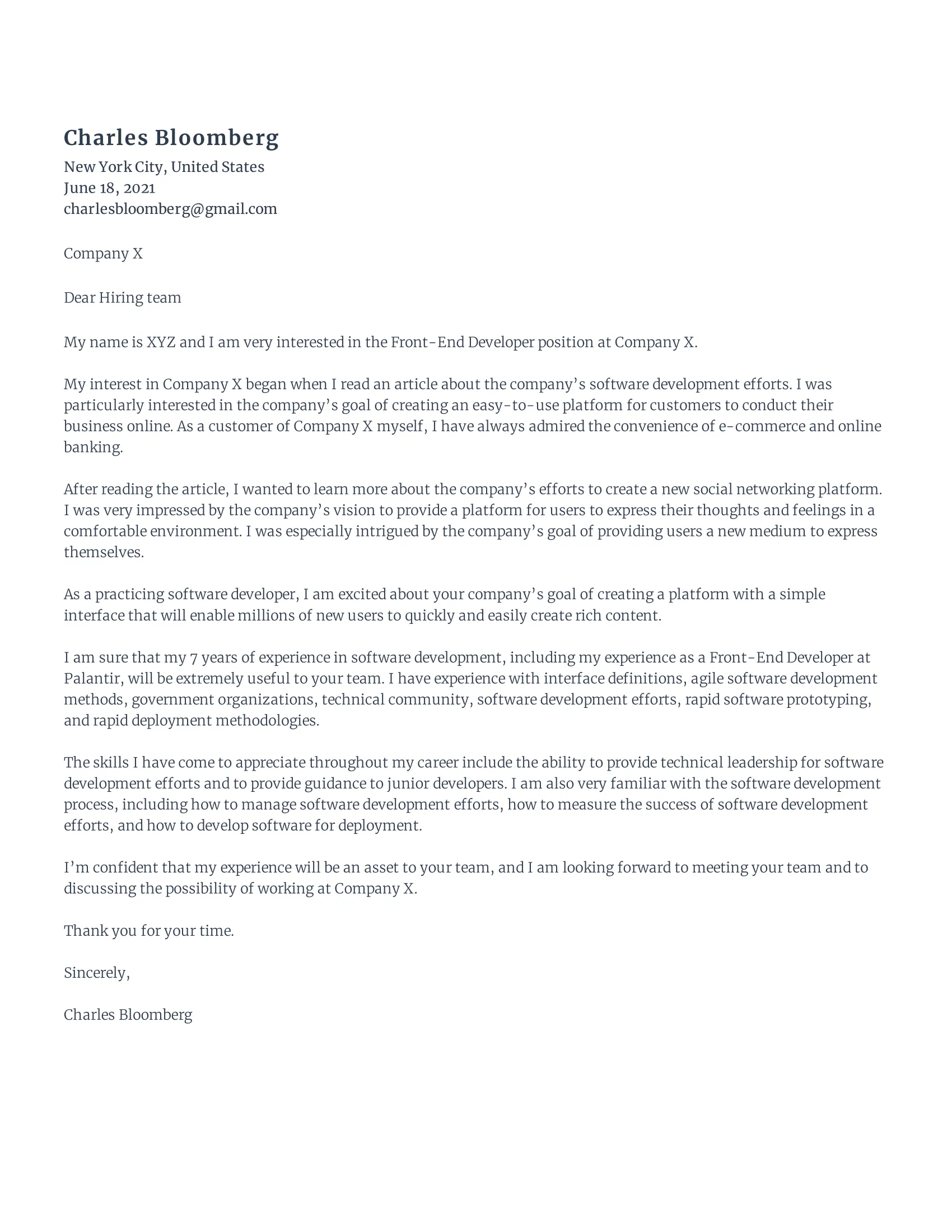
What is a Frontend Developer Cover Letter
A frontend developer cover letter is a crucial document that accompanies your resume when applying for frontend developer positions. Think of it as your personal introduction to a potential employer. It serves as a platform to express your interest, highlight your relevant skills, and showcase your passion for web development. Unlike your resume, which provides a factual overview of your experience, a cover letter allows you to connect with the hiring manager on a more personal level, demonstrating your personality, enthusiasm, and suitability for the role.
Why is a Frontend Developer Cover Letter Important
In a competitive job market, a well-crafted frontend developer cover letter can be the deciding factor in landing an interview. It’s your chance to stand out from the crowd and demonstrate why you’re the perfect fit for the company and the specific role. A strong cover letter shows that you’ve taken the time to understand the company’s needs and tailor your application accordingly. It provides an opportunity to elaborate on your skills and accomplishments in a narrative format, which can be more engaging than a list of bullet points in your resume. Moreover, it reveals your communication skills, attention to detail, and overall professionalism.
Key Components of a Frontend Developer Cover Letter

A compelling frontend developer cover letter consists of several key components, each playing a vital role in making a positive impression. Understanding these components and structuring your letter accordingly is essential for maximizing its impact. The components include a header with contact information, a professional greeting, a compelling introductory paragraph, several body paragraphs highlighting your skills and accomplishments, a tailored paragraph that shows your enthusiasm and understanding of the role, a strong closing, and thorough proofreading.
Header and Contact Information
Start your cover letter with a professional header that includes your full name, contact information (phone number, email address, and LinkedIn profile URL), and the date. If you know the hiring manager’s name, include it below your contact information. Ensure your contact information is accurate and up-to-date, as this is how recruiters will contact you. Use a clear and professional font for your header, such as Arial or Times New Roman. Make sure the header is visually appealing and well-organized, which helps in a positive first impression. (See image frontend-developer-cover-letter-header.webp)
Greeting
Address the hiring manager by name if possible. This demonstrates that you’ve done your research and are genuinely interested in the opportunity. If you can’t find the hiring manager’s name, use a professional greeting such as ‘Dear Hiring Manager’ or ‘Dear [Company Name] Hiring Team.’ Avoid generic greetings like ‘To Whom It May Concern,’ as they can make your letter feel impersonal. A personalized greeting sets a positive tone for the rest of your cover letter and shows that you’re proactive and attentive to detail.
Body Paragraph 1 Show Your Enthusiasm

Your opening paragraph should immediately grab the reader’s attention. Express your enthusiasm for the position and the company. Briefly mention where you found the job posting and why you’re interested in the role. State your strong belief you are a great match for the role and the company. Your enthusiasm is contagious; convey your excitement for the opportunity and your genuine interest in the company’s work. Make it clear that you’ve researched the company and are familiar with their products or services. This demonstrates your initiative and commitment.
Body Paragraph 2 Highlight Relevant Skills
This is where you showcase your skills. Identify the key skills the employer is looking for in the job description and highlight how you possess them. Provide specific examples of your experience using these skills. Mentioning specific technologies such as JavaScript, React, Angular, or Vue.js. Also, showcase your understanding of HTML, CSS, and responsive design principles. Quantify your achievements whenever possible, use data and metrics to demonstrate the impact of your work. For example, ‘Improved website loading time by 20%’. (See image frontend-developer-skills.webp)
Body Paragraph 3 Showcase Accomplishments
Use this paragraph to provide examples of your past work, this paragraph should focus on accomplishments. Describe projects where you made a significant impact. Focus on the outcomes of your contributions. This could include increased user engagement, improved conversion rates, or successful project launches. Highlight how your skills have benefited previous employers or clients. Use the STAR method (Situation, Task, Action, Result) to structure your examples and make them more impactful. Show how you solved a problem or achieved a specific goal. (See image frontend-developer-action-verbs.webp)
Body Paragraph 4 Tailor to the Job Description

Carefully review the job description and tailor your cover letter to address the specific requirements. Mention any specific technologies or tools the employer is looking for, and provide examples of your experience with them. Show how your qualifications align with their needs. Use keywords from the job description to demonstrate that you understand what the company is looking for. Demonstrate a deep understanding of the role. Explain how your experience and skills make you a perfect fit for the position. This demonstrates that you’ve put in the effort to understand the role and the company’s needs.
Closing
End your cover letter with a strong closing paragraph. Reiterate your interest in the position and thank the hiring manager for their time and consideration. Include a call to action, such as expressing your availability for an interview and your eagerness to discuss your qualifications further. Provide your contact information again. Maintain a professional and enthusiastic tone throughout your closing. The closing should be brief, appreciative, and forward-looking.
Proofreading and Editing
Before submitting your cover letter, thoroughly proofread and edit it for any grammatical errors, typos, or inconsistencies. Have a friend or colleague review it as well to catch any mistakes you might have missed. Ensure the language is clear, concise, and professional. Pay attention to the tone, make sure it reflects your enthusiasm and professionalism. Proper grammar, spelling, and punctuation are crucial for making a positive first impression. A polished cover letter reflects your attention to detail and commitment to quality.
Formatting and Design Tips

The formatting and design of your frontend developer cover letter contribute significantly to its readability and visual appeal. A well-formatted letter is easy to scan, making it more likely that the hiring manager will read the entire content. Good formatting highlights your skills and qualifications. Choose a professional and easy-to-read font such as Arial or Times New Roman. These fonts are widely used and considered standard for professional documents. Ensure the font size is appropriate (11-12 points) for comfortable reading. (See image frontend-developer-cover-letter-format.webp)
Choosing the Right Font and Size
Opt for a clean, professional font like Arial, Calibri, or Times New Roman. Use a font size between 11 and 12 points for readability. Avoid using decorative or unusual fonts, which can distract the reader and detract from your message. Ensure your font choice is consistent throughout the document for a professional look. Choose a font that is easy on the eyes and suitable for both online viewing and printing. Make sure the font size is appropriate for easy reading, preventing strain and improving comprehension.
Using White Space Effectively
Use white space to break up text and make your cover letter visually appealing. Use consistent spacing between paragraphs. This will make the content easier to read and comprehend. Avoid overcrowding your letter with too much text. Use headings, bullet points, and short paragraphs to improve readability. Effective use of white space makes your letter less daunting and helps the reader focus on the most important information. Ensure the layout is balanced and visually pleasing.
File Format and Submission
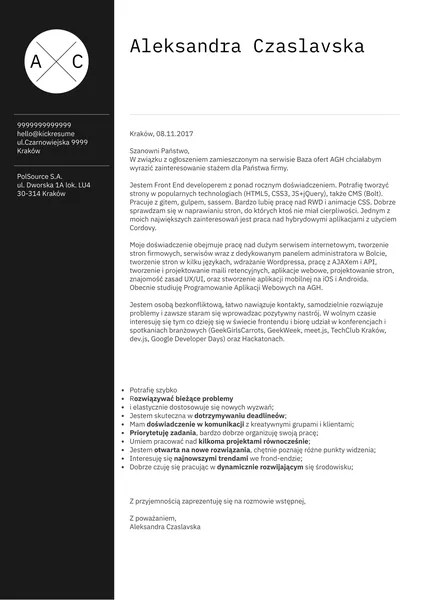
Save your cover letter as a PDF file to ensure its formatting remains consistent across different devices and operating systems. PDF files are also less prone to being altered. Always follow the instructions provided in the job posting regarding file submission. If no specific instructions are given, a PDF format is usually the safest option. If the company prefers another format, always respect their guidelines. The filename of your cover letter should be clear and professional. Use a format like ‘YourName_CoverLetter.pdf’.
Common Mistakes to Avoid
Avoiding common mistakes can significantly improve the effectiveness of your frontend developer cover letter. These errors can easily make a bad impression and reduce your chances of landing an interview. Understanding these pitfalls will help you craft a more compelling and professional cover letter. Making sure to avoid these common errors can greatly increase your chance of success. (See image frontend-developer-cover-letter-mistakes.webp)
Generic Cover Letters
Avoid using a generic cover letter that is not tailored to the specific job and company. Employers can easily spot a generic letter, and it shows that you haven’t taken the time to understand their needs. Tailor each cover letter to the specific role and company. Research the company and highlight how your skills and experience align with their requirements. Customize your cover letter to show your genuine interest in the specific opportunity.
Typos and Grammatical Errors

Typos and grammatical errors can damage your credibility. Proofread your cover letter carefully. Ensure that your grammar, spelling, and punctuation are flawless. Use a grammar checker and have a friend or colleague review your letter as well. These errors make your cover letter appear unprofessional and reflect poorly on your attention to detail. Take the time to edit, revise, and proofread before submitting it.
Lack of Personalization
Avoid writing impersonal cover letters. Address the hiring manager by name and show that you’ve researched the company. Demonstrate your genuine interest in the role. Make sure the cover letter doesn’t sound like a generic template. Personalize your cover letter to show that you’re serious about the opportunity. A lack of personalization can make your application feel impersonal and less likely to succeed.
Ignoring the Job Description
Carefully review the job description and address the specific requirements. Failing to do so demonstrates a lack of attention to detail and a lack of understanding of the role. Highlight the skills and experiences that align with the job requirements. Emphasize how you meet the specific needs outlined in the job description. Using keywords from the job description will also help your letter get noticed.
Best Practices for Frontend Developers

Following best practices will set your cover letter apart from the competition. These practices will greatly increase your chances of securing an interview. From tailoring your letter to showcasing your skills, these guidelines will improve your chances of success. Using these best practices to show you’re a qualified frontend developer.
Tailoring Your Letter to the Specific Role
Each cover letter should be unique and customized for the specific job you are applying for. This shows that you are genuinely interested in the role. Research the company’s culture, values, and the specific requirements of the position. Show that you understand the role and the company’s needs. Personalize your cover letter to make it relevant and engaging for the hiring manager. Do not send a generic cover letter, customize it.
Showcasing Your Portfolio
Include a link to your online portfolio in your cover letter. Your portfolio is a crucial part of your application and it should be up-to-date. Your portfolio should showcase your best projects and demonstrate your skills and capabilities. If your portfolio is hosted on GitHub, include the link. If you have any projects that are not live, make sure to give a demo or video of the project and showcase it as well. Highlight the projects you’re most proud of and the technologies you used. (See image frontend-developer-portfolio.webp)
Highlighting Relevant Technologies
Mention the specific technologies and tools that are relevant to the job description. Highlight your expertise in JavaScript, React, Angular, Vue.js, HTML, CSS, and any other relevant frameworks or libraries. Provide examples of your experience with these technologies. Demonstrate your understanding of web development best practices, such as responsive design, accessibility, and performance optimization. Mention any certifications or courses you’ve completed. (See image frontend-developer-skills.webp)
Using Action Verbs
Use strong action verbs to describe your skills and accomplishments. Start your sentences with action verbs to make your cover letter more impactful and engaging. Examples include ‘Developed,’ ‘Implemented,’ ‘Designed,’ ‘Optimized,’ ‘Managed,’ ‘Collaborated,’ and ‘Led.’ Show how you’ve made a difference in your previous roles. This will make your letter more active and engaging. Using action verbs will make your letter more impactful, and show what you did. (See image frontend-developer-action-verbs.webp)
Example Frontend Developer Cover Letter
Here is an example cover letter. This should be used as a template or guide. You must adjust the context and information to showcase you. Remember to proofread this and ensure it aligns with your experience. (See image frontend-developer-cover-letter-example.webp)
Sample Cover Letter Text
Dear [Hiring Manager Name], I am writing to express my enthusiastic interest in the Frontend Developer position at [Company Name], as advertised on [Platform where you saw the job posting]. With my passion for creating engaging and user-friendly web experiences and my proven skills in [list key skills], I am confident that I can significantly contribute to your team. In my previous role at [Previous Company], I was responsible for [briefly describe responsibilities and accomplishments, using action verbs]. For example, I developed [specific project] using [relevant technologies], which resulted in [quantifiable results]. My portfolio, available at [Portfolio Link], further demonstrates my abilities and commitment to delivering high-quality frontend solutions. I am particularly drawn to [Company Name]’s work on [mention a specific project or aspect of the company that interests you] and believe my skills align perfectly with your needs. I am eager to learn more about this opportunity and discuss how I can contribute to your team’s success. Thank you for your time and consideration. Sincerely, [Your Name]
Customizing the Sample for Your Application
Use the sample cover letter as a starting point, but tailor it to your specific experience. Customize the sample to reflect your achievements. Replace the bracketed placeholders with your own information. Be sure to highlight the skills and experiences that are most relevant to the specific job you are applying for. Quantify your accomplishments whenever possible. Proofread and edit the letter before submitting it to ensure it is free of errors. Ensure the letter is tailored to the specific role and the company. This customized cover letter will help you stand out.
Conclusion
A well-crafted frontend developer cover letter is essential for making a strong first impression and securing an interview. By following the tips and guidelines outlined in this guide, you can create a cover letter that effectively showcases your skills, experiences, and enthusiasm for the role. Tailor your letter to the specific job requirements, highlight your accomplishments, and always proofread carefully. With a compelling cover letter, you’ll be well on your way to landing your dream job. Take the time to craft a cover letter that stands out from the competition. (See image frontend-developer-conclusion.webp)