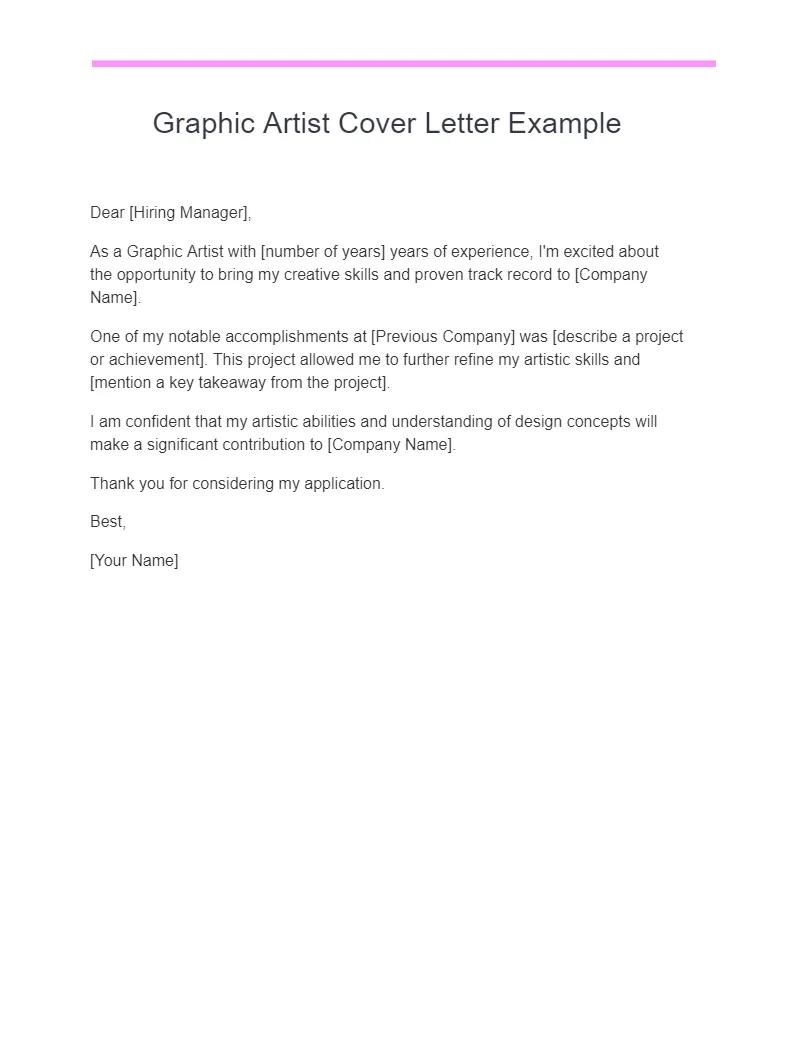
Why a Strong Graphic Artist Cover Letter Matters
In the competitive world of graphic design, your portfolio is undoubtedly your star player. However, a well-crafted cover letter is your strategic coach, guiding the recruiter’s attention and setting the stage for your portfolio’s grand performance. Think of it as the opening act before the main show. Without a compelling cover letter, your portfolio might get overlooked, lost in the shuffle of countless other applicants. A strong cover letter for a graphic artist does more than just introduce you; it provides context, highlights your most relevant skills, and showcases your understanding of the specific job requirements. It’s your chance to connect with the hiring manager on a personal level, demonstrating your enthusiasm and suitability for the role. Ultimately, a powerful cover letter can be the deciding factor in getting you that all-important interview, making it an indispensable tool in your job search arsenal. The primary purpose is to make you stand out!
Essential Elements of a Graphic Artist Cover Letter
A winning cover letter for a graphic artist is built on several key elements. Firstly, address the hiring manager by name whenever possible; it shows you’ve done your research and are genuinely interested. Secondly, clearly state the position you are applying for and how you learned about it. This helps the recruiter quickly understand your intent. Thirdly, the body of your letter should be divided into concise paragraphs, each focusing on a specific aspect of your qualifications. Mention your relevant skills and experience, and tailor your examples to the job description. Lastly, close your cover letter with a confident call to action, expressing your enthusiasm for the opportunity and your availability for an interview. Remember to proofread meticulously for any errors in grammar or spelling; a polished cover letter reflects your professionalism and attention to detail, qualities highly valued in graphic design.
Highlighting Your Skills and Experience

When highlighting your skills and experience, focus on the aspects most relevant to the job. Don’t just list your skills; provide specific examples of how you’ve used them to achieve results. Did you design a successful marketing campaign? Mention the project, your role, and the positive outcomes. Are you proficient in certain design software like Adobe Creative Suite (Photoshop, Illustrator, InDesign)? Specify your level of expertise and include any certifications. Quantify your achievements whenever possible; for instance, ‘Increased social media engagement by 30%’ or ‘Designed over 50 marketing materials.’ Tailor your descriptions to match the language used in the job description; if the job emphasizes branding, highlight your experience in that area. The key is to provide concrete evidence of your abilities and demonstrate that you possess the skills the employer is seeking. Showcase your strengths!
Showcasing Your Design Portfolio
Your design portfolio is your most valuable asset, and your cover letter is the perfect place to guide the reader towards your best work. Briefly mention your portfolio and how it showcases your diverse skill set. Instead of just saying ‘See my portfolio,’ provide a link and highlight a few key projects that are most relevant to the job. Briefly describe the project, your role, and the positive results. This will pique the recruiter’s interest and encourage them to explore your portfolio further. If you’re applying for a specific type of design role (e.g., web design, logo design), make sure to emphasize relevant projects. Use this opportunity to demonstrate your understanding of design principles, your creativity, and your ability to create visually appealing and effective designs. Make it easy for the hiring manager to see your talent.
Tailoring Your Cover Letter to the Job
Generic cover letters are a surefire way to get your application tossed aside. Take the time to tailor each cover letter to the specific job and company. Carefully review the job description and identify the key skills and qualifications the employer is seeking. Then, in your cover letter, emphasize your relevant experience and skills, providing examples that demonstrate your ability to meet those requirements. Research the company and learn about its brand, values, and recent projects. This shows you’re genuinely interested in the role and have taken the initiative to understand the company’s needs. Address the specific needs of the employer, and explain why you are the best fit. By tailoring your cover letter, you demonstrate your attention to detail and your understanding of the company’s requirements. Personalize the letter to show you care!
Formatting Your Cover Letter for Success

The format of your cover letter is crucial for making a positive first impression. Choose a professional and easy-to-read font, such as Arial, Times New Roman, or Calibri, and use a font size between 11 and 12 points. Keep your letter concise, ideally no more than one page. Use clear and concise language, avoiding jargon or overly complex sentences. Divide your letter into distinct sections, with clear headings and subheadings, to make it easy for the recruiter to scan and digest the information. Use bullet points to highlight your key skills or achievements, which will help to make your letter more visually appealing and easier to read. Ensure that your letter is well-spaced and has consistent margins. Proper formatting demonstrates professionalism and attention to detail, signaling that you take your job application seriously.
Using Keywords Effectively
In the digital age, many employers use applicant tracking systems (ATS) to screen resumes and cover letters. To ensure your cover letter gets noticed, it’s essential to incorporate relevant keywords from the job description. Carefully read the job posting and identify the key skills, technologies, and qualifications the employer is looking for. Then, weave those keywords naturally into your cover letter. For example, if the job requires proficiency in Adobe Photoshop, mention your experience with Photoshop and highlight specific projects where you used the software. However, avoid keyword stuffing, which can make your letter sound unnatural and detract from its impact. Instead, use keywords strategically and integrate them seamlessly into your writing. Use a balance and make it easy for the ATS to pick up important information.
Writing a Compelling Opening Paragraph
The opening paragraph of your cover letter is your chance to grab the recruiter’s attention and make them want to read more. Start with a strong hook that immediately demonstrates your enthusiasm for the position and the company. Mention the specific job you’re applying for and how you found it (e.g., through LinkedIn, a job board, or a referral). In your opening sentence, briefly highlight your most relevant skill or experience to grab their attention. Express your excitement about the opportunity, and mention why you’re drawn to the company or the role. Avoid generic opening lines. Instead, focus on making a positive impression by showing your understanding of the company’s mission and your alignment with their values. Create a strong first impression, and you will make your way to the interview process.
Crafting a Strong Body Paragraph

The body paragraphs of your cover letter are where you provide the details that support your claims and showcase your qualifications. Each paragraph should focus on a specific aspect of your skills, experience, or achievements. Use the STAR method (Situation, Task, Action, Result) to structure your paragraphs and provide concrete examples of your accomplishments. First, describe the situation you were in. Then, explain the task you were assigned. Next, detail the actions you took to address the task. Finally, highlight the results you achieved. This will allow you to provide relevant information and prove that you are the best fit. Quantify your achievements whenever possible to make your impact more tangible. By using the STAR method and providing compelling examples, you can convince the recruiter that you possess the skills and experience necessary for the job.
Closing Your Cover Letter with Impact
Your closing paragraph should leave a lasting positive impression and encourage the recruiter to take the next step. Reiterate your enthusiasm for the position and the company. Briefly summarize your key qualifications and why you’re the ideal candidate. Include a clear call to action, stating that you are eager to discuss your qualifications further and are available for an interview. Provide your contact information, including your phone number and email address, and make it easy for the recruiter to reach you. Thank the recruiter for their time and consideration. Avoid generic closings like ‘Sincerely’ or ‘Best regards.’ Instead, use a professional and enthusiastic closing that reflects your personality and your genuine interest in the opportunity. Make your closing memorable and show you care about the position.
Common Mistakes to Avoid in Your Cover Letter
Avoid common mistakes that can undermine your cover letter and hurt your chances of getting hired. Firstly, never use a generic cover letter; always tailor it to the specific job and company. Secondly, avoid typos, grammatical errors, and spelling mistakes at all costs; proofread your letter carefully. Thirdly, don’t be too wordy or include irrelevant information; keep your letter concise and focused on the key requirements of the job. Fourthly, avoid being negative or complaining about previous employers or experiences. Fifthly, don’t be overly boastful or arrogant; present yourself professionally and confidently. Finally, don’t forget to include a link to your online portfolio or attach it as a separate document. By avoiding these common mistakes, you can increase your chances of making a positive impression and landing an interview.
Proofreading and Editing Your Cover Letter

Proofreading and editing are crucial steps in the cover letter writing process. After you’ve finished writing your letter, set it aside for a few hours or overnight to allow you to review it with fresh eyes. Carefully read through your cover letter, checking for any errors in grammar, spelling, punctuation, and formatting. Pay close attention to the clarity and flow of your writing. Ensure that your ideas are presented logically and that your sentences are well-structured. Have a friend or colleague review your cover letter as well, as a second pair of eyes can often catch errors that you might have missed. Use grammar and spell-checking tools to assist you, but don’t rely on them entirely. Ultimately, a polished and error-free cover letter demonstrates your attention to detail and your professionalism, which are highly valued qualities in graphic design.
Cover Letter Examples for Graphic Artists
Looking at cover letter examples can provide inspiration and guidance for crafting your own. Search online for cover letter examples specifically for graphic designers or artists. Pay attention to how the examples are structured, the language used, and the way skills and experience are highlighted. Take notes on how to tailor your letter to specific positions. When reviewing examples, focus on how the applicants showcase their personality and enthusiasm. However, avoid simply copying and pasting from a template. Instead, use the examples as a starting point and personalize your letter to reflect your unique skills, experience, and personality. Consider your personal brand and reflect that brand in your cover letter. This is a great starting point for your design career!