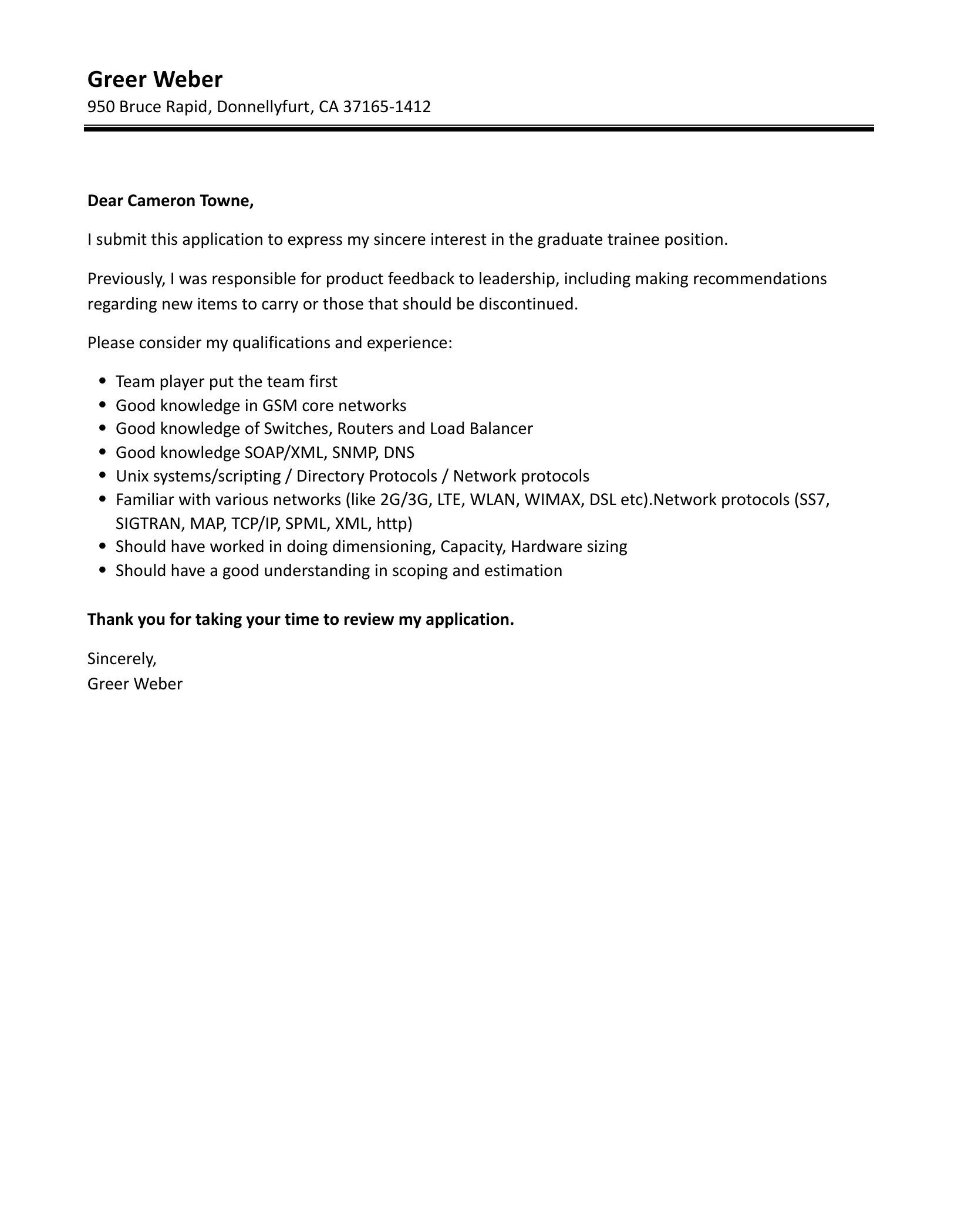
Understanding the Management Trainee Role
Before you begin crafting your cover letter for a management trainee position, it’s crucial to understand the role itself. Management trainee programs are designed to groom future leaders within an organization. These programs typically offer a structured approach to learning the various aspects of a business, often involving rotations through different departments, projects, and training sessions. As a management trainee, you’ll be expected to develop a broad understanding of the company’s operations, build leadership skills, and contribute to the company’s goals. Your cover letter is the first opportunity to demonstrate your understanding of the role and your suitability for it. It should reflect your awareness of what it entails and your enthusiasm for the opportunity to learn and grow within the organization. Highlighting your interest in leadership, your willingness to learn, and your understanding of the company’s values will significantly enhance your application.
Key Skills Employers Seek in Management Trainees
Employers look for specific skills and qualities in management trainees. Highlighting these in your cover letter is essential. These are not just technical skills, but also soft skills that demonstrate your potential to lead and manage. Make sure you mention this on your cover letter. To improve your chances, always put the keywords on the cover letter, and tailor them to the job description.
Leadership Skills

Leadership is a core requirement for management trainees. Employers seek candidates who can inspire and motivate teams. Emphasize instances where you’ve taken initiative, led projects, or influenced others. If you’ve held leadership positions in clubs, organizations, or previous jobs, be sure to include them, describing the responsibilities you had and the outcomes you achieved. Even if you haven’t held a formal leadership position, you can highlight instances where you’ve demonstrated leadership qualities, such as taking charge of a project, mentoring a peer, or driving a team towards a shared goal. Showing your ability to take initiative, make decisions, and guide others is crucial.
Communication Skills
Effective communication is vital for managers. Highlight your ability to communicate clearly and persuasively, both verbally and in writing. Provide examples of how you’ve communicated complex information to different audiences, such as making presentations, writing reports, or leading discussions. Mention instances where you’ve successfully mediated conflicts, negotiated agreements, or presented ideas to senior management. Demonstrating strong communication skills shows that you can effectively convey information, listen to others, and build relationships within the organization. Moreover, mentioning your ability to adapt your communication style to different audiences is a significant advantage. Showcasing your ability to write professional emails, deliver compelling presentations, and engage in constructive conversations will help you stand out.
Problem-Solving Skills
Management trainees must be capable problem-solvers. Showcase your ability to analyze situations, identify issues, and develop effective solutions. Describe how you’ve approached complex problems in the past. Share specific examples of how you identified a problem, analyzed the root causes, devised a solution, and implemented it successfully. Including quantifiable results, such as increased efficiency, cost savings, or improved customer satisfaction, will strengthen your impact. It’s crucial to demonstrate your ability to think critically, make informed decisions, and adapt to changing circumstances. Employers want to see how you approach and solve problems in a logical, systematic way, as this is a fundamental aspect of managerial responsibilities.
Organization and Time Management Skills

Successful management involves excellent organization and time management. Highlight your ability to prioritize tasks, manage your time effectively, and meet deadlines. Provide examples of how you’ve organized projects, managed multiple responsibilities, and worked under pressure. Emphasize your use of tools and techniques, such as project management software, scheduling applications, or other organizational strategies. Show how you’ve successfully balanced multiple commitments, managed projects, and maintained productivity. Mention any systems you use to stay organized, like to-do lists, calendars, or project management software. Your cover letter should convey your ability to handle multiple tasks efficiently and effectively.
Essential Components of a Management Trainee Cover Letter
A well-structured cover letter is crucial. It should include specific sections and be tailored to the job description. Each part serves a distinct purpose and contributes to the overall effectiveness of your application. Make sure your cover letter follows a logical flow and presents your qualifications in a clear and concise manner.
Contact Information and Date
At the top of your cover letter, include your contact information (name, address, phone number, and email) and the date. Ensure your email address is professional. Use a readable font and format the date appropriately. This information ensures the employer can easily reach you if they decide to move forward with your application. Presenting this information in a clean and professional manner sets a positive tone for your entire application. Double-check all contact details for accuracy to avoid any potential miscommunications.
The Salutation

Use a professional salutation, such as ‘Dear Mr./Ms./Mx. [Last Name]’ if you know the hiring manager’s name. If you don’t know the name, use a general salutation, such as ‘Dear Hiring Manager’ or ‘Dear [Company Name] Hiring Team’. Avoid generic salutations like ‘To Whom It May Concern’. Always research the company to find the hiring manager’s name and address them directly. Addressing the letter to a specific person personalizes your application and shows your interest. This shows that you have taken the time to research the company and understand their hiring process.
Opening Paragraph: Grabbing Their Attention
The opening paragraph is your chance to grab the reader’s attention. State the position you’re applying for and how you learned about the opportunity. Briefly mention something that makes you stand out. Express your enthusiasm for the role and the company. For instance, you might start by stating your excitement about the management trainee position and highlighting something specific that attracted you to the company, such as their values, a recent project, or their industry standing. This will immediately capture the reader’s interest and make them want to learn more about your qualifications. A compelling opening can differentiate your cover letter from the many others a hiring manager receives.
Highlighting Your Relevant Skills and Experience
The body of your cover letter should highlight your skills and experience that align with the job requirements. Use specific examples to illustrate your qualifications. Focus on the key skills and experiences mentioned in the job description. Relate your past accomplishments to the requirements of the management trainee position. If the job description emphasizes leadership, include examples of when you took initiative, led a project, or motivated a team. If the job description emphasizes communication, describe instances where you communicated effectively, such as presentations, written reports, or project management activities. Your goal is to showcase your ability to perform the duties of the management trainee role effectively.
Quantifying Your Achievements

Whenever possible, quantify your achievements. Use numbers, percentages, or specific metrics to demonstrate the impact of your work. This makes your claims more credible and helps the employer understand the value you can bring to their organization. For example, instead of saying you ‘improved customer service,’ state that you ‘increased customer satisfaction scores by 15%’. Instead of saying that you ‘managed projects successfully,’ specify that you ‘completed projects on time and under budget’. Using data helps the reader understand the scale of your accomplishments. Quantifying your achievements offers concrete evidence of your abilities and the results you have generated in the past.
Showcasing Your Passion and Enthusiasm
Express your enthusiasm for the role, the company, and the industry. Explain why you are interested in the specific management trainee program. Mention what excites you about the company’s mission, values, or culture. Show your understanding of the company and its industry. Demonstrate that you’ve researched the organization and understand its goals. This shows that you’re not just applying for any job but that you’re genuinely interested in this specific opportunity. Expressing your enthusiasm is a key factor in standing out from other candidates. It allows you to make a connection with the hiring manager and showcase your commitment to the role.
Closing the Cover Letter
In your closing paragraph, summarize your interest and reiterate your qualifications. Express your eagerness for an interview and thank the hiring manager for their time and consideration. Use a professional closing, such as ‘Sincerely’ or ‘Best regards,’ followed by your name. Provide your contact information again, just in case. Your closing paragraph is your last chance to make an impression. Make sure it is professional and expresses your strong interest in the opportunity. Ensure that you offer a strong closing statement, which summarizes why you’re the best fit for the position and reiterates your eagerness to interview. A well-crafted closing can leave a lasting positive impression.
Proofreading and Editing Your Cover Letter

Proofreading and editing your cover letter is essential before submitting it. Check for grammatical errors, spelling mistakes, and typos. Ensure your cover letter is free of errors and easy to read. Have someone else review your cover letter to catch any errors you may have missed. Reading your cover letter aloud can also help you identify awkward phrasing or unclear sentences. Pay close attention to the tone of your letter; make sure it is professional and reflects your personality. A polished cover letter shows that you pay attention to detail and that you are committed to presenting yourself in the best possible light. This is an important step that should never be skipped. Errors can undermine your credibility and can damage your chances of getting an interview.
Common Mistakes to Avoid in Your Cover Letter
Avoid common mistakes that can negatively impact your cover letter. Do not simply restate your resume, as this shows a lack of effort and attention. Use unique examples and insights from your past experiences. Avoid generic language; tailor your cover letter to the specific job description and company. Do not use overly casual language. Do not include irrelevant information; focus on skills and experiences that are relevant to the management trainee position. Generic cover letters, filled with clichés, will not impress. Be sure your cover letter reflects your genuine interest in the company and the position. Make sure it sounds professional.
Using Action Verbs Effectively
Using strong action verbs can make your cover letter more impactful. Start your sentences with action verbs to describe your accomplishments. These verbs should demonstrate your abilities and skills, adding more impact to your writing. Action verbs help you convey your accomplishments in a clear and concise way. Some examples include ‘managed,’ ’led,’ ‘implemented,’ ‘achieved,’ ‘developed,’ and ‘improved.’ Instead of writing, ‘I was responsible for,’ write ‘Managed a team of five employees…’ This helps demonstrate your abilities. Always choose action verbs that specifically describe the actions you took and the results you achieved.
Tailoring Your Cover Letter for Each Application

It’s essential to tailor your cover letter to each application. Do not use a generic cover letter. Always customize your cover letter to fit the specific job description and the company’s needs. Research the company and mention specific aspects that appeal to you. Highlight the skills and experiences most relevant to the position. Tailoring your cover letter shows the hiring manager that you’ve taken the time to understand their requirements and are genuinely interested in the opportunity. Using a customized cover letter will significantly increase your chances of getting an interview. Personalizing your cover letter for each company will help you to stand out from the competition.