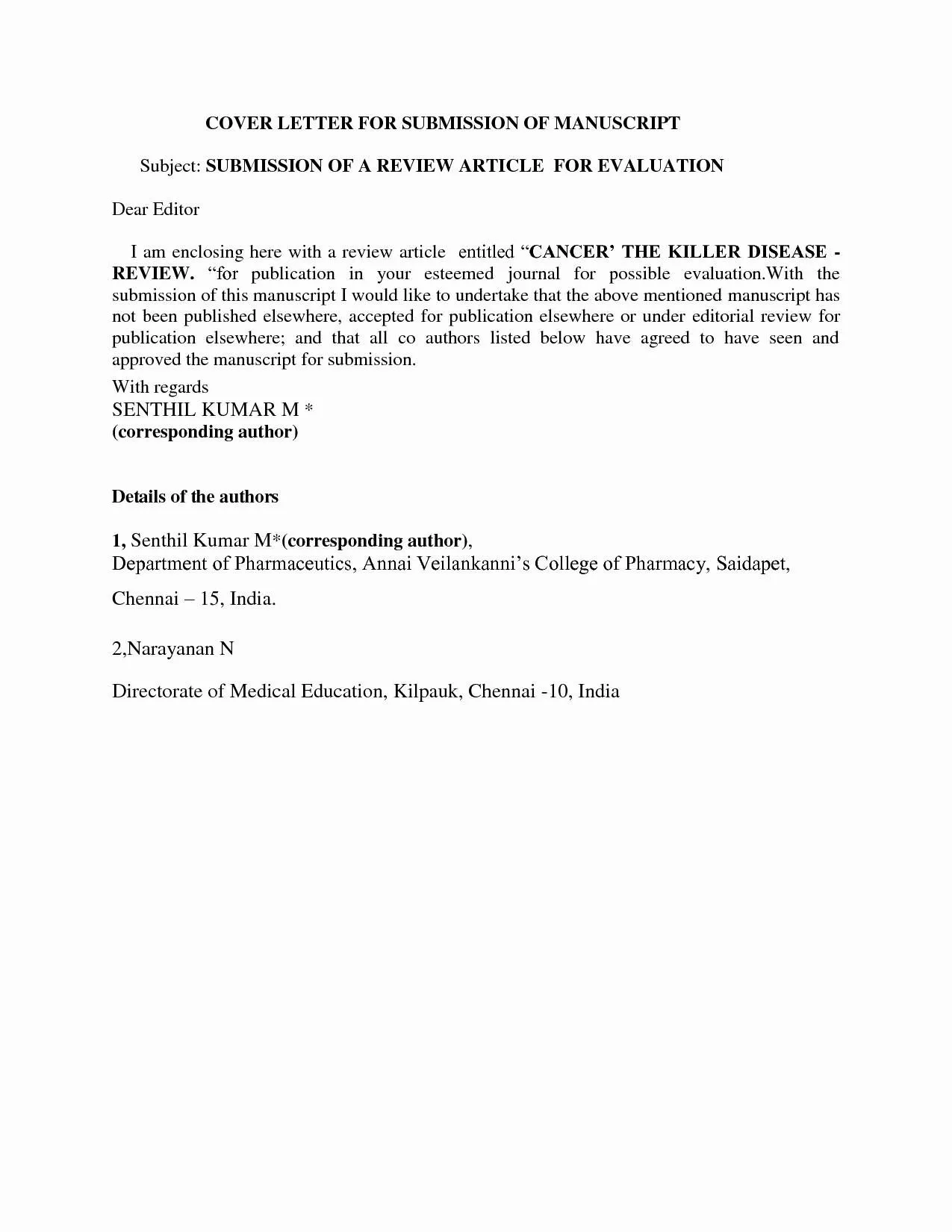
Understanding the Importance of a Journal Cover Letter
A journal cover letter is more than just a formality; it’s your first and often only chance to make a positive impression on the editor and potentially, the reviewers. It serves as a concise and persuasive introduction to your manuscript, highlighting its significance, originality, and suitability for the target journal. A well-crafted cover letter can significantly increase the likelihood of your manuscript being considered for peer review, while a poorly written one might lead to immediate rejection. Think of it as a sales pitch where you’re selling your research and convincing the editor that your work deserves their attention and space in their journal. This document provides the editor with crucial context, allowing them to quickly assess the relevance and potential impact of your work within the broader scientific landscape. A strong cover letter sets the stage for a successful publication journey, showcasing your professionalism and attention to detail from the very beginning.
Key Components of a Winning Cover Letter
A successful cover letter comprises several critical elements that work together to present your research effectively. It’s not just about summarizing your abstract; it’s about strategically communicating the value of your work. Each component plays a vital role in guiding the editor and reviewers through your manuscript and making a compelling case for its publication. The key is to be clear, concise, and compelling, providing all the necessary information while avoiding unnecessary jargon or overly technical language. By carefully crafting each element, you can significantly improve your chances of having your manuscript considered and ultimately, published.
Contact Information and Salutation

Begin with your contact information, including your name, affiliation, email address, and any other relevant details. This allows the editor to easily reach you with any questions or correspondence. Always address the editor by name if possible. Research the journal’s website to find the editor’s name; using a personalized salutation shows that you’ve taken the time to understand the journal’s editorial structure. Avoid generic greetings. If the editor’s name is unavailable, a professional salutation like “Dear Editor” is acceptable. Proper formatting and attention to detail at this stage sets a tone of professionalism and respect from the very start of your communication. (cover-letter-journal)
Clear and Concise Introduction
The introduction should immediately state the purpose of the letter and the manuscript. Briefly mention the title of your paper, the type of manuscript (e.g., original research article, review), and the journal to which you are submitting. Your introduction should capture the editor’s attention and provide a clear roadmap for what follows. Keep it concise, avoiding unnecessary wordiness or jargon. This section is about clearly establishing your intentions and making sure the editor immediately understands what the letter is about. A well-crafted introduction sets the stage for the rest of the cover letter, making it easier for the editor to quickly grasp the core of your submission. (journal-submission-checklist)
Stating the Purpose of the Submission
Explicitly state that you are submitting your manuscript for consideration for publication in the journal. Briefly introduce the title of your manuscript and highlight the main objective or research question. Include the type of manuscript being submitted (e.g., research article, review, case study). This is a straightforward way to communicate the reason for your communication. Being clear about your intentions helps the editor quickly understand the context of your submission, ensuring they can efficiently manage the review process. This transparency ensures no confusion about the manuscript’s purpose and the journal’s role in reviewing it.
Highlighting Key Findings and Contributions

Summarize your main findings in a concise and compelling manner. Focus on the most important results and their significance. Explain how your research contributes to the existing body of knowledge. Avoid technical jargon and focus on the broader implications of your work. Briefly describe the methods used, but keep it brief and focused on the outcomes. This section should highlight the novelty and significance of your research and capture the attention of the editor. It is about presenting your paper’s highlights in a way that’s easy to understand, showing how your research adds to what’s already known. (research-paper-writing)
Emphasizing the Novelty and Significance of the Research
Clearly state the novelty of your research and why it’s important. Explain how your findings advance the current understanding of the topic. Discuss the potential impact of your work on the field. Highlight any unique aspects of your study that differentiate it from previous research. This part of your cover letter is about convincing the editor that your research is not only significant but also moves the field forward. By clearly communicating the unique contributions of your work, you help the editor quickly recognize its importance and potential impact. This is your opportunity to showcase the value of your research and why it warrants publication in their journal.
Mentioning the Target Journal’s Scope and Audience
Briefly mention the journal and its focus. Explain why your manuscript is a good fit for their audience and scope. Demonstrate your familiarity with the journal’s aims and scope. This shows that you have done your homework. It demonstrates to the editor that you have carefully considered the journal’s goals. Acknowledging this fit boosts your manuscript’s prospects by showing you have a specific target in mind. This section emphasizes your suitability to the journal and confirms to the editor that the manuscript aligns with their publication objectives. (cover-letter-example)
Demonstrating Alignment with the Journal’s Aims

Explicitly state how your manuscript aligns with the journal’s aims and scope. Mention any specific articles or themes within the journal that are relevant to your research. Explain why the journal’s audience would be interested in your work. Demonstrating this alignment increases your chances of acceptance. It convinces the editor that your research contributes to the journal’s goals and audience. This is where you show that you understand the journal’s mission. By aligning your work with the journal’s objectives, you boost its potential and significance. It makes a strong case for your manuscript’s relevance and fit within the journal’s publications.
Acknowledging Limitations
Briefly acknowledge any limitations of your study. Be transparent about any potential weaknesses or shortcomings. This shows your understanding of the work and avoids surprises. It helps enhance your credibility and establishes trust with the editor and reviewers. Avoiding this step may show you as less credible. Addressing these limitations demonstrates a critical understanding of your research and your work. It will often be a point of discussion within the review process so it’s better to get this out on the table. This strengthens your claim of credibility and professionalism in the eyes of the editor. (proofreading-tips)
Proper Formatting and Presentation
The presentation of your cover letter is as important as its content. A well-formatted letter conveys professionalism and attention to detail, which are essential for making a positive impression. Poor formatting can distract from the message and may suggest a lack of attention to detail, potentially affecting the editor’s perception of your work. Ensure your cover letter looks clean, organized, and easy to read. Following formatting guidelines sets a good tone and enhances your chances of success. (conflict-of-interest)
Formatting Guidelines

Use a professional font like Times New Roman, Arial, or Calibri in an easily readable size (e.g., 11 or 12 points). Ensure consistent spacing and clear paragraph breaks. Structure the letter with clear sections and headings for easy navigation. Maintain a professional tone throughout. Adhere to all journal-specific formatting guidelines, such as the required length. Proper formatting can help the editor process your cover letter effectively. This will improve your chances of having your manuscript considered.
Proofreading for Errors
Carefully proofread your cover letter for any grammatical errors, typos, or inconsistencies. Errors can undermine your credibility. Ask a colleague to review your letter as a second pair of eyes. Proofreading ensures your letter is polished and professional. Always check spelling and grammar. Having a fresh set of eyes will help you identify potential errors that you may have overlooked. (author-contribution)
Additional Information
Include any additional information the journal requires, such as a list of potential reviewers or a statement about data availability. Provide information on any prior submissions. Mention if any part of the work has been presented or published elsewhere. Including additional information shows that you are thorough and attentive to the specific requirements of the journal. This can include information on your data and any other information needed to process the manuscript.
Disclosure of Conflicts of Interest
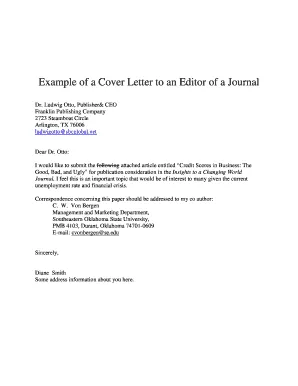
Disclose any potential conflicts of interest, such as financial relationships or affiliations that could influence the interpretation of your results. Transparency is essential for maintaining the integrity of your research. Following guidelines strengthens the credibility of your work. Full disclosure demonstrates ethical conduct and protects your research from potential challenges. This is an important step in any research. (cover-letter-journal)
Authorship and Contributions
Clearly state the contribution of each author to the manuscript. This information is required by most journals. Following this demonstrates compliance with ethical guidelines. Providing this information helps the editor understand the level of involvement by each of the authors. It also helps to avoid any future disputes and confirms the integrity of your authorship. (cover-letter-journal)
Conclusion and Call to Action
In your conclusion, briefly reiterate the main points of your cover letter and thank the editor for their time and consideration. Express your hope for a positive outcome and a willingness to answer any questions. Conclude with a professional closing and your name, title, and contact information. A strong call to action encourages the editor to proceed with your manuscript. This section should convey your enthusiasm for the publication.