Understanding the Purpose of a Cover Letter
A cover letter is more than just a formality; it’s your first chance to make a strong impression on a potential employer. It serves as an introduction, providing context to your resume and highlighting your suitability for the role. Unlike a resume, which is a factual summary of your experience, a cover letter allows you to showcase your personality, enthusiasm, and writing skills. Its primary purpose is to persuade the hiring manager to read your resume and ultimately, to invite you for an interview. A well-crafted cover letter demonstrates your understanding of the company and the specific job requirements, setting you apart from other applicants and increasing your chances of landing your dream job. Think of it as your personal sales pitch, designed to grab the reader’s attention and leave a lasting positive impression.
Key Purposes
- Introduce yourself and your interest in the position.
- Highlight relevant skills and experiences.
- Demonstrate your understanding of the company and the role.
- Express your enthusiasm for the opportunity.
- Persuade the reader to review your resume and consider you for an interview.
Highlighting Your Skills and Experience

Your cover letter is the perfect platform to connect your skills and experience to the job requirements. Don’t simply rehash your resume; instead, provide specific examples that illustrate how your qualifications align with the position. Start by carefully reviewing the job description and identifying the key skills and experiences the employer is seeking. Then, select 2-3 of your most relevant accomplishments and describe them in detail, using the STAR method (Situation, Task, Action, Result) to provide a clear and concise narrative. Quantify your achievements whenever possible, using numbers and data to demonstrate the impact of your work. This focused approach will not only show that you possess the necessary skills but also demonstrate your ability to deliver results, making you a more compelling candidate.
Focus on the Employer’s Needs
- Analyze the job description for required skills.
- Select 2-3 relevant accomplishments.
- Use the STAR method to structure your examples.
- Quantify your achievements with data.
Researching the Company and Tailoring Your Letter
Before you start drafting your cover letter, take the time to research the company and the specific role you’re applying for. This shows that you are genuinely interested in the opportunity and that you’ve taken the initiative to learn more about the organization. Visit the company’s website, read their mission statement, and familiarize yourself with their products, services, and values. If possible, look for information about the hiring manager or the team you’ll be working with. Tailor your letter to the specific company and position by referencing their unique culture, recent projects, or industry achievements. This demonstrates that you understand their needs and that you’re a good fit. Generic cover letters are easily recognizable and are often overlooked, so taking the time to personalize your message is a critical step in the job application process.
Tailoring Tips

- Research the company’s mission, values, and recent achievements.
- Identify the specific requirements of the job description.
- Address your letter to a specific person if possible.
- Highlight how your skills and experience align with the company’s needs.
Structuring Your Cover Letter Effectively
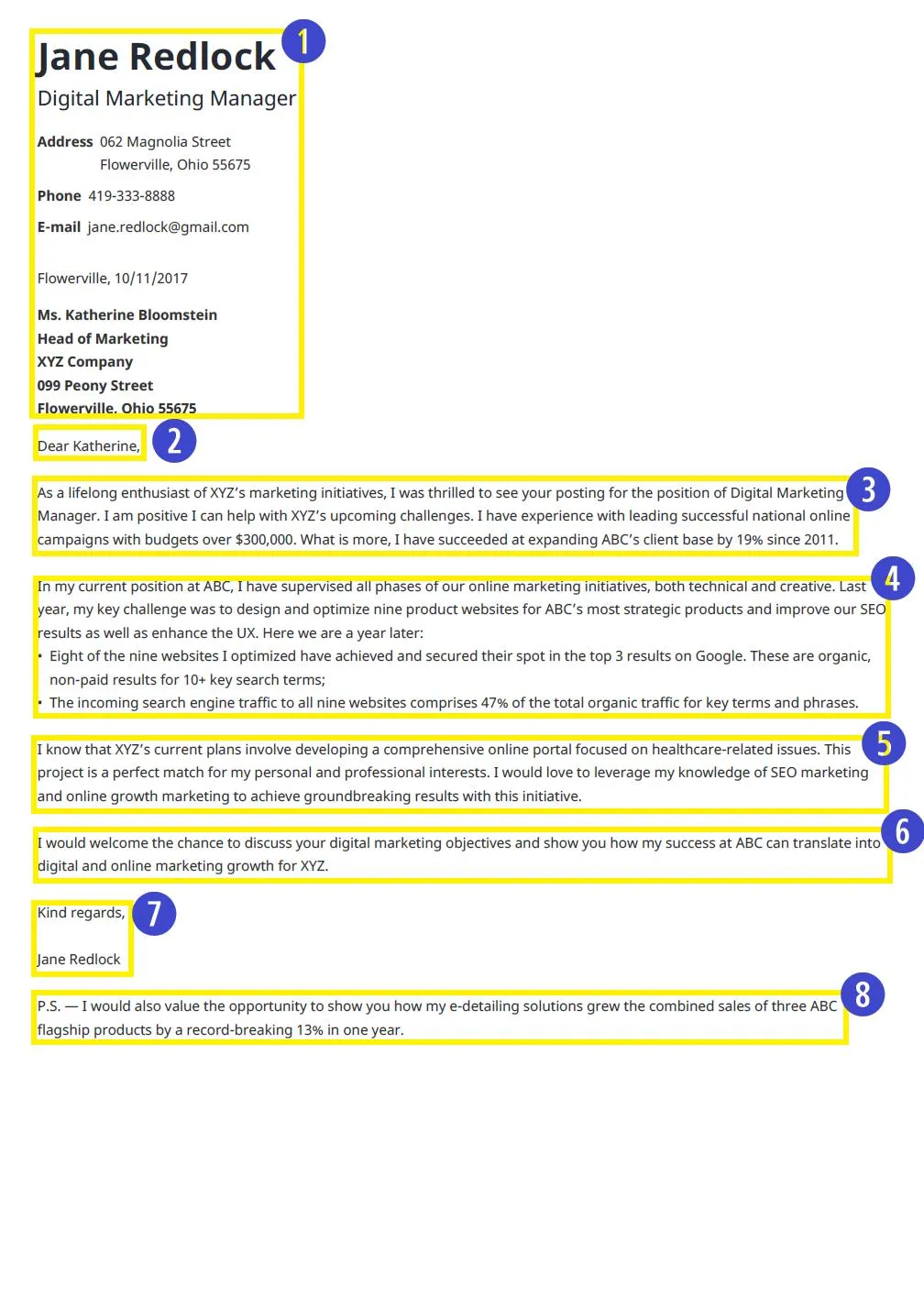
A well-structured cover letter is easy to read and leaves a lasting impression. Start with a compelling introduction that grabs the reader’s attention, clearly stating the position you’re applying for and how you learned about it. The body of your letter should highlight your key skills, experiences, and accomplishments, using specific examples to support your claims. Tailor your content to the role and the company, demonstrating your understanding of their needs. Close with a strong call to action, expressing your enthusiasm for the opportunity and your desire for an interview. Make sure to include your contact information and a professional signature. A clear and logical structure ensures that your message is easily understood and makes it easier for the reader to find the information they need to evaluate your candidacy.
Key Sections
- Introduction State the position and how you learned about it.
- Body Highlight key skills, experiences, and accomplishments.
- Closing Express enthusiasm and call to action.
- Contact Information
Formatting Your Cover Letter for Impact

The visual presentation of your cover letter is just as important as the content. Choose a professional and easy-to-read font, such as Times New Roman, Arial, or Calibri, and use a font size between 10 and 12 points. Maintain consistent formatting throughout the document, including spacing, margins, and alignment. Use clear headings and subheadings to break up the text and make it easier to scan. Avoid lengthy paragraphs and use bullet points to highlight key information. Ensure that your cover letter is free of grammatical errors and typos by proofreading carefully. A well-formatted cover letter not only makes a good first impression but also demonstrates your attention to detail and professionalism, making you a more attractive candidate.
Formatting Essentials
- Use a professional font (Times New Roman, Arial, Calibri).
- Maintain consistent formatting throughout.
- Use clear headings and subheadings.
- Avoid lengthy paragraphs and use bullet points.
- Proofread carefully for errors.
Reviewing and Proofreading Your Cover Letter
Before submitting your cover letter, take the time to review and proofread it thoroughly. Errors in grammar, spelling, or punctuation can create a negative impression and undermine your credibility. Read your letter aloud to catch any awkward phrasing or sentence structure. Ask a friend, family member, or career advisor to review your letter and provide feedback. They can often identify mistakes that you might have missed. Ensure that your contact information is accurate and up-to-date. A polished and error-free cover letter demonstrates your attention to detail and your commitment to presenting yourself in the best possible light. This final step is essential for maximizing your chances of making a positive impression and securing an interview. Don’t underestimate the importance of a final review – it could be the difference between getting hired and being overlooked.
Proofreading Checklist

- Check for grammar, spelling, and punctuation errors.
- Read the letter aloud to check for clarity and flow.
- Ensure that your contact information is accurate.
- Ask someone else to review your letter.
By following these tips, you can draft a cover letter that effectively showcases your skills, experience, and enthusiasm for the job, increasing your chances of landing an interview and ultimately, securing your dream job. Remember to tailor each cover letter to the specific position and company, and always proofread carefully before submitting. Good luck with your job search!