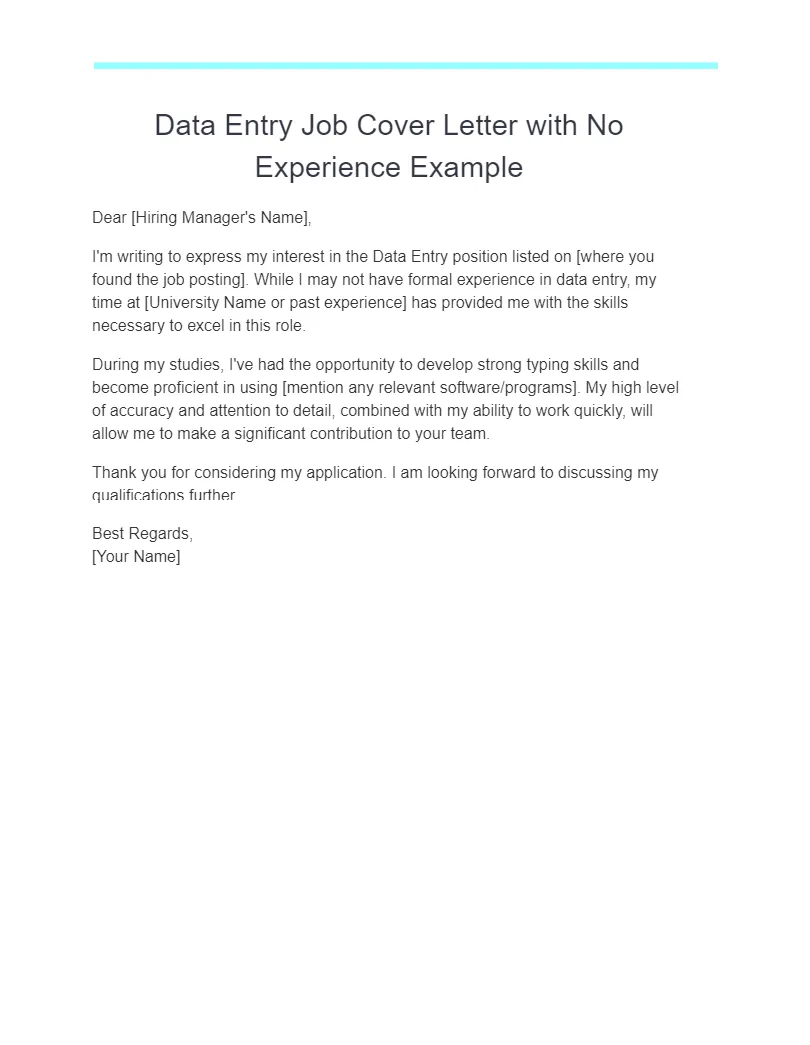
Why Cover Letters Matter
In the competitive world of job applications, a cover letter serves as your personal introduction, providing an opportunity to showcase your personality, skills, and enthusiasm for a specific role. Many job seekers, especially those with limited experience, underestimate the power of a well-crafted cover letter. However, it’s your chance to go beyond the bullet points of your resume and tell a compelling story about why you’re the perfect fit for the job. A cover letter demonstrates your communication skills, your understanding of the role and company, and your genuine interest in the opportunity. Ignoring this crucial step could mean missing out on your dream job. So, let’s dive into the essential elements of a cover letter and equip you with the tools to create a winning application.
The Anatomy of a Cover Letter
A cover letter, when structured correctly, can be your most valuable asset when applying for a job. It is usually divided into several distinct sections, each serving a specific purpose. Understanding the structure of a cover letter will help you organize your thoughts, present your information effectively, and make a positive impression on the hiring manager. The components typically include a header, a greeting, an introductory paragraph, body paragraphs that highlight your relevant skills and experience, a closing paragraph, and a professional sign-off. Each part is crucial for effectively presenting yourself and your qualifications to a prospective employer. From the moment the hiring manager receives your application to when they eventually decide on their final candidates, the cover letter is a vital element of the process.
Header Essentials

The header is the top section of your cover letter and includes your contact information and the date. It’s the first thing a hiring manager sees, so it should be clear, professional, and easy to read. Ensure your name, phone number, email address, and possibly your LinkedIn profile URL are listed correctly. Formatting the header correctly sets a professional tone. Choose a clean, simple font, and avoid any distracting elements. Your goal is to provide the necessary contact details without overshadowing the main content of your letter. This section helps the recruiter quickly identify who you are and how to reach you. Always double-check that all the information is current and accurate, because it is critical to include this essential information at the very beginning of the document.
Your Contact Information
Start with your full name, ensuring it matches the name on your resume. Below your name, list your phone number; make sure the voicemail is set up professionally. Next, include your email address; use a professional email (e.g., firstname.lastname@email.com) rather than a casual one. Optionally, include a link to your LinkedIn profile. This allows the hiring manager to quickly learn more about you. Keep all contact details concise and easy to find. Proper formatting and accuracy in this section are the foundation of a professional impression. Make sure the font is clear and readable, and that there is enough space between each piece of information to maintain the overall look of professionalism.
Date and Recipient Details
Under your contact information, include the current date. Then, add the hiring manager’s name and title (if known), and the company name and address. If you’re unsure who the hiring manager is, research the company’s website or LinkedIn. Addressing your letter to a specific person shows that you’ve done your homework. This attention to detail adds to the personalized approach and shows that you’re serious about the job. Correct recipient information shows that you are very committed to the role and have done your research. This section helps in showing that you are very organized and professional.
Greeting the Hiring Manager

The greeting sets the tone for your cover letter. A formal greeting like ‘Dear Mr./Ms. [Last Name]’ is usually best. If you don’t know the hiring manager’s name, use ‘Dear Hiring Manager’ or ‘Dear [Company Name] Team.’ Avoid generic greetings like ‘To Whom It May Concern,’ as they can make your letter seem impersonal. Ensure you spell the name correctly; this small detail demonstrates that you have taken the time to personalize your application. A thoughtful, respectful greeting shows that you respect the recruiter’s time and effort. It’s one of the easiest ways to show you care about the role and the company.
The Body of Your Cover Letter
The body of your cover letter is where you sell yourself to the hiring manager. It includes your introductory paragraph, body paragraphs, and closing paragraph. Each section should have a specific purpose and work together to showcase your qualifications and enthusiasm. The introductory paragraph should grab the reader’s attention. The body paragraphs should highlight your skills and experiences, emphasizing how you can contribute to the company. The closing paragraph should summarize your key strengths and express your interest in the role. Properly structuring your letter is essential if you want to make a great first impression. Carefully planning and organizing this section will boost your chances of success and getting the job.
First Paragraph Grab Their Attention
Your first paragraph is your chance to make a strong first impression. Start by stating the position you’re applying for and where you saw the job posting. Then, immediately capture the hiring manager’s attention. You can express your enthusiasm for the role, mention a relevant skill, or highlight a connection to the company. The goal is to hook the reader and make them want to learn more about you. Avoid clichés and generic phrases. Instead, aim for a concise, compelling opening that shows you understand the role and are excited about the opportunity. This paragraph should be a personalized statement.
Highlight Your Skills and Experiences

In the body paragraphs, demonstrate your relevant skills and experiences. If you have little to no professional experience, focus on transferable skills gained from coursework, volunteer work, extracurricular activities, or personal projects. Provide specific examples that illustrate your abilities. Use the job description as a guide to identify the key skills and qualifications the employer is looking for. Customize each cover letter to match the specific requirements of the role. Quantify your achievements whenever possible (e.g., ‘Managed social media campaigns that increased engagement by 30%’). This section should persuade the reader of your potential.
Emphasize Your Passion and Enthusiasm
Expressing your passion for the role and the company is essential. Show that you’ve done your research and genuinely want to work there. Mention something specific that excites you about the company or the position. This could be a recent project they worked on, their company culture, or their mission. Highlight how your values align with theirs. Enthusiasm can make you stand out from other applicants. Let your personality shine through while maintaining a professional tone. When you show passion, it shows you are genuinely invested in the role and will likely give it your all. This will ensure the recruiter remembers you for the long run.
Show, Don’t Tell
Instead of simply stating that you possess a skill, provide evidence through examples. If you claim to have strong communication skills, describe a situation where you effectively communicated with a team or presented to an audience. When you ‘show’ rather than ’tell’, you provide concrete proof of your abilities. This makes your claims more credible and memorable. Focus on the outcomes of your actions, such as what you achieved or the impact you made. Quantifiable results are especially effective in demonstrating your capabilities. Be specific and provide context to make your examples more impactful, which is always an excellent way to impress the hiring manager.
Closing the Deal

Your closing paragraph is your final opportunity to make a lasting impression. It should summarize your key qualifications and reiterate your interest in the role. It should also include a call to action. This shows you’re proactive and eager for the next step in the hiring process. A strong conclusion can leave a lasting impression and significantly boost your chances of getting an interview. Your closing paragraph is your last chance to shine and to persuade the reader to offer you the role. Do not leave this element out, as it is very important.
Express Gratitude
Thank the hiring manager for their time and consideration. Expressing gratitude shows you appreciate the opportunity to apply and respect their efforts in reviewing your application. A simple ‘Thank you for your time’ or ‘Thank you for considering my application’ is appropriate. This shows that you respect the time they have spent reading your cover letter. It also leaves a positive and polite impression. It is a good idea to always express your gratitude when applying for a role, as it shows professionalism and courtesy.
Call to Action
Include a call to action, such as expressing your availability for an interview. State that you are eager to discuss your qualifications further and how you can contribute to the company. Be clear and direct with your call to action. For example, ‘I am eager to discuss my qualifications further and am available for an interview at your earliest convenience.’ This will encourage the hiring manager to consider your application. Make it clear that you are serious about the role and ready to take the next step. This shows initiative, and that you’re actively looking for an opportunity.
Sign-off and Signature

Use a professional sign-off, such as ‘Sincerely,’ ‘Best regards,’ or ‘Thank you.’ End your letter with your full name. If submitting a physical copy, leave space for a handwritten signature above your typed name. A professional sign-off and signature add a polished finishing touch to your cover letter. It shows attention to detail and respect for the hiring process. Double-check the format to ensure it is clean and professional. A proper sign-off is essential and should be part of the final touches of your document. Make sure you present your signature well, and follow the guidelines.
Formatting Your Cover Letter
Proper formatting is crucial for making your cover letter easy to read and visually appealing. The formatting of your cover letter can significantly impact how it is received. A well-formatted letter showcases your professionalism and attention to detail, while a poorly formatted one can distract from your message. Consistent formatting throughout your document is important. This includes choosing a suitable font, setting the appropriate margins and spacing, and ensuring your letter is easy on the eye. Following these guidelines can dramatically increase your chances of having your cover letter seen in a positive light.
Font and Font Size
Choose a professional and readable font, such as Times New Roman, Arial, or Calibri. Keep the font size between 10 and 12 points. The font size can be adjusted if you are trying to fill more of the page. Avoid using overly stylized fonts, which can be difficult to read. Choose a font that is clean and easy on the eyes. This will help the hiring manager focus on the content of your letter. Maintaining consistency in your font choice will maintain a professional look. A font that is easy to read is more likely to be seen favorably.
Margins and Spacing

Use standard margins of 1 inch on all sides. This will make your letter look clean and uncluttered. Use single spacing within paragraphs and double spacing between paragraphs. This will create a professional look. Proper spacing ensures that the text is easy to follow. Avoid making your text look crowded. Proper formatting can make your cover letter look more appealing. Ensuring your letter does not look crowded will help readers enjoy the content. Proper formatting also helps the letter look more professional. Always make sure that the layout is right.
Proofreading and Editing
Proofread your cover letter carefully for any typos, grammatical errors, or inconsistencies. Always proofread your cover letter. Errors can undermine your credibility and leave a negative impression. Use a spell checker, but don’t rely on it entirely. Read your letter aloud to catch any awkward phrasing or sentence structures. Ask a friend or family member to review your letter as well. This is very important because a fresh pair of eyes can easily spot errors. Pay attention to every detail of your letter, from the formatting to the content, and make sure it represents you in the best light. Take your time and make sure everything is perfect before you submit your letter.
Cover Letter Examples
Reviewing cover letter examples can help you understand how to structure your letter and what content to include. Here are a few examples of cover letters for job seekers with no experience, including recent graduates, career changers, and students. Use these examples as a guide to creating your own personalized cover letter. These cover letter examples will help you to construct your own. It is important to customize these examples. Cover letters are supposed to be individual and tailored to the role that you want to fill. Do not copy and paste, because that is not what the role is designed for. Using an example is a good place to start.
Example 1 The Recent Graduate

A recent graduate might focus on their academic achievements, projects, internships, and relevant skills. The cover letter should highlight how their education and any practical experiences have prepared them for the role. If they have experience in any clubs or associations, they should highlight those as well. They should demonstrate enthusiasm for the company and the specific role. Focus on transferable skills, such as communication, teamwork, and problem-solving. Make sure they have a clear and concise description of their abilities. A good cover letter will ensure that they get a job.
Example 2 The Career Changer
Career changers should focus on their transferable skills, achievements, and how their previous experiences align with the new role. Even with no direct experience, they can make connections. Show how your past roles have prepared you. Emphasize any relevant skills or experiences. You need to highlight what makes you a suitable candidate. Explain the reasons for the career change and your enthusiasm for the new field. Show how your previous work aligns with the skills the role is looking for. Demonstrating your abilities and interests in this field is an excellent way to get the role.
Example 3 The Student
Students should highlight any part-time jobs, volunteer work, projects, and extracurricular activities. Focus on skills and experiences that align with the job requirements. Mention any relevant coursework or academic achievements. Express your enthusiasm for the company and the role. Show how you are a good fit for the team and how you can contribute to the organization. Provide details on any project or assignment where you have gained experience. Make sure you are focused on your qualifications and have demonstrated the skills they are looking for.
Common Mistakes to Avoid
Avoiding common mistakes can significantly improve the quality of your cover letter and increase your chances of getting an interview. Ensure you take your time to avoid making errors. Proofread your letter to eliminate typos. A poorly written cover letter reflects poorly on you as a candidate. Being aware of and avoiding the mistakes listed below can dramatically improve your cover letter. These common mistakes can be detrimental to your application. Make sure to avoid these common mistakes, so you can set your cover letter apart from the rest.
Generic Content
Avoid using a generic cover letter. Instead, tailor your cover letter to each specific job and company. Generic content does not highlight your qualifications or show your interest in the specific role. The use of a generic cover letter might give the impression that you are not genuinely interested in the role. Research the company and the job requirements, and customize your letter accordingly. Demonstrate that you understand the company’s values and the specific needs of the role. Customizing your letter ensures you make a good impression on the hiring manager. This will help you stand out as a candidate.
Typos and Grammatical Errors
Proofread your cover letter carefully to eliminate typos and grammatical errors. Spelling and grammar mistakes can make you look careless and unprofessional. Use a spell checker, but always read through your letter manually. Typos can be embarrassing, so make sure you edit and proofread it before sending it off. Errors show a lack of attention to detail. Proofread your cover letter carefully. Double-check your work. Mistakes can damage your application, so make sure to put in the time to perfect your cover letter.
Lack of Research
Failing to research the company and the job requirements is another common mistake. Demonstrating that you understand the company’s mission and values, the role’s responsibilities, and the skills required will help you make a better impression on the reader. Research the company, the role, and what makes you the perfect candidate. Research shows that you are genuinely interested in the position. If you do not research the company, then it will show that you don’t care about the role. Showing the work you’ve done in advance can show the hiring manager that you are the right fit for the role.
Key Takeaways
Crafting a strong cover letter, especially with no experience, requires careful planning and attention to detail. Focus on transferable skills, tailor your letter to each job, and always proofread for errors. Following the strategies outlined above will help you create a compelling cover letter that highlights your potential. By following these guidelines, you can confidently demonstrate your skills and enthusiasm for the role. A well-crafted cover letter can be your best asset in your job search. Remember that your cover letter is a key component in setting yourself apart from the competition.