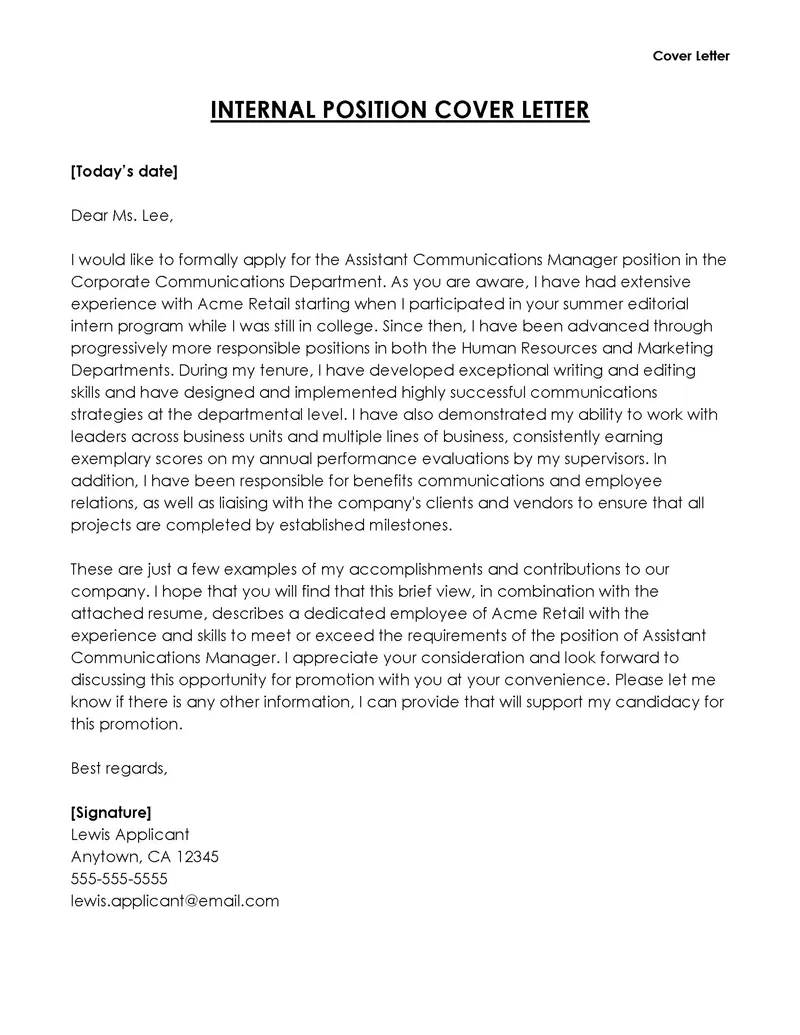
What is an Internal Cover Letter
An internal cover letter is a job application tool designed specifically for employees seeking new roles within their current organization. Its main purpose is to showcase your qualifications, experiences, and enthusiasm to the hiring manager or relevant decision-makers. Unlike an external cover letter, which introduces you to a new company, an internal letter leverages your existing familiarity with the company culture, values, and potentially, the hiring team. This unique advantage allows you to tailor your letter to highlight how well you fit the specific needs of the role and the company’s internal landscape. In essence, it’s your chance to demonstrate that you’re not just a good candidate but also an excellent fit for the internal opportunity.
Key Differences Internal vs External Cover Letter
The fundamental difference between internal and external cover letters lies in their target audience and context. An external cover letter, sent to a company where you are not employed, focuses on creating an initial impression and building credibility. It emphasizes your skills, experience, and achievements to make a compelling case for hiring you. An internal cover letter, on the other hand, benefits from your existing relationship with the company. Because you are already an employee, your letter can concentrate on demonstrating your contributions, understanding the company’s values, and your commitment to professional growth within the organization. This inherent familiarity allows you to directly address your qualifications, and your ability to understand the company’s requirements and needs.
Importance of Cover Letters for Internal Positions

Even if you are well-known within your current company, an internal cover letter plays a vital role in your job application. It serves as your personal marketing tool, clearly articulating your qualifications and demonstrating why you are the best choice for the new position. It allows you to align your career aspirations with the company’s strategic needs, showcasing your commitment to growth within the organization. The letter allows you to elaborate on your skills, achievements, and how they relate to the open role. It illustrates your understanding of the company’s mission and provides the context of your accomplishments, ultimately boosting your chances of standing out and securing the desired opportunity. Think of it as a unique opportunity to reintroduce yourself in a new light.
Pre-Writing Your Internal Cover Letter
Before drafting your internal cover letter, you must lay a strong foundation. This preparatory phase involves thorough analysis of the job description, a critical assessment of your existing skills and experience, and focused research on both the company and the specific department or team. It is a crucial step in ensuring that your letter is both relevant and impactful, allowing you to create a compelling case for your candidacy. Investing time in this pre-writing stage will translate into a more effective and targeted application.
Analyze the Job Description
Begin by carefully analyzing the job description. Pinpoint the key skills, qualifications, and core responsibilities the role requires. This analysis will guide your content and highlight the points you should emphasize. Identify the specific keywords and phrases used within the description, which represent the crucial competencies and requirements of the role. Demonstrating that your skills and experience align with the job requirements makes your application targeted and thoughtful. This approach shows you understand the role and are genuinely interested in it.
Identify Your Skills and Experience

Compile a detailed list of your skills and relevant experience. This should include your achievements, projects, and contributions from your current and past roles within the company. Consider how these experiences have prepared you to succeed in the new position. Match your skills with the requirements outlined in the job description. Focus on accomplishments that demonstrate your ability and your impact. Be specific and clear to prove your ability to meet the needs of the new role. This step is important because it forms the core of your case.
Research the Company and Department
Take the time to research the company and the specific department you are targeting. Aim to understand the department’s key goals, current challenges, and recent projects. If possible, learn about the team structure and the hiring manager’s background. This kind of preparation shows that you are truly interested in the role and invested in the company’s success. By tailoring your cover letter to the department’s specific needs, you demonstrate your genuine commitment. Show that you have knowledge of the company’s broader objectives to further strengthen your application.
Crafting Your Internal Cover Letter
With your pre-writing completed, you can now begin drafting your cover letter. This is where you transform your research and self-assessment into a clear and effective message that captures the hiring manager’s attention. The goal is to create a well-structured, compelling document that showcases your qualifications and highlights your potential. Proper organization and impactful content are key to making your application stand out from the competition.
Header and Salutation

Start your cover letter with a professional header containing your contact information. This includes your full name, current job title, department, email address, and phone number. Next, address the hiring manager by name, if possible. Researching their name creates a personal touch and shows that you have gone the extra mile. If you cannot identify the hiring manager, use a professional greeting such as “Dear Hiring Manager.” These simple steps set a professional tone and improve your chances of being noticed.
Opening Paragraph Make it Compelling
The opening paragraph is your opportunity to immediately capture the reader’s attention. Clearly state the position you are applying for and how you found out about it. Express your enthusiasm for the role and the company. Briefly mention your most relevant qualifications or accomplishments. By doing so, you immediately signal your interest. The introductory paragraph should be concise and compelling, motivating the hiring manager to read further.
Highlighting Relevant Experience
In the body of your cover letter, the emphasis should be on your relevant experience. Describe your past roles and projects, including the accomplishments and responsibilities within each. Use specific examples to illustrate your skills and capabilities. Quantify your achievements whenever possible to provide concrete evidence of your value. This section aims to present a clear picture of your career progression and your contributions to the company. It demonstrates your ability to succeed in the new role, supporting the case for your promotion.
Showcasing Internal Accomplishments

Focus on highlighting your accomplishments within the company. Discuss how you have contributed to team goals and projects. Mention any awards, recognition, or positive feedback you’ve received. Show that you have embraced the company’s core values and contributed to its culture. These examples of how you’ve added value will help you stand out. The core focus here is demonstrating your existing value to the company, making your application stand out as an excellent internal candidate.
Quantifying Your Achievements
When possible, quantify your achievements to illustrate your impact. Use numbers, percentages, and specific data to demonstrate the results of your work. For example, instead of saying “improved customer satisfaction,” state “increased customer satisfaction by 15%.” Quantitative results highlight the effectiveness of your contributions and leave a lasting impression on the hiring manager. This approach showcases your accomplishments with clarity and offers hard evidence of your capabilities, strengthening the impact of your claims.
Demonstrating Your Understanding of the Role
Show a clear understanding of the new role and its requirements. Explain how your skills and experience align with the job description. Describe how you can contribute to the department’s goals. State your eagerness to take on new responsibilities and challenges. Show your commitment to learning and growing within the new position. This demonstrates that you possess the skills and experience needed to excel, making you a valuable team member.
Expressing Enthusiasm for the Opportunity

Show your enthusiasm for the opportunity and your genuine interest in the role. Explain why you want this position and how it fits your career goals. Express your dedication to the company’s success and your eagerness to contribute to its future. Express your excitement for what the job entails and how it aligns with your professional ambitions. Enthusiasm is contagious, making you more memorable. Your genuine passion for the position enhances your application.
Closing Paragraph and Call to Action
In your closing, express your appreciation for the opportunity. Reiterate your interest in the position. Include a call to action, such as your availability for an interview or further discussion. Thank the hiring manager for their time and consideration. Ending with a clear call to action makes it easy for the hiring manager to take the next step. Make your closing professional, enthusiastic, and concise, making it clear that you are willing to move forward.
Formatting and Proofreading Your Cover Letter
The final steps in crafting your internal cover letter involve formatting and careful proofreading. Pay as much attention to your letter’s presentation as you do to its content. Ensuring your cover letter is well-formatted and free of errors can be the deciding factor in securing your desired opportunity. The time you invest in refining your letter will dramatically increase your chances of success.
Formatting Guidelines

Adhere to professional formatting guidelines to ensure your cover letter is easy to read. Use a standard font such as Times New Roman or Arial, and set the font size between 11 and 12 points. Use single-spaced lines within paragraphs and double-spaced lines between paragraphs. Keep the margins at 1 inch on all sides. Clear headings and bullet points can also improve readability. Following these guidelines will show you are professional and detail-oriented.
Proofreading Tips
Carefully proofread your cover letter for grammatical errors, spelling mistakes, and typos. Check that your sentence structure flows smoothly. Ask a colleague or friend to review your letter for feedback. An error-free and well-edited cover letter demonstrates your attention to detail and increases your chances of making a strong positive impression on the hiring manager. Consider using online tools, such as Grammarly, to help with the final checks for errors.
Internal Cover Letter Examples and Templates
Using examples and templates can be extremely helpful when creating your internal cover letter. These resources offer a starting point, allowing you to adapt and customize your letter to your unique style and circumstances. With many online options, finding the perfect template is an achievable step.
Where to Find Examples
You can find examples and templates from various online sources, including job search websites and career resource sites. Search for “internal cover letter examples” or “internal cover letter templates” to access a broad selection. Study multiple samples to find inspiration. Pay close attention to how the letters highlight skills and experiences, as this will help you create a compelling application for your needs. These templates provide a strong base for your cover letter, allowing you to personalize it effectively.
Adapting Templates to Your Needs
Adapt the templates and examples to match your qualifications and the specific job requirements. Personalize the template by inserting your own information. Then, replace the sample content with your own skills, accomplishments, and understanding of the role. Tailor the language and tone to reflect your personality and professional style. Always personalize each cover letter so that it uniquely reflects your background and strengths. A customized letter will showcase your professional journey.
Common Mistakes to Avoid
Avoid these common mistakes to enhance your cover letter’s effectiveness. Addressing these issues ensures that your letter is both clear and compelling. A well-crafted letter can improve your chances of a successful application.
- Generic Content: Avoid using a generic cover letter. Show genuine enthusiasm for the specific opportunity and why you are the best candidate.
- Lack of Research: Don’t assume you know everything about the role or company. Always conduct thorough research on the job and the department.
- Poor Formatting and Errors: Proofread your cover letter for errors. Make your letter polished and professional.
- Focusing Only on Duties: Go beyond listing your duties. Emphasize specific accomplishments, results, and the positive impact you’ve made.
- Not Quantifying Achievements: Support your achievements using specific numbers and data to demonstrate your impact.
- Ignoring the Job Description: Tailor your cover letter to meet the specific job requirements and showcase your experience.
- Negative Language: Maintain a positive tone throughout. Focus on your achievements and your suitability for the role.