Why You Need a Cover Letter
In today’s competitive job market, a well-crafted cover letter is more than just a formality it’s a crucial tool that can significantly increase your chances of landing an interview. While your resume provides a concise overview of your skills and experience, a cover letter offers the opportunity to showcase your personality, articulate your career goals, and demonstrate your genuine interest in the specific role and company. It allows you to connect with the hiring manager on a more personal level, highlighting how your unique qualifications align with the job requirements and company culture. Without a cover letter, you risk being perceived as just another applicant, failing to make a compelling case for why you stand out from the crowd. A strong cover letter allows you to introduce yourself, expand on key accomplishments, and signal your enthusiasm for the opportunity.
Crafting Your Cover Letter
Understanding the Structure of a Cover Letter

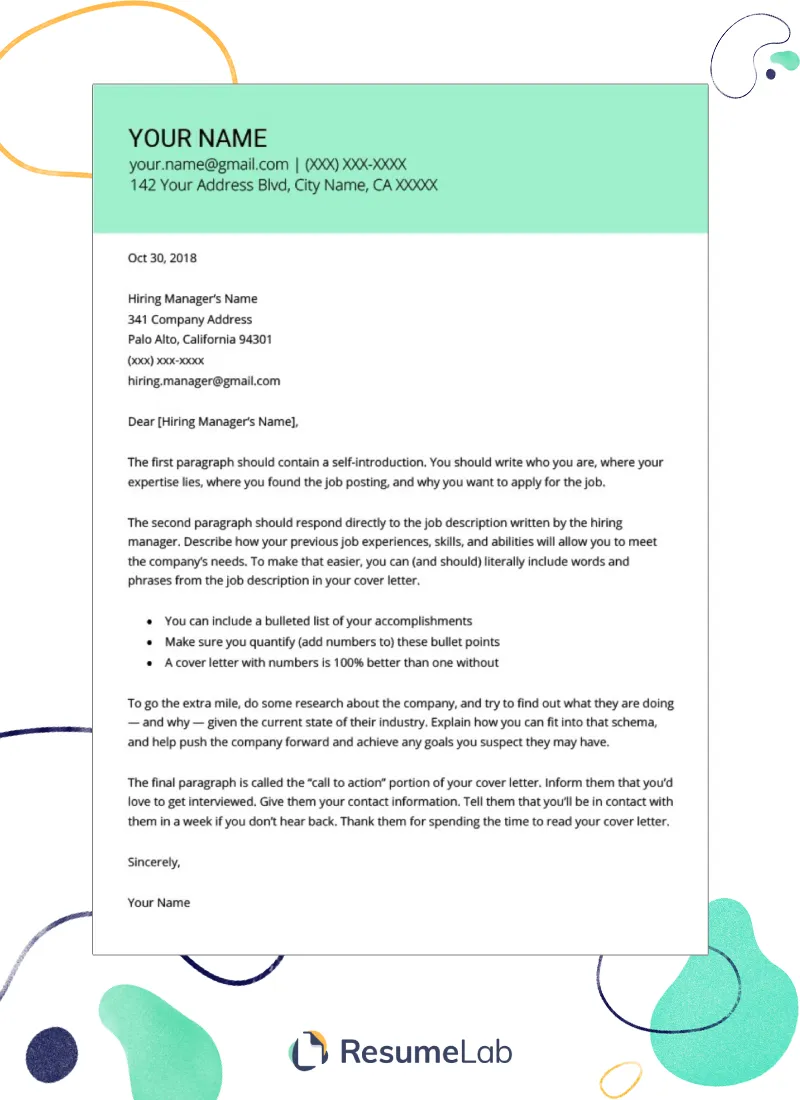
A well-structured cover letter follows a standard format, which includes a header, a greeting, an introduction, body paragraphs highlighting your skills and experience, a paragraph showing your enthusiasm, a closing, and a signature. This structure ensures that your letter is easy to read and effectively communicates your key qualifications and interest in the position. Adhering to a standard structure helps you to organize your thoughts logically, making it easier for the hiring manager to quickly grasp your qualifications and assess your suitability for the role. Each section plays a vital role in creating a cohesive narrative that convinces the reader that you are the right fit for the job.
The Header
Your header should include your contact information (name, phone number, email, and sometimes your LinkedIn profile URL). It’s the first thing the hiring manager sees, so ensure it’s professional, accurate, and easy to read. Using a clear and legible font, such as Arial or Times New Roman, is recommended. Ensure all contact information is up-to-date to facilitate communication. Consider also including the date and the recipient’s information (hiring manager’s name, title, and company address), although this can be omitted if you don’t know who the hiring manager is. The header should clearly state who you are and how to reach you.
The Greeting
Address your cover letter to a specific person whenever possible. Research the hiring manager’s name and title on the company website or LinkedIn. ‘Dear Mr./Ms. [Last Name]’ is the most common and professional greeting. If you cannot find a specific name, use a general greeting such as ‘Dear Hiring Manager’ or ‘Dear [Department Name] Team’. Avoid generic greetings like ‘To Whom It May Concern,’ as they suggest a lack of effort. Personalizing the greeting demonstrates that you have taken the time to learn about the company and the specific role. This immediately establishes a sense of personalization and indicates your proactive approach to job hunting.
Body Paragraph 1 The Introduction

In your introduction, state the position you are applying for and how you found it. Briefly mention why you’re interested in the role and the company, showing your initial enthusiasm. You can also touch on a key accomplishment or skill that immediately captures the reader’s attention. Keep the introduction concise and engaging, setting the tone for the rest of the letter. This initial paragraph is your opportunity to make a strong first impression and encourage the hiring manager to continue reading. Show that you’ve taken the time to understand the company’s needs and how you can meet them.
Body Paragraph 2 Highlight Skills and Experience
This section is where you showcase your relevant skills and experiences. Carefully review the job description and identify the key requirements. Provide specific examples of your achievements and how they align with the job’s needs. Use the STAR method (Situation, Task, Action, Result) to describe your accomplishments, quantifying your achievements whenever possible. This demonstrates the value you bring to the table. Make sure that your skills and experiences are not just listed but show how you have used those skills to deliver results. Provide concrete examples that illustrate your capabilities, backing up your claims with verifiable data or outcomes.
Body Paragraph 3 Show Enthusiasm and Fit
In this paragraph, articulate why you are a good fit for the company culture and the specific role. Research the company’s values, mission, and recent initiatives. Explain how your values align with theirs and how you see yourself contributing to their goals. Express your genuine interest in the role and highlight what excites you about the opportunity. Demonstrate your understanding of the company’s challenges and how you plan to address them. This will show the hiring manager that you are truly invested in the position and see yourself succeeding within the organization.
The Closing

Conclude by thanking the hiring manager for their time and consideration. Reiterate your interest in the position and express your eagerness to discuss your qualifications further. Include a call to action, such as stating that you are available for an interview. Keep the closing professional and confident, and proofread it carefully to avoid any errors. Ending with a positive note can reinforce your application and leave a lasting impression. Consider also mentioning your availability for an interview and reiterating your gratitude.
Formatting Your Cover Letter in Word
Font Selection
Choose a professional and readable font like Times New Roman, Arial, Calibri, or Helvetica. Use a font size between 10 and 12 points to ensure readability. Consistency in font style and size throughout your cover letter is critical for a polished appearance. Avoid using overly decorative fonts or those that are difficult to read. Ensuring your document is easy on the eyes is vital, and proper font selection does precisely that. Keep your overall presentation professional and avoid making bold choices.
Margins and Spacing

Set margins to one inch on all sides. Use single spacing for the body of your letter, with a blank line between paragraphs to improve readability. Proper margins and spacing create a clean, uncluttered look, making it easier for the hiring manager to read. Maintain consistent formatting throughout your document. Ensure that your text is not cramped or too spread out. These simple adjustments can significantly improve the overall aesthetics of your cover letter and create a positive first impression.
Saving and Sending Your Cover Letter
Save your cover letter as a PDF to preserve formatting across different devices. Use a clear and professional file name (e.g., ‘Your Name - Cover Letter - Job Title’). Attach your cover letter and resume in a single email, unless specified otherwise in the job application instructions. Customize your email subject line to include the job title and your name. This ensures your application is easily identifiable and organized. This helps streamline the hiring process and show your organizational skills.
Proofreading Your Cover Letter
Proofread your cover letter meticulously for any grammatical errors, typos, or inconsistencies. Use spell-check and grammar-check tools, but don’t rely solely on them. Read your cover letter aloud to catch awkward phrasing or missing words. Ask a friend or family member to review it for a fresh perspective. A polished and error-free cover letter demonstrates your attention to detail and professionalism. A single error can undermine your credibility, so it is critical to review your work thoroughly. Proofreading ensures your message is clearly and effectively conveyed.
Common Cover Letter Mistakes to Avoid

Avoid generic cover letters. Tailor each letter to the specific job and company. Refrain from simply restating your resume. Instead, expand on your experiences and highlight relevant achievements. Do not include irrelevant information or personal details. Keep your cover letter concise and focused. Avoid using excessive jargon or overly complex language. Never lie or exaggerate your skills or experience. A truthful, well-written cover letter is always more effective. Proofread for mistakes before submitting your application. Do your research on the company to ensure you’re not making any incorrect assumptions.