Why a Cover Letter Matters
In the competitive landscape of job applications, a well-crafted cover letter can be your secret weapon. While your resume provides a snapshot of your skills and experience, a cover letter allows you to tell a story, to connect with the hiring manager on a personal level, and to demonstrate why you’re the perfect fit for the role. It’s an opportunity to showcase your personality, your enthusiasm, and your genuine interest in the company and the position. Moreover, a cover letter allows you to address any potential gaps in your resume, such as a career change or a period of unemployment. It can also be used to expand on specific achievements and provide context for your qualifications. Remember, a cover letter is not just a formality; it’s a vital tool in your job search arsenal. It can make the difference between getting an interview and being overlooked.
The Anatomy of a Winning Cover Letter
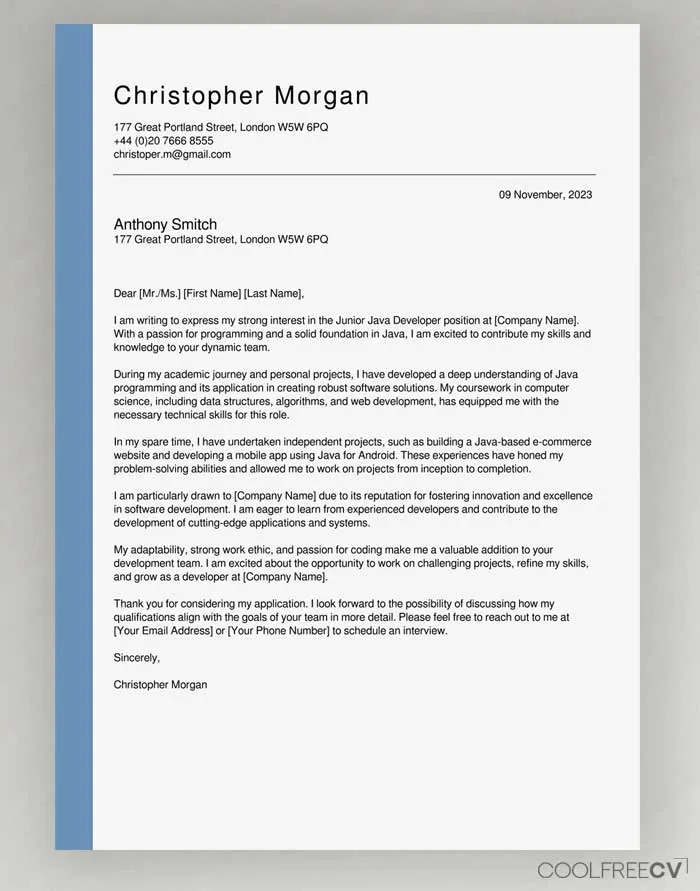
A successful cover letter comprises several key elements, each contributing to its overall impact. Understanding these components is crucial for crafting a letter that grabs attention and leaves a lasting impression. The structure should be logical and easy to follow, guiding the reader through your qualifications and your enthusiasm. A typical cover letter includes a header with your contact information, a salutation, an opening paragraph, the body paragraphs where you highlight your skills and experiences, a closing paragraph with a call to action, and a professional sign-off. Each section has a specific role to play in convincing the hiring manager that you are the ideal candidate. By meticulously structuring your letter, you demonstrate professionalism, attention to detail, and a clear understanding of the job requirements.
Your Header Contact Information

Your header should include your full name, phone number, email address, and optionally, your LinkedIn profile URL or personal website. This information should be clearly presented at the top of the document. Ensure that your email address is professional and that your phone number is current. Double-check for any typos, as even a small error can prevent the recruiter from contacting you. The header is the first thing the hiring manager sees, so make sure it’s neat, accurate, and easy to read. This section sets the tone for the rest of your cover letter, indicating your attention to detail and professionalism. It is also helpful if the hiring manager wants to reach you. For visually appealing design, you can use a simple, clean layout that complements the overall design of your resume.
The Salutation Addressing the Hiring Manager
Addressing the hiring manager by name is a great way to personalize your cover letter. This shows that you’ve taken the time to research the company and the specific role. If the name of the hiring manager is not available, you can try to find it on the company’s website, LinkedIn, or by calling the company. If you’re unable to find a name, a general salutation like ‘Dear Hiring Manager’ is acceptable. However, avoid generic greetings like ‘To Whom It May Concern,’ as they can make your letter feel impersonal. Use the correct title (Mr., Ms., Dr., etc.) and spell the name correctly. The salutation sets the tone for your interaction and demonstrates your attention to detail. It is best practice to do your research on the hiring manager’s name. Finding this information shows a potential employer that you care about the position.
Crafting a Compelling Opening Paragraph
Your opening paragraph is your chance to make a strong first impression. Instead of a generic opening, start with a hook to grab the reader’s attention. State the position you’re applying for and briefly mention where you saw the job posting. Then, quickly highlight your most relevant skills or experiences and express your enthusiasm for the role. A compelling opening paragraph creates a sense of excitement and encourages the reader to continue. Keep it concise and focused on why you’re the perfect candidate. Avoid clichés and generic statements. Instead, aim for an engaging and memorable introduction that showcases your personality and your understanding of the company’s needs. It should be unique and create a positive impression on the reader.
Highlighting Your Key Skills and Experiences

The body of your cover letter is where you connect your skills and experience to the job requirements. Focus on the skills and experiences that align with the job description. Use specific examples and achievements to demonstrate your capabilities. Instead of simply listing your responsibilities, show the results you achieved in previous roles. Use keywords from the job description to help the recruiter quickly understand your qualifications. Tailor your letter to each specific job application. Don’t just repeat what’s in your resume; provide additional context and detail. The body of your cover letter gives the reader a more in-depth look into your skills. This section is the most important part of the cover letter because it shows what the candidate is capable of.
Matching Your Skills to the Job Requirements
Carefully review the job description and identify the key skills and qualifications the employer is seeking. Then, in your cover letter, explicitly state how your skills and experiences match those requirements. Provide concrete examples of how you’ve demonstrated those skills in the past. Use the same keywords and terminology used in the job description to demonstrate that you speak the same language as the employer. Explain how your previous achievements align with the company’s goals. This demonstrates that you understand the role and can contribute to the company’s success. Always make sure to align the skills, experiences, and goals between the job description and the cover letter. Make sure to take the time to match your skills to the job requirements.
Quantifying Your Achievements
Whenever possible, quantify your achievements using numbers and data. Instead of saying ‘I improved customer satisfaction,’ say ‘I improved customer satisfaction by 15%.’ Quantifiable results provide concrete evidence of your accomplishments and make your claims more believable. Use metrics to showcase the impact you had in previous roles. This could include sales figures, cost savings, project completion rates, or any other measurable results. Quantifying your achievements shows the hiring manager the direct value you can bring to their company. Numbers give the potential employer concrete evidence of a person’s success in a previous role. Adding metrics helps show your ability to perform a job at the expected standards.
Demonstrating Your Enthusiasm and Fit

Your cover letter is an excellent opportunity to express your genuine enthusiasm for the position and the company. Research the company’s mission, values, and recent achievements, and then explain why you’re excited about the opportunity to contribute. Show that you understand the company’s goals and how your skills align with those goals. Explain why you’re a good fit for the company culture. Make it clear that you want this specific job and that you’ve done your research. Demonstrating enthusiasm can make you stand out from other candidates. This is one of the easiest things you can do in order to create a good impression on the potential employer. Showing enthusiasm is a good way to get noticed.
Writing a Strong Closing Paragraph
Your closing paragraph should summarize your key qualifications, reiterate your enthusiasm, and include a call to action. Briefly restate why you are the perfect fit for the role and the company. Express your interest in an interview and thank the hiring manager for their time and consideration. Keep it concise and professional. Avoid generic phrases like ‘Thank you for your time’ or ‘I look forward to hearing from you.’ Instead, be specific and show that you’re eager to move forward in the hiring process. Expressing your interest in an interview is a great way to show that you want to be considered for the position. A clear and strong closing paragraph is very important.
Call to Action Expressing Your Interest
A call to action encourages the hiring manager to take the next step in the hiring process. In your closing paragraph, clearly state that you are available for an interview and provide your contact information again. You can also express your willingness to provide any additional information. Make it easy for the hiring manager to take action. This part is what will make the potential employer contact you. Without a call to action, you may not get contacted for the position. Don’t make them guess, and always include a call to action at the end of your letter.
Formatting and Design Tips

A well-formatted cover letter is easy to read and makes a positive impression. Use a professional font like Times New Roman, Arial, or Calibri. Set the font size to 11 or 12 points for readability. Use single spacing within paragraphs and double spacing between paragraphs. Align your text to the left and avoid using full justification. Keep your letter concise, aiming for no more than one page. Use clear headings and bullet points to organize your content. Ensure that your letter is free from any formatting errors. Good formatting shows that you pay attention to detail and are a professional. Make sure to organize the information in a readable format.
Choosing the Right Font and Size
The font and size you choose can significantly impact the readability of your cover letter. Opt for a professional and easy-to-read font, such as Times New Roman, Arial, or Calibri. Avoid using overly decorative or unusual fonts. The font size should be set between 11 and 12 points. This will ensure that your letter is legible without being too large or too small. Maintain consistency in your font and size throughout the document. Using the correct font and size will make a great impression on the reader.
Keeping Your Cover Letter Concise
Hiring managers often have limited time to review each application. Keep your cover letter concise and to the point. Aim for a length of one page, and avoid unnecessary details or lengthy paragraphs. Focus on the most relevant information and highlight your key qualifications. Use concise language and avoid jargon or overly complex sentences. Be sure to get straight to the point without rambling. Make every word count. Brevity shows that you respect the reader’s time and can communicate effectively. Keep your message clear, concise, and focused on the value you offer.
Proofreading and Editing

Before submitting your cover letter, proofread it carefully for any errors in grammar, spelling, or punctuation. These errors can undermine your credibility and make you appear unprofessional. Read your letter aloud to catch any awkward phrasing or typos. Ask a friend or family member to review your letter as well. Proofreading is a critical step in the writing process. A polished and error-free cover letter demonstrates your attention to detail. Make sure that you are reviewing the cover letter carefully before sending it out.
Common Cover Letter Mistakes to Avoid
Be aware of common cover letter mistakes that can hurt your chances of landing an interview. Avoid generic templates and customize each letter to the specific job. Don’t simply repeat your resume; provide additional context and detail. Refrain from using clichés or overly casual language. Avoid negative statements or criticizing previous employers. Never include irrelevant information or personal details. Always proofread carefully to avoid errors. Remember to tailor your letter to each job and make sure it reflects your best self.
Conclusion
Writing a compelling cover letter is a crucial step in any job search. By following these guidelines, you can create a cover letter that grabs attention, highlights your skills and experiences, and increases your chances of landing an interview. Remember to tailor your letter to each job, proofread carefully, and express your enthusiasm for the position and the company. A well-written cover letter can significantly increase your chances of landing your dream job. Always focus on showcasing your strengths and demonstrating how you can add value to the organization. Use the strategies and advice above to your advantage.