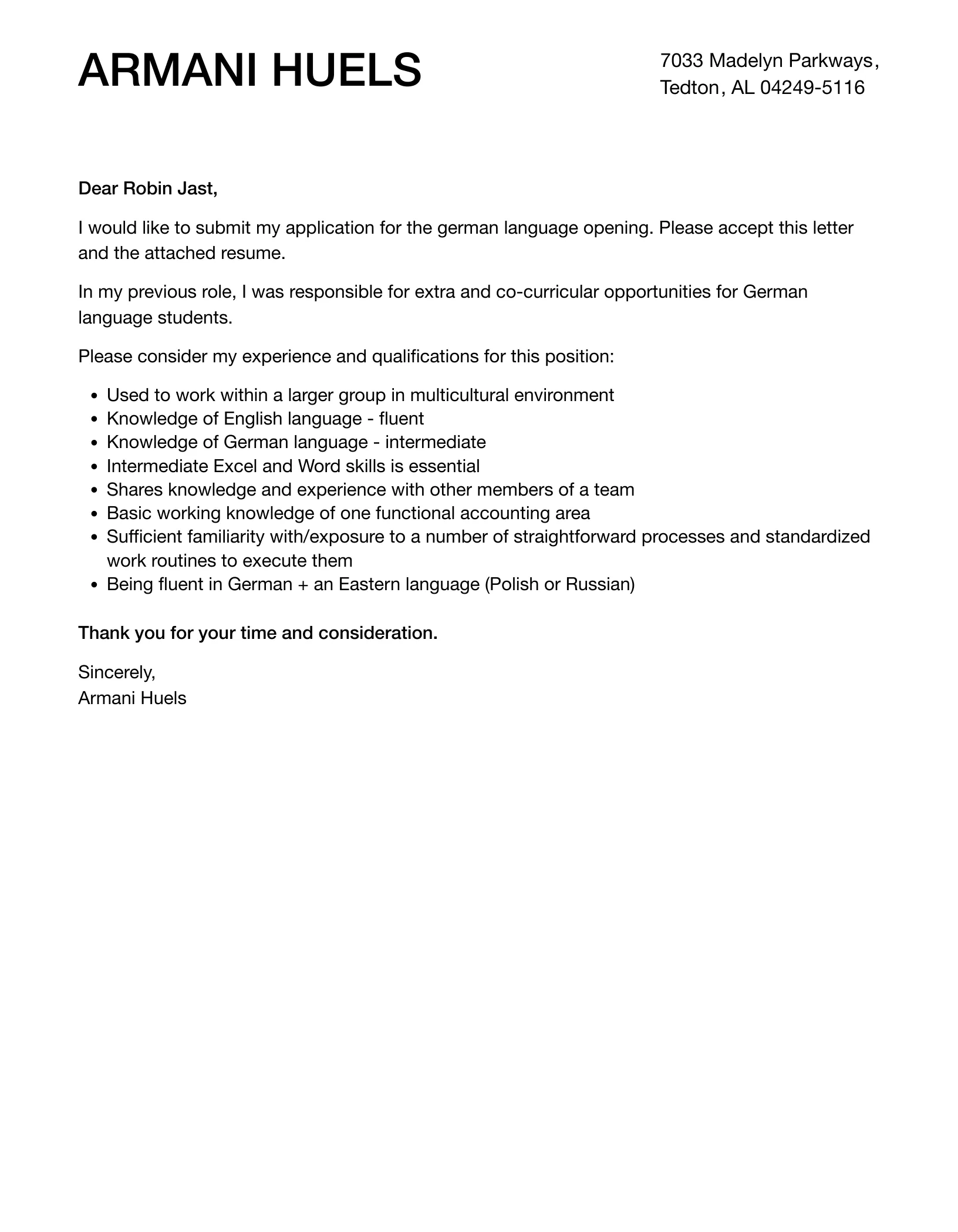
Understanding the German Cover Letter
The German cover letter, or ‘Anschreiben,’ is a crucial component of any job application in Germany. It serves as your initial introduction to a potential employer, offering you the opportunity to showcase your qualifications, skills, and enthusiasm for the role. Unlike its English counterpart, the German cover letter adheres to specific formatting and stylistic conventions that are vital to follow. This document is not just a formality, but a carefully crafted piece of writing that can significantly impact your chances of securing an interview. The German cover letter should complement your resume (Lebenslauf), elaborating on key aspects of your experience and demonstrating a clear understanding of the company and the position.
Key Differences from English Cover Letters
While cover letters globally share the same fundamental purpose, the German version differs markedly from English styles. Understanding these differences is key to presenting yourself as a professional and serious candidate. The German cover letter tends to be more formal and structured. It prioritizes directness, precision, and a focus on the specific requirements of the job. The tone is generally more professional and less conversational than what is often seen in English-speaking countries. Length is also a consideration; German cover letters are typically shorter, generally one page, focusing on the most relevant information.
Formal Tone and Structure

The German cover letter demands a formal tone, which is reflected in the language used and the structure. Using formal German, including the polite form of ‘Sie’ and avoiding contractions is essential. The structure is more rigid than in English, with defined sections that must be followed. This formality reflects the cultural emphasis on professionalism and respect within the workplace. Proper structure makes it easy for the reader to quickly understand your background, qualifications, and interest in the position.
Essential Elements of a German Cover Letter
A well-crafted German cover letter includes several essential elements that are crucial for making a positive impression. These elements, when combined, provide a clear and persuasive overview of your qualifications. You should include your contact details and the recipient’s information, a formal salutation, the body paragraphs that detail your skills, interest and experience, a closing paragraph expressing your gratitude, and a formal closing and signature. Each element plays a part in presenting you as a credible candidate.
Your Contact Information and Date
At the top left of your cover letter, you must provide your complete contact information. This should include your full name, address, phone number, and email address. On the right side, you should include the date of the letter. Make sure that your contact information is presented clearly and is easy to find. This is critical because it allows the hiring manager to easily contact you. Double-check all the information, including your email address, to ensure there are no errors.
The Recipient’s Information

Directly below the date, on the left, include the recipient’s details. This typically includes the name of the company, the department or hiring manager’s name, and the company’s full address. If you know the name of the hiring manager, always address the letter to that person; this shows that you have done your research and have a sincere interest in the position. If the hiring manager’s name is unavailable, address the letter to the relevant department.
Salutation: Addressing the Hiring Manager
The salutation is the opening greeting of your letter and must reflect the formality of German business correspondence. If you know the hiring manager’s name, the correct salutation is ‘Sehr geehrte/r Herr/Frau [Last Name]’ (Dear Mr./Ms. [Last Name]). If you don’t know the hiring manager’s name, use ‘Sehr geehrte Damen und Herren’ (Dear Sir or Madam). Always avoid informal greetings such as ‘Hallo’ or ‘Guten Tag’. Use the correct gender form of the salutation (Herr for men and Frau for women).
Body Paragraphs Building Your Case
The body of your cover letter should be divided into a few concise paragraphs, each serving a distinct purpose. It is within these paragraphs that you construct your case for why you are a suitable candidate. The body paragraphs need to show your interest, highlight your relevant skills, and quantify your achievements.
First Paragraph Purpose and Hook

The first paragraph is your opportunity to make a strong first impression. It should state the position you are applying for and how you learned about the opportunity. Briefly state your interest in the company, and try to include a ‘hook’ – something that captures the reader’s attention. Make sure that you are clearly stating the role, and use the official title from the job description. Mentioning a specific project or aspect of the company can immediately show your personal interest.
Demonstrating Your Interest
In the subsequent paragraphs, clearly demonstrate your interest in the company and the specific role. Explain why you are interested in this particular company, and what aligns you with their mission or values. Research the company and tailor your responses to their specific needs. Mentioning something unique about the company’s work or industry can greatly enhance your response. Make sure that your demonstration of interest is genuine and not generic, showing the employer that you have taken the time to learn about them.
Highlighting Relevant Skills and Experience
This is where you connect your skills and experience with the job requirements. Carefully review the job description and identify the key skills and qualifications the employer is seeking. Explain how your background and experience match these requirements. Instead of simply listing your skills, provide concrete examples of how you have used those skills in previous roles. Use action verbs and specific examples to illustrate your abilities. This section provides crucial information about your qualifications.
Quantifiable Achievements and Results

Whenever possible, quantify your achievements. Provide numbers and statistics to demonstrate the impact you have made in previous roles. Instead of saying ‘Managed projects’, say ‘Managed 5 projects simultaneously, completing them on time and within budget’. Quantifiable results help to highlight your success and add credibility to your claims. By backing up your claims with data, you make your contributions more tangible and impactful.
The Closing Paragraph: Next Steps
In the closing paragraph, express your enthusiasm for the opportunity and state your next steps. Make it clear that you are eager to learn more about the position and the company. Indicate your availability for an interview, and thank the hiring manager for their time and consideration. Maintain a professional tone, and keep your closing concise and confident. This gives a strong final impression and reiterates your interest.
Expressing Gratitude and Enthusiasm
Expressing gratitude is a crucial element in the closing of a German cover letter. Thank the hiring manager for considering your application and for their time. Reiterate your enthusiasm for the position and express your eagerness to discuss your qualifications further in an interview. This shows professionalism and respect for the reader’s time. A sincere closing leaves a positive lasting impression.
Formal Closing and Signature

The formal closing must follow the expression of gratitude. The standard closing is ‘Mit freundlichen Grüßen’ (With kind regards) or ‘Freundliche Grüße’ (Kind regards). Below the closing, leave space for your signature and then type your full name. Use a professional and readable signature, if you are submitting a physical letter. If sending electronically, your typed name suffices. The closing and signature add a professional finish to your letter.
Formatting Your Cover Letter
Proper formatting is essential for creating a professional and readable cover letter. Formatting affects the overall impression your application makes. Adhering to standard formatting guidelines shows attention to detail and respect for the recipient. Choose a professional-looking font, maintain consistent margins, and keep the letter concise and well-structured.
Font and Font Size
Use a professional and easy-to-read font such as Arial or Times New Roman in a size between 11 and 12 points. Avoid unusual or overly decorative fonts, as they can distract from the content. Make sure the font is clear and legible, both on screen and when printed. A standard font size improves readability, ensuring the reader can easily scan the document.
Margins and Spacing

Use standard margins (approximately 1 inch or 2.54 cm) on all sides of the document. Double-space between paragraphs, but single-space within paragraphs. Proper spacing enhances readability, making your letter appear less cluttered. Adequate margins and spacing create a professional look and provide visual breathing room, allowing the reader to focus on the content.
Length and Readability
The German cover letter should ideally be one page long. Be concise and focus on the most relevant information. Ensure the content is well-structured and easy to read, using clear language and concise sentences. Use bullet points to highlight key skills or achievements if appropriate. A well-structured and concise letter shows that you can communicate effectively and respect the reader’s time.
Common Mistakes to Avoid
Several common mistakes can significantly reduce your chances of success when writing a German cover letter. These mistakes can range from grammatical errors to a lack of personalization. Understanding these pitfalls is essential for creating a compelling application. Avoiding these errors enhances your professionalism and improves your chances of landing an interview.
Grammar and Spelling Errors
Grammar and spelling errors are among the most damaging mistakes in a German cover letter. Proofread meticulously to ensure that there are no errors. Errors indicate a lack of attention to detail and can signal unprofessionalism. Use a grammar checker, and if possible, have someone else review your letter. A well-proofread cover letter will highlight your ability to communicate effectively, and increase your credibility.
Generic Content and Lack of Personalization
Avoid using generic content and templates that do not reflect the specific job and company. Always customize your cover letter to match the requirements of each position. Show that you have researched the company and understand its values and needs. Generic letters demonstrate a lack of interest and may be immediately dismissed. Personalize your letter by referencing specific company projects or goals, to demonstrate your sincere interest.
Translating Your Cover Letter
If you are not fluent in German, consider having your cover letter translated by a professional. Poor translation can damage your application, leading to misunderstandings and negative impressions. Professional translators understand the nuances of German and can ensure that your message is conveyed accurately and effectively. This ensures you are represented correctly in the target language.
Proofreading and Editing
Proofreading and editing your German cover letter are essential steps in the application process. After writing your letter, set it aside for a while before returning to review it with fresh eyes. Check for errors in grammar, spelling, punctuation, and formatting. Ensure that your sentences are clear and concise. Editing and proofreading improves the quality and clarity of your application.
Professional Proofreading Services
If you are not completely confident in your German writing skills, consider using professional proofreading services. These services can provide feedback and correct any errors in your letter, ensuring a polished and professional final product. A professional proofreader can catch mistakes you might miss and can improve your writing. Professional proofreading services offer peace of mind and improve your chances of success.
German Cover Letter Examples and Templates
Using German cover letter examples and templates can be helpful, especially if you are unsure how to structure your letter. However, be sure to customize any template you use. You should tailor the content to fit your specific situation and the requirements of the job. Examples and templates provide a useful starting point, but you must make them your own.
Adapting to Different Industries
The approach to writing a German cover letter may vary depending on the industry. Research the norms and expectations of the industry you are targeting. For example, the tone of a cover letter for a creative role might be somewhat different from that for a position in a more formal sector. Tailor your cover letter to the industry to maximize your chances of making a great impression. Adapting to industry standards makes your application more appealing and helps you connect to the reader.
Tailoring to Specific Job Descriptions
Always tailor your cover letter to each specific job description. Carefully review the job requirements and highlight the skills and experiences that align with those requirements. Use keywords from the job description. This shows that you have taken the time to understand the role and are a good fit for the company. Tailoring your cover letter to each job enhances its relevance and boosts your application’s chances of success.