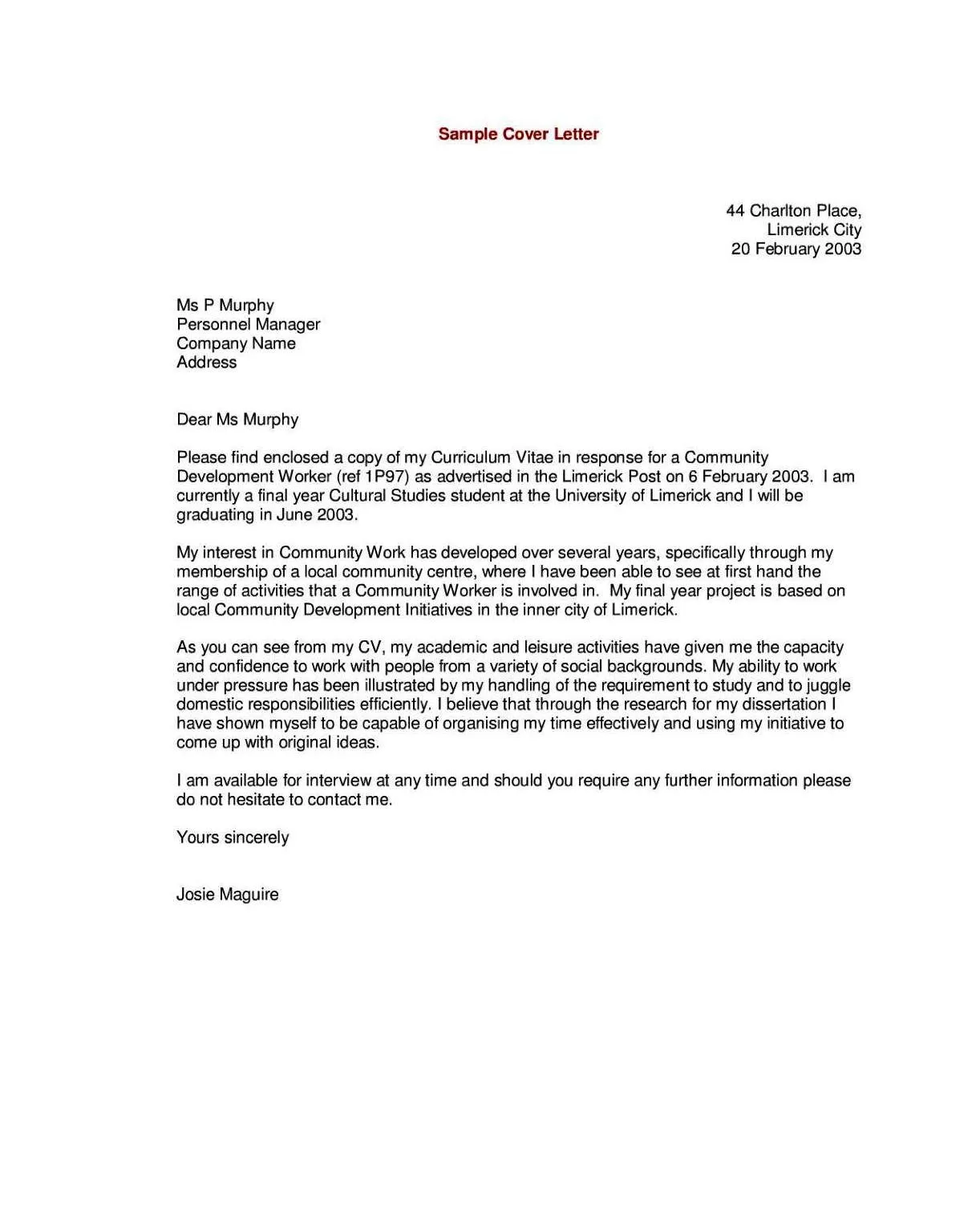
What is a Resume Cover Letter
A resume cover letter is a crucial document that accompanies your resume when applying for a job. It serves as a personalized introduction, allowing you to elaborate on your qualifications, skills, and experiences in a more detailed and engaging manner than your resume alone. It provides an opportunity to showcase your personality, express your enthusiasm for the role, and demonstrate your understanding of the company and its needs. A well-crafted cover letter can significantly increase your chances of landing an interview, setting you apart from other candidates.
The Purpose of a Cover Letter
The primary purpose of a cover letter is to capture the hiring manager’s attention and persuade them to read your resume. It’s your chance to make a strong first impression and highlight why you are the perfect fit for the job. A cover letter allows you to explain any gaps in your employment history, address specific job requirements, and demonstrate your passion for the position and the company. It also provides a platform to showcase your communication skills and writing style, giving the hiring manager a better understanding of your personality and professionalism.
Essential Components of a Cover Letter

A well-structured cover letter includes several key components that work together to present a compelling case for your candidacy. These components include your contact information, a professional salutation, an engaging opening paragraph, a section highlighting your relevant skills and experience, an expression of your enthusiasm for the role, a clear call to action, and a professional closing. Each component plays a crucial role in conveying your qualifications and increasing your chances of securing an interview. Failure to include all these components will make your application less effective.
Contact Information
Your contact information should be at the top of your cover letter, making it easy for the hiring manager to reach you. Include your full name, phone number, email address, and optionally, your LinkedIn profile URL. Ensure that your email address is professional and that your phone number is up-to-date. This information should be aligned with the contact details provided on your resume. Make sure it is easily readable. An easily accessible contact info will make it seamless for the hiring manager to contact you for an interview.
Opening Paragraph Crafting
The opening paragraph is your opportunity to grab the reader’s attention immediately. Start by stating the position you are applying for and where you found the job posting. Briefly mention a key achievement or skill that aligns with the job requirements to pique the hiring manager’s interest. Showcasing your enthusiasm is extremely important in the opening paragraph. Tailor your opening to each specific job application; avoid using generic opening lines. A compelling opening sets the tone for the rest of your letter, so make sure it’s concise, engaging, and relevant.
Highlighting Skills and Experience

In the body of your cover letter, elaborate on your skills and experience that are most relevant to the job. Review the job description carefully and identify the key requirements. Provide specific examples of how you have demonstrated these skills in your previous roles. Quantify your achievements whenever possible, using numbers and data to illustrate your impact. This section should demonstrate how your qualifications align with the needs of the employer. This is your chance to tell the hiring manager about your achievements and what makes you the best candidate for the job.
Tailoring to the Job Description
Customize your cover letter for each job application by carefully reviewing the job description. Identify the specific skills, qualifications, and experiences the employer is seeking. Then, tailor your letter to address those requirements directly. Use keywords from the job description throughout your letter, but avoid keyword stuffing. Demonstrate your understanding of the company’s values, mission, and the role’s responsibilities. This level of personalization shows the hiring manager that you have taken the time to understand the position and the company, significantly increasing your chances of being selected for an interview.
Expressing Enthusiasm for the Role
Show your genuine interest in the role and the company by expressing your enthusiasm. Explain why you are excited about this specific opportunity and what aspects of the job appeal to you. Mention any research you’ve done on the company and how its values align with your own. This can be accomplished by explaining a few examples of the company’s work that you admire and the impact they have. Your enthusiasm should be evident throughout your letter, but especially in this section. A genuine and well-articulated expression of interest will make you stand out from other applicants.
Call to Action

Conclude your cover letter with a clear call to action. Express your interest in an interview and indicate your availability. Thank the hiring manager for their time and consideration. This is your opportunity to reiterate your enthusiasm and encourage the reader to take the next step. A strong call to action is essential for converting interest into the next stage of the hiring process. Make it easy for the hiring manager to take the next step by making a clear and direct request.
Closing the Letter
Use a professional closing such as “Sincerely,” “Best regards,” or “Yours sincerely.” Always include your full name below the closing. It’s a standard practice to include a signature, but a typed name is acceptable in a digital application. Review the entire letter to ensure it is free of errors and that the tone is professional and reflects your personality. The closing is your final opportunity to leave a positive impression, so make sure it’s polished and professional.
Basic Resume Cover Letter Example
Here’s a basic example to get you started. Adapt this to your own situation. [Your Name] [Your Address] [Your Phone Number] [Your Email Address] [Date] [Hiring Manager Name (if known), or “Hiring Manager”] [Company Name] [Company Address] Dear [Hiring Manager Name or Hiring Manager], I am writing to express my keen interest in the [Job Title] position at [Company Name], as advertised on [Platform where you saw the job]. With [Number] years of experience in [Relevant field] and a proven track record of [Key accomplishment], I am confident I possess the skills and experience necessary to excel in this role and contribute to your team. In my previous role at [Previous Company], I was responsible for [Key responsibilities] where I successfully [Quantifiable achievement]. I am particularly drawn to [Company Name] because of [Specific reason]. I am eager to learn more about this opportunity. Thank you for your time and consideration. Sincerely, [Your Name]. This is a basic example, but you’ll need to tailor it to each application!
Key Tips for Writing Effective Cover Letters

To write effective cover letters, keep these tips in mind. Always tailor your cover letter to each specific job. Highlight relevant skills and experiences. Proofread carefully for grammar and spelling errors. Keep it concise and easy to read. Use a professional tone and format. Research the company and address the letter to a specific person if possible. Show enthusiasm for the role and company. Use keywords from the job description. Quantify your accomplishments whenever possible. Finally, get feedback from others before submitting your application.
Proofreading and Editing
Proofreading and editing are essential steps in ensuring your cover letter is polished and professional. Carefully review your letter for any grammatical errors, spelling mistakes, and typos. Use grammar-checking tools, but don’t rely on them completely. Read your letter aloud to catch any awkward phrasing or sentence structure issues. Ask a friend, family member, or career counselor to proofread your letter for you. A fresh pair of eyes can often identify errors that you may have missed. A well-edited cover letter demonstrates your attention to detail and professionalism.
Formatting and Layout
Formatting and layout play a crucial role in making your cover letter visually appealing and easy to read. Use a standard font such as Times New Roman, Arial, or Calibri, with a font size between 10 and 12 points. Maintain consistent spacing throughout the letter. Use clear headings and subheadings to break up the text and make it easier to scan. Keep paragraphs concise and focused. Ensure the margins are consistent. A well-formatted cover letter demonstrates your professionalism and respect for the reader’s time.
Common Mistakes to Avoid

Avoid these common mistakes to make your cover letter as effective as possible. Don’t use a generic, one-size-fits-all cover letter. Avoid typos and grammatical errors. Don’t simply repeat your resume; provide additional information. Don’t use overly long paragraphs or a rambling writing style. Avoid being negative or critical of previous employers. Don’t use slang or informal language. Don’t forget to tailor your letter to the specific job. And most importantly, don’t submit a cover letter without proofreading it first.
Using Keywords
Incorporating relevant keywords from the job description is essential for helping your cover letter get noticed by applicant tracking systems (ATS) and hiring managers. Carefully review the job description and identify the key skills, qualifications, and requirements the employer is looking for. Weave these keywords naturally throughout your cover letter. Make sure not to overdo it. Avoid keyword stuffing, which can make your letter sound unnatural and unprofessional. Prioritize including keywords within the context of your skills and experiences, and you will optimize your chances of being considered.
Resume Cover Letter Examples by Industry
Cover letter examples are available for nearly every industry. These examples can provide a helpful starting point. Examples can offer insights into how to tailor your letter to a specific field, highlight relevant skills, and address industry-specific requirements. You can modify these examples to match your unique skills and experience. These examples will ensure that you effectively communicate your qualifications for the desired position. Search online for industry-specific cover letter examples to see how others have successfully approached the job application process. This can save you time and give you new ideas for writing your own cover letter.
Example Cover Letter for Entry-Level Positions

For entry-level positions, focus on highlighting your relevant skills, academic achievements, internships, and any volunteer experience. Example: [Your Name] [Your Address] [Your Phone] [Your Email] [Date] [Hiring Manager Name] [Company Name] [Company Address] Dear [Mr./Ms./Mx. Last Name], I am writing to express my enthusiastic interest in the [Job Title] position at [Company Name], as advertised on [Platform]. As a recent graduate of [University Name] with a degree in [Major], I have developed a strong foundation in [Relevant skills]. During my internship at [Company Name], I gained experience in [Relevant experience]. I’m eager to apply my skills to contribute to your team. Thank you for your consideration.
Cover Letter Example for Experienced Professionals
For experienced professionals, emphasize your career achievements, leadership skills, and contributions to previous organizations. Example: [Your Name] [Your Address] [Your Phone] [Your Email] [Date] [Hiring Manager Name] [Company Name] [Company Address] Dear [Mr./Ms./Mx. Last Name], I am writing to apply for the [Job Title] position at [Company Name], as advertised on [Platform]. With [Number] years of experience in [Industry], I have a proven track record of [Key accomplishment]. As [Your previous role] at [Previous Company], I led [Team/Project] and achieved [Quantifiable result]. I am impressed by [Company Name]’s [Specific achievement] and would welcome the opportunity to bring my expertise to your team. Thank you for your consideration.
Cover Letter for Career Change
When changing careers, explain why you are making the transition and highlight any transferable skills you have. Example: [Your Name] [Your Address] [Your Phone] [Your Email] [Date] [Hiring Manager Name] [Company Name] [Company Address] Dear [Mr./Ms./Mx. Last Name], I am writing to apply for the [Job Title] position at [Company Name]. With a strong background in [Previous field] and a passion for [New field], I am excited to transition my career. While my experience is in [Previous field], I have developed transferable skills such as [Transferable skill 1] and [Transferable skill 2]. I am particularly drawn to [Company Name] because of [Specific reason]. Thank you for your consideration.