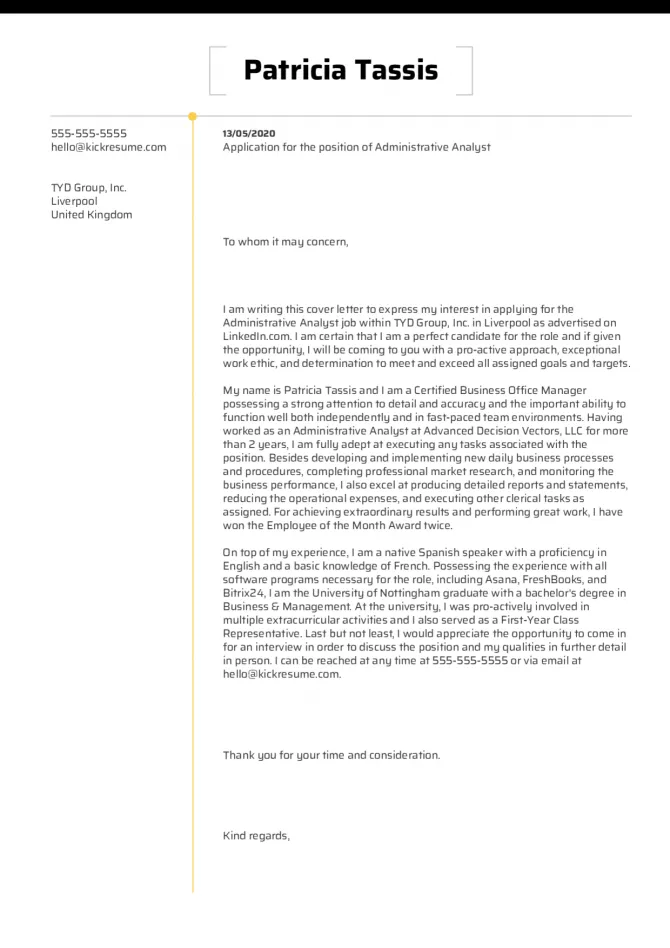
Understanding the Administrative Analyst Role
Before diving into the intricacies of crafting an administrative analyst cover letter, it is crucial to have a clear understanding of the role itself. Administrative analysts are essential professionals within organizations, responsible for streamlining processes, analyzing data, and improving efficiency. They bridge the gap between administrative functions and strategic objectives, offering analytical support and contributing to decision-making. Their work involves a variety of tasks, including data analysis, report writing, project management, and communication with various stakeholders. A well-written cover letter must reflect your understanding of these responsibilities and demonstrate your ability to contribute to an organization’s success in this capacity. Understanding the core functions of an administrative analyst will help you tailor your letter to showcase the most relevant skills and experiences, making your application more impactful.
Key Skills for Administrative Analysts
Administrative analysts require a diverse set of skills to excel in their roles. Your cover letter should highlight these skills, aligning them with the specific requirements of the job description. Strong analytical skills are fundamental, as the role involves interpreting data, identifying trends, and providing insights. Proficiency in data analysis tools, such as Excel, SQL, or other relevant software, is highly desirable. Communication skills, both written and verbal, are also essential, enabling effective interaction with colleagues, management, and external parties. Project management skills are often needed to coordinate tasks, manage timelines, and ensure projects are completed successfully. Attention to detail and problem-solving abilities are also critical, helping you to identify issues, develop solutions, and implement changes. Your cover letter is the perfect place to showcase these abilities, providing examples that reflect your capacity to perform each skill with excellence and precision.
Researching the Company and Position

A generic cover letter will not impress potential employers. Before you even begin writing, conduct thorough research on the company and the specific position you are applying for. Visit the company’s website, read about their mission, values, and recent projects. Examine the job description carefully, noting the specific requirements, responsibilities, and skills they are seeking. This research will enable you to customize your cover letter, demonstrating your genuine interest in the company and your understanding of the role. Tailoring your letter to the specific needs of the employer will make a positive impression and increase your chances of landing an interview. Addressing specific pain points of the company or highlighting how your skills can contribute to their goals showcases that you have taken the time to understand their needs and are serious about the opportunity.
Crafting a Compelling Header and Greeting
The header of your cover letter is the first thing the hiring manager will see, so it is crucial to make a positive impression. Include your contact information, such as your name, address, phone number, and email address. Make sure your formatting is professional and easy to read. The greeting is equally important. Avoid generic greetings such as ‘To Whom It May Concern.’ Instead, address the hiring manager by name if possible. Research the hiring manager’s name through LinkedIn or the company’s website. Addressing the letter to a specific person shows that you have taken the initiative to learn about the organization and can make your application stand out from the crowd. If a name cannot be found, a more specific greeting like ‘Dear Hiring Manager’ is still better than a generic one.
Writing a Strong Opening Paragraph
The opening paragraph should immediately grab the reader’s attention and convince them to keep reading. State the position you are applying for and briefly mention where you saw the job posting. Then, make a concise and impactful statement that highlights your most relevant qualifications or your understanding of the company. For example, you can express your enthusiasm for the role, how your skills align with the company’s goals, or highlight a specific achievement that demonstrates your value. Avoid starting with a generic sentence. Instead, aim for an opening that clearly demonstrates your understanding of the role and your interest in the company, immediately capturing the reader’s attention and setting a positive tone for the rest of your cover letter. This is a chance to introduce yourself with confidence and demonstrate that you are a serious contender for the position.
Highlighting Relevant Experience and Achievements

The body of your cover letter is where you provide details about your experience and accomplishments. Focus on the aspects that are most relevant to the job description. Use specific examples to demonstrate your skills, showing how you have successfully applied them in previous roles. Use the STAR method (Situation, Task, Action, Result) to structure your examples, making them clear, concise, and impactful. Quantify your achievements whenever possible. Instead of saying, ‘Improved efficiency,’ state ‘Improved operational efficiency by 15% through process optimization.’ This approach provides tangible evidence of your abilities and showcases your value to the employer. Tailor each example to the job requirements, demonstrating your capabilities and what you can bring to the company. This tailored approach helps you to stand out from the crowd, highlighting the skills most valued by the hiring team.
Quantifying Your Accomplishments with Data
Numbers speak louder than words. Throughout your cover letter, use data and metrics to quantify your accomplishments. Providing concrete figures will make your achievements more compelling and memorable. For example, instead of saying ‘Managed projects successfully,’ write ‘Managed over 10 projects simultaneously, delivering them on time and within budget.’ If you improved a process, state the percentage of improvement. If you reduced costs, specify the amount saved. Data provides objective evidence of your abilities and showcases your impact. It enables the hiring manager to understand the extent of your contributions. By including these figures, you demonstrate that you are not only capable of doing the work but also that you can deliver measurable results. This will set you apart from other candidates who may make general claims without supporting evidence.
Showcasing Your Skills and Abilities
Clearly articulate your skills and abilities throughout your cover letter. Highlight the specific skills mentioned in the job description and provide examples of how you have used them. If the job requires proficiency in a specific software, mention it and briefly describe your experience using it. If communication is essential, give examples of successful presentations, reports you have written, or interactions with stakeholders. Align your skills with the requirements of the position, demonstrating how you meet the needs of the employer. This will help the hiring manager quickly identify your qualifications and understand the value you can bring to the role. By actively showcasing the skills that are in demand, you are demonstrating that you are a good fit for the position and are ready to start contributing to the company’s success.
Tailoring Your Cover Letter to the Job Description

Each cover letter should be tailored to the specific job you are applying for. Never use a generic template. Carefully review the job description and identify the key requirements, skills, and responsibilities. Customize your cover letter to directly address these points. Use the same keywords that are used in the job description and rearrange your experiences to align with their needs. This demonstrates your attention to detail and your genuine interest in the position. Tailoring your cover letter increases your chances of making it past the initial screening process. It shows that you have invested time and effort in understanding the role and are willing to go the extra mile to impress the hiring manager. This customized approach helps you stand out from the competition and makes your application more effective.
Demonstrating Your Enthusiasm and Fit
Express your enthusiasm for the position and the company. Explain why you are interested in the role and how your skills and experience align with the company’s mission and values. Show that you have done your research and understand what the organization does and the challenges they may be facing. This will demonstrate your genuine interest and passion. Explain why you are a good fit for the company’s culture. Refer to the company’s values, mission, or recent news to demonstrate you have taken the time to learn about their organization. This level of effort shows the hiring manager that you’re not simply looking for a job but seeking to become a valuable part of their team. Your eagerness should be genuine and reflected in your tone.
Writing a Powerful Closing Paragraph
Your closing paragraph should reinforce your interest in the position and reiterate your key qualifications. Thank the hiring manager for their time and consideration. Include a call to action, such as expressing your availability for an interview or stating your eagerness to discuss your qualifications further. Keep it concise and professional. This is the last thing the hiring manager will read, so it’s a perfect opportunity to leave a lasting impression. A strong closing paragraph demonstrates your confidence and initiative. If you genuinely want the job, make it clear. Expressing your enthusiasm, reiterating your value, and including a call to action can make your application stand out and increase your chances of receiving an interview invitation. Conclude with a professional closing and your name.
Proofreading and Editing Your Cover Letter

Before submitting your cover letter, carefully proofread and edit it to ensure it is free of errors. Check for grammatical errors, typos, and inconsistencies. Read your cover letter multiple times, looking at it from different perspectives. Ask a friend, family member, or career counselor to review it for you. A polished, well-written cover letter demonstrates professionalism and attention to detail. Errors can undermine your credibility and make a negative impression. Proofreading ensures that your cover letter reflects your best qualities and increases your chances of making a positive impression on the hiring manager. Make sure that the tone is professional and appropriate for the workplace. Correct formatting and sentence structure add to the overall appeal and readability of your cover letter.