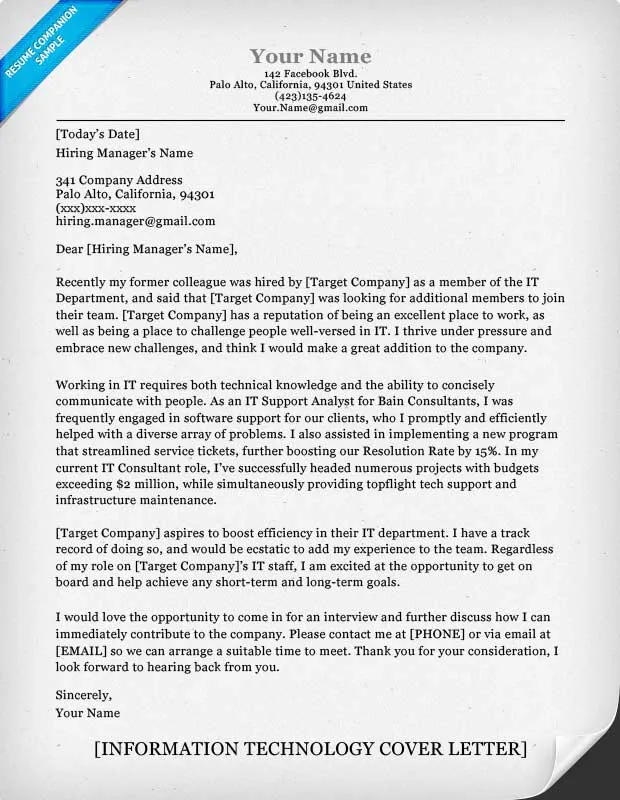
Understanding the Importance of an IT Professional Cover Letter
In the competitive world of Information Technology, a well-crafted cover letter is your first opportunity to make a strong impression. It serves as a crucial introduction, setting the stage for your resume and demonstrating your suitability for the role. The IT industry values precision, attention to detail, and effective communication – all of which should be evident in your cover letter. A stellar cover letter doesn’t just list your skills; it tells a story, showcasing how your experiences align with the specific needs of the employer and the requirements of the job description. It provides a space to elaborate on experiences, explain career transitions, and express genuine enthusiasm for the opportunity. Furthermore, in a digital landscape, a well-formatted and error-free cover letter showcases your professionalism and tech-savviness, reflecting your ability to communicate clearly and concisely, which is vital in any IT role.
Key Components of a Compelling Cover Letter
A compelling IT professional cover letter is more than just a formality; it’s a strategic document designed to captivate the hiring manager’s attention. The most successful cover letters consist of several crucial elements. Firstly, start with a strong introduction, immediately grabbing the reader’s interest and stating your purpose clearly. Secondly, provide a brief overview of your relevant skills and experience, aligning them with the specific job requirements. Thirdly, showcase your achievements by quantifying your accomplishments whenever possible – use numbers, percentages, or specific examples to demonstrate impact. Also, tailor the letter to the specific role and company, demonstrating your research and understanding of their needs. Finally, maintain a professional tone throughout, demonstrating enthusiasm and a clear understanding of the role. Remember to keep your tone professional and enthusiastic, avoiding clichés and generic statements.
Contact Information and Salutation

Start your IT professional cover letter with your contact information: full name, phone number, email address, and professional online profiles (like LinkedIn). This is where the hiring manager can easily find you. Directly beneath your contact details, include the date and the hiring manager’s name and title, if possible; this personalized touch demonstrates your attention to detail. Addressing the letter to a specific person also makes it more personable and shows you’ve done your research. If you are unsure of the hiring manager’s name, use a professional salutation, such as “Dear Hiring Manager” or “Dear [Department Name] Team.” Avoid generic greetings and double-check the spelling of the name. A well-crafted salutation sets a professional tone, while the inclusion of your contact information ensures the hiring manager can easily reach out to you.
Highlighting Your Skills and Experience
The heart of your IT professional cover letter should be a concise yet compelling overview of your skills and experience. Start by identifying the key requirements of the job description and then highlight your relevant qualifications. Focus on showcasing your expertise in areas most pertinent to the role, such as network administration, cybersecurity, software development, or data analysis. Instead of merely listing your skills, provide brief examples of how you’ve applied them in past roles. For instance, you might mention successfully managing a network infrastructure, implementing security protocols, or leading a software development project. Emphasize achievements that demonstrate your impact and provide measurable results. By linking your skills to tangible outcomes, you’ll make your qualifications more convincing and demonstrate your value to the potential employer. Always tailor this section to the specific job, ensuring that you’re addressing the employer’s specific needs.
Tailoring Your Cover Letter to the Job Description
One of the most critical aspects of an IT professional cover letter is tailoring it to each specific job application. Generic cover letters often fall flat because they fail to demonstrate that you’ve taken the time to understand the company’s needs. Begin by carefully reviewing the job description, identifying the key skills, experiences, and qualifications the employer is seeking. Then, align your skills and experience with these requirements, providing concrete examples of how you’ve met similar challenges in the past. Customize your letter to highlight the most relevant aspects of your background, ensuring they directly address the employer’s needs. Show that you understand the company’s mission and how your skills can contribute to their success. This level of customization demonstrates that you’re truly interested in the role and are prepared to contribute meaningfully. This targeted approach significantly increases your chances of getting noticed.
Quantifying Your Achievements

In the IT field, tangible results speak volumes. To make your cover letter stand out, quantify your achievements whenever possible. Use numbers, percentages, and specific data points to demonstrate the impact of your work. Instead of stating that you ‘improved network efficiency,’ state that you ‘increased network throughput by 25% through optimization of server configurations.’ If you ‘reduced security breaches,’ quantify the decrease – ‘reduced security breaches by 40% by implementing new firewall rules and intrusion detection systems.’ Quantifying your achievements showcases your ability to drive results and your attention to detail. By providing clear, measurable data, you provide concrete evidence of your value and increase your credibility with the hiring manager. Use data to make your accomplishments more impactful and memorable.
Showcasing Your Technical Expertise
Your cover letter is the perfect place to showcase your technical expertise. Be specific about the technologies, platforms, and tools you have experience with. Instead of broadly mentioning ’experience with networking,’ list the specific protocols, hardware, and software you’ve used, such as ‘Proficient in configuring and maintaining Cisco routers and switches, experienced with TCP/IP, DNS, and DHCP protocols.’ If you have certifications like CCNA, CISSP, or AWS Certified Solutions Architect, be sure to include them. Briefly explain how you’ve used these technologies in real-world scenarios, such as ‘Implemented a virtualized server environment using VMware ESXi, reducing hardware costs by 15%.’ The goal is to provide concrete examples of your skills and demonstrate that you have the practical knowledge required for the job. Highlight your technical skills clearly and concisely, providing specific examples of how you’ve applied them in past projects or roles.
Demonstrating Soft Skills
While technical skills are essential in IT, soft skills play a vital role in your success. Showcase these skills in your cover letter to demonstrate your ability to work effectively within a team and manage complex projects. Highlight your communication skills by describing how you’ve explained complex technical concepts to non-technical stakeholders. Emphasize your problem-solving skills with examples of how you’ve identified and resolved technical issues. If you have experience leading or collaborating on projects, mention how you managed deadlines, coordinated teams, and ensured successful outcomes. Include your ability to learn and adapt, given the rapid changes in technology. Examples include: ‘Successfully led a team of five developers to complete a critical project ahead of schedule,’ ‘Effectively communicated technical issues and solutions to non-technical stakeholders,’ or ‘Quickly adapted to new technologies and frameworks, consistently exceeding expectations.’ Emphasizing these skills can set you apart from other candidates and demonstrate your ability to thrive in a professional environment.
Formatting and Proofreading Your Cover Letter

Formatting and proofreading are critical aspects of your IT professional cover letter. A well-formatted letter demonstrates your attention to detail and professionalism. Use a clean, easy-to-read font like Arial or Calibri. Maintain consistent formatting throughout the document, including font size, spacing, and alignment. Ensure that your cover letter is free of grammatical errors and typos. Proofread carefully, and consider using a grammar checker. The content should be well-structured with clear headings and paragraphs. Ensure your letter is concise and avoids unnecessary jargon. Consider having a friend or colleague review your cover letter to catch any errors you might have missed. Ensure the file is saved in a professional format, such as PDF, to preserve its formatting. These steps ensure your cover letter reflects your professionalism.
Common Mistakes to Avoid in an IT Cover Letter
Avoiding common mistakes can significantly improve the effectiveness of your IT professional cover letter. One common mistake is using a generic, one-size-fits-all letter that doesn’t address the specific requirements of the job. Another is focusing solely on your responsibilities rather than highlighting your achievements and the results you’ve delivered. Avoid overly technical jargon that may confuse the hiring manager. Also, don’t simply reiterate your resume; provide additional context and expand on your experiences. Avoid typos, grammatical errors, and formatting inconsistencies, as these can undermine your credibility. Finally, failing to tailor your letter to the company and the role, can make you appear less interested in the position. By avoiding these common pitfalls, you’ll enhance your chances of making a positive impression and securing an interview.
Closing Your Cover Letter Effectively
Conclude your IT professional cover letter with a strong call to action, encouraging the hiring manager to contact you for an interview. Thank the hiring manager for their time and consideration. Reiterate your interest in the position and your enthusiasm for the opportunity to contribute to their team. State your availability for an interview and provide your contact information again to make it easy for them to reach you. Finally, use a professional closing such as “Sincerely” or “Best regards,” followed by your name. A well-crafted closing reinforces your professionalism and leaves a positive lasting impression, increasing the likelihood of getting the job.