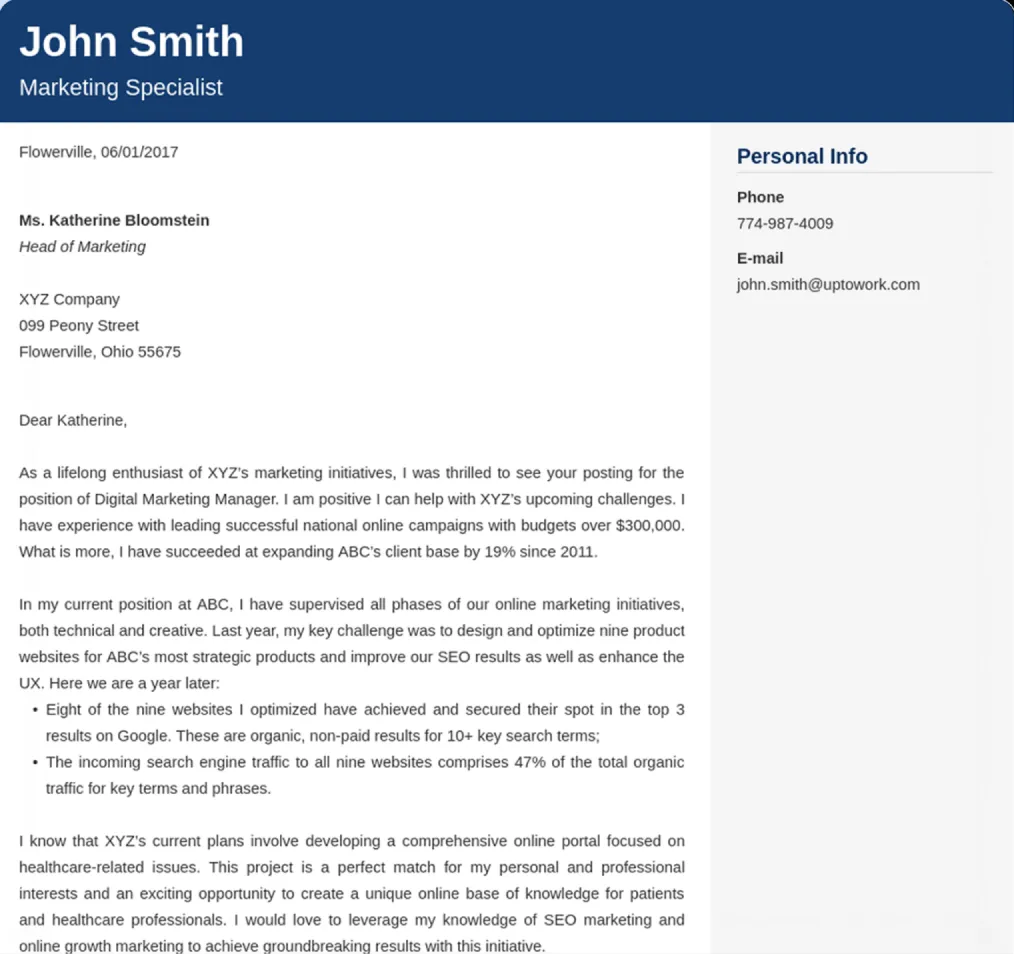
Crafting the Perfect Online Job Application Cover Letter
In the competitive world of online job applications, a well-crafted cover letter can be the key to unlocking your dream job. It’s your first opportunity to make a lasting impression, showcase your personality, and demonstrate why you’re the perfect fit for the role. This comprehensive guide will walk you through the essential steps of writing a winning online job application cover letter, ensuring your application stands out from the crowd. From understanding the importance of a cover letter to tailoring it for each specific job, we’ll cover everything you need to know to increase your chances of landing an interview. Remember, a cover letter isn’t just a formality; it’s a powerful tool that can significantly impact your job search success. Use it strategically to highlight your strengths and make a compelling case for why you should be hired. Start by understanding its significance and how it complements your resume, then learn how to structure, format, and tailor your letter to maximize your chances of success.
Understanding the Importance of a Cover Letter
Many job seekers underestimate the power of a cover letter, but it serves a crucial role in the online application process. Think of it as your personal introduction, providing context and personality that your resume alone cannot convey. In an environment where hiring managers often receive hundreds of applications, a compelling cover letter can set you apart. It offers you a chance to tell your story, explain your career aspirations, and demonstrate your genuine interest in the company and the specific position. It’s a chance to bridge the gap between your qualifications and the job requirements, showing the hiring manager why you’re the ideal candidate. By using the right tone and including a brief summary of your most relevant skills, you can use a cover letter to increase your chances of getting a job interview. It’s important to remember that the perfect cover letter is customized for the specific job you’re applying for.
Why Cover Letters Matter for Online Applications

In the digital age, where most applications are submitted online, a cover letter becomes even more critical. Unlike traditional applications, online submissions often lack the personal touch. A well-written cover letter can humanize your application, allowing you to connect with the hiring manager on a personal level. Furthermore, many online application systems use Applicant Tracking Systems (ATS) to scan resumes for keywords. A cover letter provides an additional opportunity to incorporate relevant keywords and phrases, ensuring your application gets noticed. Additionally, a cover letter lets you demonstrate your writing and communication skills. A well-written cover letter that effectively communicates your ideas shows you have skills for professional communication. The ability to communicate clearly and concisely is important in most work environments. An online job application cover letter can be the thing that makes you stand out and get your job application noticed.
Highlighting Your Key Skills and Qualifications
One of the primary functions of your cover letter is to highlight your key skills and qualifications. Don’t just list them; demonstrate how you’ve applied these skills in past roles and how they align with the job requirements. Use specific examples and quantify your achievements whenever possible. For instance, instead of saying, ‘Managed social media accounts,’ you could say, ‘Increased social media engagement by 30% in six months by implementing a new content strategy.’ When highlighting your key skills, focus on the ones that are most relevant to the job description. Review the job posting carefully and identify the skills and qualifications the employer is looking for. Tailor your cover letter to emphasize these skills, showing the hiring manager that you possess the specific expertise they need. By being specific and showing, not just telling, you demonstrate your value to the potential employer.
Matching Your Skills with Job Requirements
A successful cover letter must clearly demonstrate a match between your skills and the job requirements. Start by carefully reviewing the job description, identifying the key responsibilities and required skills. Then, in your cover letter, explicitly connect your skills and experience to those requirements. For each skill mentioned in the job description, provide an example of how you have successfully used that skill in the past. This shows the hiring manager that you can walk the walk, not just talk the talk. Whenever possible, use the same keywords and phrases from the job description in your cover letter. This helps ensure that your application passes through the ATS and that the hiring manager immediately recognizes your qualifications. Use this strategy to demonstrate you’ve thoroughly read the job description and understand the role.
Showcasing Relevant Experience

Your cover letter is the perfect opportunity to showcase your relevant experience. While your resume provides a chronological list of your work history, your cover letter allows you to elaborate on your most significant achievements and how they relate to the job you’re applying for. When describing your experience, focus on the results you achieved, not just the tasks you performed. Use the STAR method (Situation, Task, Action, Result) to provide concise and compelling examples. Describe the situation you were in, the task you had to accomplish, the actions you took, and the positive results you achieved. By quantifying your accomplishments, you can provide concrete evidence of your value to the company. Make sure the experience described lines up with the specific job description. You will get your foot in the door by highlighting your relevant experiences.
Formatting Your Online Cover Letter
Formatting your online cover letter correctly is essential for readability and professionalism. Use a clean and professional font, such as Arial, Calibri, or Times New Roman, with a font size between 10 and 12 points. Keep your letter concise and easy to read, with clear paragraphs and adequate white space. Use a standard business letter format, including your contact information, the date, the recipient’s contact information, a salutation, the body of the letter, a closing, and your signature. When submitting your cover letter online, make sure to save it in a compatible format, such as a .doc or .pdf file. Proofread your cover letter multiple times to eliminate any grammatical errors or typos, as these can detract from your professionalism. Pay close attention to the layout of your cover letter so that it will look presentable when the employer reads it.
Choosing the Right Font and Font Size
The font and font size you choose for your online cover letter can influence how it is received. Select a font that is easy to read, such as Arial, Calibri, or Times New Roman. Avoid using overly decorative or unusual fonts, as these can make your letter difficult to read. The font size should be between 10 and 12 points. This size is large enough to be easily readable on a computer screen, yet small enough to keep your letter concise. Using the right font and size ensures that your cover letter is accessible and professional. Be consistent throughout your cover letter, using the same font and size for all text. If your cover letter has a formatting error, the reader may think your lack of attention to detail may carry over into your professional life.
Structuring Your Cover Letter for Online Submission

Structuring your cover letter effectively is crucial for capturing the reader’s attention and conveying your message clearly. Begin with your contact information, the date, and the recipient’s contact information. Use a professional salutation, such as ‘Dear Mr./Ms. [Last Name],’ and follow up with a strong opening paragraph that immediately grabs the reader’s attention. The body of your cover letter should consist of one or two paragraphs, highlighting your key skills, relevant experience, and how you align with the job requirements. The closing paragraph should reiterate your interest in the position, express gratitude for their time, and include a clear call to action, such as requesting an interview. Proofread your cover letter carefully for any errors. Your cover letter structure should follow a logical flow that is easy to read and comprehend.
The Opening Paragraph Make a Strong First Impression
The opening paragraph of your cover letter is your chance to make a strong first impression. It should immediately capture the reader’s attention and make them want to read further. Start by stating the position you are applying for and where you found the job listing. Then, provide a brief overview of your key qualifications and why you are a good fit for the role. Highlight your enthusiasm for the company and the position. Consider using a hook to grab the reader’s attention, such as a compelling anecdote, a relevant achievement, or a statement about your passion for the industry. Be concise and to the point, conveying your enthusiasm and demonstrating your understanding of the job requirements. The opening paragraph sets the tone for the rest of your cover letter, so make sure it is engaging and compelling.
Grabbing the Reader’s Attention
In a sea of applications, grabbing the reader’s attention from the start is essential. Avoid generic opening lines like ‘I am writing to apply for the position of…’ Instead, begin with a statement that showcases your understanding of the company’s mission, values, or recent achievements. You can also start with a specific accomplishment or skill that directly relates to the job requirements. Another effective approach is to use a compelling anecdote or story that demonstrates your relevant experience and skills. For example, if the job requires problem-solving skills, you could start by describing a challenging situation you successfully resolved in a previous role. The goal is to immediately demonstrate your value and pique the reader’s interest. Keep your opening paragraph concise and relevant to the job requirements. It is important to grab the reader’s attention by starting off strong!
Writing a Compelling Body Paragraph

The body paragraphs of your cover letter are where you provide detailed evidence of your qualifications and how they align with the job requirements. Start each paragraph with a topic sentence that clearly states the main point. Use specific examples to support your claims. Instead of just stating that you have strong communication skills, provide an example of how you effectively communicated with clients or colleagues. Quantify your achievements whenever possible. Use metrics to demonstrate your impact. For example, if you increased sales in a previous role, state the percentage increase. Tailor your body paragraphs to the job description, highlighting the skills and experience most relevant to the position. Address the specific requirements mentioned in the job posting and explain how you have demonstrated those skills in the past. By focusing on specific achievements and how they relate to the job requirements, you can create a compelling case for why you are the ideal candidate.
Providing Specific Examples and Achievements
Using specific examples and achievements is crucial for making your cover letter stand out. Instead of making general statements about your skills, provide concrete examples that demonstrate your abilities. For instance, if you claim to be a strong leader, describe a time when you successfully led a team to achieve a specific goal. Quantify your achievements whenever possible. Use numbers and statistics to show the impact you have had in previous roles. For example, ‘Increased sales by 20% in one quarter’ is much more compelling than ‘Improved sales.’ Whenever possible, relate your examples to the job description. Show how your past accomplishments have prepared you for the challenges of the role. By providing specific examples and quantifying your achievements, you can create a powerful cover letter that demonstrates your value to the potential employer. Your cover letter is your opportunity to convince the hiring manager of your qualifications.
The Closing Paragraph Call to Action
The closing paragraph of your cover letter should reiterate your interest in the position and include a clear call to action. Reiterate your enthusiasm for the role and the company, and express your appreciation for their time and consideration. Restate your key qualifications, reminding the hiring manager why you are a good fit for the job. End with a clear call to action, such as ‘I look forward to the opportunity to discuss my qualifications further in an interview.’ Or, ‘I am eager to learn more about this opportunity and how my skills can benefit your team.’ Providing a clear call to action makes the next steps clear to the hiring manager. Make sure to include your contact information again in the closing, just in case they don’t see the information at the top of the cover letter. It’s important to include a clear and direct statement of what you want the hiring manager to do next.
Expressing Enthusiasm and Gratitude

Expressing enthusiasm and gratitude in your cover letter can significantly enhance your chances of success. Show genuine excitement for the opportunity and the company, and express your appreciation for the hiring manager’s time and consideration. Show that you are genuinely interested in the role. Highlight what you find most appealing about the position or the company. Show your interest by mentioning specific projects or initiatives that resonate with you. Expressing gratitude is also important. Thank the hiring manager for their time and consideration, and acknowledge the effort they put into reviewing your application. By expressing enthusiasm and gratitude, you create a positive impression and demonstrate your professionalism. The impression you create can be important. You want the hiring manager to feel good about you as they read your cover letter.
Proofreading and Editing Your Cover Letter
Proofreading and editing your cover letter is an essential step in the application process. Even a single typo or grammatical error can undermine your credibility and make you appear unprofessional. Before submitting your cover letter, carefully proofread it for any errors. Pay attention to spelling, grammar, punctuation, and sentence structure. Use a spell checker and grammar checker, but don’t rely on them entirely. Proofread the document yourself, as these tools can sometimes miss errors or make incorrect suggestions. Ask a friend or family member to review your cover letter as well. A fresh pair of eyes can often catch mistakes that you might have missed. If possible, read your cover letter aloud, as this can help you identify awkward phrasing and grammatical errors. By taking the time to proofread and edit your cover letter, you can ensure that it is polished, professional, and error-free.
Checking for Grammatical Errors and Typos
Checking for grammatical errors and typos is a critical part of proofreading your cover letter. These errors can make you appear careless and unprofessional, potentially costing you the opportunity to land an interview. When proofreading, pay close attention to common errors, such as incorrect word usage, subject-verb agreement, and punctuation. Check that your commas, semicolons, and apostrophes are correctly placed. Carefully review all proper nouns, ensuring that they are capitalized correctly. Also check the names and titles of the people you are addressing. Use a spell checker, but don’t rely on it entirely. Read your cover letter aloud, as this can help you identify awkward phrasing and grammatical errors. Always ask a friend or family member to review your cover letter for you. It’s easy to make mistakes when you are looking at your own work.
Customizing Your Cover Letter for Each Job

One of the most important tips for writing a winning online job application cover letter is to customize it for each job you apply for. Don’t use a generic cover letter that you send to every employer. Instead, tailor your cover letter to the specific requirements of the job and the company. Start by carefully reviewing the job description, identifying the key skills, qualifications, and responsibilities. Then, in your cover letter, highlight how your skills and experience align with those requirements. Use the same keywords and phrases from the job description to ensure that your application gets noticed by the ATS. Research the company and its culture to show that you understand its values and goals. By customizing your cover letter for each job, you demonstrate your genuine interest in the position and your commitment to tailoring the application.
Tailoring Your Letter to the Job Description
Tailoring your cover letter to the job description is critical for demonstrating your qualifications and securing an interview. The job description is your roadmap; it outlines the specific skills, experience, and qualifications the employer is seeking. Start by carefully reading the job description and highlighting the key requirements. Make a list of the skills, experiences, and qualifications that are most important to the employer. Then, use your cover letter to show how your background aligns with those requirements. Use the language of the job description. Incorporate the same keywords and phrases. Show the hiring manager that you have what it takes to succeed in the role. By tailoring your cover letter to the job description, you show you have read the job description. You are showing the employer why you are the best candidate for the job.
Keywords Optimization for ATS Systems
In the digital age, many companies use Applicant Tracking Systems (ATS) to screen job applications. These systems scan resumes and cover letters for keywords, and only those that meet a certain threshold are forwarded to the hiring manager. To optimize your cover letter for ATS systems, you must incorporate relevant keywords from the job description. Carefully review the job posting and identify the key skills, qualifications, and experience the employer is looking for. Use these keywords throughout your cover letter, especially in the first paragraph and in the sections that highlight your skills and experience. Use a natural tone; avoid keyword stuffing. Your cover letter should read smoothly and be easy to understand. It should sound like you are writing to a person, not to a computer. By using relevant keywords, you can increase your chances of your cover letter being seen by a human.
Common Mistakes to Avoid

To maximize your chances of success, it is important to avoid common mistakes when writing your online job application cover letter. One common mistake is using a generic cover letter. Take the time to customize your letter for each job you apply for, highlighting the specific skills and experience that align with the job requirements. Another mistake is failing to proofread your cover letter carefully. Always proofread your cover letter for any grammatical errors, typos, and awkward phrasing. Make sure to avoid being too wordy; keep your cover letter concise and to the point. Avoid using clichés and overly formal language. Write in a clear, concise, and professional style. Avoid these common mistakes to make your application more appealing.
Generic Cover Letters
Using a generic cover letter is one of the most common mistakes job seekers make. A generic cover letter is a one-size-fits-all document that is sent to multiple employers without any customization. It lacks the specific details and personalization necessary to grab the hiring manager’s attention. Hiring managers can tell when a cover letter is generic and often disregard it. Generic cover letters fail to demonstrate your genuine interest in the role and the company. To avoid this mistake, always tailor your cover letter to the specific job you are applying for. Research the company and the role, and highlight the skills and experiences that align with the job requirements. This personalized approach will significantly increase your chances of success.
Ignoring the Application Instructions
Ignoring the application instructions is a major mistake that can lead to your application being immediately rejected. Most job postings include specific instructions for submitting your application. These instructions may specify the format for your cover letter and resume, the file type, or how to submit your application. Carefully read and follow all the instructions provided in the job posting. If the instructions ask you to submit your cover letter in a specific format, make sure to do so. Failing to follow the instructions demonstrates a lack of attention to detail. It also indicates that you may not be willing to follow directions, which is a valuable skill in most workplaces. Following the application instructions shows the employer you are serious about the job. Always check the job posting and follow all the instructions!