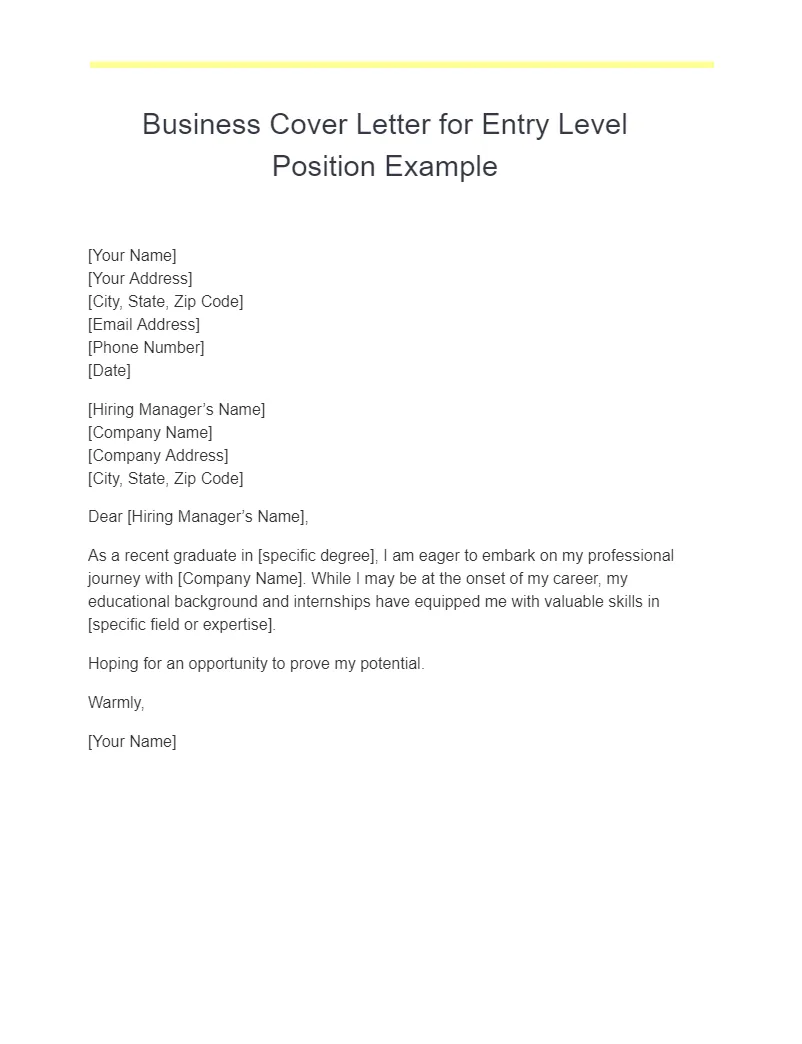
What is a Business Cover Letter?
A business cover letter is a crucial document that accompanies your resume when applying for a job. It serves as an introduction, allowing you to showcase your skills, experience, and enthusiasm for the specific position and the company. Unlike a resume, which provides a factual overview of your qualifications, a cover letter allows you to elaborate on your accomplishments and explain why you are the perfect fit for the role. It’s your chance to make a strong first impression and persuade the hiring manager to read your resume more closely. This letter should be customized to each job application to highlight the most relevant aspects of your background and demonstrate your genuine interest.
Why Cover Letters Are Still Important
Despite the digital age and the evolution of job applications, cover letters remain significantly important. They provide context to your resume, enabling you to connect your experience with the job’s requirements. A well-written cover letter demonstrates your communication skills, your understanding of the company, and your passion for the role. It also gives you the opportunity to address any gaps in your resume or explain career changes. Many hiring managers still value cover letters, as they offer insights into a candidate’s personality and writing style. It shows that you are willing to go the extra mile and are truly interested in the position. A compelling cover letter increases your chances of getting an interview.
Key Components of a Business Cover Letter

A well-structured business cover letter should include several key components to effectively convey your qualifications and interest. Each element contributes to a cohesive and persuasive presentation of your candidacy. By carefully crafting each section, you can create a cover letter that stands out and captures the attention of the hiring manager. These essential components ensure that you present yourself professionally and make a compelling case for why you deserve an interview.
Your Contact Information
At the top of your cover letter, include your full name, address, phone number, and professional email address. Ensure that your email address is appropriate and professional. This information allows the hiring manager to easily contact you if they are interested in your application. Consistency in formatting, matching your resume, is key for professionalism. Always double-check this information for accuracy to avoid any communication issues.
Date and Recipient Information
Below your contact information, include the date and the recipient’s details. If possible, address the letter to a specific person; research the hiring manager’s name online (LinkedIn or the company website). Use the correct title (Mr., Ms., Dr., etc.) and the full name. If you cannot find a specific name, use a professional title like “Hiring Manager” or “Recruiting Team.” Include the company name and address accurately.
The Salutation

Start your cover letter with a professional salutation. If you know the hiring manager’s name, use “Dear Mr./Ms./Dr. [Last Name].” If you do not know the name, use “Dear Hiring Manager” or “Dear [Department Name] Team.” Avoid generic greetings like “To Whom It May Concern.” The salutation sets the tone for your letter and should be respectful and personalized whenever possible. Proper salutations demonstrate attention to detail and a willingness to make a personal connection.
The Body of Your Business Cover Letter
The body of your cover letter is where you make your case for why you are the ideal candidate. It should be concise, well-organized, and tailored to the specific job. This section allows you to highlight your relevant skills, showcase your achievements, demonstrate your understanding of the company, and express your enthusiasm for the role. Crafting a compelling body requires careful consideration of your experience and how it aligns with the job requirements. Remember to keep the tone professional and engaging throughout.
Highlight Your Relevant Skills and Experience
Clearly state which position you are applying for and where you found the job posting. Then, highlight the skills and experience that align with the job requirements. Review the job description carefully and identify the key skills and qualifications the employer is seeking. Provide specific examples of how you have used these skills in past roles and how you have achieved results. Use keywords from the job description to show that you understand the company’s needs and can meet them. Tailor your examples to match the job and the company.
Showcase Your Achievements with Quantifiable Results

Instead of simply listing your responsibilities, focus on your achievements. Use the STAR method (Situation, Task, Action, Result) to provide context and showcase your accomplishments. Quantify your achievements whenever possible. For example, instead of saying “Improved sales,” say “Increased sales by 15% in one quarter.” Quantifiable results demonstrate your impact and help employers understand the value you bring. Be specific and use data to support your claims, illustrating the positive outcomes of your actions. This provides concrete evidence of your skills and experience.
Demonstrate Your Understanding of the Company
Show that you have researched the company. Mention specific company values, projects, or recent news to demonstrate your genuine interest. Explain why you want to work for this particular company, and how your values align with theirs. This shows the hiring manager that you are not just sending out generic applications but are genuinely interested in the organization. Understanding the company culture helps you tailor your application and express your enthusiasm more effectively.
Express Your Enthusiasm and Fit
Conclude the body of your letter by expressing your enthusiasm for the position and the company. Reiterate why you are a good fit. Mention your eagerness to learn more about the opportunity. This ensures that the hiring manager knows you are interested and motivated. End with a strong closing statement that reinforces your interest and makes it easy for them to contact you for the interview.
The Closing of Your Cover Letter

The closing of your cover letter is your last opportunity to leave a positive impression. It should be professional, concise, and leave the reader with a clear call to action. This section should re-emphasize your interest in the position and invite the hiring manager to take the next step. A well-crafted closing ensures that you end your letter on a high note and increases your chances of securing an interview.
Use a Professional Closing
Use a formal and professional closing such as “Sincerely,” “Respectfully,” or “Best regards.” Avoid informal closings like “Thanks” or “Cheers.” Choose a closing that is appropriate for the company culture. Follow your closing with a comma and leave a few lines for your signature.
Your Signature
If you are printing the cover letter, sign your name in blue or black ink above your typed name. If you are sending the cover letter electronically, you can either scan your signature or type your full name. Ensure your signature is legible and professional, matching your brand. Make the closing and signature consistent to maintain professionalism.
Proofreading and Formatting Your Cover Letter

Proofreading and formatting are critical steps in creating an effective cover letter. A well-formatted, error-free document demonstrates your attention to detail and professionalism. Errors and poor formatting can undermine your credibility and make it difficult for the hiring manager to take your application seriously. Investing time in these areas ensures that your cover letter makes a positive impression.
Formatting Guidelines
Use a professional font, such as Times New Roman, Arial, or Calibri, and use a font size between 10 and 12 points. Keep the font consistent throughout the document. Use single spacing for the body of your letter and double spacing between paragraphs. Use standard one-inch margins. Align your text to the left and ensure a clean, easy-to-read layout. This ensures that the letter is visually appealing and easy to read. Ensure your document is free of any formatting errors.
Proofreading Tips
Proofread your cover letter multiple times. Check for typos, grammatical errors, and punctuation mistakes. Read your letter aloud to catch any awkward phrasing or sentences. Ask a friend, family member, or career counselor to review it for you. They might identify any errors you missed. Proofreading is critical to create a polished final product, highlighting your attention to detail. Eliminate all errors to ensure that your letter is perfect.
Common Mistakes to Avoid

Avoid these common mistakes to make your cover letter stand out. Make sure your letter is error-free and engaging. Paying attention to the details can significantly increase your chances of getting noticed by the hiring manager.
Generic and Uninspired Content
Avoid sending a generic cover letter that could be sent to any company. Customize your cover letter for each job application. Show that you have researched the company and understand the role. Highlight your relevant skills and experiences that align with the job description. Personalized letters demonstrate that you are genuinely interested and take the time to show a strong connection.
Typos and Grammatical Errors
Always proofread your cover letter carefully. Typos and grammatical errors can make you look careless and unprofessional. Use spell-check and grammar-check tools, but don’t rely on them entirely. Have someone else review your letter to catch any errors you might have missed. Ensure that your writing is clear, concise, and error-free to give a professional impression.
Ignoring the Job Description
Always refer to the job description and tailor your cover letter accordingly. Highlight the skills and experiences the employer is looking for. Use keywords from the job description to show that you understand the requirements. Demonstrate how your qualifications match the needs of the role. Ignoring the job description can result in an application that does not address the employer’s needs.
Tailoring Your Cover Letter
Tailoring your cover letter is essential for maximizing your chances of getting an interview. Customizing your letter for each application demonstrates your attention to detail and genuine interest in the role and the company. This personalized approach is highly appreciated by hiring managers and can set you apart from other applicants. By carefully aligning your qualifications with the specific requirements of each job, you can create a compelling narrative that showcases your value and increases your chances of success.
Researching the Company
Before writing your cover letter, thoroughly research the company. Visit their website, read their mission statement, and review their recent news and projects. This will help you understand their values, culture, and current initiatives. Use this information to demonstrate your genuine interest and tailor your letter to the company’s specific needs. Understanding the company shows that you care and are willing to invest time to highlight their needs.
Customizing for Each Application
Customize your cover letter for each job application. Do not use a generic template. Highlight the skills and experiences that are most relevant to the specific role and company. Use keywords from the job description to demonstrate that you understand the requirements. Tailoring your letter shows the hiring manager that you have put thought and effort into your application. Customize your letter to the particular needs.
Examples of Effective Business Cover Letters
Reviewing examples of effective business cover letters can provide inspiration and guidance for writing your own. Studying different formats, styles, and approaches can help you understand how to structure your letter and tailor your message to the specific role. The following examples showcase various career paths, demonstrating how to highlight relevant skills and experiences effectively. These examples are guides and can be tailored to your needs.
Cover Letter for Marketing Position
A marketing cover letter should highlight your understanding of marketing principles, your ability to develop and execute marketing strategies, and your experience with relevant marketing tools. Include specific examples of successful marketing campaigns, demonstrating how you have increased brand awareness, generated leads, and boosted sales. Show your skills related to market research, content creation, SEO, and social media. Focus on measurable results and tailor your language to the company.
Cover Letter for Finance Position
A finance cover letter should emphasize your financial expertise, attention to detail, and ability to analyze financial data. Highlight your experience with budgeting, forecasting, financial reporting, and accounting principles. Include examples of how you have improved financial processes, reduced costs, and ensured compliance. Tailor your letter to match the specific job responsibilities. Mention the financial tools and software you know.
Cover Letter for Sales Position
A sales cover letter should emphasize your sales abilities, your ability to build relationships, and your experience in closing deals. Highlight your track record of meeting or exceeding sales targets, building and managing client relationships, and closing sales. Show off your skills related to sales presentations and negotiation. Make it clear that you are a skilled communicator. Make the company aware that you are a results-driven individual.