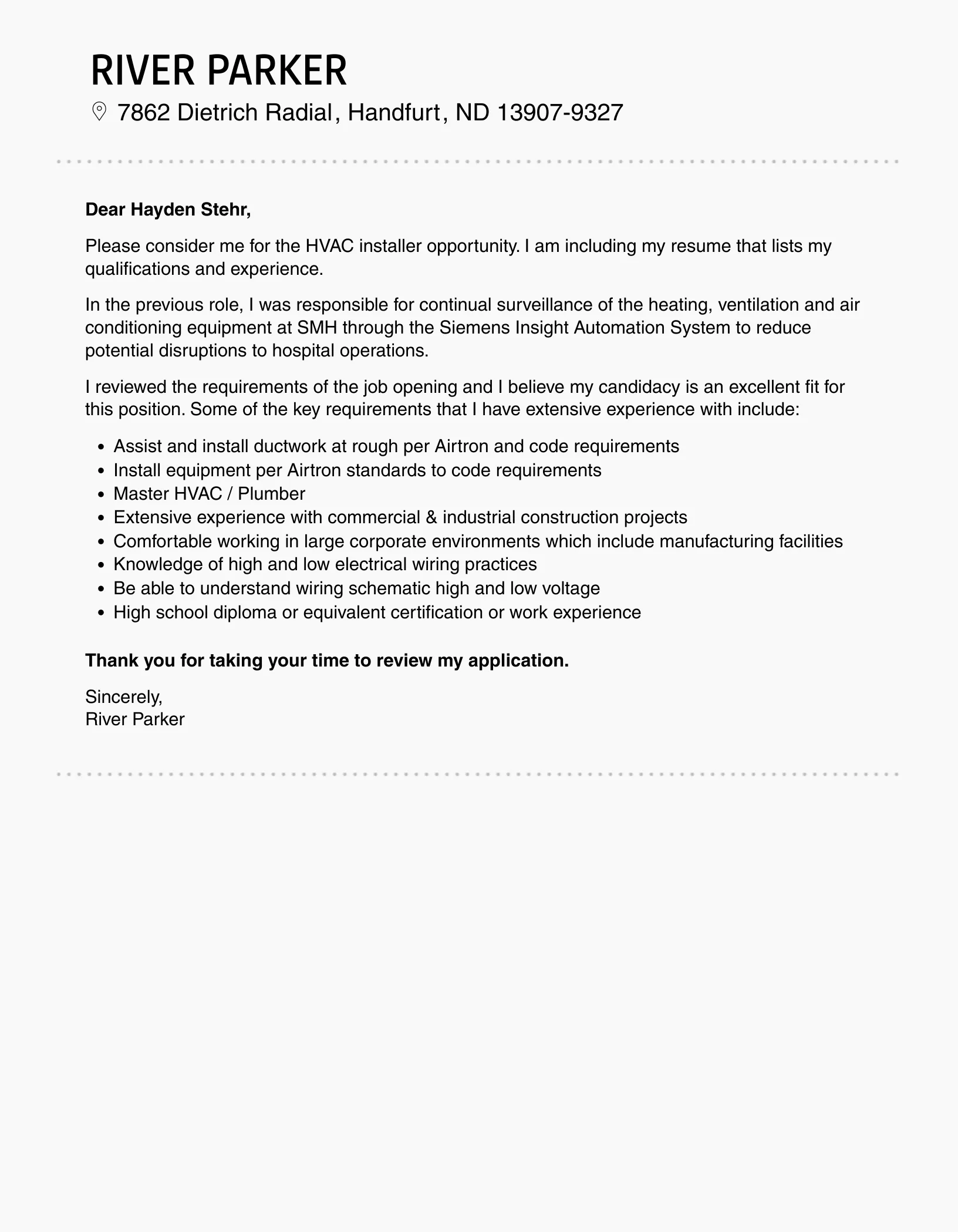
Crafting an effective HVAC cover letter is crucial for making a strong first impression on potential employers. A well-written cover letter can significantly increase your chances of landing an interview and ultimately securing your desired HVAC position. It’s your opportunity to showcase your skills, experience, and passion for the HVAC field. This guide provides you with the top 5 tips to help you create a cover letter that impresses, highlighting your qualifications and making you stand out from the competition. By following these tips, you’ll be well on your way to a successful HVAC career.
Highlight Your HVAC Skills
One of the most important elements of your HVAC cover letter is highlighting your skills. Employers want to know what you can do and how your abilities align with their needs. Instead of just listing your skills, provide concise examples of how you’ve used them effectively. This section is your chance to shine a light on your strengths, demonstrating your technical proficiency and practical knowledge. Focus on skills that are directly relevant to the job description, such as troubleshooting, system installations, maintenance, and repair. By clearly illustrating your expertise, you position yourself as a valuable asset to the company. This is a crucial element when writing your HVAC cover letter.
Quantify Your Achievements
Whenever possible, quantify your achievements to demonstrate the impact of your work. Instead of saying you ‘improved efficiency,’ state that you ‘improved energy efficiency by 15% through system upgrades.’ Use numbers and specific data to illustrate your successes and provide concrete evidence of your capabilities. This approach adds credibility to your claims and makes your cover letter more compelling. Quantifiable achievements also help employers easily assess the value you could bring to their team and increase the likelihood that they will give you a call.
Provide Specific Examples

Don’t just tell employers what you’ve done; show them. Provide specific examples of your accomplishments and how you applied your skills in real-world scenarios. For instance, describe a challenging project you completed, the techniques you used, and the positive outcome. Use the STAR method (Situation, Task, Action, Result) to structure your examples effectively. For example, ‘In a situation where a customer’s system failed on a weekend (Situation), I was tasked with diagnosing and repairing the issue (Task). I quickly identified the faulty component, replaced it, and ensured the system was fully operational (Action), resulting in the customer’s system back up in under 4 hours (Result). This demonstrates how to create a cover letter that impresses.
Showcase Relevant Certifications
Certifications are a key indicator of your qualifications in the HVAC field. Ensure that you prominently display your relevant certifications in your cover letter. Include details such as the certification name, the issuing organization, and the date of certification. Common certifications include EPA 608, NATE, and other industry-specific credentials. If the job description mentions specific certifications, make sure to highlight those first. This demonstrates that you meet the basic requirements and are committed to professional development. Having current and relevant certifications increases your credibility and shows employers that you are prepared to work.
Tailor the Letter to the Job
A generic cover letter is unlikely to impress. Customize your cover letter for each job you apply for. Carefully review the job description and identify the key requirements and desired skills. Then, align your skills and experiences with these needs. Mention the company by name and express your enthusiasm for their specific projects, values, or reputation. Showing that you’ve taken the time to understand the role and the company demonstrates your genuine interest and increases your chances of being selected. Tailoring your cover letter is a strong signal that you’re serious about the opportunity and can get the job done.
Demonstrate Enthusiasm

Employers want to hire individuals who are passionate about their work. Your cover letter is an excellent opportunity to express your enthusiasm for the HVAC field and the specific job you’re applying for. Show that you’re eager to learn, contribute, and grow with the company. Share what excites you about the role and what you hope to achieve. This can set you apart from other candidates who might seem indifferent or uninspired. Enthusiasm is contagious and makes you a more appealing candidate and can greatly enhance your chances of getting hired for the job.
Research the Company
Before writing your cover letter, research the company thoroughly. Understand their mission, values, and recent projects. Mentioning specific details about the company shows that you’ve taken the time to learn about them and are genuinely interested in working there. Tailor your letter to fit the company’s culture and emphasize why you would be a good fit. This shows your proactive approach and demonstrates to the employer that you are interested in the opportunity. It is important to have an idea about the values of the company.
Express Your Interest Clearly
Make it clear in your cover letter that you’re excited about the opportunity and want to be considered for the position. State your interest directly and concisely. Reiterate why you are interested in the company and how your skills align with their needs. End your letter with a strong call to action, such as expressing your availability for an interview and providing your contact information. A confident, enthusiastic closing paragraph can leave a lasting positive impression and get you noticed. The conclusion of the letter should summarize why you’re the best candidate.
Proofread Meticulously

Errors in your cover letter can undermine your credibility and leave a negative impression. Always proofread your letter carefully for any grammatical errors, typos, or inconsistencies. Use spell-check, but don’t rely on it entirely; read the letter aloud to catch any mistakes that spell-check might miss. Consider asking a friend or family member to review your letter as a fresh pair of eyes can often spot errors that you might overlook. A polished, error-free cover letter demonstrates your attention to detail and professionalism, increasing your chances of a positive response.
Formatting and Presentation
The visual presentation of your cover letter is just as important as the content. A well-formatted and visually appealing letter is easier to read and makes a better impression. Ensure your cover letter is neat, organized, and easy to read. Use clear headings, bullet points, and sufficient white space. Maintain consistency in font size, style, and spacing. A professional-looking cover letter shows that you pay attention to detail and that you’re serious about the job application. Proper formatting reflects your ability to communicate effectively and adds to your overall professionalism.
Use a Professional Tone
The tone of your cover letter should be professional and respectful. Avoid using slang, jargon, or overly casual language. Maintain a formal tone throughout the letter, even when expressing your enthusiasm. Use polite language and address the hiring manager by name, if possible. The appropriate tone establishes your professionalism and shows that you understand workplace communication expectations. A professional tone is particularly important in HVAC, where the importance of precise communication is key to the work.
Keep It Concise and Focused

Hiring managers are busy people. Keep your cover letter concise and to the point. Focus on the most relevant information and avoid unnecessary details. Aim for one page in length, highlighting your key qualifications and experiences. Avoid rambling or going off-topic. Your cover letter should quickly and effectively present the most compelling reasons why you are the best candidate for the job. A focused, concise letter is more likely to capture the reader’s attention and convey your value effectively.
Choose the Right Font and Format
Select a professional and easy-to-read font, such as Times New Roman, Arial, or Calibri. Use a font size between 10 and 12 points. Ensure your cover letter is well-formatted with clear margins, consistent spacing, and appropriate paragraph breaks. Avoid using excessive formatting or decorative elements that could distract the reader. The goal is to create a clean, readable document that highlights your qualifications. A well-formatted cover letter shows attention to detail and enhances the overall presentation of your application.
In conclusion, a well-crafted HVAC cover letter is a powerful tool that can significantly increase your chances of landing your desired job. By following these top 5 tips – highlighting your skills, quantifying your achievements, providing specific examples, showcasing relevant certifications, and tailoring your letter to the job – you can create a cover letter that impresses. Remember to demonstrate enthusiasm, research the company, and proofread meticulously. Also, pay attention to formatting and presentation. By implementing these strategies, you can effectively showcase your qualifications and make a strong first impression on potential employers, leading to a successful career in the HVAC industry.