Crafting a Compelling Internal Cover Letter
An internal candidate cover letter is your golden ticket to a new role within your current organization. It’s not just a formality it’s a strategic document that can significantly boost your chances of landing that coveted position. Unlike external applications, you have an advantage know the company culture, values, and perhaps even the hiring manager. This knowledge should be leveraged effectively. Your cover letter is your opportunity to showcase how your skills and experiences align perfectly with the new role’s requirements and to demonstrate your commitment to the company’s continued success. By carefully crafting your letter, you can differentiate yourself from other internal applicants and make a strong case for why you are the best fit.
Highlighting Your Accomplishments
One of the most critical aspects of an internal cover letter is highlighting your accomplishments. Simply listing your job duties is not enough; you must demonstrate the value you’ve brought to the company. Focus on specific achievements, using the STAR method (Situation, Task, Action, Result) to provide context and showcase your impact. This means describing the situation you faced, the task you undertook, the actions you took, and, most importantly, the results you achieved. Emphasize measurable outcomes, such as increased sales, improved efficiency, or successful project completion. Use action verbs to describe your contributions and show your initiative and drive. This approach helps the hiring manager visualize your capabilities and understand your potential in the new role.
Quantifying Your Achievements

To make your accomplishments even more impactful, quantify them whenever possible. Numbers speak volumes and provide concrete evidence of your contributions. Instead of saying ‘Improved customer satisfaction,’ say ‘Increased customer satisfaction scores by 15% in six months.’ Similarly, instead of ‘Managed projects effectively,’ state ‘Successfully managed three projects simultaneously, completing them on time and within budget.’ Use metrics such as percentages, dollar amounts, time saved, or units produced to illustrate the tangible results of your work. This level of detail not only demonstrates your success but also shows your attention to detail and your ability to analyze and improve processes. Quantifying your achievements makes your cover letter more compelling and memorable.
Showcasing Your Alignment with the New Role
The best internal candidate cover letters make a clear and compelling connection between your skills and the requirements of the new role. Review the job description carefully and identify the key responsibilities and desired qualifications. Then, in your cover letter, explicitly state how your previous experience and skills align with these requirements. Provide specific examples from your current or past roles where you’ve demonstrated the necessary abilities. This might involve mentioning projects you’ve led, software you’ve used, or skills you’ve honed. Show the hiring manager that you understand the role’s demands and that you are well-equipped to succeed in it. This targeted approach shows you’ve done your homework and are genuinely interested in the position, not just another name on a list.
Researching the New Role and Company Culture
Even though you’re an internal candidate, it’s still crucial to research the new role and the company culture. Understand the specific challenges and opportunities associated with the position. If possible, talk to people who currently hold similar roles or who are familiar with the team. This will allow you to tailor your cover letter to address specific needs and demonstrate your understanding of the new role’s demands. Similarly, demonstrate your understanding of the company’s values and how your approach aligns with them. This shows your dedication to the company and demonstrates your commitment to contributing to its success in the new role. Tailoring your cover letter to the specific role and company culture demonstrates your genuine interest and proactive approach, significantly enhancing your application.
Demonstrating Your Knowledge and Skills

Your internal cover letter must clearly demonstrate your knowledge and skills relevant to the new role. Go beyond simply listing your qualifications; provide concrete examples of how you’ve applied those skills in previous situations. This is your chance to shine and show why you’re the perfect fit. Highlight any training, certifications, or special projects that relate to the new position. If you’re applying for a management role, detail your experience in leading teams, resolving conflicts, or motivating employees. If it’s a technical role, describe your proficiency in relevant software, tools, and methodologies. Your goal is to convince the hiring manager that you possess not only the required skills but also the practical experience to excel in the new role. This requires more than just stating your qualifications; it requires showcasing your competence through specific, verifiable examples.
Tailoring Your Cover Letter
Generic cover letters are easily discarded. To truly impress the hiring manager, you must tailor your cover letter to the specific job description. This means more than just changing the job title; it means carefully analyzing the job requirements and addressing them directly in your letter. Use the job description as a guide to determine the key skills, experiences, and qualifications the employer is seeking. Then, in your cover letter, highlight how your skills and experiences align with these requirements. This approach shows that you’ve carefully considered the role and understand what the company is looking for. It also indicates a genuine interest in the position and a willingness to invest the time and effort required to create a compelling application.
Customizing for the Specific Job Description
The most successful cover letters are customized for each job you apply for. Avoid using a generic template; instead, create a fresh document that directly addresses the requirements of the specific role. This means carefully reading the job description, identifying the key responsibilities and qualifications, and then structuring your cover letter to showcase how your skills and experience align with those needs. For example, if the job description emphasizes project management skills, dedicate a significant portion of your letter to discussing your project management experience, including specific projects you’ve led, challenges you’ve overcome, and results you’ve achieved. By tailoring your letter in this way, you demonstrate that you’re not just sending out a generic application but that you’re genuinely interested in the specific opportunity and have the skills and experience to succeed.
Using Keywords from the Job Posting

To increase your chances of getting noticed, incorporate keywords from the job posting into your cover letter. Many companies use Applicant Tracking Systems (ATS) that scan cover letters and resumes for specific keywords. By strategically including these keywords in your letter, you increase the likelihood that your application will make it past the initial screening process. Carefully review the job description and identify the key terms, phrases, and skills. Then, weave these keywords naturally into your cover letter. This will help your application stand out to the hiring manager. However, avoid keyword stuffing, which can make your cover letter sound unnatural and unprofessional. Instead, use the keywords in a way that flows organically within your writing. Your aim is to highlight your qualifications and demonstrate your understanding of the role by reflecting the language used in the job posting.
Emphasizing Your Internal Advantages
As an internal candidate, you have unique advantages that you should leverage in your cover letter. Unlike external candidates, you’re already familiar with the company culture, its processes, and its people. Highlight your understanding of the company’s values and your ability to work effectively within the organization. Mention any existing relationships you have with colleagues or managers, especially those who might recommend you for the new role. Furthermore, you can showcase your familiarity with the company’s products, services, and strategic goals, demonstrating your understanding of the company’s bigger picture. Emphasizing your internal advantages shows that you’re not just looking for a new job, but that you’re invested in the company’s success and ready to hit the ground running.
Formatting and Presentation
The format and presentation of your cover letter play a significant role in making a positive impression. A well-formatted and professional-looking letter demonstrates your attention to detail and your commitment to professionalism. Choose a clean, easy-to-read font, such as Times New Roman or Arial, and maintain a consistent font size throughout the document. Use clear headings and subheadings to organize your content logically and make it easy for the hiring manager to scan. Ensure that your letter has adequate margins and spacing, avoiding a cluttered appearance. Pay attention to the overall layout and ensure that your cover letter is visually appealing and easy to read. A polished, well-formatted letter reflects well on you and increases the likelihood that the hiring manager will take the time to read and consider your application.
Professional Formatting for Internal Applications

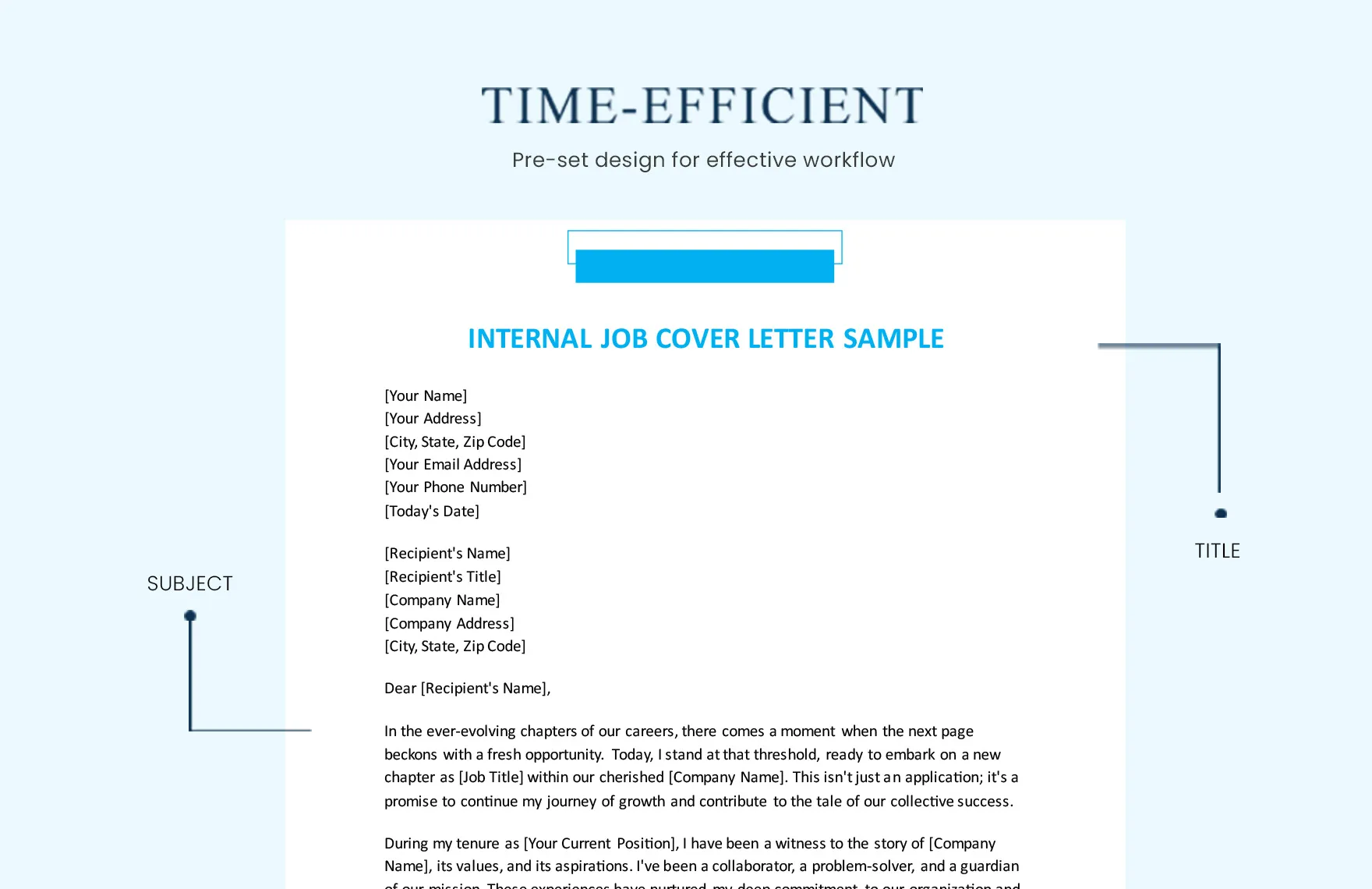
When formatting your internal candidate cover letter, keep it professional and tailored to the company’s standards. Use business letter format, including your contact information, the date, and the hiring manager’s contact information. Address the hiring manager by name if possible, and avoid generic greetings. The tone of your letter should be professional but also reflect your internal status. You can, in certain cases, adopt a slightly less formal tone than you would for an external application, but always remain respectful and professional. Ensure that the letter matches the overall style and branding of the company if applicable. Proper formatting enhances readability and ensures your cover letter is well-received, signaling to the hiring manager that you understand professional communication and the importance of presenting yourself effectively.
Proofreading and Editing Your Cover Letter
Proofreading and editing your cover letter is crucial. Typos, grammatical errors, and inconsistencies can undermine your credibility and detract from your message. Before submitting your cover letter, carefully proofread it for any errors. Read it aloud to catch any awkward phrasing or sentences that don’t flow smoothly. If possible, ask a colleague or friend to review your letter for any mistakes you might have missed. A second pair of eyes can often catch errors that you’ve overlooked. Ensure that your letter is free of spelling mistakes, grammatical errors, and punctuation errors. Proper proofreading and editing not only enhance the professionalism of your cover letter but also demonstrate your attention to detail and your commitment to presenting yourself in the best possible light. Take the time to ensure that your cover letter is polished and error-free, allowing your skills and experience to shine through.
The Importance of a Strong Closing
Your closing is your final opportunity to leave a lasting impression. Make it count by summarizing your key qualifications, reiterating your interest in the position, and clearly stating your availability for an interview. Thank the hiring manager for their time and consideration. Avoid generic closings such as ‘Sincerely’ or ‘Best regards’; instead, opt for a more personalized closing that reflects your enthusiasm for the opportunity. Something like ‘I am excited about the prospect of joining your team and contributing to [company name]’s success’ can be effective. Make it clear that you are looking forward to hearing from them soon. A well-crafted closing demonstrates your professionalism and leaves the hiring manager with a positive impression of you. Your closing should summarize your value proposition, reinforce your interest, and encourage the hiring manager to take the next step.