Mastering the Judicial Internship Cover Letter
A judicial internship cover letter is more than just a formality its your first opportunity to make a strong impression on a judge or court. This document is a critical tool in securing a highly competitive internship. It serves as your initial introduction, and it should convey not only your qualifications but also your understanding of the judicial process, your passion for the law, and your commitment to excellence. A well-crafted cover letter can significantly increase your chances of standing out from the crowd and landing the internship of your dreams. The cover letter acts as a personal marketing tool, allowing you to showcase your unique skills, experiences, and qualities that align with the requirements of the internship and the values of the court.
Researching the Court and Judge
Before you even begin writing, research the court and the specific judge you are addressing. This research is paramount, as it demonstrates your genuine interest and allows you to tailor your letter to the specific needs and preferences of the court. Visit the court’s website to learn about its jurisdiction, the types of cases it handles, and any specific programs or initiatives it has. Understanding the court’s environment will help you align your application with its objectives. Moreover, delve into the judge’s background. Search for their published opinions, read articles about their legal philosophy, and, if possible, learn about their interests and any affiliations they may have. This research will provide valuable insights into the judge’s priorities, enabling you to customize your letter to reflect their values.
Understanding the Court’s Mission
Each court has a specific mission, and it’s vital that you understand it. Does the court focus on specific areas of law? Are there any recent developments or initiatives within the court? Researching these things will highlight that you are informed about the court’s activities, and can potentially show that you are a valuable addition to the team. Show your understanding of the court’s role in the community and how your skills and experiences can contribute to its mission. Demonstrate your commitment to upholding justice and serving the public interest. Use the knowledge from your research to align your goals and values with the court’s mission. This preparation showcases your preparedness, and allows you to integrate the court’s mission into your letter, showing your understanding and respect for its goals.
Highlighting Relevant Skills
Your cover letter needs to showcase the skills that make you a strong candidate. Identify the skills that are most relevant to a judicial internship and provide specific examples of how you have used them. These skills can include legal writing, research, analytical thinking, attention to detail, and communication skills. Furthermore, tailor your skills to the particular court and judge. Make sure you tailor the skills sections to the specific requirements and expectations of the internship. If the court handles complex legal cases, emphasize your analytical and research skills. If the judge is known for their excellent writing skills, highlight your writing proficiency. Customization shows the court that you are able to align yourself with the court’s unique values.
Legal Writing and Research Proficiency
Legal writing and research are fundamental skills for any judicial intern. Demonstrate your ability to write clearly, concisely, and persuasively by highlighting any experiences where you had to analyze legal documents or create legal arguments. Mention any legal writing courses you have taken, any law review experience, or any work you’ve done in a legal clinic. Detail any legal research methodologies you know how to use, such as Westlaw or LexisNexis. Provide specific examples of research projects you have undertaken, including the types of legal issues you have researched and the research tools you used. Show how you can use these skills to support legal analyses and the creation of arguments. Use your experiences to help you show your understanding of legal concepts and your capacity to synthesize intricate legal information.
Attention to Detail and Analytical Skills

Judges require an exceptional level of detail in all of their activities, so make sure you show your attention to detail. The cover letter is the place to show this. Emphasize your ability to carefully analyze information, identify key legal issues, and think critically about complex problems. Describe situations where you had to carefully analyze legal documents, interpret laws, and formulate legal strategies. Provide examples of instances where your analytical skills helped you solve problems or make critical decisions. Highlight any experiences where you successfully identified errors or inconsistencies in legal documents. These may be grammatical errors or misinterpretations of information. Show how you are able to make informed decisions based on sound evidence and critical reasoning.
Showcasing Relevant Experience
Your professional experience should be relevant to the judicial internship. Include any experience that demonstrates your understanding of the legal system. Tailor your experience to highlight your accomplishments that align with the internship. For example, working in a law firm or legal aid organization could be relevant. Additionally, emphasize skills and experiences that align with the court’s values. Highlight your ability to work in a professional setting and your understanding of legal processes and procedures. Be sure to connect your experiences to the specific requirements of the internship and show how you can apply your existing skills in the role. These may include writing summaries, preparing case files, and attending court proceedings. Include the skills that you possess which align to the values of the court.
Academic Achievements and Coursework
Your academic background is an important factor in your application. Include relevant coursework and academic achievements that demonstrate your legal knowledge and skills. Highlight courses that are directly related to the legal field, such as constitutional law, civil procedure, or criminal law. Showcase your ability to understand complex legal concepts. Mention any academic honors, scholarships, or awards you have received. If you have a high GPA, include it. Mention any specific projects or assignments that required legal research or writing. These showcase your ability to apply legal principles and think critically. Show your overall academic performance and the courses you have taken that are relevant to the position. Also, use your educational achievements to show your commitment to learning and your ability to meet the academic demands of the internship.
Extracurricular Activities and Leadership

Extracurricular activities are valuable, and can provide evidence of leadership abilities, teamwork, and overall well-roundedness. Discuss leadership positions you have held in student organizations, law journals, or debate teams. Show how you have contributed to your community through volunteering, pro bono work, or other activities. These activities show your leadership qualities, your commitment to working as a team, and your understanding of civic responsibility. Highlight activities that have developed your communication, problem-solving, and organizational skills. Leadership experience can be extremely valuable in an internship setting. Make sure you can illustrate how your extracurricular activities are connected to your interest in law. Connect your skills, experiences, and personal qualities to the needs of the court and your passion for the legal profession.
Tailoring Your Letter
Customizing your cover letter for each judicial internship is critical. This means tailoring your letter to the specific requirements of the court and judge. Review the internship requirements, and address them directly in your letter. Show that you understand what the court expects of its interns. Customize your letter to highlight the specific qualities and skills the judge values. Personalize your letter by referring to the judge’s background, interests, or any previous publications. Show how your experiences align with their professional interests. When tailoring your letter, you should demonstrate your specific interest in the judge or court. Personalization can make a strong impression, as it shows your interest and dedication to the internship. This tailoring helps make your application stand out, and it will help you get noticed.
Addressing Specific Requirements
Always carefully read the internship requirements and address them directly in your cover letter. Pay close attention to any specific instructions, such as word limits, formatting guidelines, and required documents. Provide examples of how you meet each requirement. If the application requires a writing sample, make sure you include a well-written and edited example of your legal writing. Provide specific examples to show you know how to follow instructions. You must make sure you meet all of the requirements. If you do not follow directions, the judge may pass over your application. Make sure you also follow the required guidelines and instructions. Adhering to all requirements showcases your attention to detail, professionalism, and ability to follow instructions.
Demonstrating Enthusiasm and Fit

Demonstrate your enthusiasm for the internship and show how your values and skills align with the court’s mission and values. Express your genuine interest in the legal field and explain why you are interested in a judicial internship. Explain your understanding of the legal profession, and demonstrate how your skills will help the court. Express your enthusiasm by connecting your personal goals and your professional aspirations to the internship. Show that you have the qualities that align with the court’s needs and values. By expressing your genuine enthusiasm, you should be able to effectively communicate your passion for the law and your commitment to the judicial process. This will resonate with the judge, and help you get the internship.
Formatting and Proofreading
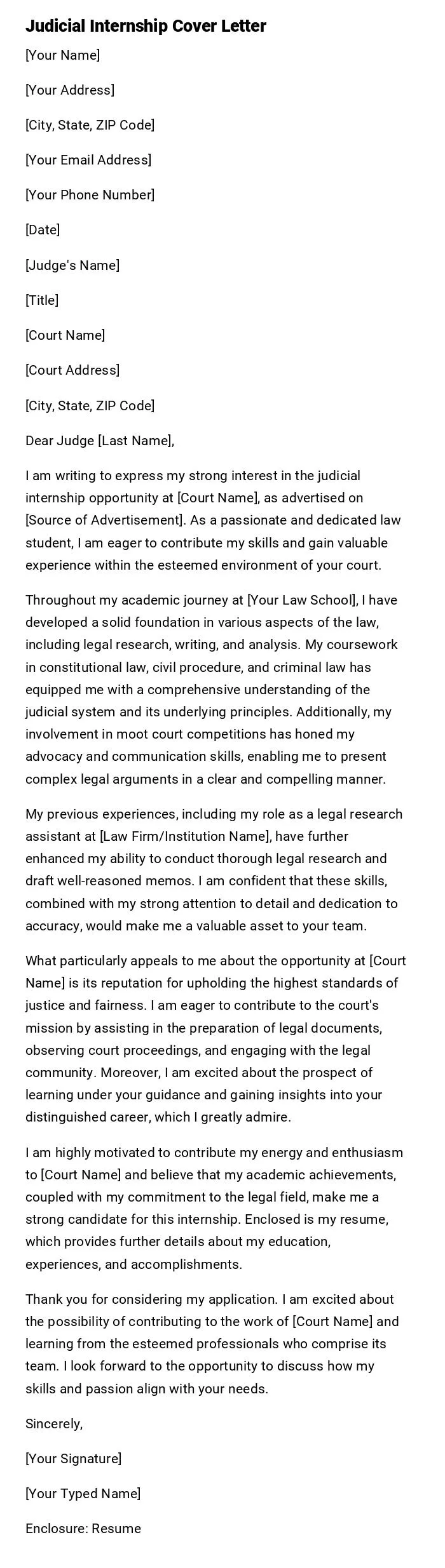
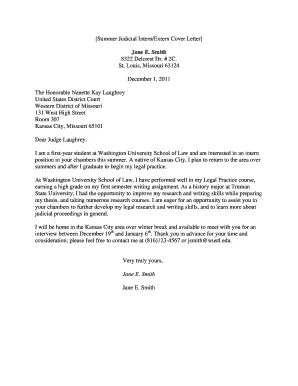
The format and quality of your cover letter are very important to a successful application. Make sure your cover letter is formatted professionally. Use a standard business letter format with a clear heading, salutation, body paragraphs, and a closing. Ensure that the letter is well-organized and easy to read. Use concise language, and avoid jargon. Proofread your cover letter carefully for any errors in grammar, spelling, and punctuation. Proofreading is one of the most important steps of creating a cover letter. Ask someone else to read your cover letter to make sure it is error-free. Make sure your letter is consistent in style and tone. Errors can make the impression of not being attentive to detail, which is very important in the field of law. Proofreading helps you show that you are professional and a serious candidate for the internship.
Structuring the Cover Letter Effectively
A well-structured cover letter is critical for clearly communicating your qualifications and interest. Start with a compelling introduction that grabs the reader’s attention and states your purpose. Provide a brief overview of why you are interested in the judicial internship and why you are a good fit for the role. In the body paragraphs, showcase your skills, experiences, and qualifications. Provide specific examples to illustrate your abilities and accomplishments. Tailor your letter to the internship requirements and the judge’s preferences. In your conclusion, summarize your key qualifications and reiterate your interest. End with a confident closing statement that encourages the judge to contact you for an interview. The overall structure of your cover letter helps your letter be clear and easy to read. It also highlights the most important aspects of your qualifications.
Writing a Compelling Introduction

The introduction is your first chance to make a positive impression. Make it clear, concise, and compelling. Show your interest in the specific judicial internship and state the purpose of your letter. Briefly mention any connection you have to the court or judge. You may mention a mutual acquaintance, any relevant prior experience, or anything that shows you have researched the court and its needs. Clearly state why you are interested in the internship. Tailor your introduction to the judge and the specific requirements of the position. This makes it clear that you have a solid interest in the internship, and it will get you noticed. Make sure your introduction encourages the reader to review the rest of your cover letter. Make it clear, and make it memorable.
Crafting Strong Body Paragraphs
The body paragraphs are the meat of your cover letter. They must support your claims and showcase your abilities. Start by identifying 2-3 key qualifications or skills. Provide specific examples and evidence to support your claims. Use the STAR method (Situation, Task, Action, Result) to describe your experiences and accomplishments. Quantify your achievements whenever possible. By clearly describing the situation, your role, the actions you took, and the results you achieved, you can show the impact of your experiences. Use strong verbs to describe your skills and experiences. Tailor your body paragraphs to match the internship requirements. Be sure to include the specific requirements. The goal is to show your abilities and skills that are most relevant to the role. Writing strong body paragraphs is important to making your letter work.
Creating a Powerful Conclusion
The conclusion should restate your interest in the internship. Summarize your key qualifications and accomplishments, and reiterate your enthusiasm. Thank the judge for their time and consideration, and express your interest in an interview. End with a professional closing, such as “Sincerely” or “Respectfully”. Make sure to include your contact information, including your phone number and email address. Show your continued interest in the position, and your willingness to follow up with the judge. A strong conclusion should reiterate your skills and experiences, and re-emphasize why you are a strong candidate. The conclusion should also be easy to read and professional.
Following Up and Submitting Your Application

After submitting your application, follow up with the court to show your continued interest. Send a brief thank-you email to the judge or hiring manager. This demonstrates your professionalism and your appreciation. If you haven’t heard back within a reasonable timeframe, send a follow-up email to inquire about the status of your application. In your follow-up emails, reiterate your interest in the internship. If you are selected for an interview, prepare thoroughly. Research the judge and the court, and prepare to answer questions about your qualifications and experiences. Be ready to discuss your interest in the legal profession and your goals. By following up and demonstrating your continued interest in the position, you’re showing your professionalism and strong interest. Following up shows that you are serious about the internship.