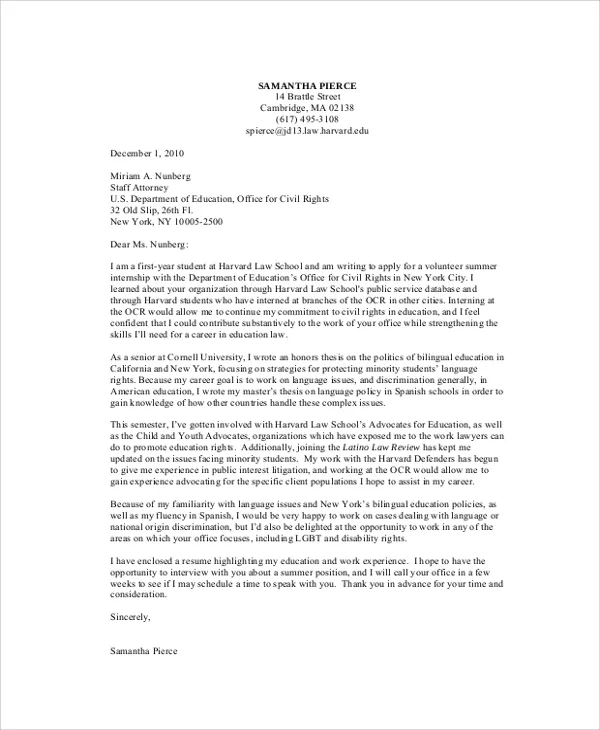
What is a Cover Letter for Law Students?
A cover letter is a crucial document that accompanies your resume when applying for internships, clerkships, and other legal positions. For law students, it serves as an introduction to your qualifications, skills, and interest in the specific opportunity. It’s your chance to make a strong first impression and persuade the employer to consider your application. Unlike a resume, which is a factual summary of your experiences, a cover letter allows you to showcase your personality, writing abilities, and genuine enthusiasm for the position. It provides context to your resume and explains why you are a suitable candidate, going beyond simply listing your accomplishments. A well-crafted cover letter can significantly increase your chances of getting an interview and ultimately landing your desired legal role.
Key Components of a Law Student Cover Letter
A compelling law student cover letter follows a standard structure, but each section should be tailored to the specific opportunity and your unique experiences. This structured approach ensures you provide all the necessary information in a clear and concise manner, while also highlighting your best qualities. The key components include a header with your contact information, a salutation, a body consisting of several paragraphs, a closing with a complimentary close, and your signature. Each section plays a vital role in presenting you as a qualified and enthusiastic candidate. Careful attention to each element ensures that your letter is professional, well-written, and leaves a lasting positive impression on the hiring manager.
Header Section
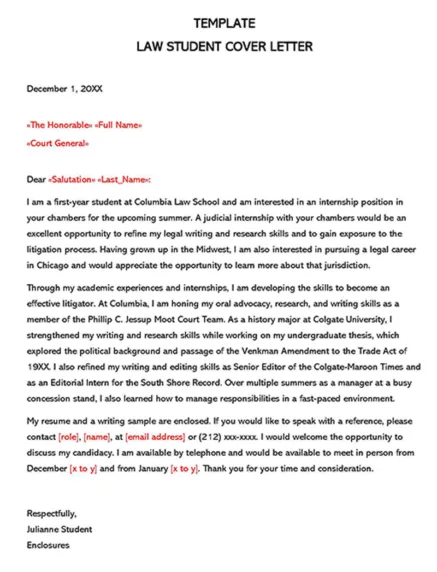
The header is the very first part of your cover letter and should contain your contact details and the date. It’s vital for easy identification and helps the recipient quickly reach you. Ensure your information is accurate, current, and presented professionally. The header sets the tone for the entire letter and demonstrates your attention to detail.
Your Contact Information
Include your full name, phone number, professional email address, and LinkedIn profile URL (optional). Make sure your email address sounds professional and is easy to read. Double-check that all your contact information is correct, as missing or incorrect information can lead to missed opportunities. A well-formatted header makes it easy for the hiring manager to reach out to you for an interview or further information.
Date and Recipient Information
Below your contact information, include the date you are writing the letter. Then, include the recipient’s name (if known), their title, and the company’s name and address. If you are unable to find a specific contact person’s name, then you should aim for the hiring manager or the appropriate department. Researching the recipient demonstrates your initiative and personalization, making your application stand out. Correctly addressing the letter shows that you have taken the time to prepare properly.
Salutation

The salutation is your formal greeting. If you know the hiring manager’s name, use “Dear Mr./Ms./Mx. [Last Name].” If you are unsure of the specific recipient, use a professional greeting like “Dear Hiring Manager” or “Dear [Department Name] Team.” Avoid generic greetings like “To Whom It May Concern.” A personalized salutation sets a positive tone and shows that you’ve taken the time to research the opportunity and the company.
Body Paragraphs
The body paragraphs are the core of your cover letter. They allow you to elaborate on your skills, experience, and motivations, as well as how you can benefit the firm. This section is where you make your case for why you are the best fit for the role. A well-structured body will capture the hiring manager’s attention and increase your chances of getting an interview.
First Paragraph: Grab Attention
Start with a compelling opening statement that immediately grabs the reader’s attention. Mention the specific position you are applying for and where you found the listing. You can also briefly state your interest in the opportunity. Consider mentioning something specific that caught your eye about the firm or the position. This demonstrates that you are genuinely interested in the opportunity and have done your research. Avoid generic phrases and instead, aim for a strong and confident opening.
Second Paragraph: Highlight Relevant Skills and Experience

This is where you showcase your relevant skills and experience. Highlight the skills and experiences that align with the job description. Use specific examples from your coursework, internships, or other experiences to demonstrate your abilities. Quantify your achievements whenever possible to provide concrete evidence of your skills. Tailor your examples to the specific requirements of the position to show the hiring manager that you are a good fit and that you have what it takes to excel in the role. Don’t simply list your skills, explain how you have utilized them in a practical setting and what the outcome was.
Third Paragraph: Showcase Your Interest and Fit
Demonstrate your genuine interest in the specific opportunity and the firm or organization. Explain why you are attracted to this particular position and why you are a good fit for their culture and goals. Research the company thoroughly and identify what resonates with you. This may include their values, their work, their commitment to a specific area of law, or their reputation in the legal community. Express your enthusiasm and discuss how your career goals align with the company’s vision. This paragraph should be a clear declaration of your interest in the position.
Fourth Paragraph (Optional): Address Weaknesses or Explain Gaps
Use this paragraph to address any potential weaknesses or explain any gaps in your resume. Be honest and concise, and frame any weaknesses positively. For example, if you have limited experience, you can discuss your eagerness to learn and your commitment to continuous professional development. If you had a gap in employment, briefly explain it without going into excessive detail. Your goal is to address any potential concerns head-on and to provide reassurance to the hiring manager that you are a strong candidate despite any perceived limitations. Focus on what you can offer rather than dwelling on what you lack.
Closing and Signature

The closing is the final section of your cover letter, and it is where you end your letter with a professional and polished tone. This section needs to leave the reader with a final positive impression of your application. It should summarize your interest, express your enthusiasm, and provide a call to action.
Complimentary Close
Use a professional closing such as “Sincerely,” “Best regards,” or “Thank you for your time and consideration.” Avoid casual closings like “Thanks” or “See you later.” Choose a closing that reflects the overall tone of your letter and the level of formality appropriate for the organization. Ensure that the closing is followed by a comma.
Signature and Typed Name
Leave space for your handwritten signature above your typed name. If you are submitting an electronic application, you can scan your signature and insert it. Always include your typed name below your signature. Make sure your signature is legible and that it reflects your professionalism. This final element completes the professional look of the cover letter, leaving a strong and positive impression.
Formatting and Style Guide

A well-formatted cover letter is easy to read and reflects your professionalism. Follow these formatting guidelines to ensure your cover letter is polished and professional. Proper formatting contributes to a positive impression by showing that you pay attention to detail and take your application seriously.
Font and Margins
Use a professional and readable font such as Times New Roman, Arial, or Calibri, with a font size between 11 and 12 points. Maintain 1-inch margins on all sides of the document. Ensure the font is consistent throughout the letter and that it complements your resume. Proper formatting makes your cover letter easier to read and helps it appear professional.
Length and Tone
Keep your cover letter concise, ideally one page in length. Tailor the tone to the specific opportunity and the company culture. Generally, a formal and professional tone is appropriate. Avoid using overly casual language or slang. Proofread the letter carefully to ensure the tone is consistent and that there are no grammatical errors or typos. A well-written and appropriately toned cover letter can significantly enhance your chances of landing an interview.
Proofreading and Editing

Thorough proofreading and editing are essential for a professional cover letter. Typos and grammatical errors can undermine your credibility. Proofread your letter multiple times, and consider asking a friend, professor, or career advisor to review it. Pay attention to grammar, spelling, punctuation, and sentence structure. Correct any errors you find, and make sure your writing is clear, concise, and engaging. Proofreading is an essential step for a polished and error-free final product.
Common Mistakes to Avoid
Be mindful of common mistakes that can undermine the effectiveness of your cover letter. Avoiding these pitfalls is crucial to ensure that your cover letter makes a positive impression on the hiring manager. Some things you need to avoid include generic cover letters, grammatical errors, typos, long paragraphs, and not tailoring the letter to the specific job and company. Proofread meticulously and customize each cover letter to reflect the specific requirements and your interest in the role.
Using Templates
While templates can be a useful starting point, you should always customize them to fit your unique qualifications and the specific job you are applying for. Using a generic template without personalization can make your application seem impersonal. Ensure the content accurately reflects your skills and experiences and is tailored to the job’s requirements. Make sure the template is well-formatted, professional-looking, and that the font and style are appropriate. Customize the template by adding your own experiences, skills, and personal interests.
Where to Find Cover Letter Samples
Numerous online resources provide cover letter samples for law students, and they can be valuable for inspiration and guidance. These examples can provide insights into structure, language, and formatting, and can help you to create a strong cover letter. Look for samples tailored to specific types of positions or legal fields to get relevant guidance. Remember to adapt any examples to your own unique qualifications and the specific job requirements. Career services at your law school often offer samples and advice to help students.